Artwork
Țărancă în peisaj
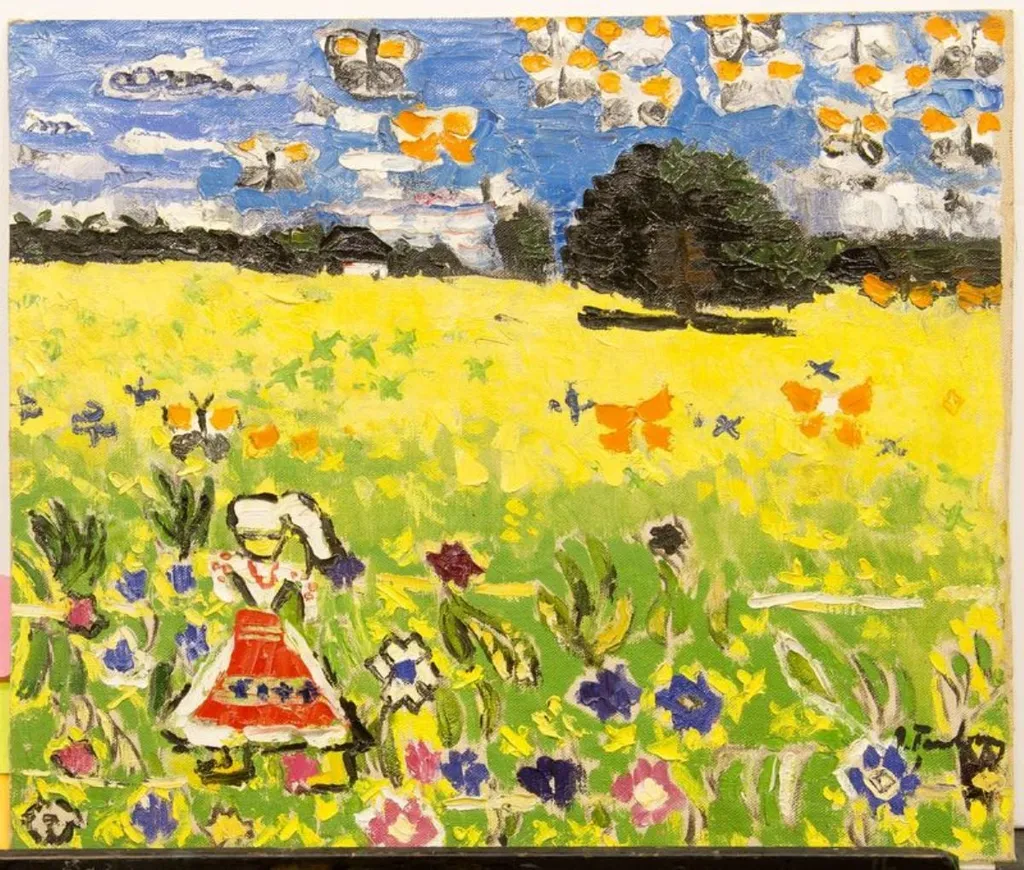
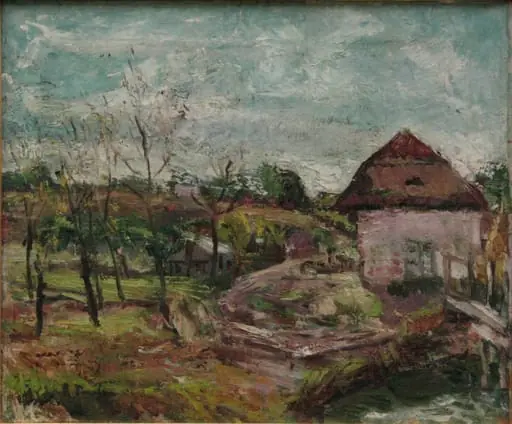
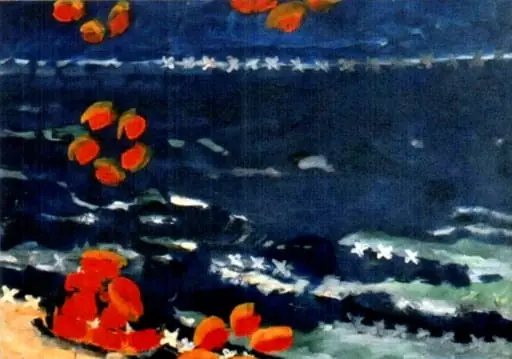
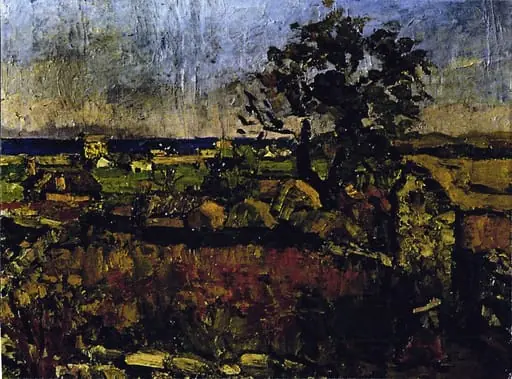
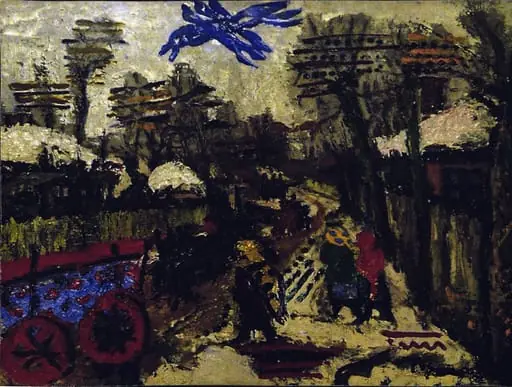
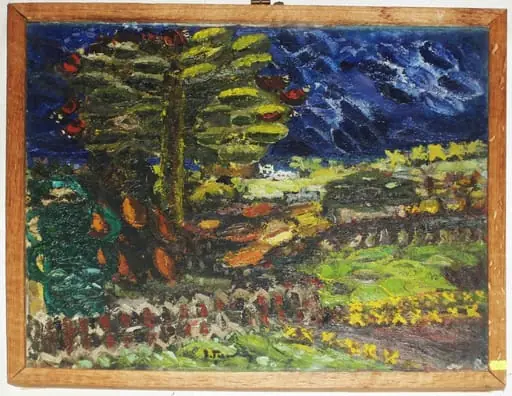
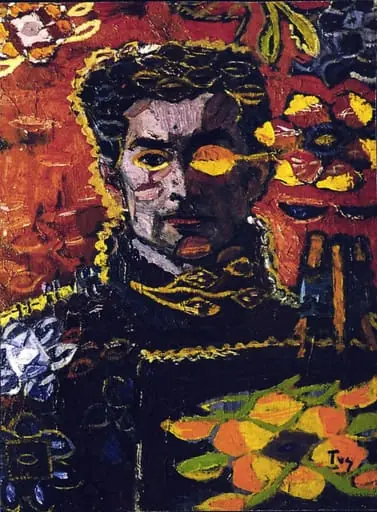
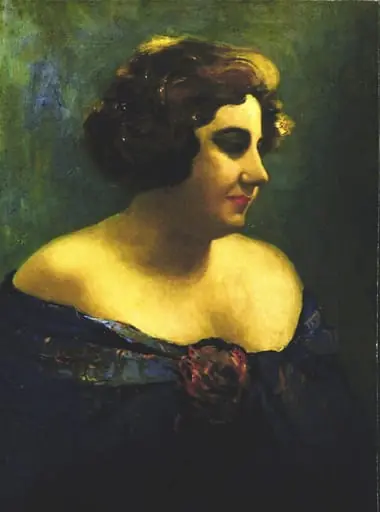
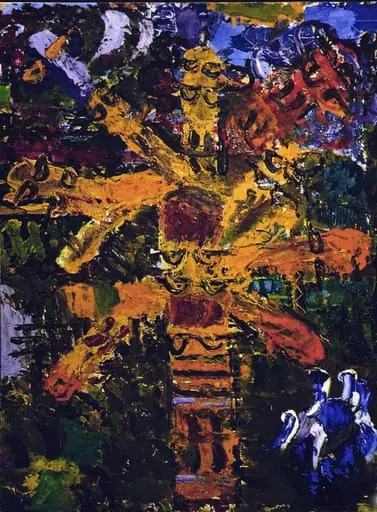
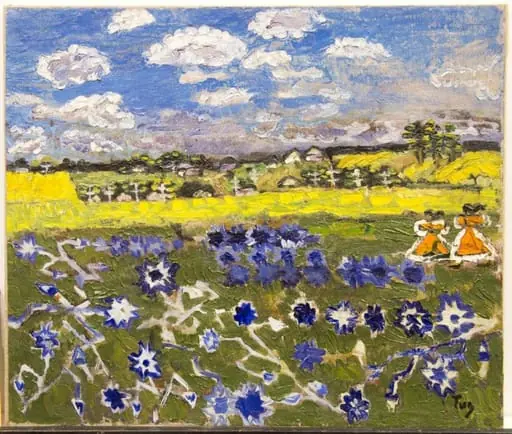
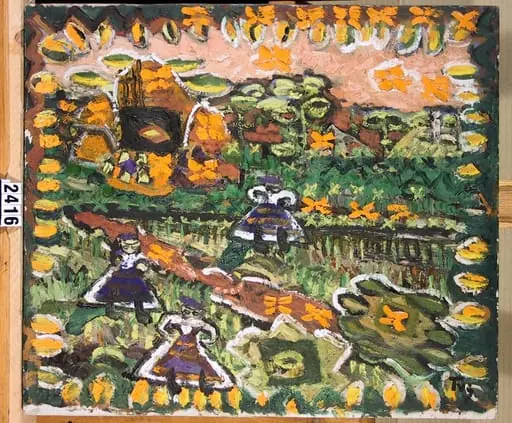
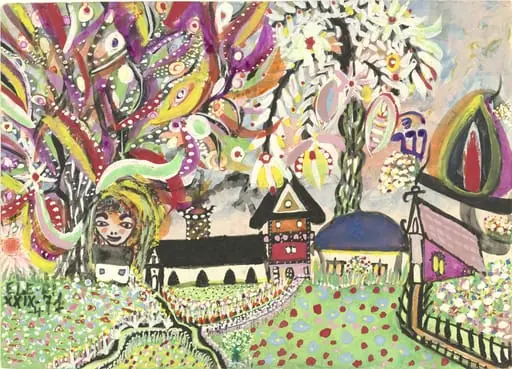
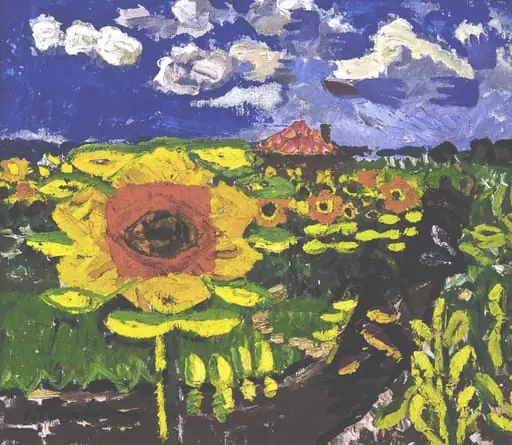
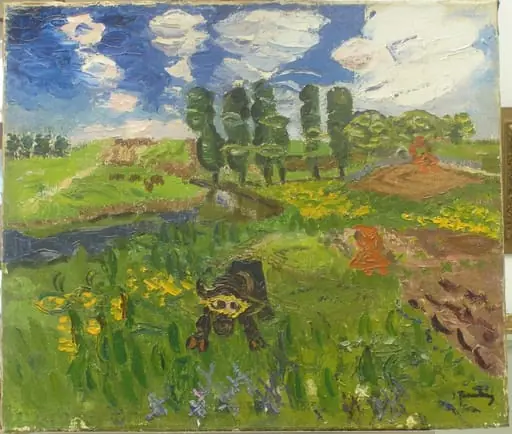
Țărancă în peisaj is an unspecified painting by Ion Țuculescu. It is held in the collection of the National Museum of Art of Romania. This painting depicts a rural woman standing alone in a field, surrounded by vibrant wildflowers and a distant village.
About this work
Overview
This painting depicts a rural woman standing alone in a field, surrounded by vibrant wildflowers and a distant village.
This painting depicts a rural woman standing alone in a field, surrounded by vibrant wildflowers and a distant village. Rendered with thick, textured brushwork, the scene conveys a sense of movement and immediacy. The bold use of color—particularly the red dress against yellow and blue blooms—creates visual tension, while the sky and background elements ground the figure in a specific, observable landscape.
Subject & Meaning
The central figure, a peasant woman in traditional attire, is isolated yet integrated into the natural environment. Her presence suggests a quiet dignity tied to the land, without overt narrative or symbolism. The composition avoids idealization, focusing instead on the ordinary moment of a figure at rest within a working landscape, reflecting a connection to rural life rather than romanticizing it.
Technique & Style
The artist employs impasto techniques, applying paint thickly to build texture and luminosity. Brushstrokes are visible and directional, enhancing the energy of the field and sky. Colors are applied with minimal blending, allowing contrasts—red against green, blue against orange—to vibrate. This approach prioritizes sensory impact over fine detail, emphasizing atmosphere and materiality.
History & Provenance
The work’s origin is tied to early 20th-century Romanian rural realism, though specific details of its creation and early ownership remain undocumented. It likely emerged from a regional artistic movement focused on depicting peasant life with emotional honesty. No major exhibitions or collectors are recorded in its early history, suggesting it remained within local or private circles.
Context
Created during a period when Eastern European artists were turning to native subjects amid industrialization, this painting reflects a broader cultural interest in preserving rural identity. The depiction of modest village architecture and traditional dress aligns with regional efforts to assert cultural continuity. The style echoes contemporaneous post-impressionist tendencies, adapted to local visual traditions.
Legacy
Though not widely exhibited internationally, the painting contributes to a body of work that redefined Romanian visual culture by elevating everyday rural scenes. Its emphasis on texture and color influenced later regional artists seeking to express authenticity through materiality. It remains a quiet example of how local observation could yield a distinctive artistic voice outside mainstream European trends.
Artist & collection
Artist