Artwork
Peisaj cu munți (Sinaia)
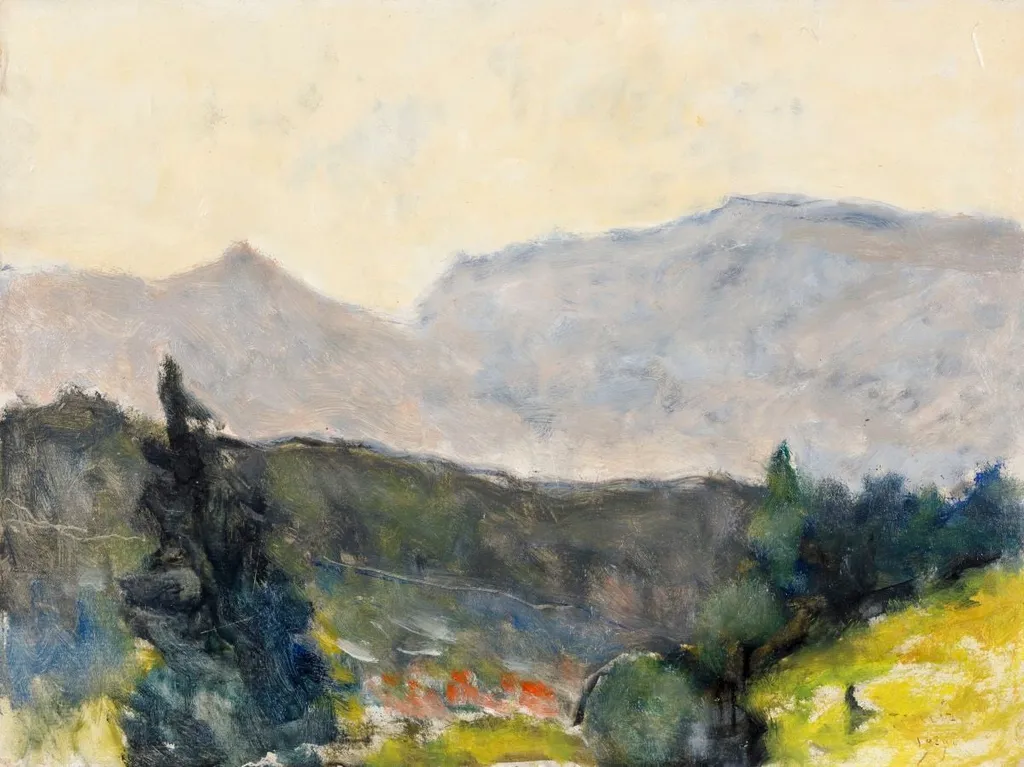
Peisaj cu munți (Sinaia) is an unspecified painting by Nicolae Tonitza. It dates from 1939 and is held in the collection of the National Museum of Art of Romania.
About this work
Overview
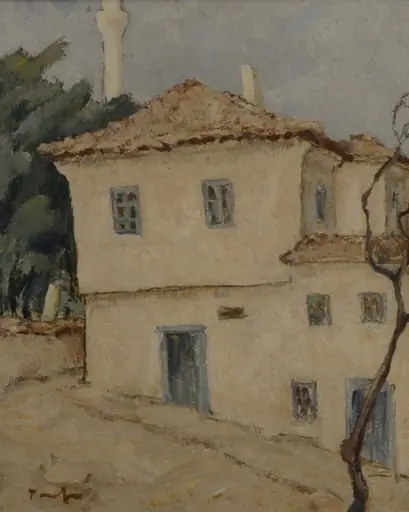
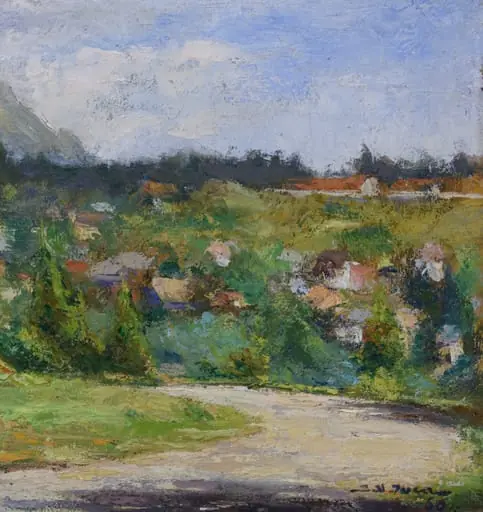
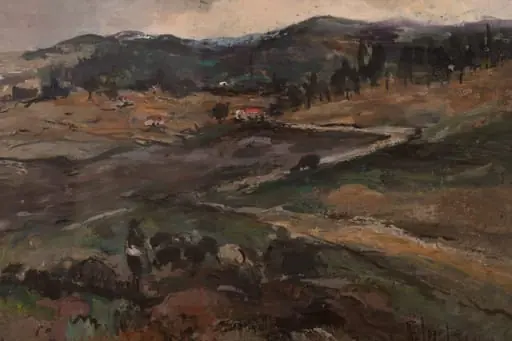
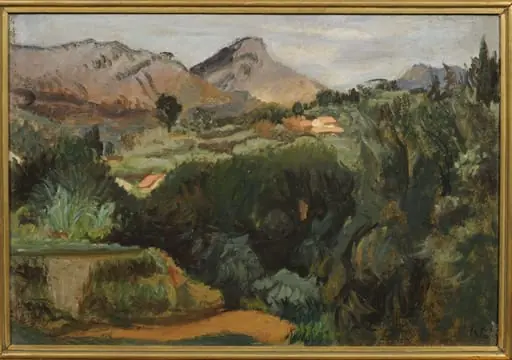
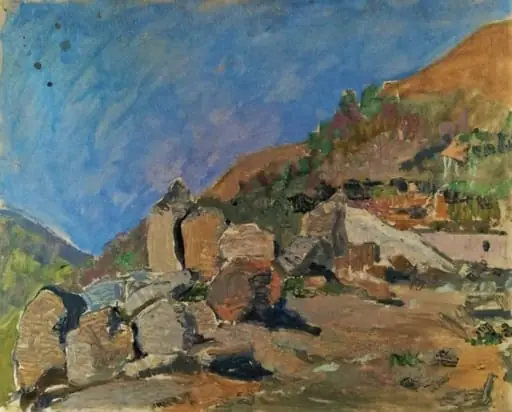
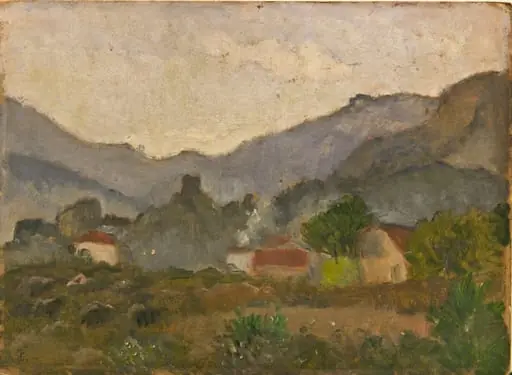
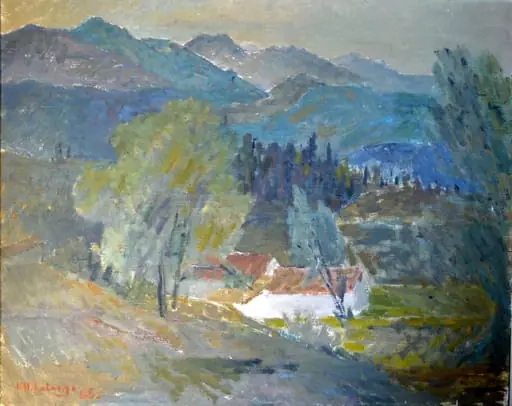
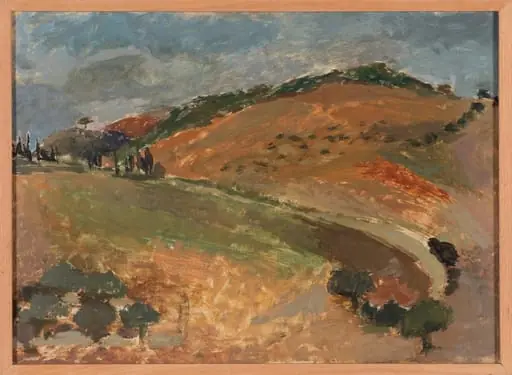
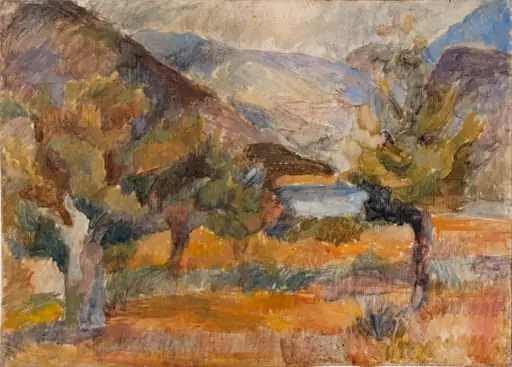
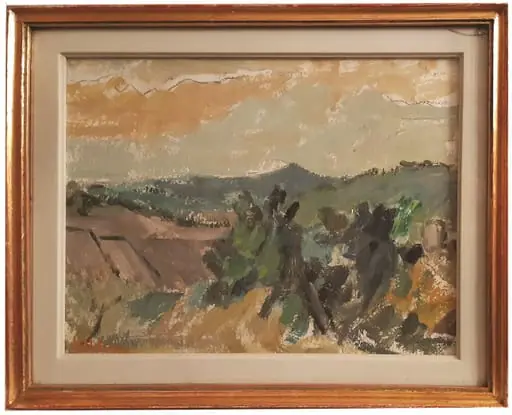
Painted in 1939 by Nicolae Tonitza, this landscape depicts the Sinaia region of Romania. The composition balances distant mountain forms with a foreground of vegetation, creating a quiet, meditative space. The work is rendered in soft, muted tones, emphasizing atmosphere over detail, and reflects Tonitza’s interest in Romanian natural scenery during the late 1930s.
Subject & Meaning
The scene presents a tranquil mountain valley, with faint architectural forms barely visible in the distance. These elements suggest human presence without disrupting the dominance of nature. The painting conveys stillness and solitude, evoking a sense of harmony between land and observer, consistent with Tonitza’s broader focus on the emotional resonance of rural landscapes.
Technique & Style
Tonitza employed loose brushwork and subtle gradations of color to suggest depth and light. The mountains are rendered in pale, hazy washes, while the foreground uses warmer greens and yellows to ground the composition. Forms are simplified, avoiding sharp definition, which enhances the painting’s contemplative mood and aligns with post-Impressionist tendencies in his late work.
History & Provenance
Created in the final years of Tonitza’s life, the painting belongs to a series of Romanian landscapes he produced after returning from exile. It was likely painted during one of his visits to Sinaia, a mountain resort he frequently sketched. The work remained in private Romanian collections after his death in 1940, with no public exhibition record until later decades.
Context
In the late 1930s, Romanian artists increasingly turned to native landscapes as expressions of cultural identity, away from European avant-garde trends. Tonitza’s focus on Sinaia’s hills reflected a national interest in preserving and portraying rural authenticity. His style, though modern, avoided abstraction, favoring emotional clarity rooted in observed reality.
Legacy
This painting exemplifies Tonitza’s mature approach to landscape, where simplicity and restraint convey deep emotional resonance. Though not widely exhibited during his lifetime, it has since become a representative example of interwar Romanian painting, valued for its quiet dignity and connection to the country’s natural topography.
Artist & collection
Artist
Nicolae Tonitza painted quiet still lifes and village scenes, often showing colorful vegetables on a table or blooming flowers in simple pots.