Artwork
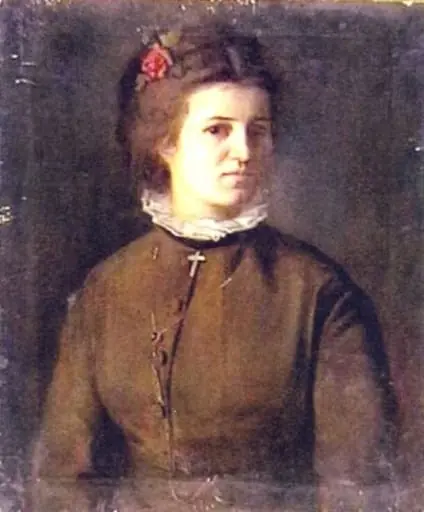
Soția pictorului, Maria Tăttărescu
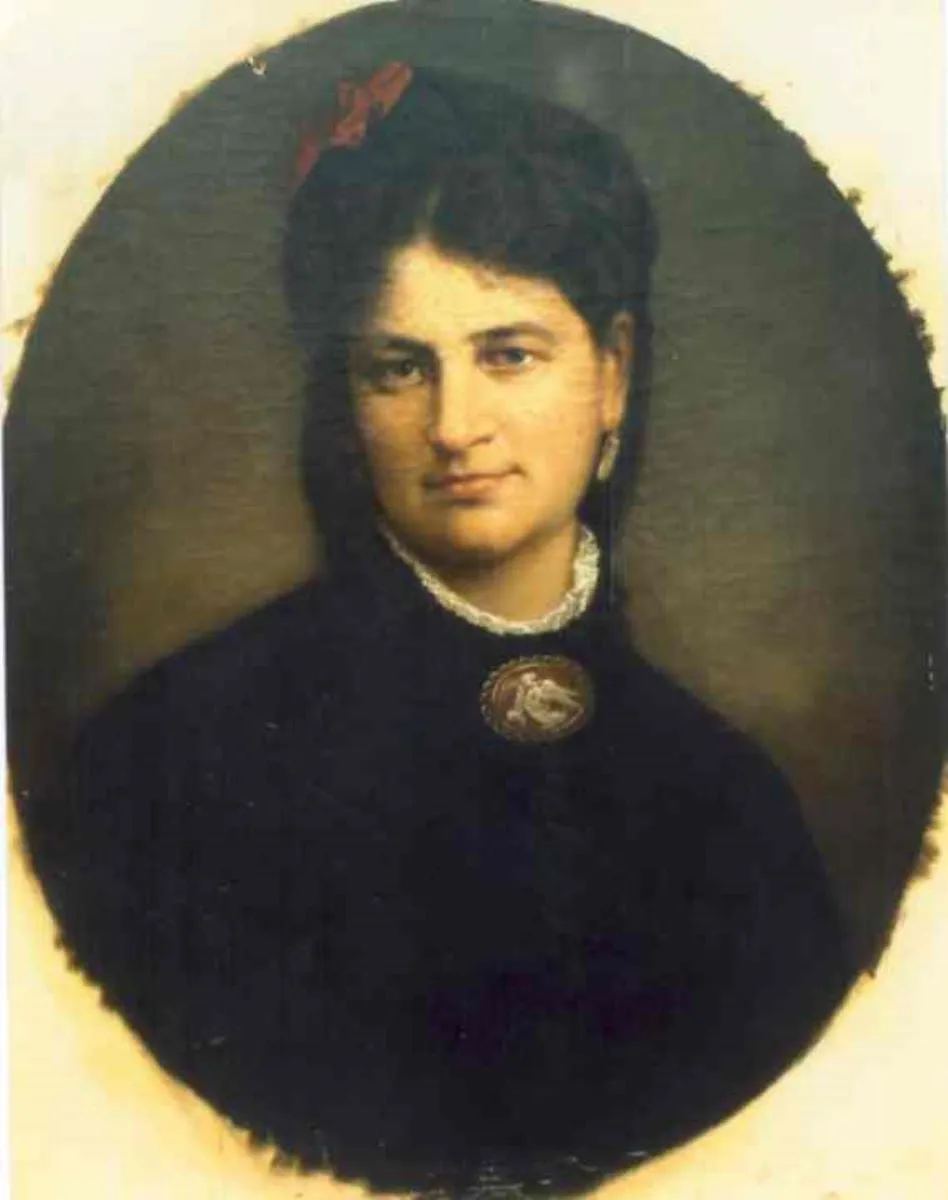
Soția pictorului, Maria Tăttărescu is an unspecified painting by the Impressionist artist Gheorghe Tattarescu. It dates from 1877 and is held in the collection of the Bucharest Municipality Museum.
About this work
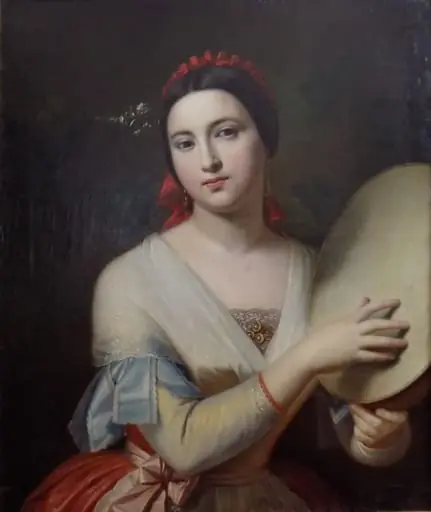
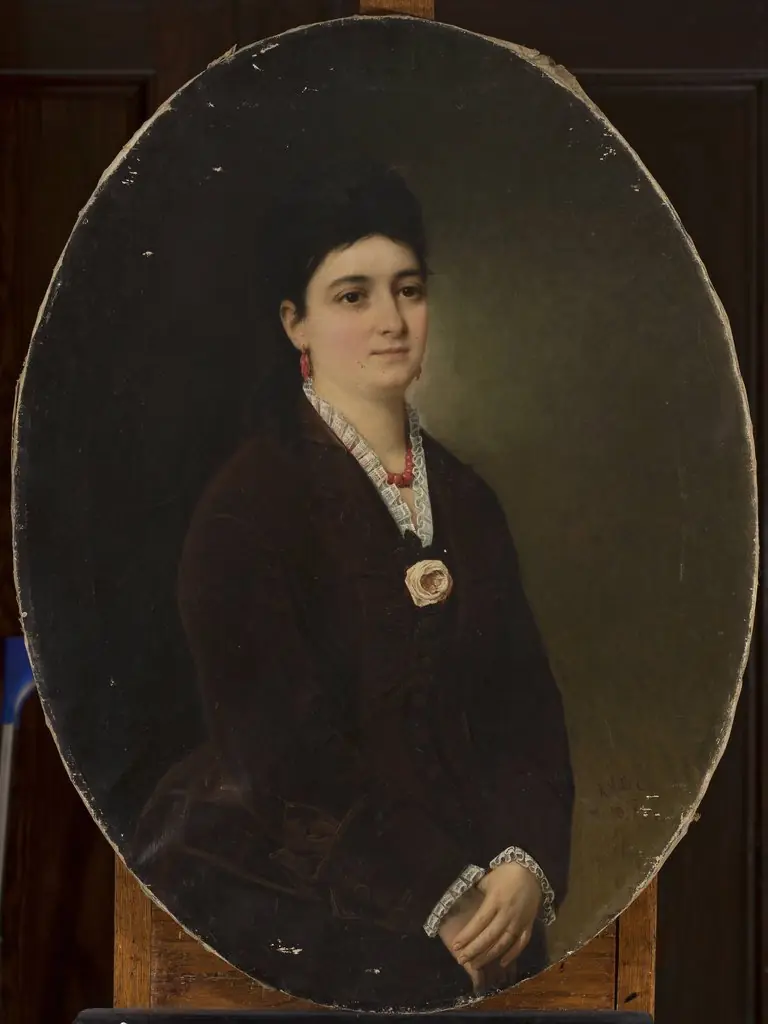
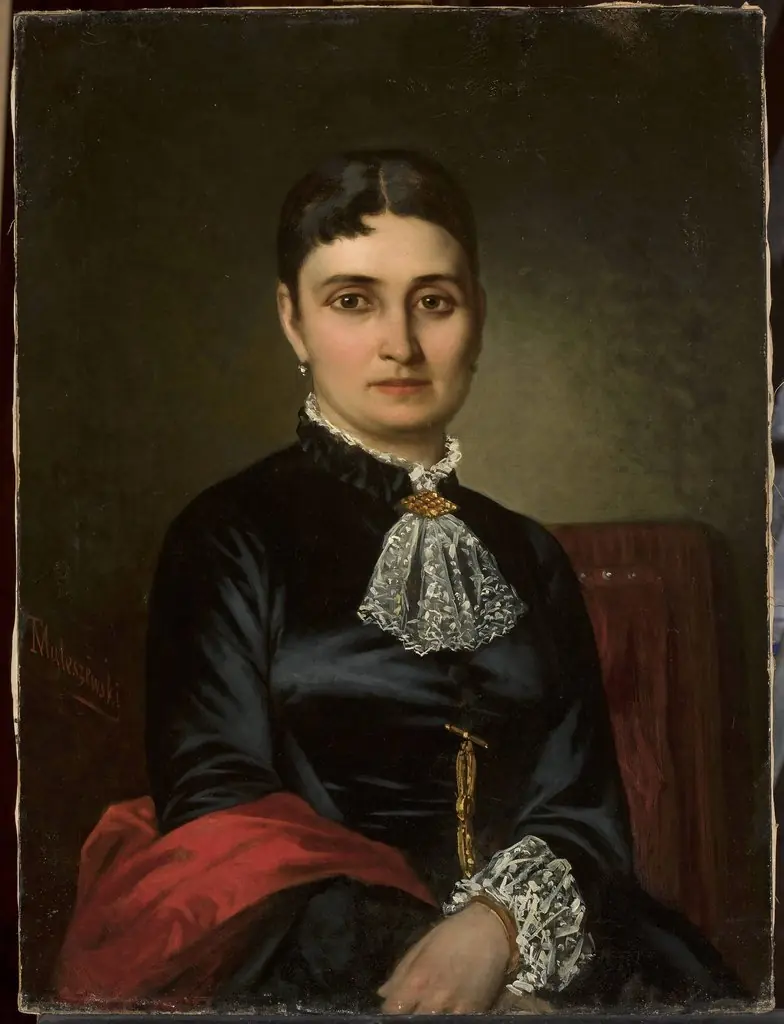
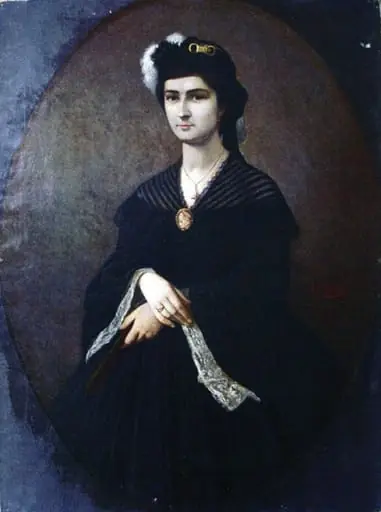
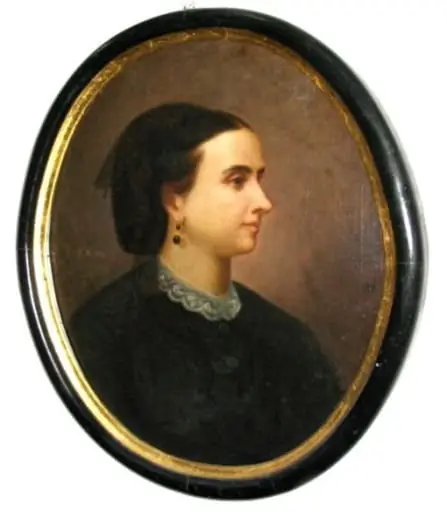
This portrait painting depicts a woman with dark hair, dressed in a black dress with a white collar and a brooch.
This portrait painting depicts a woman with dark hair, dressed in a black dress with a white collar and a brooch. She wears a red bow in her hair and has a neutral expression. The background is a muted brown color.
The woman's attire and hairstyle suggest a formal setting, possibly from the late 19th century. The artist's use of dark colors and subtle lighting creates a sense of intimacy and quiet contemplation.
If you're interested in learning more about the artist's style and technique, you might want to explore the Impressionism movement, which emphasizes capturing light and color in everyday life.
Overview
Gheorghe Tattarescu painted this portrait in 1877, depicting his wife, Maria Tăttărescu. The canvas is part of the collection of the Museum of Ethnography, where it is displayed among other 19th‑century works. The painting presents a seated woman in a restrained pose, set against a muted brown backdrop.
Subject & Meaning
The sitter is shown with dark hair, a black dress trimmed with a white collar, and a red bow securing her hair. A modest brooch rests on the dress, and her expression is neutral, conveying a quiet dignity typical of domestic portraiture of the period. The composition emphasizes personal intimacy rather than public display.
Technique & Style
Tattarescu employs a limited palette of dark tones, allowing subtle contrasts of light to model the figure’s features. Soft shading and careful rendering of fabric folds create a sense of volume, while the background’s uniform brown hue recedes, focusing attention on the sitter. The brushwork is controlled, reflecting academic training rather than avant‑garde experimentation.
History & Provenance
Created in the late 1870s, the portrait remained in the Tăttărescu family before entering the Museum of Ethnography’s holdings. Documentation indicates it was transferred to the museum as part of a broader acquisition of Romanian artists’ works in the early 20th century, ensuring its preservation and public accessibility.
Context
The work belongs to a period when Romanian painters were consolidating a national artistic identity, often through portraiture of family members and local elites. Tattarescu, a prominent figure in this movement, combined academic techniques with a focus on Romanian subjects, situating this painting within the broader cultural effort to document contemporary life.
Artist & collection
Artist