Artwork
La culesul fragilor
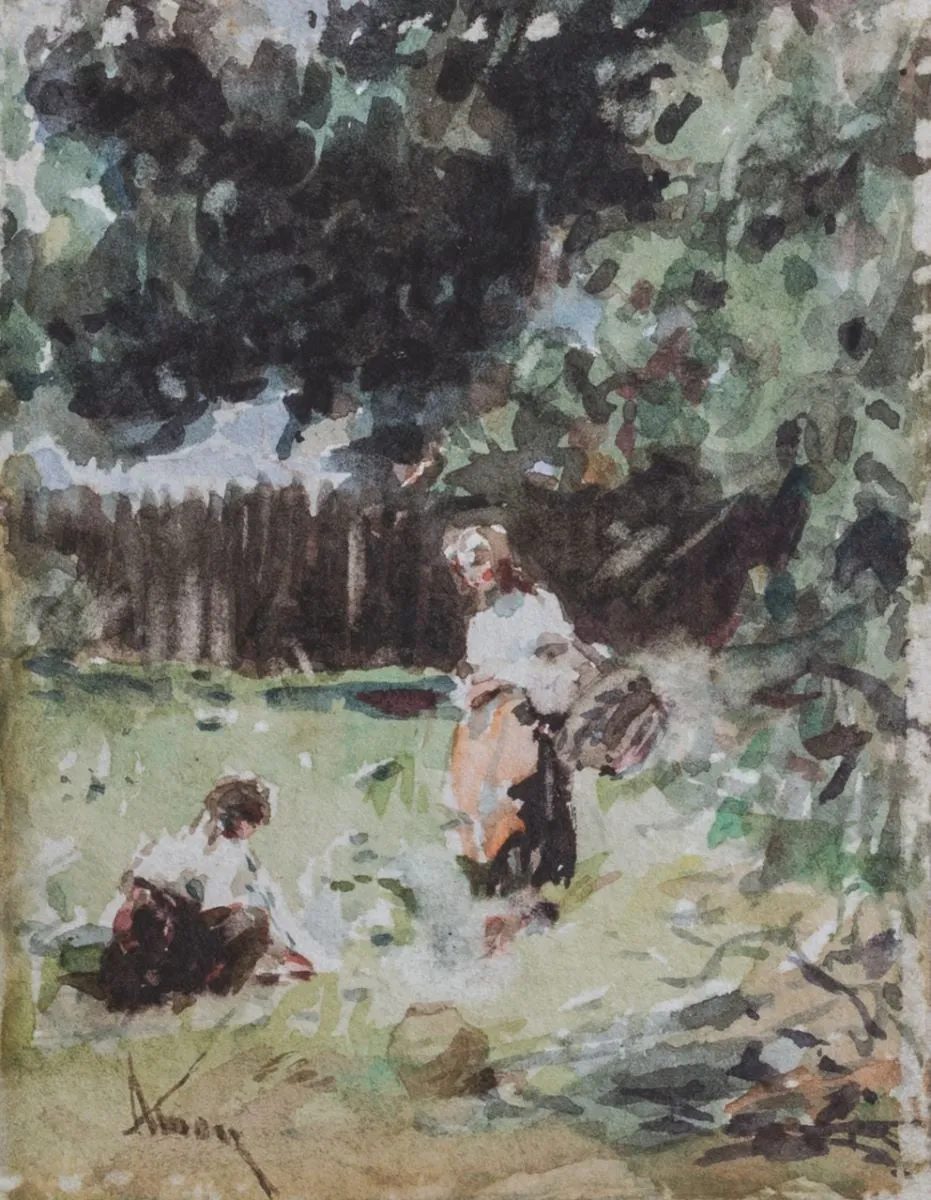
La culesul fragilor is an unspecified painting by Theodor Aman. It dates from 1850 and is held in the collection of the Bucharest Municipality Museum.
About this work
Overview
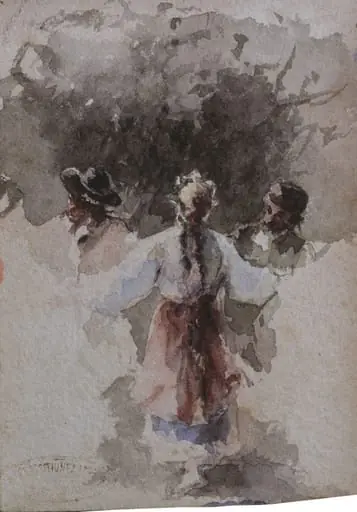
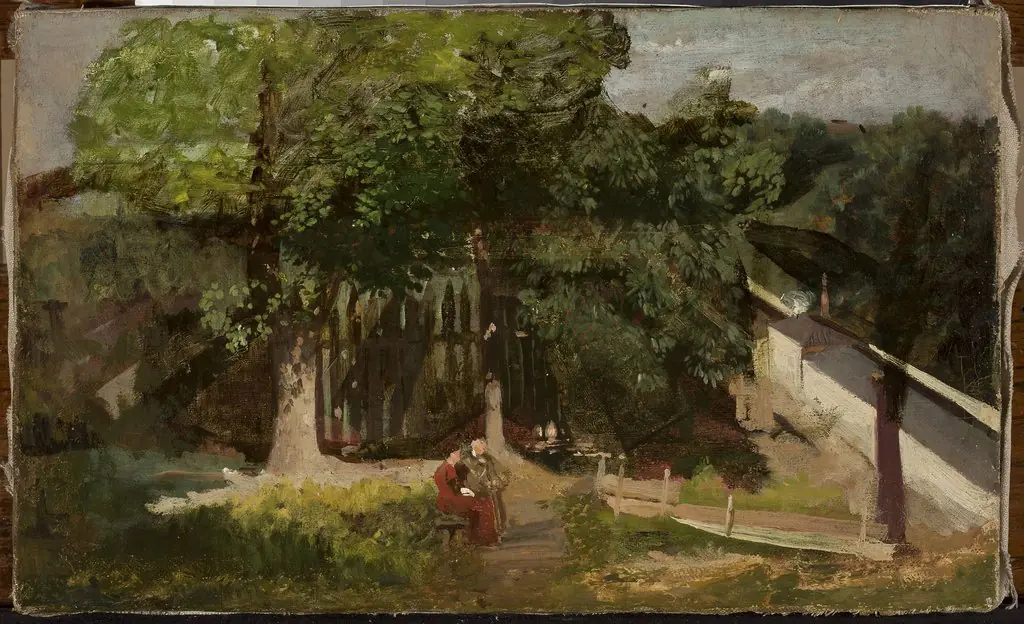
La culesul fragilor, dated around 1850, is a small-scale oil painting by Romanian artist Theodor Aman. It depicts a quiet rural moment of berry-picking, rendered with a loose, tactile brushwork that emphasizes texture over detail. The work resides in the Museum of Ethnography, where it is valued for its intimate portrayal of peasant life rather than its formal polish.
Subject & Meaning
The blurred face of the standing figure suggests movement or transience, subtly underscoring the fleeting nature of daily toil.
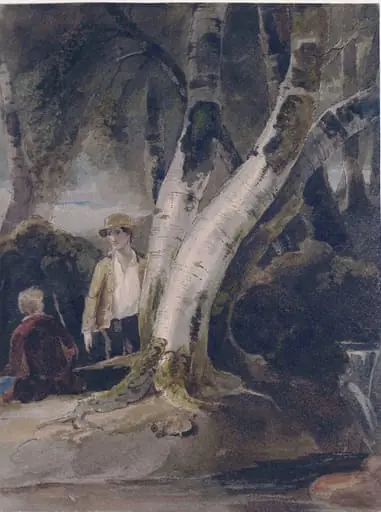
The scene shows two figures engaged in the quiet labor of gathering strawberries. One stands with a bundle, the other seated nearby, both dressed in simple white shirts and dark trousers. The blurred face of the standing figure suggests movement or transience, subtly underscoring the fleeting nature of daily toil. The focus is on labor, not narrative, reflecting a quiet dignity in rural existence.
Technique & Style
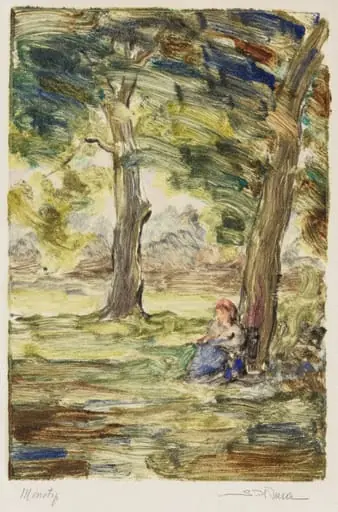
Aman applied paint thickly in places, creating a rough, tactile surface reminiscent of impasto. The background trees and foliage are rendered with broad, uneven strokes of green and brown, giving the woods a dense, shadowed depth. Facial features are deliberately softened, and contours are indistinct, prioritizing mood and texture over precise realism.
History & Provenance
Created in the early 1850s, the painting entered the collection of the Museum of Ethnography in Romania, where it has remained since. Its preservation there reflects its role as a document of 19th-century rural customs rather than as a celebrated artistic achievement. No significant changes in ownership or restoration are documented.
Context
Aman painted during a period when Romanian artists were turning toward native subjects amid growing national consciousness. While academic traditions favored grand historical themes, this work aligns with a quieter movement to depict everyday peasant life with sincerity. Its informal style contrasts with the polished academies of Western Europe at the time.
Legacy
La culesul fragilor is not widely reproduced or studied outside Romania, but it holds significance within national art history as an early example of naturalistic rural observation. Its unpolished technique and focus on ordinary labor prefigure later realist tendencies in Romanian painting, offering a modest but persistent counterpoint to idealized imagery.
Artist & collection
Artist