Artwork
Peisaj
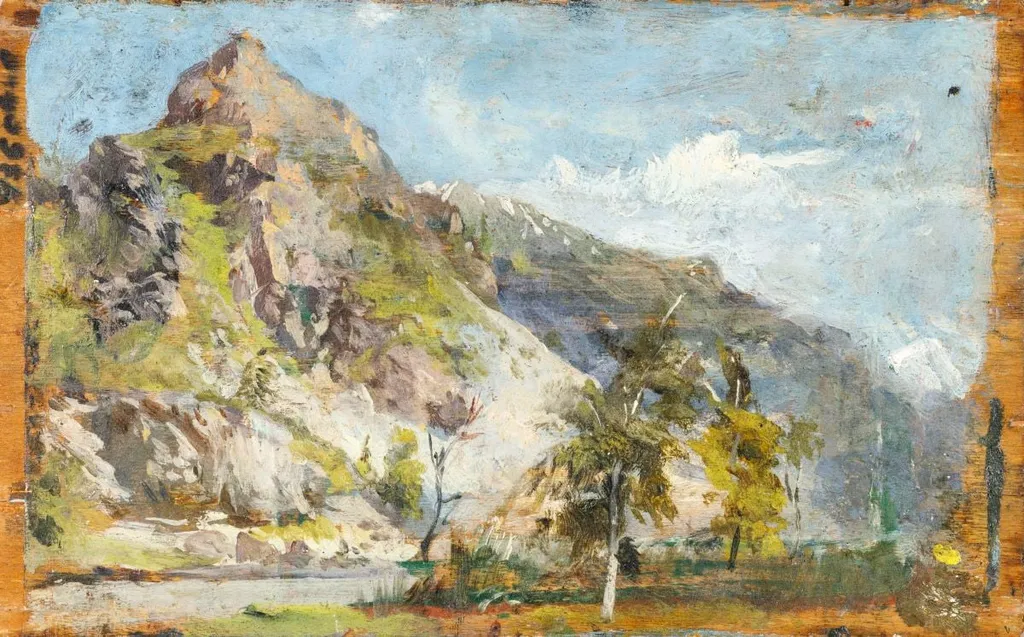
Peisaj is an unspecified painting by Theodor Aman. It dates from 1882 and is held in the collection of the National Museum of Art of Romania.
About this work
Overview
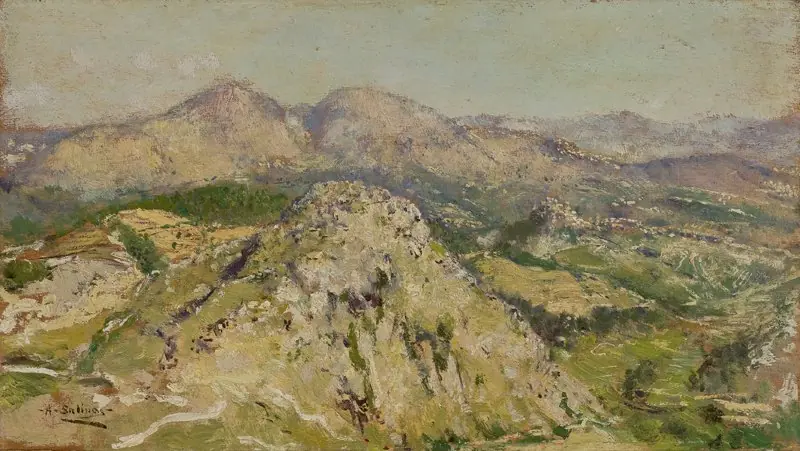
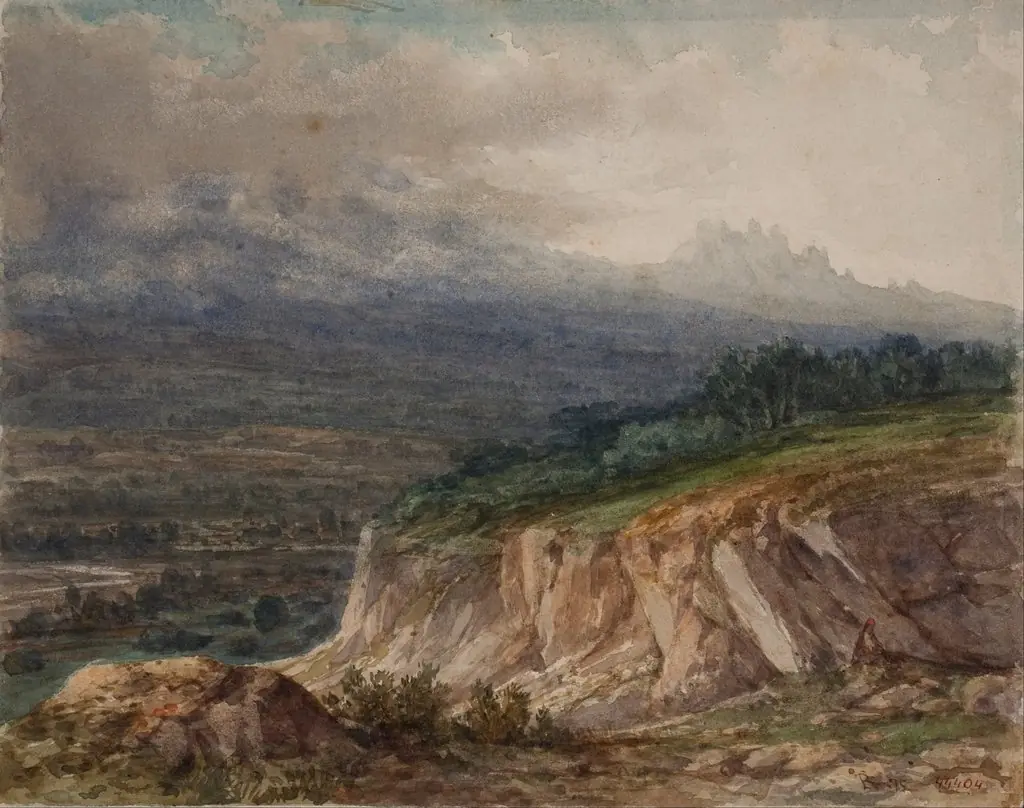
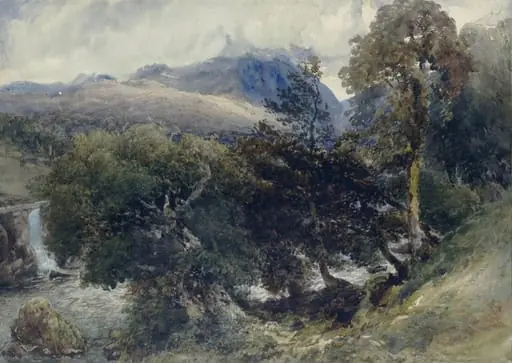
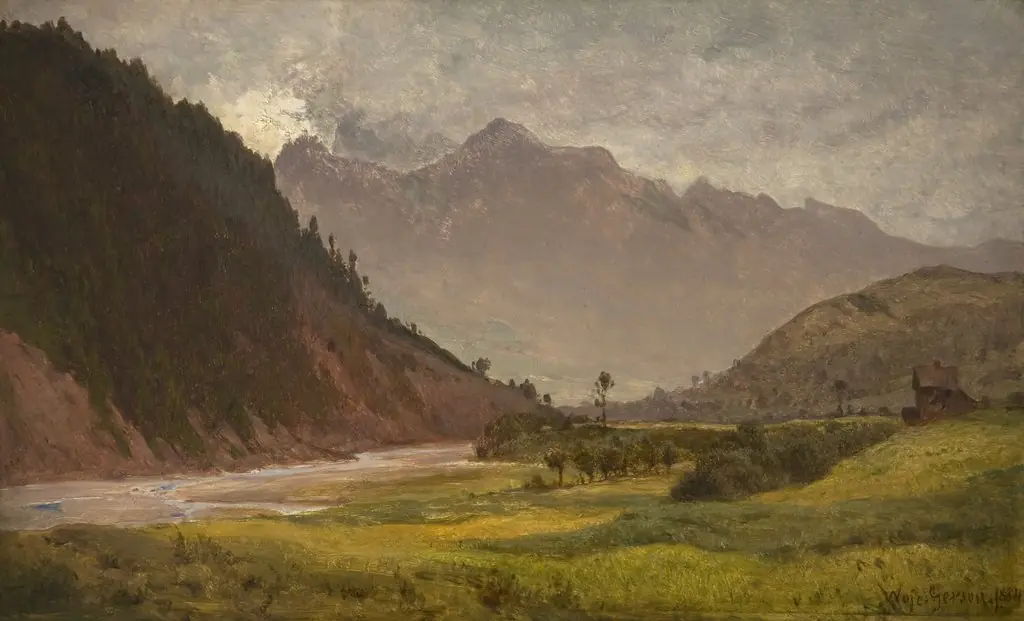
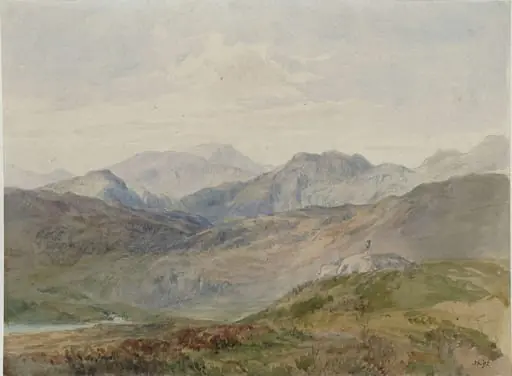
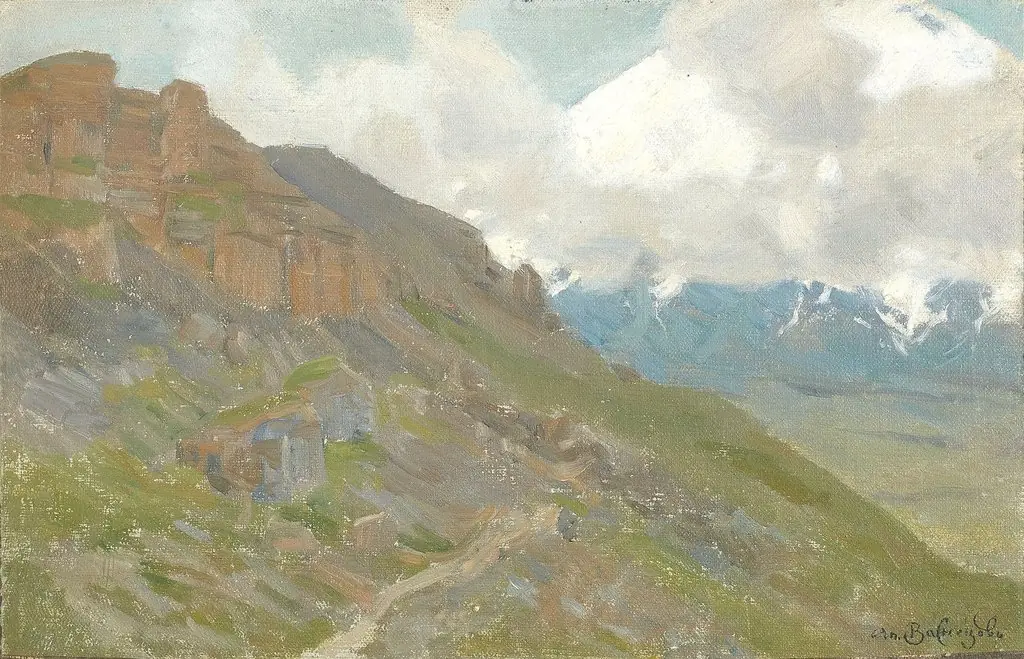
Peisaj, painted around 1882 by Romanian artist Theodor Aman, presents a rugged mountainous landscape. A pale blue sky stretches over jagged rock formations, interspersed with patches of green and brown vegetation. In the lower foreground, a small body of water reflects the scene, while a few leafless trees reach toward the sky, their branches appearing stiff and angular.
Subject & Meaning
The composition emphasizes the starkness of nature, juxtaposing the solidity of the rocky terrain with the fleeting quality of light in the sky.
The composition emphasizes the starkness of nature, juxtaposing the solidity of the rocky terrain with the fleeting quality of light in the sky. The sparse vegetation and barren trees suggest a remote, perhaps inhospitable environment, inviting contemplation of the relationship between humanity and the untamed landscape. The distant snow‑capped peaks add a sense of depth and atmospheric perspective.
Technique & Style
Aman employs a thick, uneven application of paint, creating a textured surface that borders on impasto. The visible brushstrokes give the work a sketch‑like immediacy, prioritizing overall form and illumination over fine detail. This approach captures the fleeting qualities of light and atmosphere, while the tactile surface adds a physical dimension to the depicted terrain.
History & Provenance
Created circa 1882, Peisaj belongs to the later period of Aman’s career, when he increasingly explored landscape subjects. The painting’s provenance is not extensively documented, but it reflects the artist’s interest in Romanian scenery during a time of growing national artistic identity. Its current location and ownership remain unspecified in available records.
Artist & collection
Artist