Artwork
Odaliscă culcată
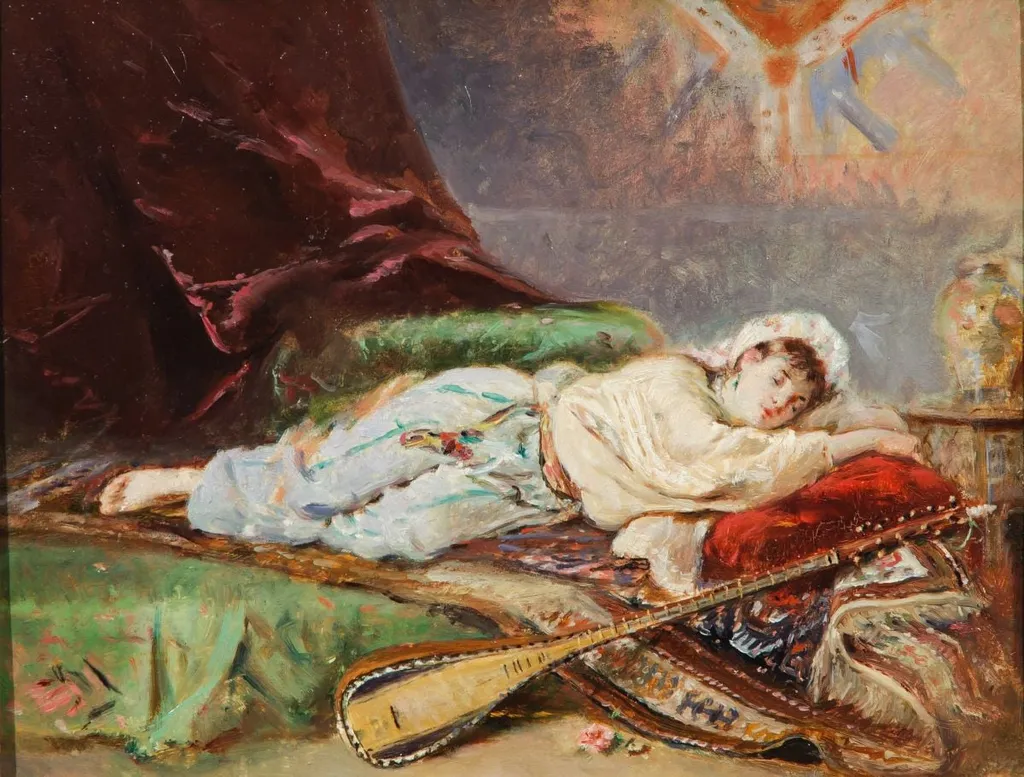
Odaliscă culcată is an unspecified painting by Theodor Aman. It dates from 1885 and is held in the collection of the National Museum of Art of Romania.
About this work
Overview
The work belongs to Aman’s later period, reflecting his interest in Orientalist themes and domestic serenity.
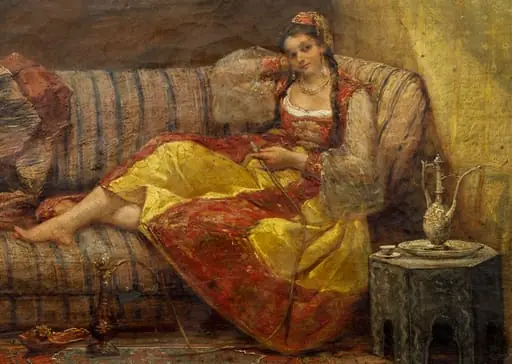
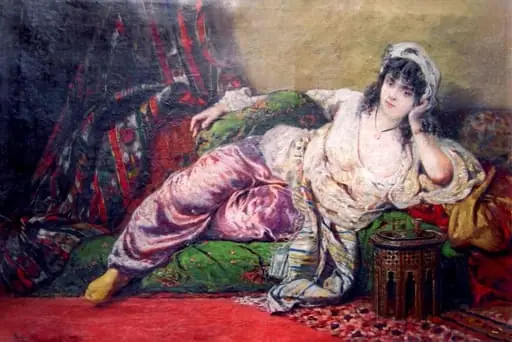
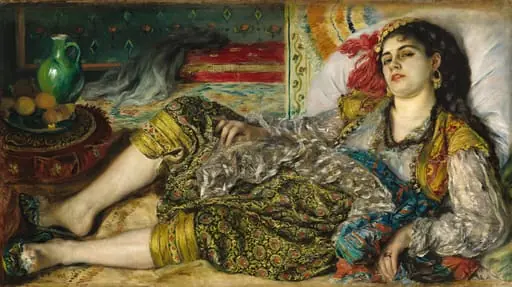
Painted in 1885 by Theodor Aman, Odaliscă culcată is a quiet interior scene centered on a reclining woman. The composition emphasizes stillness and intimacy, with the figure positioned diagonally across a low couch. Rich textiles and muted background tones frame her form, creating a sense of enclosed calm. The work belongs to Aman’s later period, reflecting his interest in Orientalist themes and domestic serenity.
Subject & Meaning
The figure, likely an odalisque, is depicted in a moment of repose, her closed eyes and relaxed posture suggesting introspection rather than performance. The absence of narrative action shifts focus to her inner state. The white headscarf and dress, contrasted with vivid cushions, hint at cultural hybridity, while the lute nearby implies music as a private, not theatrical, experience. The scene resists exoticism, favoring quietude over spectacle.
Technique & Style
Aman employs soft brushwork to render fabric textures and skin tones, with subtle gradations of color creating volume without harsh outlines. The warm earth tones of the background recede gently, allowing the woman’s pale garments and the red-green pillows to emerge with quiet intensity. Light falls evenly, avoiding dramatic contrasts, reinforcing the tranquil mood. The composition is deliberately uncluttered, guiding attention to the figure’s stillness.
History & Provenance
Created in 1885, the painting emerged during Aman’s mature phase, after his involvement with Romanian national art institutions. It was likely painted in his Bucharest studio, where he often explored themes drawn from Eastern Mediterranean and Ottoman visual culture. The work remained in private Romanian collections until the mid-20th century, when it entered a public museum’s holdings, where it is now preserved.
Context
In late 19th-century Romania, Orientalist imagery was popular among artists seeking exotic subjects, yet Aman’s approach diverged from sensationalism. His depiction avoids the overt eroticism common in French Orientalist works, instead favoring psychological stillness. This aligns with broader European trends toward intimate, interior scenes, while reflecting Romania’s own cultural negotiations with Ottoman heritage.
Legacy
Odaliscă culcată stands as a quiet example of Romanian Orientalism, distinguished by its restraint and emotional subtlety. It influenced later Romanian painters who sought to humanize non-Western subjects rather than idealize them. The painting is now recognized for its sensitivity to light, texture, and mood, offering a counterpoint to more theatrical contemporaries in the genre.
Artist & collection
Artist