Artwork
Cap de femeie
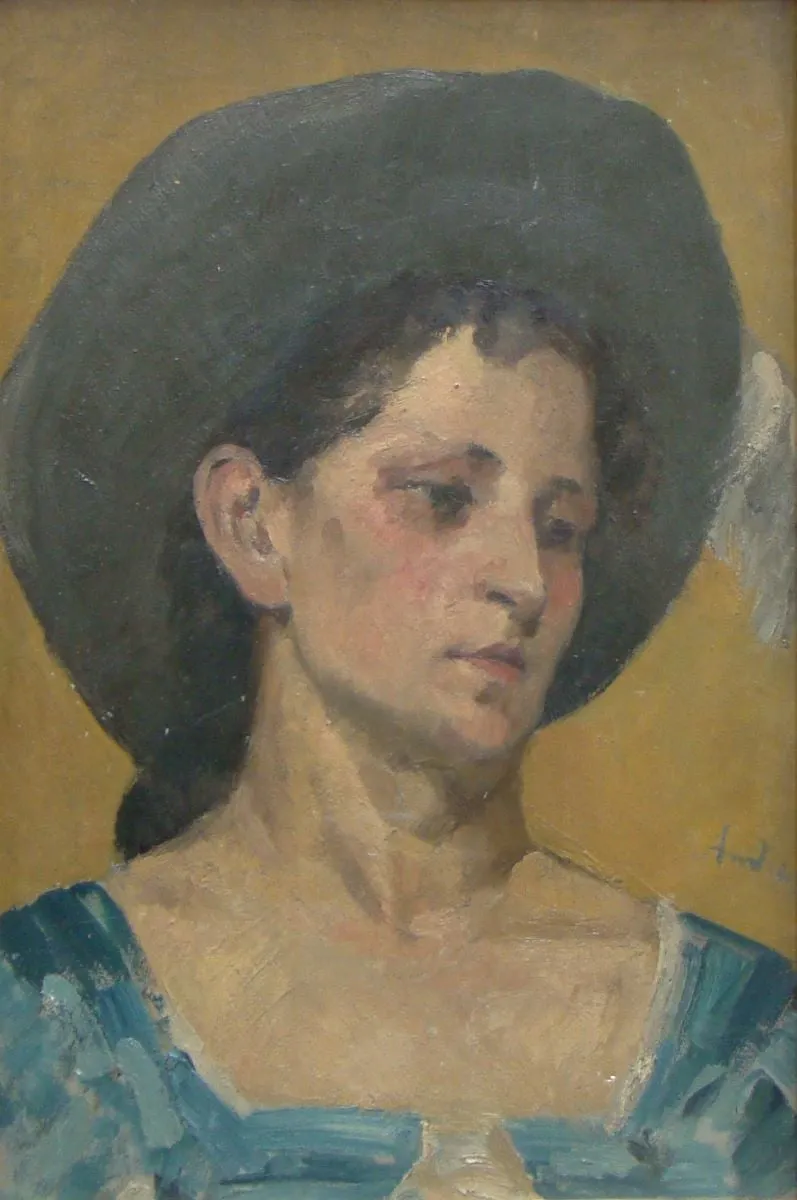
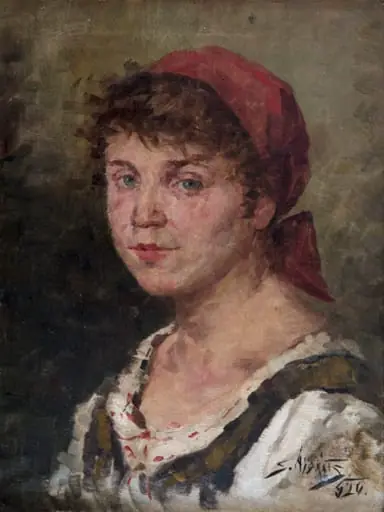
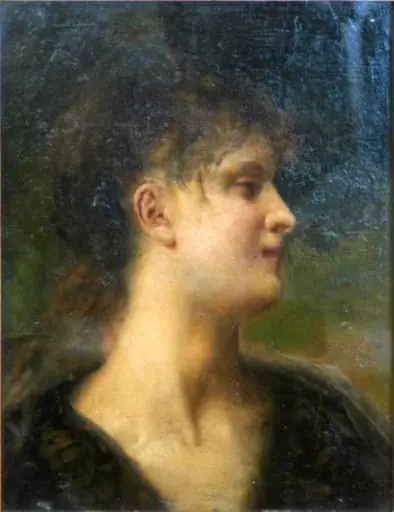
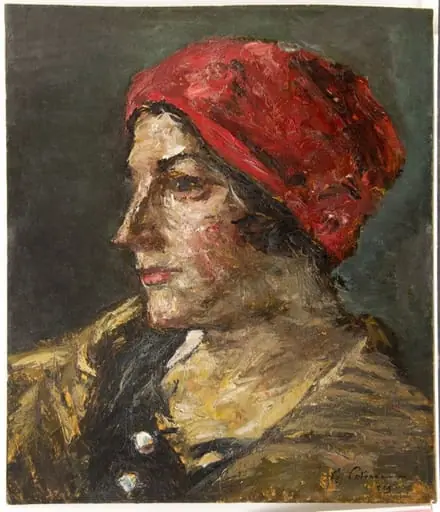
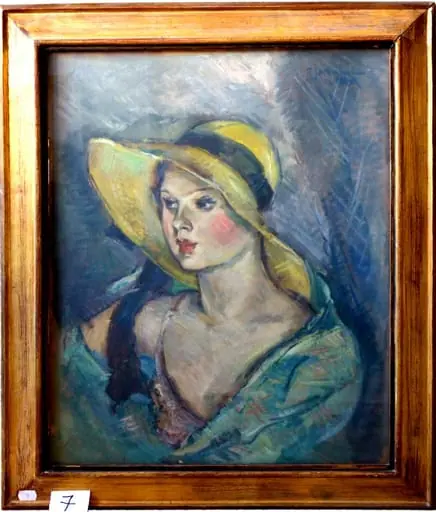
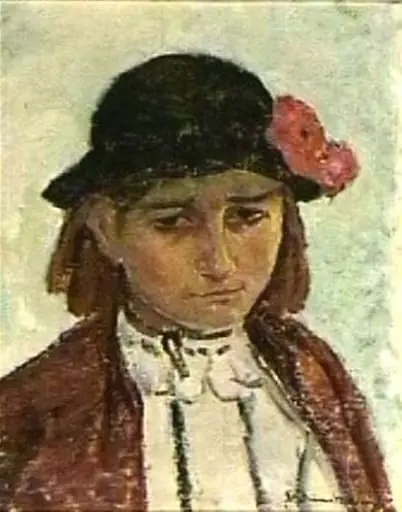
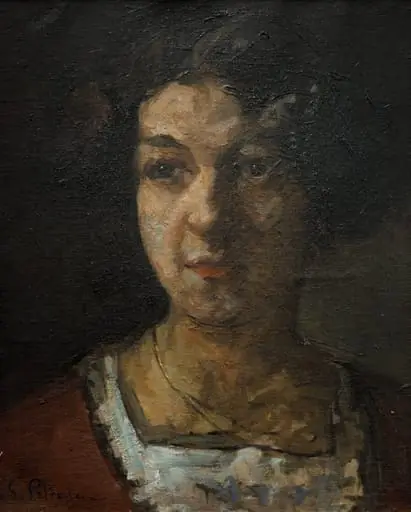
Cap de femeie is an unspecified painting by Ion Andreescu. It is held in the collection of the Iulian Antonescu Bacău Museum Complex. This portrait presents a woman’s head in three-quarter view, turned gently to the right.
About this work
Overview
The artist employs subtle lighting to model the form, focusing attention on the face while minimizing extraneous detail.
This portrait presents a woman’s head in three-quarter view, turned gently to the right. Rendered in cool tones against a warm golden background, the composition emphasizes stillness and introspection. The artist employs subtle lighting to model the form, focusing attention on the face while minimizing extraneous detail. The quiet demeanor of the subject suggests an inward focus, unbroken by external cues.
Subject & Meaning
The woman’s expression is neutral, her gaze directed slightly away, evoking a sense of private thought. Her modest attire—a blue dress with a square neckline—and neatly bound dark hair convey restraint and dignity. No jewelry or ornamental elements distract from her presence, reinforcing an atmosphere of quiet solitude. The painting invites contemplation rather than narrative interpretation.
Technique & Style
Chiaroscuro is used with restraint to define the contours of the face and neck, creating volume without dramatic contrast. The transition between light and shadow is soft, suggesting natural ambient light rather than theatrical illumination. The background’s warm yellow enhances the cool blue of the dress, heightening spatial depth through color contrast rather than linear perspective.
History & Provenance
The painting’s origin and early ownership remain undocumented. It lacks a signature or dated inscription, making precise attribution difficult. It has been held in private collections since at least the mid-20th century, with no public exhibition history prior to recent scholarly interest. Its survival suggests it was valued as a personal or intimate work rather than a public commission.
Context
Created during a period when intimate portraiture gained favor among collectors, this work reflects a shift from grand ceremonial depictions to quieter, individualized studies. The use of a monochromatic background and focused lighting aligns with trends in Northern European studio practice, where psychological presence often outweighed ornamental detail.
Legacy
Though not widely reproduced or cited in major art historical texts, the painting is occasionally referenced in studies of understated portraiture. Its restrained aesthetic has influenced later artists seeking to convey inner life through minimal means. It remains a quiet example of how simplicity in composition can sustain emotional resonance over time.
Artist & collection
Artist
Ion Andreescu painted quiet scenes of everyday life and landscapes in the late 1800s.
Museum
Iulian Antonescu Bacău Museum Complex
Continue through works from the same source collection.