Artwork
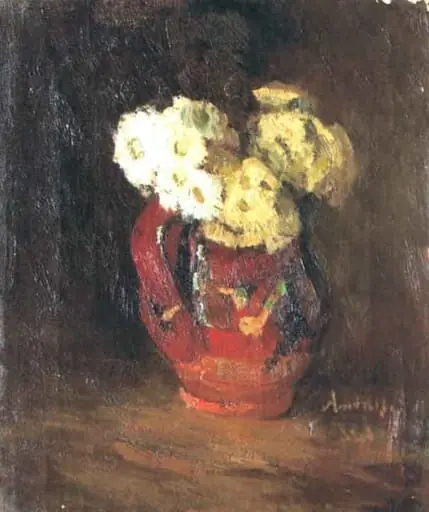
Flori în ulcică
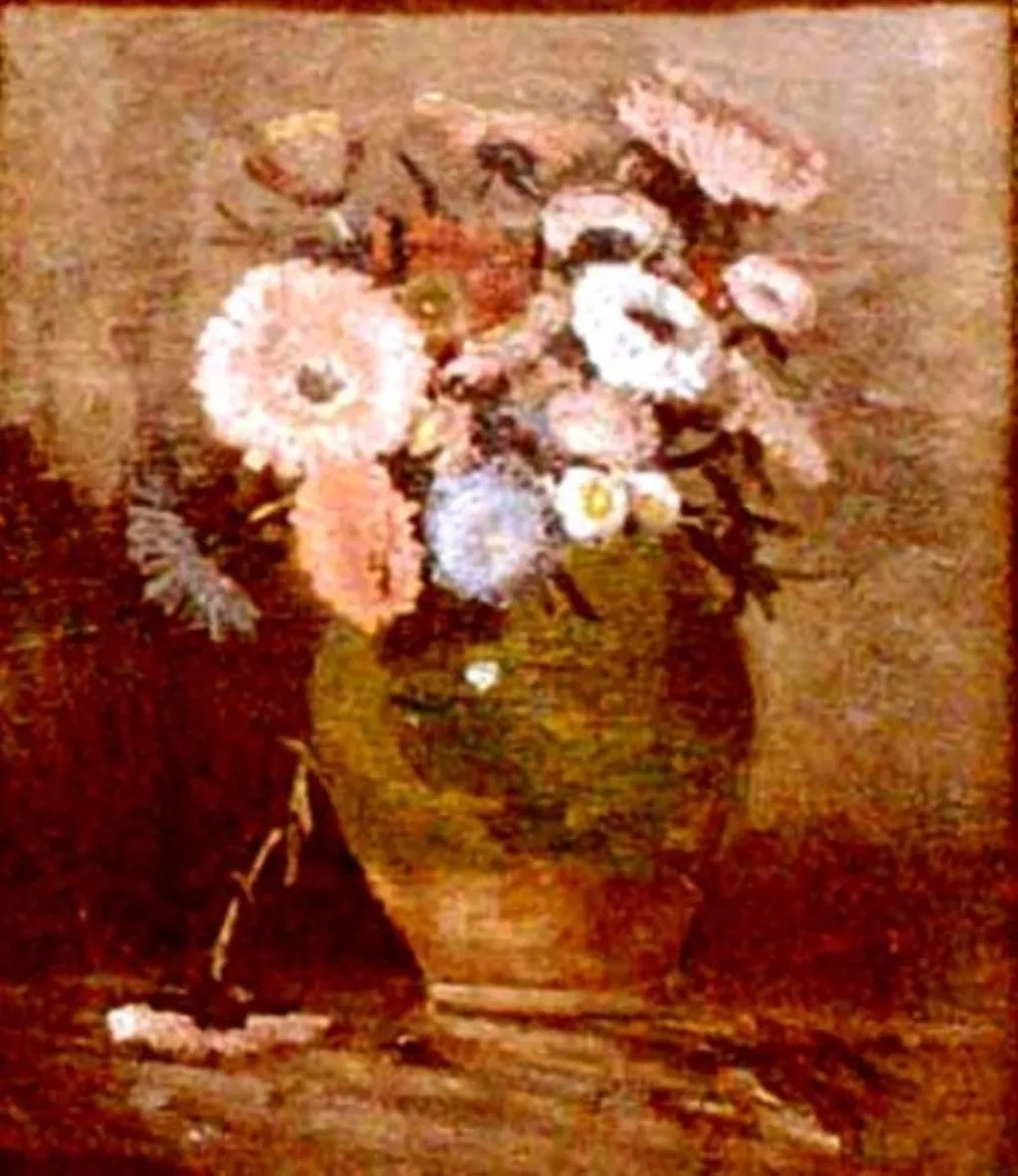
Flori în ulcică is an unspecified painting by Ion Andreescu. It dates from 1850 and is held in the collection of the National Museum of Art of Romania.
About this work
Overview
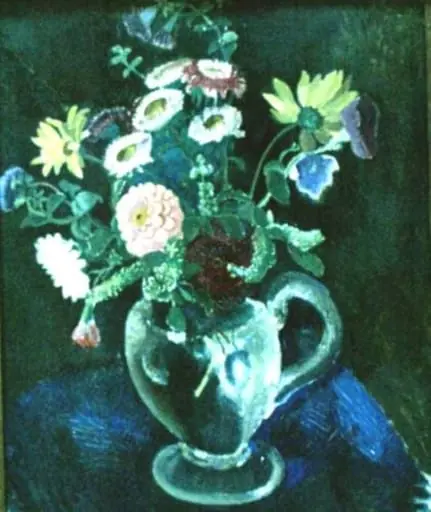
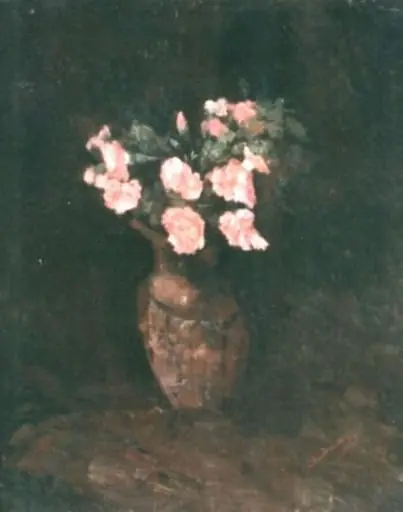
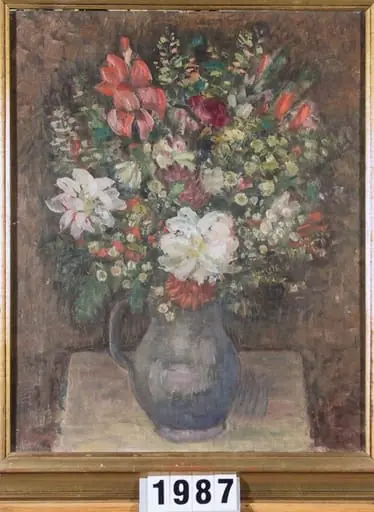
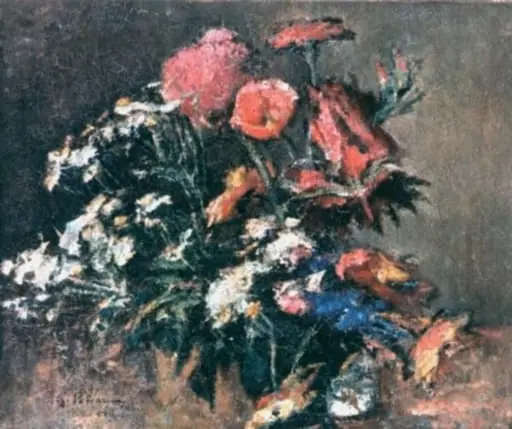
It depicts a modest ceramic vase holding a loose arrangement of wildflowers, set against a muted, earth-toned background.
Flori în ulcică is a still life painting by Romanian artist Ion Andreescu, dated around 1850. It depicts a modest ceramic vase holding a loose arrangement of wildflowers, set against a muted, earth-toned background. The composition avoids ornamentation, focusing instead on the quiet presence of natural forms. The work reflects an early interest in everyday subjects, diverging from formal academic traditions of the time.
Subject & Meaning
The painting presents a humble bouquet of white, pink, and purple blossoms with green foliage, arranged without symmetry or grandeur. The flowers, neither cultivated nor exotic, suggest a moment of quiet observation rather than symbolic allegory. Their simplicity implies an appreciation for transient beauty found in ordinary life, aligning with emerging realist sensibilities in 19th-century Romanian art.
Technique & Style
Andreescu applied paint with thick, tactile brushstrokes, using impasto to give the petals and leaves a textured, almost sculptural quality. The surface of the vase and the background are rendered with minimal detail, allowing the flowers to emerge through layered pigment. The uneven handling of paint enhances the sense of spontaneity, as if capturing the bouquet shortly after being gathered.
History & Provenance
Created during Andreescu’s formative years, Flori în ulcică predates his more widely recognized works. It was likely painted in Romania, possibly in a domestic setting, reflecting the artist’s early experimentation with local subjects. The painting remained in private collections until entering public institutional holdings in the 20th century, where it is now preserved as an early example of Romanian realist painting.
Context
In mid-19th century Romania, academic art favored historical and mythological themes. Andreescu’s focus on a simple floral arrangement was unconventional, aligning more with emerging European trends that valued everyday observation. This work signals a shift toward intimate, nature-centered subjects, influenced by French and Dutch still life traditions adapted to local sensibilities.
Legacy
Flori în ulcică is recognized as one of the earliest Romanian paintings to prioritize naturalistic still life over idealized composition. Its unadorned aesthetic and expressive brushwork influenced later generations of Romanian artists seeking to ground their work in observable reality. The painting remains a quiet landmark in the development of national artistic identity during a period of cultural awakening.
Artist & collection
Artist
Ion Andreescu painted quiet scenes of everyday life and landscapes in the late 1800s.