Artwork
Προσωπογραφία του Ιωάννη Διοβουνιώτη
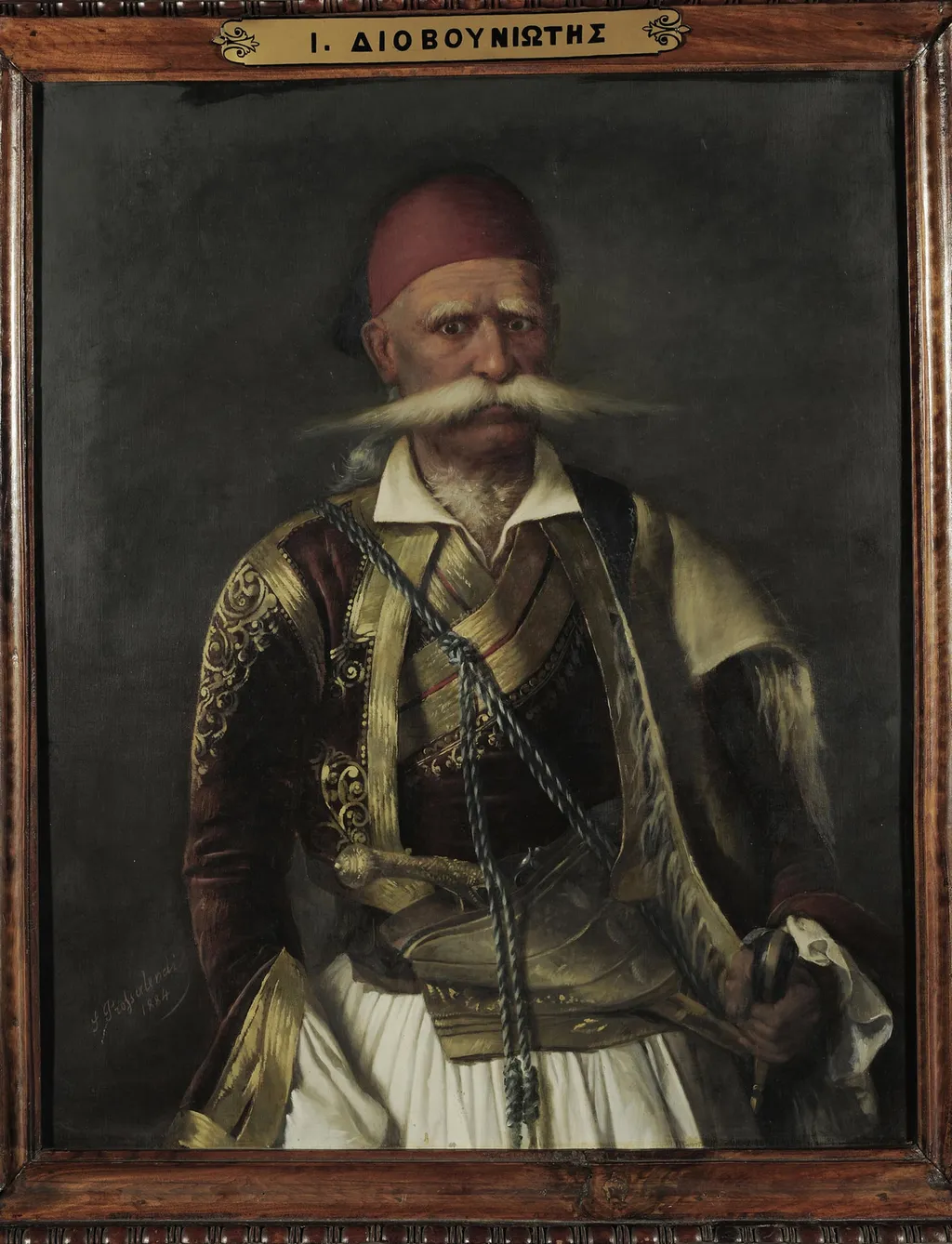
Προσωπογραφία του Ιωάννη Διοβουνιώτη is an unspecified painting by the Impressionist artist Prossalendis Spyridon. It dates from 1884 and is held in the collection of the Historical & Ethnological Society of Greece.
About this work
Overview
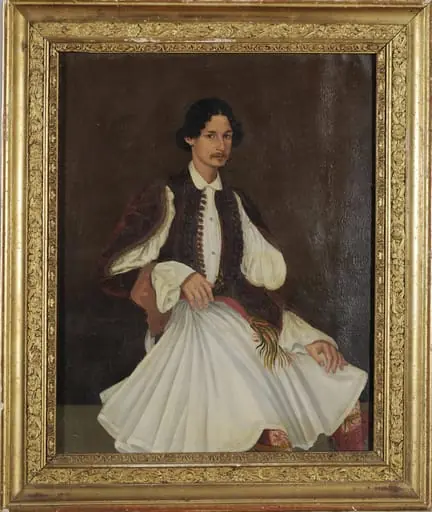
Painted in 1884 by Prossalendis Spyridon, this portrait depicts Ioannis Diobouniotis, a figure of local significance in 19th-century Greece.
Painted in 1884 by Prossalendis Spyridon, this portrait depicts Ioannis Diobouniotis, a figure of local significance in 19th-century Greece. Executed in oil on canvas, the work is part of the Museum of Ethnography’s collection. Its composition centers entirely on the subject, with no distracting elements in the background. The painting reflects a quiet dignity, emphasizing personal presence over narrative context.
Subject & Meaning
Ioannis Diobouniotis is portrayed as a man of established status, likely a community elder or religious figure. His ornate yet worn garments suggest a life of service rather than wealth. The chain he holds may symbolize authority or spiritual duty, while the folded cloth beneath his hand implies ritual or formality. His direct gaze and composed posture convey quiet authority and introspection.
Technique & Style
Spyridon employs a restrained realism with deliberate brushwork. The face and beard are rendered with soft, nuanced strokes that capture texture and volume, while the embroidery on the sleeves is suggested through loose, luminous touches. The use of chiaroscuro draws attention to the subject’s features, isolating him against a deep, neutral background. The technique balances precision with a tactile, almost tactile immediacy.
History & Provenance
The painting was completed in 1884 and entered the Museum of Ethnography’s holdings shortly thereafter. It was likely commissioned by or for Diobouniotis’s community, reflecting local traditions of portraiture among respected figures. Its preservation suggests ongoing cultural value, though little is documented about its early ownership or exhibition history beyond its institutional acquisition.
Context
In late 19th-century Greece, portraiture of local notables often served to affirm social identity amid national modernization. This work aligns with regional traditions where dress, gesture, and subtle symbolism conveyed status without overt grandeur. Unlike academic portraits of the era, it avoids theatricality, favoring intimacy and authenticity over idealization.
Legacy
The portrait remains a quiet example of Greek regional portraiture from the post-Ottoman period. It contributes to the understanding of how everyday authority was visually represented outside urban centers. While not widely known beyond institutional circles, it continues to inform studies of material culture and identity in 19th-century Greek society.
Artist & collection
Artist
Museum
Historical & Ethnological Society of Greece
Continue through works from the same source collection.