Artwork
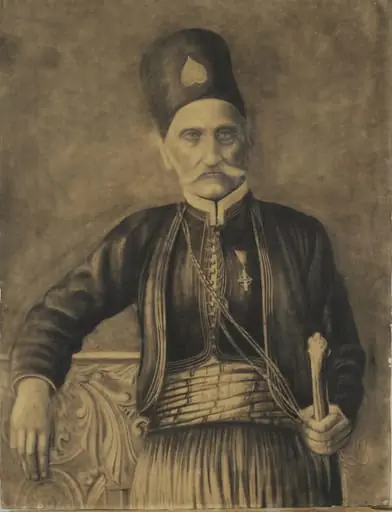
Προσωπογραφία του Νάκου Πανουργιά
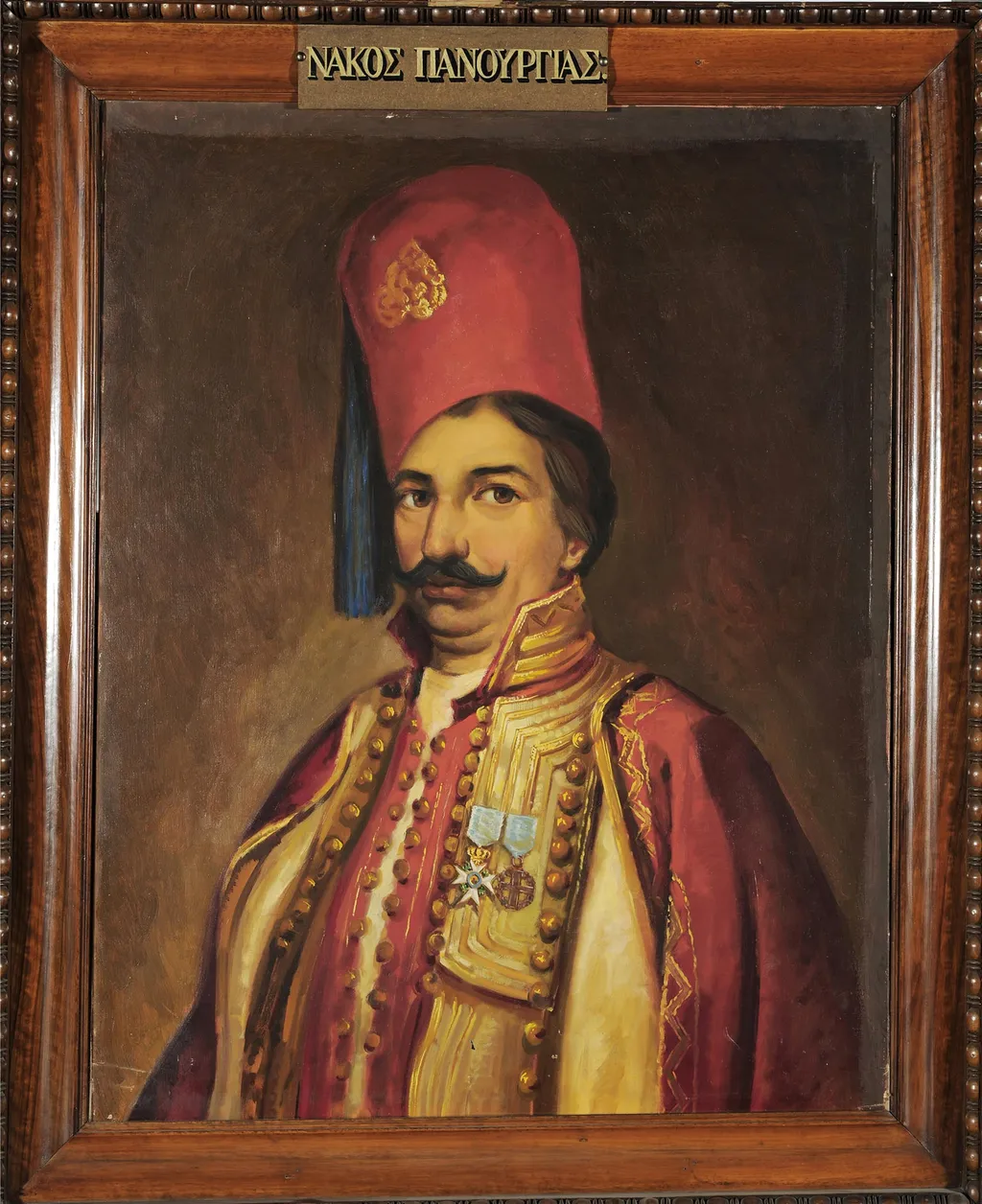
Προσωπογραφία του Νάκου Πανουργιά is an unspecified painting by Fertis Ilias. It dates from 1955 and is held in the collection of the Historical & Ethnological Society of Greece.
About this work
Overview
Rendered with deliberate simplicity, the composition isolates the subject against a dark, unadorned background, emphasizing his attire and presence.
Painted in 1955 by Fertis Ilias, this portrait depicts a man named Nákou Panourgiás. The work is part of the collection at the Museum of Ethnography. Rendered with deliberate simplicity, the composition isolates the subject against a dark, unadorned background, emphasizing his attire and presence. The painting serves as a documentary record of an individual within a specific cultural and historical context.
Subject & Meaning
The subject, Nákou Panourgiás, is portrayed in a distinctive uniform featuring a red hat with gold embroidery, a military-style jacket adorned with buttons and medals, including a star and a ribbon. These elements suggest official status, possibly military or civic service. The portrait does not convey emotion or narrative but instead presents the subject as a figure of authority, reflecting societal values around rank and public role in mid-20th century Greece.
Technique & Style
Fertis Ilias employs a restrained, realistic approach with clear outlines and flat areas of color. The background is uniformly dark, eliminating spatial depth to focus attention on the figure. Details of the uniform are rendered with precision, particularly the embroidery and medal arrangements, while facial features are simplified, avoiding psychological depth. The style prioritizes clarity and symbolic representation over expressive brushwork.
History & Provenance
The painting was completed in 1955 and entered the collection of the Museum of Ethnography shortly thereafter. Its origin lies in a period when Greek institutions were actively documenting regional identities and social hierarchies. The portrait likely originated from a local commission or ethnographic survey, intended to preserve the visual culture of individuals who held recognized roles within their communities.
Context
In post-war Greece, public figures in uniform often symbolized stability and continuity after years of conflict. The detailed military regalia in this portrait aligns with broader efforts to visually codify civic and veteran identities. Such portraits were sometimes produced for municipal archives or cultural institutions seeking to represent the diversity of social roles across the country during a time of national reconstruction.
Legacy
The portrait remains a quiet but significant artifact within the Museum of Ethnography’s holdings, offering insight into how personal identity was visually constructed through dress and insignia in mid-century Greece. It contributes to a broader archive of regional portraiture that documents social structures without overt political commentary, preserving the dignity of ordinary individuals who held public roles.
Artist & collection
Artist
Museum
Historical & Ethnological Society of Greece
Continue through works from the same source collection.
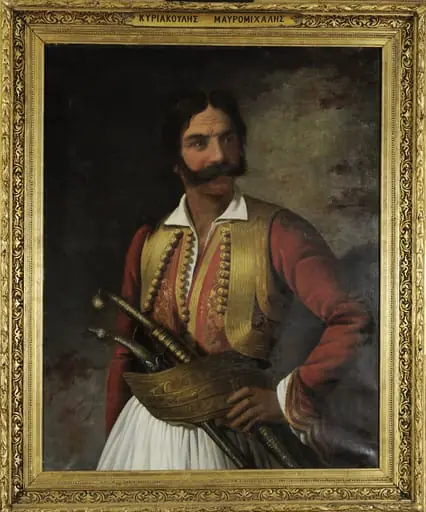 Προσωπογραφία του Κυριακούλη Μαυρομιχάλη
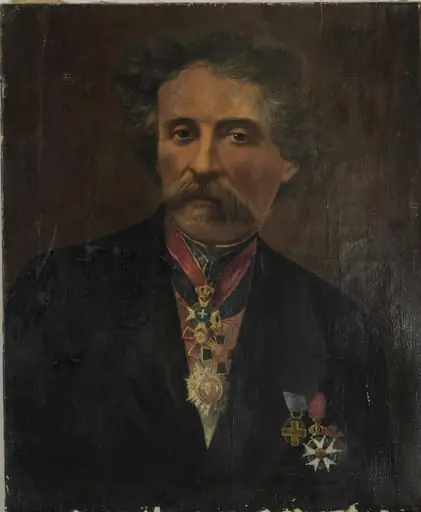 Προσωπογραφία του Γεωργίου Σκούφου
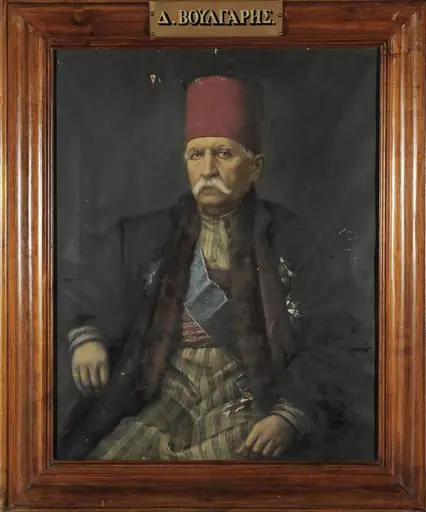 Προσωπογραφία του Δημητρίου Βούλγαρη
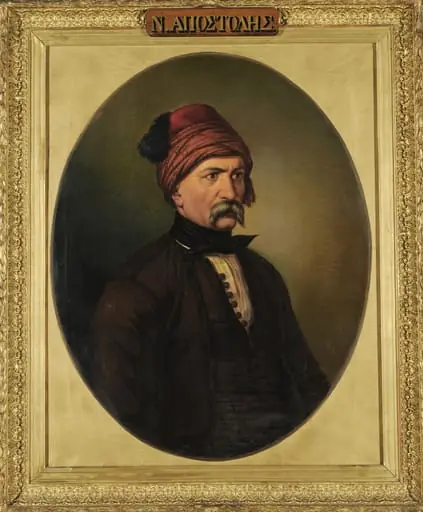 Προσωπογραφία του Νικολάου Αποστόλη
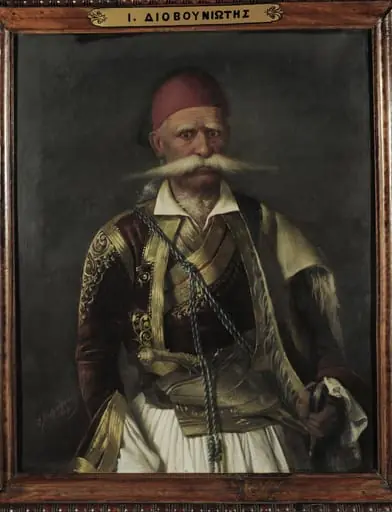 Προσωπογραφία του Ιωάννη Διοβουνιώτη
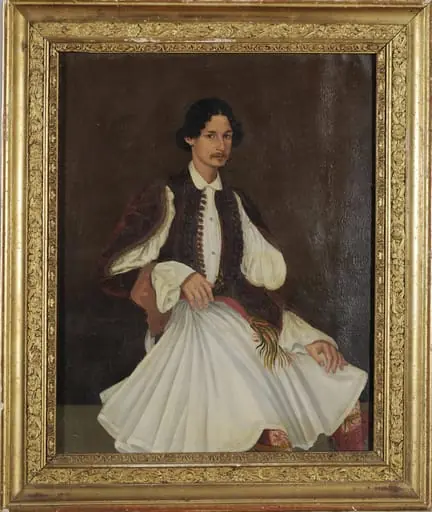 Προσωπογραφία του Αχιλλέα Αγγέλου Γέροντα
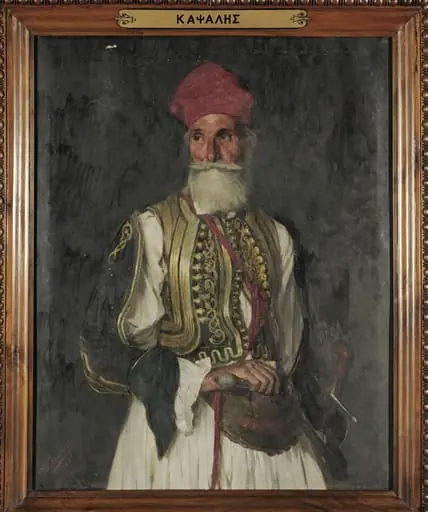 Προσωπογραφία του Χρήστου Καψάλη
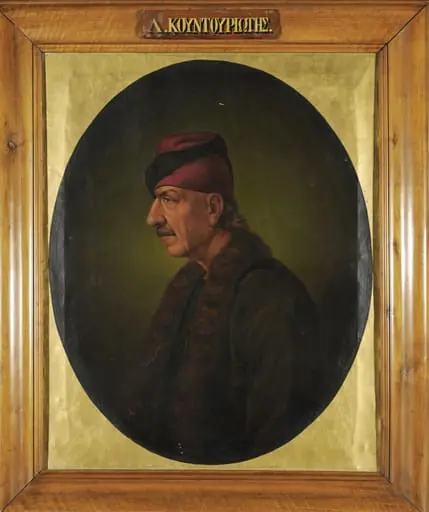 Προσωπογραφία του Λαζάρου Κουντουριώτη
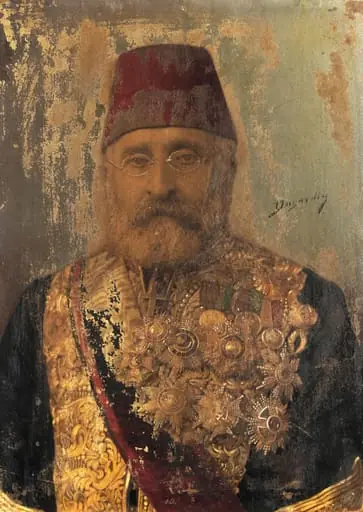 Προσωπογραφία του Σπυρίδωνος Μαυρογένη
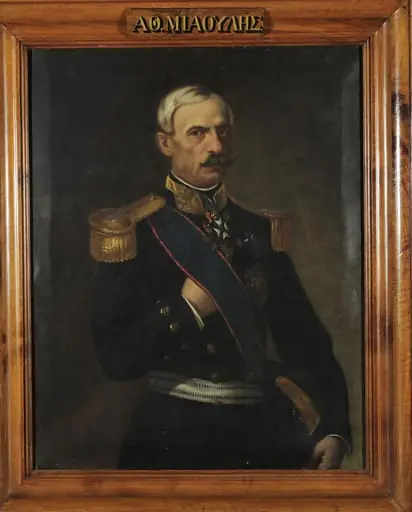 Προσωπογραφία του Αθανασίου Μιαούλη
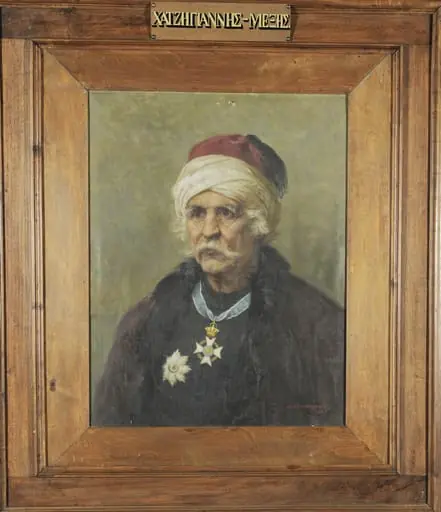 Προσωπογραφία του Χατζηγιάννη Μέξη
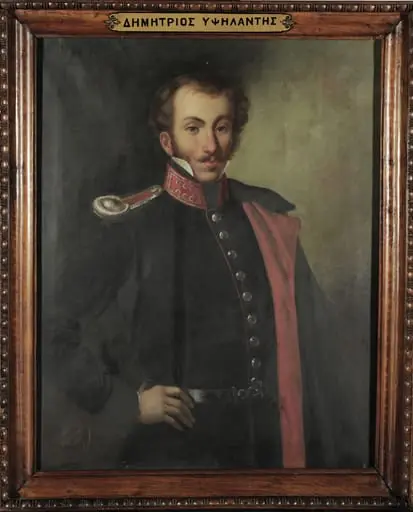 Προσωπογραφία του Δημητρίου Υψηλάντη