Artwork
Rupture XVII
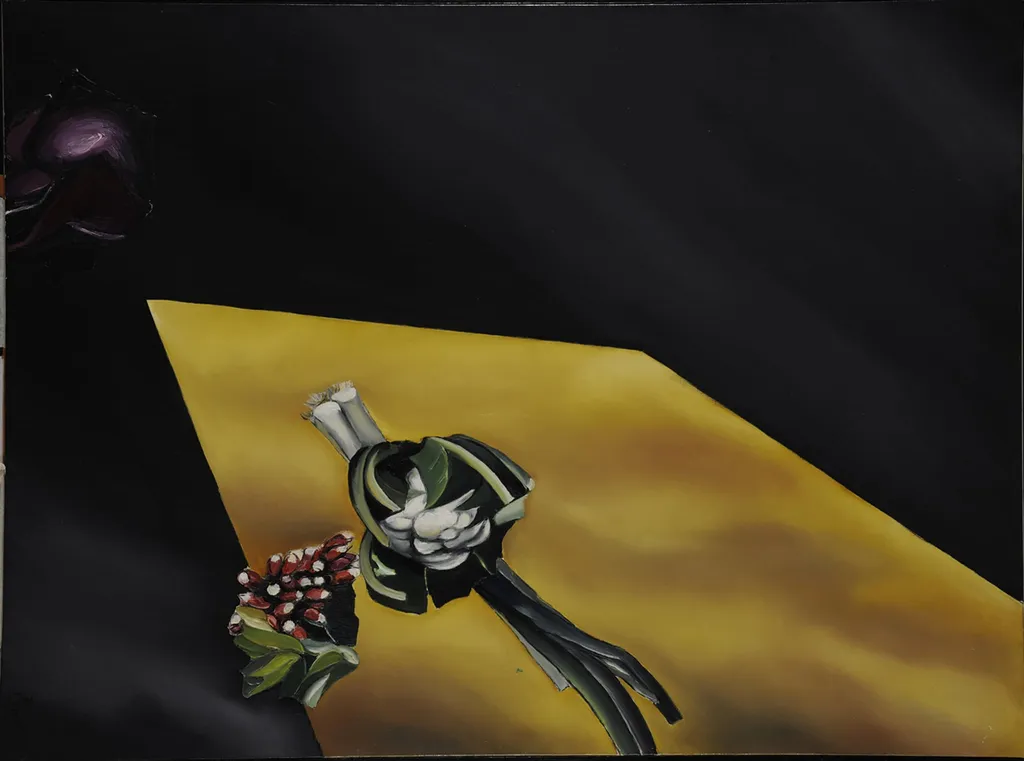
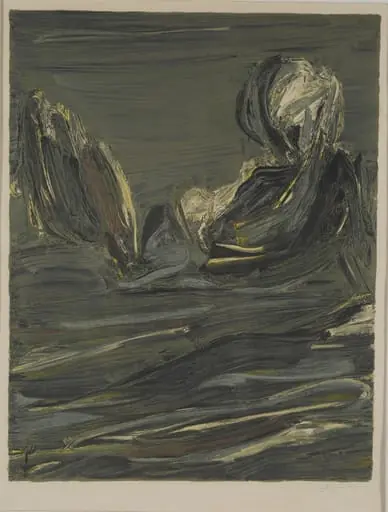
Rupture XVII is an unspecified painting by Vyzantios Ntikos. It dates from 1991 and is held in the collection of the Historical & Ethnological Society of Greece.
About this work
Overview
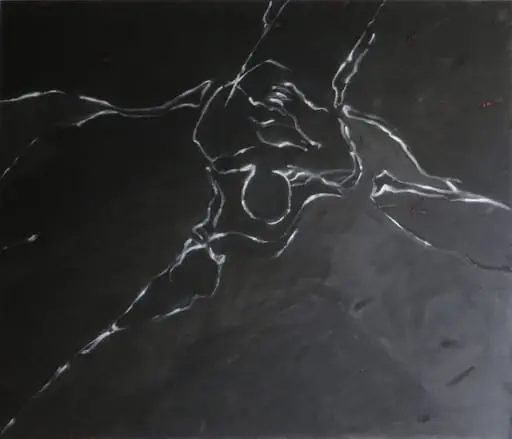
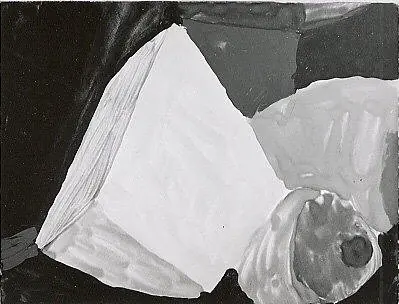
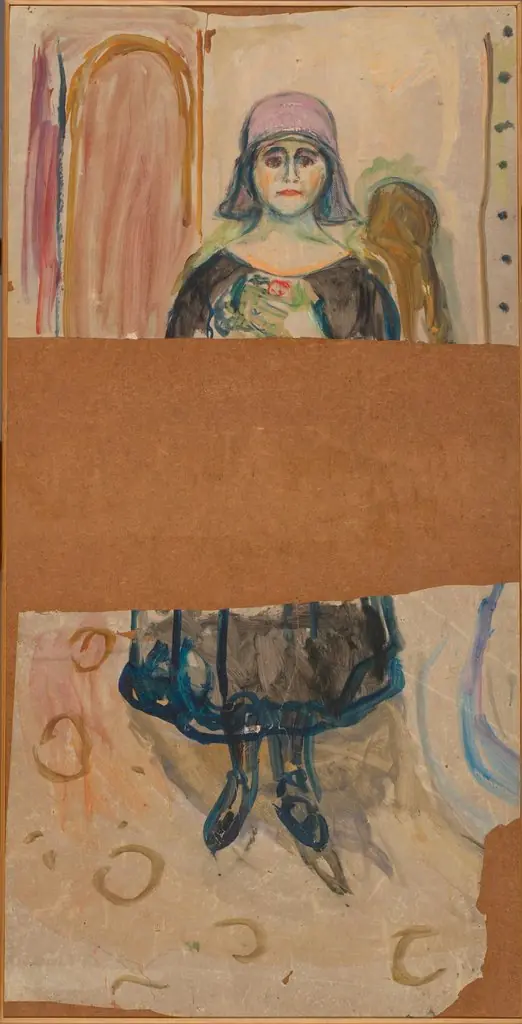
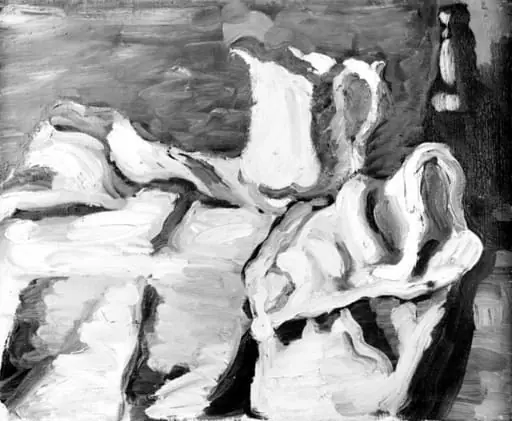
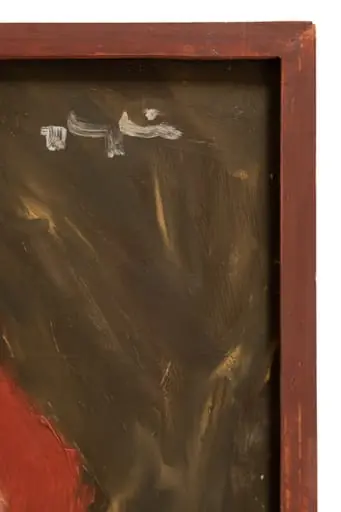
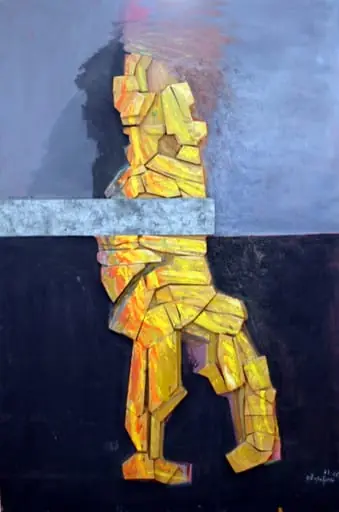
Rupture XVII, created by Vyzantios Ntikos in 1991, is a painting housed at the Museum of Ethnography. Characterized by a bold, contrasting color scheme, the work features geometric and organic elements against a dark backdrop.
Subject & Meaning
The composition centers on a yellow diamond, accompanied by a white flower and green leaves on its left, bound by a black ribbon extending to the right. Additional purple flowers occupy the top-left corner, introducing a sense of layered symbolism, though the specific meaning of these elements is not explicitly stated in available information.
Technique & Style
Ntikos employs a striking visual contrast, with the vibrant yellow diamond prominently set against a black background. The incorporation of white and green accents, along with purple flowers, suggests an intentional balance of warmth and coolness in the palette.
History & Provenance
Created in 1991, Rupture XVII is part of Vyzantios Ntikos's body of work from this period. The painting is currently in the collection of the Museum of Ethnography, indicating its recognition within the realm of ethnographic or culturally significant art.
Context
While specific contextual details about Rupture XVII are limited, its creation in 1991 places it within the broader artistic landscape of the late 20th century, potentially reflecting influences or responses to contemporary themes, though these are not explicitly documented in the provided information.
Legacy
The legacy of Rupture XVII is reflected in its institutional housing at the Museum of Ethnography, suggesting an enduring cultural or artistic value. However, detailed information on its impact, exhibitions, or scholarly analysis beyond its museum presence is not provided.
Artist & collection
Artist
Greek painter Vyzantios Ntikos made abstract canvases full of bold shapes and raw energy.
Museum
Historical & Ethnological Society of Greece
Continue through works from the same source collection.