Artwork
Bosphore
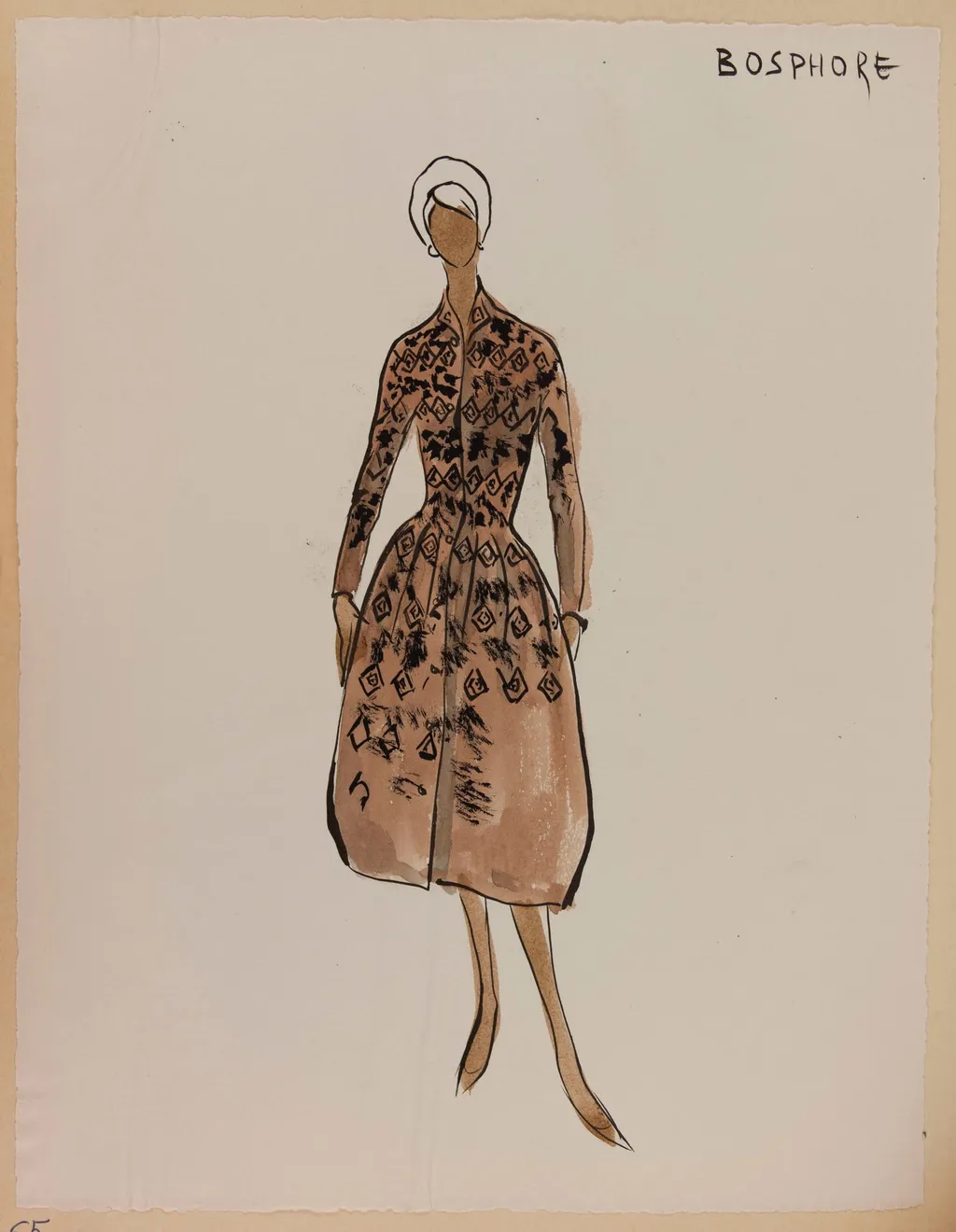
Bosphore is a drawing by Marie-Louise Carven. It dates from 1956 and is held in the collection of the Palais Galliera - Musée de la Mode de la Ville de Paris.
About this work
Overview
Created around 1956 by French designer Marie-Louise Carven, *Bosphore* is a fashion sketch in ink or pencil, now held by the Museum of Ethnography.
Created around 1956 by French designer Marie-Louise Carven, *Bosphore* is a fashion sketch in ink or pencil, now held by the Museum of Ethnography. It reflects Carven’s approach to design—elegant, restrained, and attuned to the proportions of petite figures. Unlike finished garments, this work captures the immediacy of the design process, offering insight into her creative method before production.
Subject & Meaning
The sketch depicts a slender female figure in a long, high-necked dress with long sleeves and a subtle A-line flare. The posture is upright and composed, suggesting poise rather than movement. The title *Bosphore* evokes the strait between Europe and Asia, hinting at a cultural or geographic inspiration, though the design itself remains abstract, prioritizing form over narrative.
Technique & Style
Carven rendered the figure with swift, confident lines, giving the sketch a spontaneous quality. The dress is adorned with a repeating geometric pattern of black diamonds against a pale ground, creating visual rhythm without ornamentation. The absence of shading or detail emphasizes silhouette and structure, aligning with mid-century modernist sensibilities in fashion illustration.
History & Provenance
Carven founded her fashion house in 1945 and was among the early couturiers to develop ready-to-wear collections. *Bosphore* likely originated as a design study during the mid-1950s, a period when her brand was expanding its aesthetic reach. The sketch entered the Museum of Ethnography’s collection as part of a broader effort to document fashion as cultural artifact.
Context
In the 1950s, fashion illustration increasingly served as a bridge between concept and production. Carven’s work stood apart for its simplicity and focus on wearable forms, contrasting with the more elaborate styles of Parisian haute couture. Her use of light fabrics and geometric motifs reflected postwar desires for practicality and clean lines in women’s clothing.
Legacy
*Bosphore* exemplifies Carven’s influence on accessible, well-proportioned design. Her integration of geometric patterns and ready-to-wear principles helped reshape mid-century fashion. The sketch remains a quiet testament to her belief that elegance need not be ornate—clarity of form and thoughtful proportion could define modern style.
Artist & collection
Artist
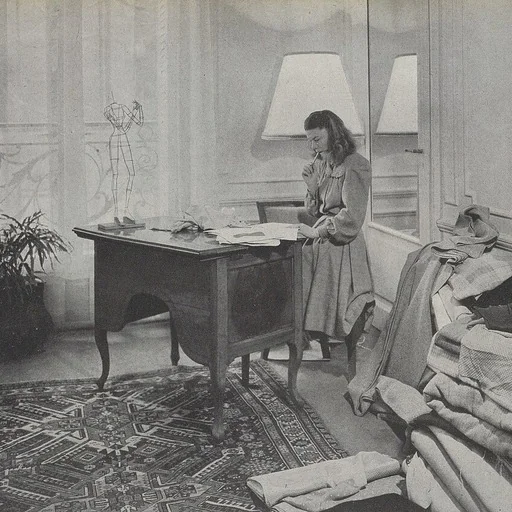
Marie-Louise Carven (31 August 1909 – 8 June 2015), born Carmen de Tommaso, was a French fashion designer who founded the house of Carven in 1945.

Museum
Palais Galliera - Musée de la Mode de la Ville de Paris
Continue through works from the same source collection.
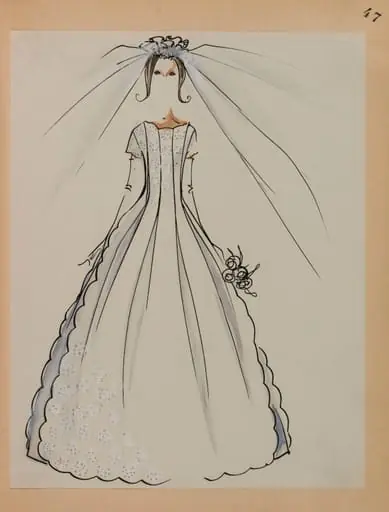 Robe de mariée festonnée et son voile
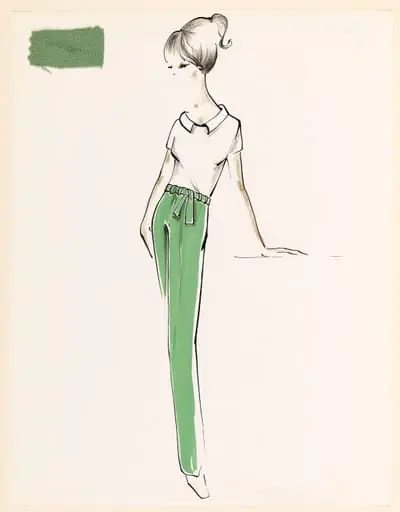 Haut blanc à manches courtes et pantalon vert à ceinture nouée
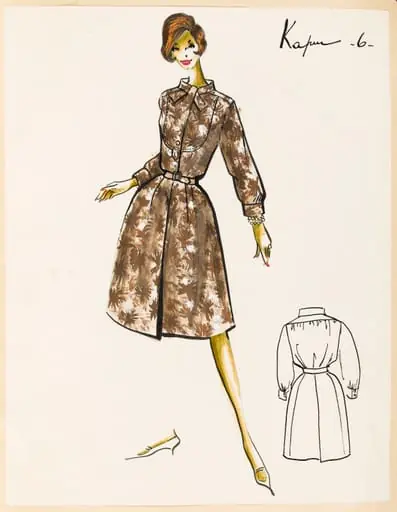 Kapur
Kapur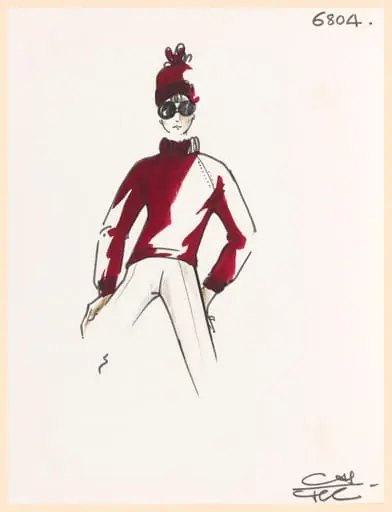 Pull-over à manches longues pourpre, bonnet assorti, pantalon et lunettes de soleil
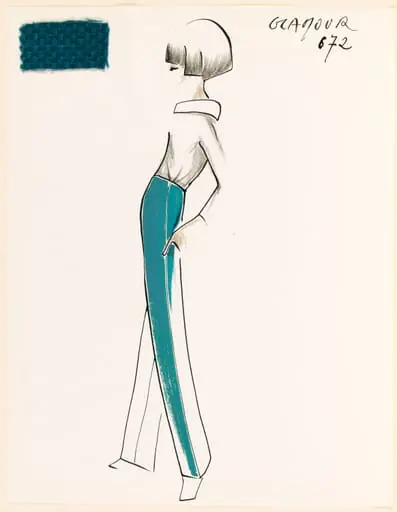 GLAMOUR
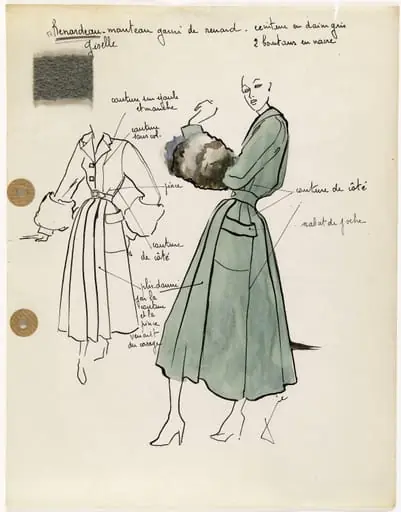 'Renardeau'
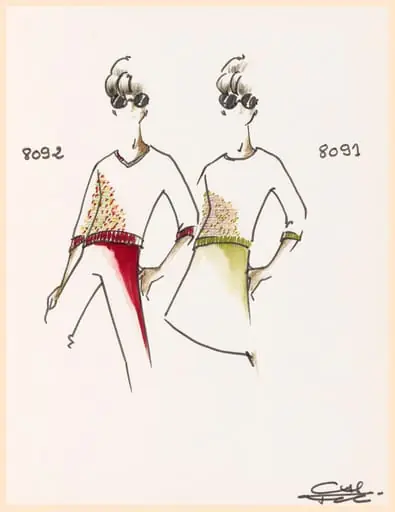 Pull-over à manches trois quarts et à encolure V à motifs multicolores, pantalon cerise et lunettes de soleil
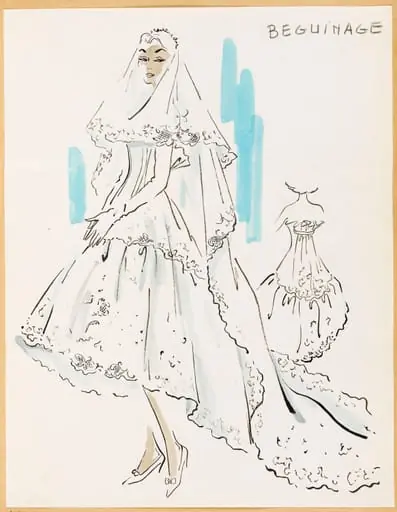 Béguinage