Artwork
'Cécilia'
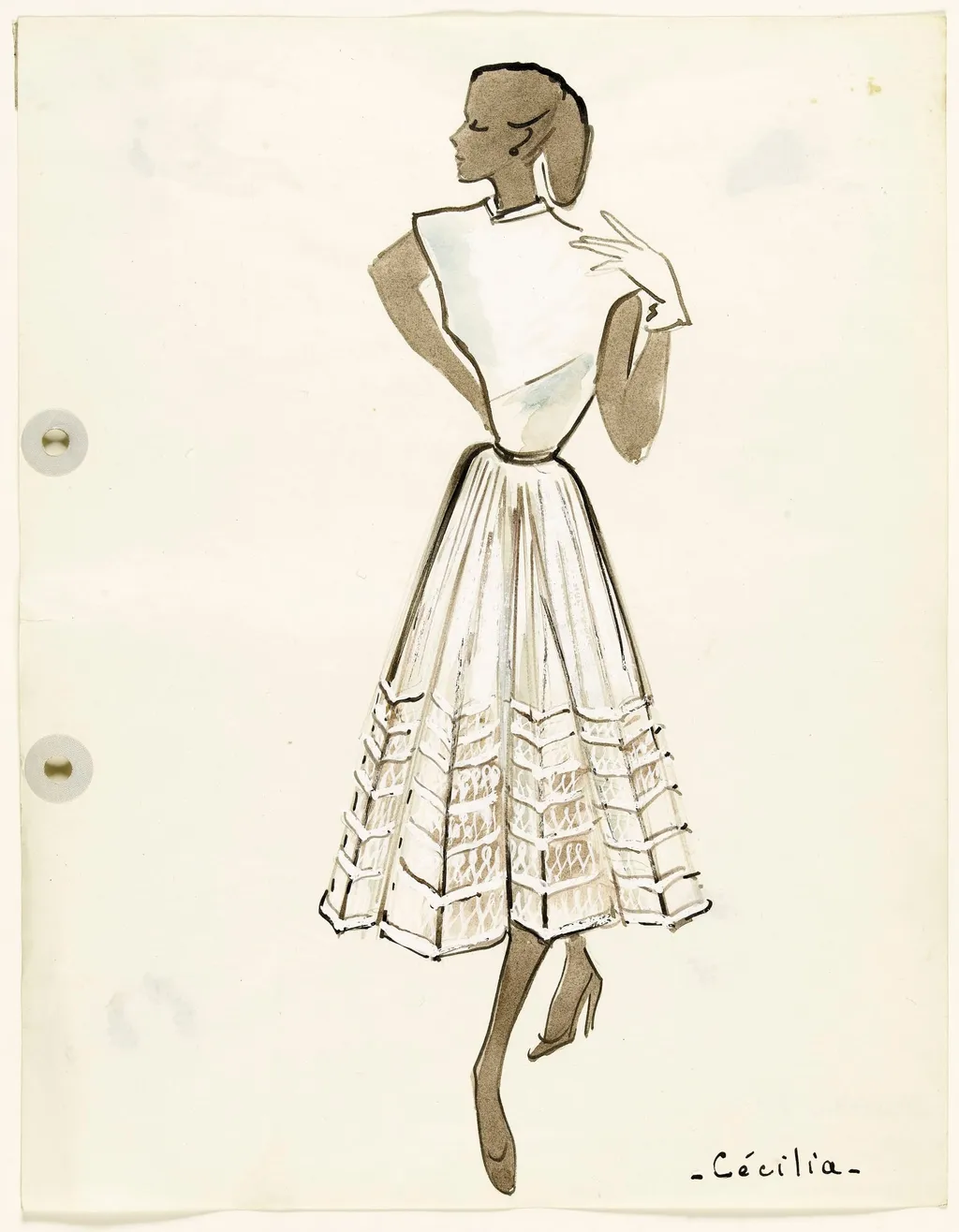
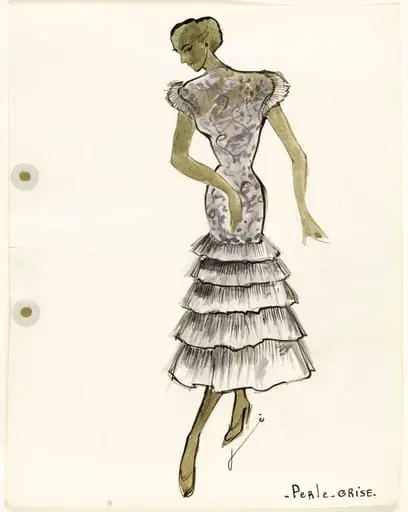
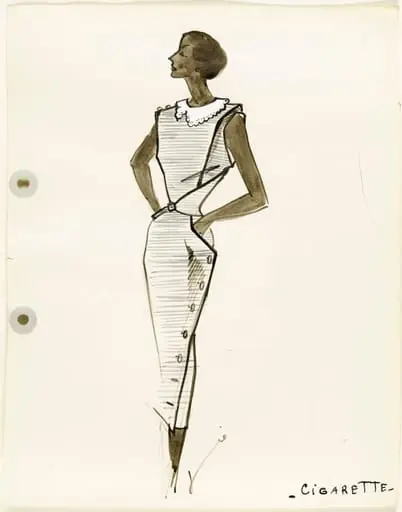
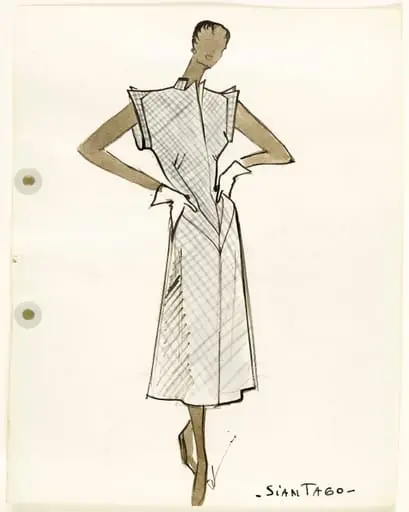
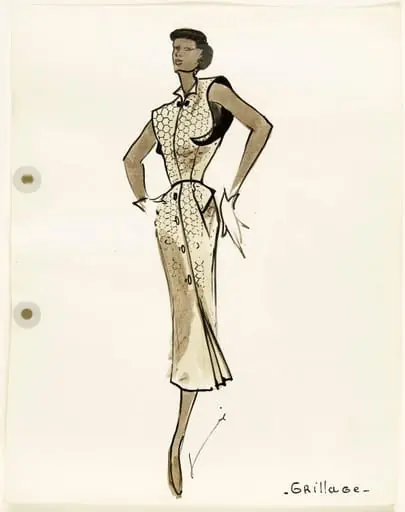
'Cécilia' is a drawing by Marie-Louise Carven. It dates from 1951 and is held in the collection of the Palais Galliera - Musée de la Mode de la Ville de Paris.
About this work
Overview
It resides in the Museum of Ethnography’s collection, where it is valued as a document of mid-century design practice rather than a haute couture artifact.
Created in 1951 by French designer Marie-Louise Carven, *Cécilia* is a hand-drawn fashion sketch that captures a dress design from her early prêt-à-porter collection. Though not a finished garment, the drawing reflects Carven’s approach to accessible elegance, emphasizing simplicity and movement. It resides in the Museum of Ethnography’s collection, where it is valued as a document of mid-century design practice rather than a haute couture artifact.
Subject & Meaning
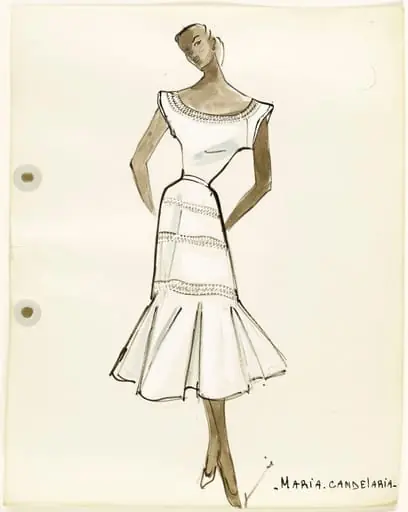
The sketch depicts a woman in a sleeveless dress with a boat neckline and a flared, layered skirt, likely intended for everyday wear. The name 'Cécilia,' scrawled in the corner, may refer to the model, the dress, or a personal reference. The design avoids ornamentation, suggesting a focus on functionality and quiet refinement—qualities central to Carven’s vision of modern femininity for petite figures in postwar France.
Technique & Style
Carven rendered the design with loose, fluid lines and minimal shading, conveying texture and volume without detail. The pleated skirt is suggested through rhythmic, overlapping strokes, while the fabric’s lightness is implied by the sketch’s airiness. The unrehearsed quality indicates it was a working study, not a presentation piece, aligning with the spontaneous energy of design ideation rather than commercial illustration.
History & Provenance
Marie-Louise Carven founded her fashion house in 1945 and pioneered ready-to-wear in Parisian couture circles. *Cécilia* emerged during this transitional period, when designers began adapting haute couture principles to mass production. The sketch entered the Museum of Ethnography’s collection as part of a broader effort to document everyday fashion as cultural expression, rather than elite art.
Context
In early 1950s France, postwar economic constraints and shifting social roles encouraged practical clothing. Carven’s designs responded to this by offering stylish yet affordable options for working women. *Cécilia* reflects a broader movement away from rigid formality toward relaxed silhouettes, aligning with the rise of ready-to-wear and the democratization of fashion in Western Europe.
Legacy
Though not widely exhibited, *Cécilia* stands as a quiet testament to Carven’s role in reshaping fashion accessibility. Its presence in an ethnographic museum underscores how design sketches, once considered ephemeral, now serve as historical records of cultural change. The drawing’s modesty and clarity continue to inform discussions on the intersection of utility and aesthetics in modern dress.
Artist & collection
Artist
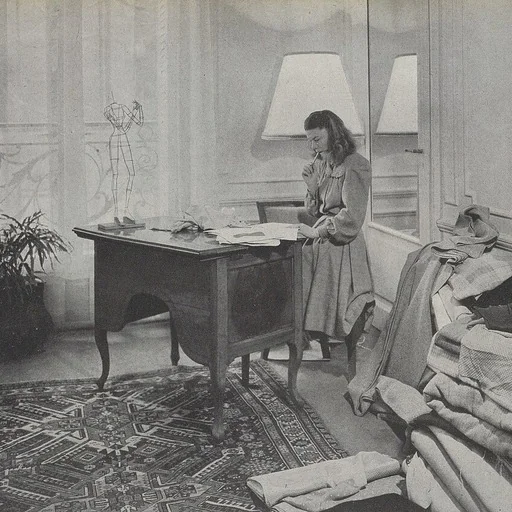
Marie-Louise Carven (31 August 1909 – 8 June 2015), born Carmen de Tommaso, was a French fashion designer who founded the house of Carven in 1945.
Museum
Palais Galliera - Musée de la Mode de la Ville de Paris
Continue through works from the same source collection.
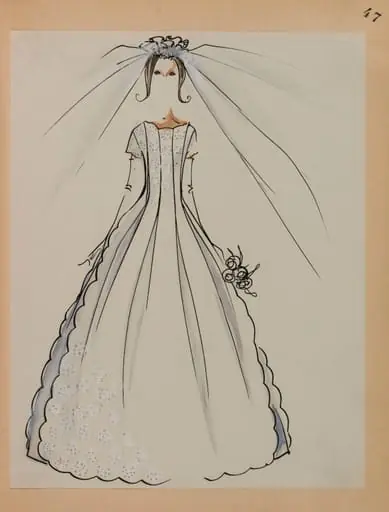 Robe de mariée festonnée et son voile
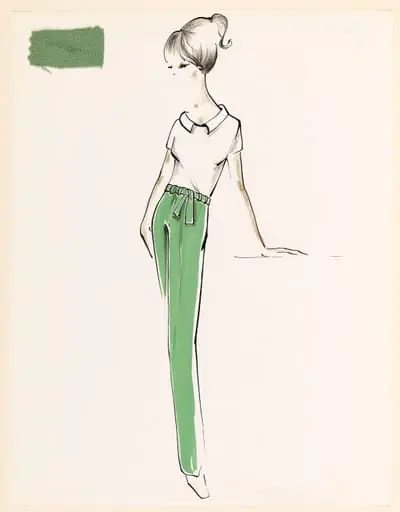 Haut blanc à manches courtes et pantalon vert à ceinture nouée
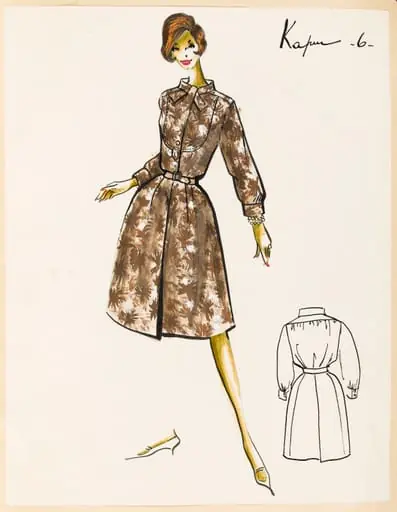 Kapur
Kapur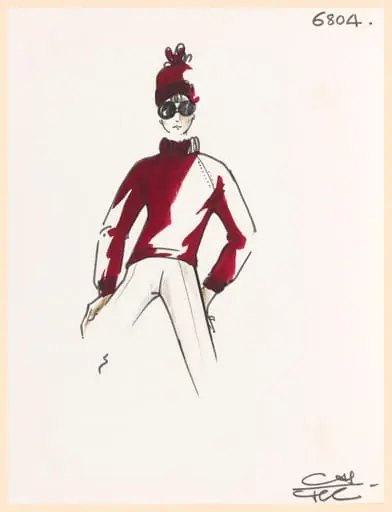 Pull-over à manches longues pourpre, bonnet assorti, pantalon et lunettes de soleil
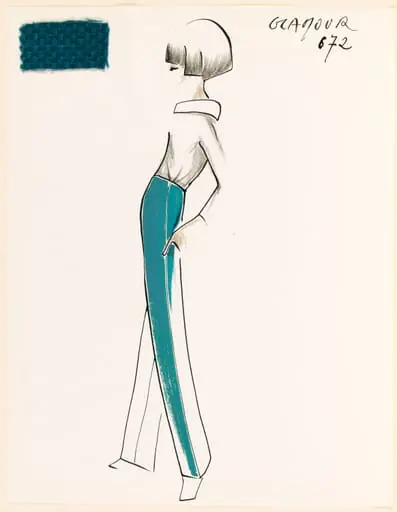 GLAMOUR
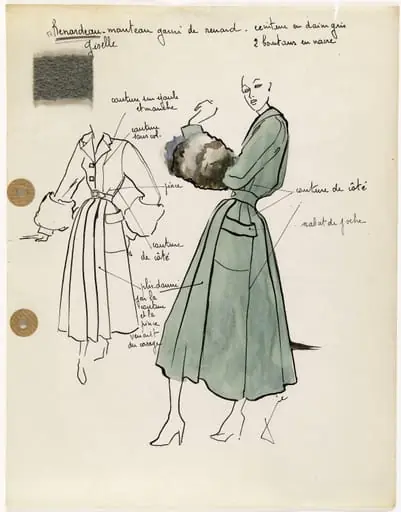 'Renardeau'
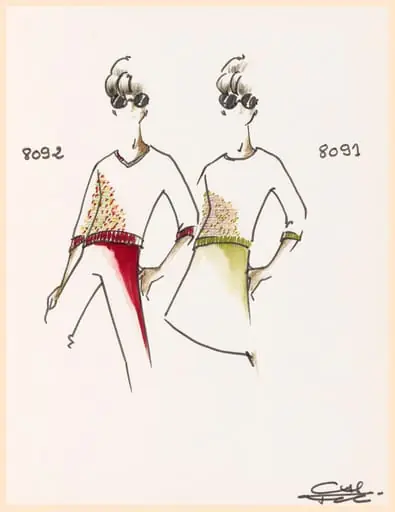 Pull-over à manches trois quarts et à encolure V à motifs multicolores, pantalon cerise et lunettes de soleil
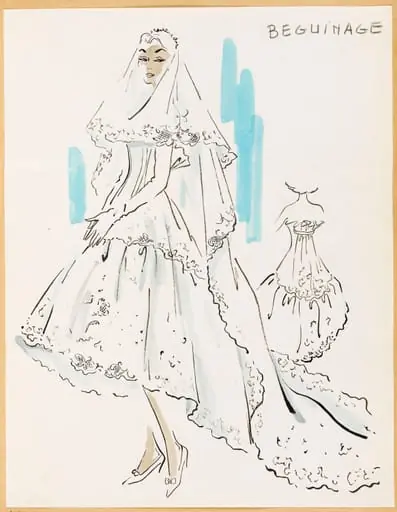 Béguinage