Artwork
'Caravelle'
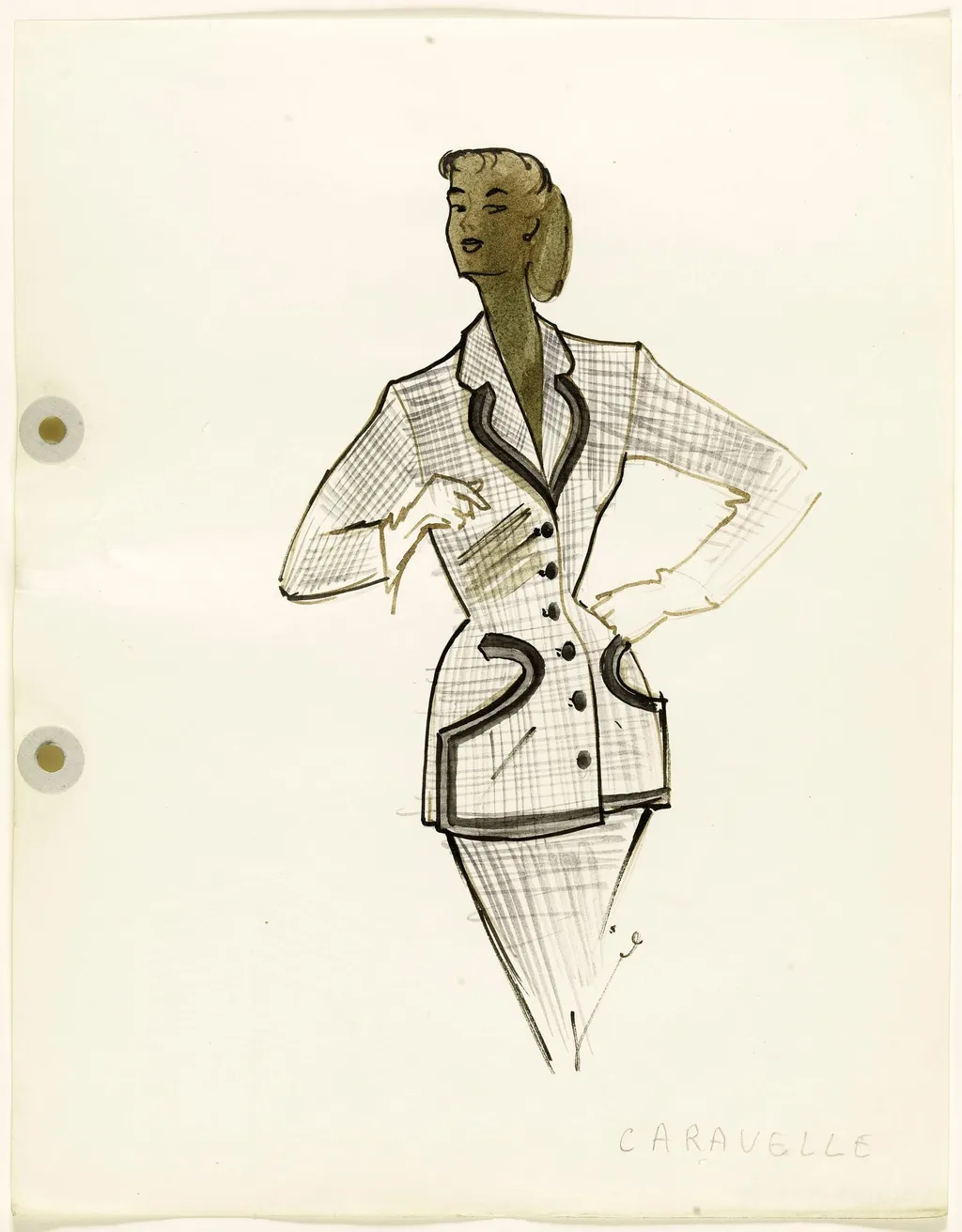
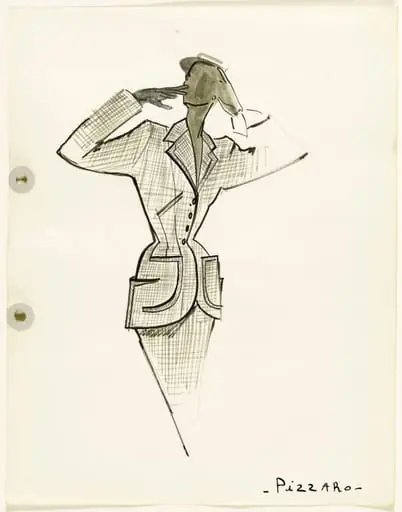
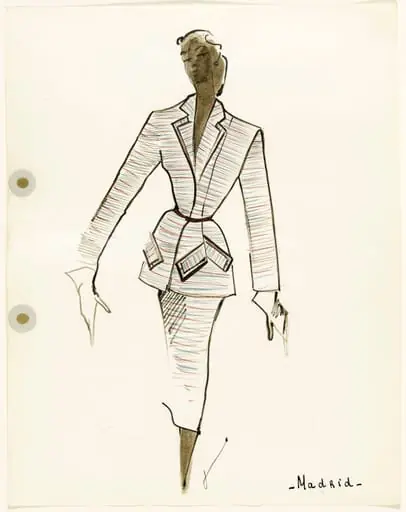
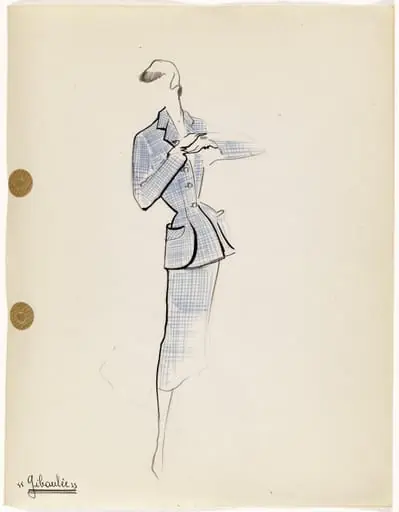
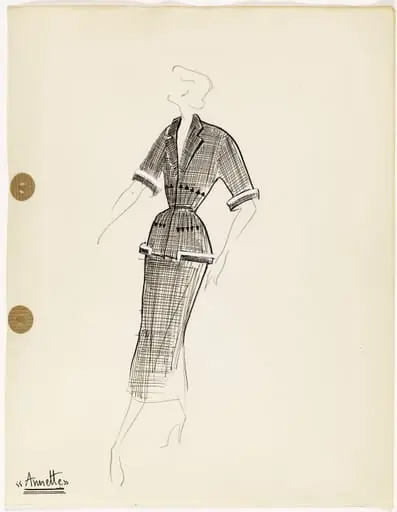
'Caravelle' is a drawing by Marie-Louise Carven. It dates from 1951 and is held in the collection of the Palais Galliera - Musée de la Mode de la Ville de Paris.
About this work
Overview
The image captures a moment of poised stillness, aligning with her vision of accessible elegance.
Caravelle is a pencil drawing by French designer Marie-Louise Carven, created in 1951. It depicts a woman in a plaid suit, rendered with clean, confident lines and minimal shading. Though held in the Museum of Ethnography, the work is not a garment but a fashion illustration, reflecting Carven’s approach to design as both art and practicality. The image captures a moment of poised stillness, aligning with her vision of accessible elegance.
Subject & Meaning
The figure in Caravelle stands with hands on hips and head turned sideways, conveying quiet confidence. The plaid suit—jacket with lapels and a fitted pencil skirt—suggests urban sophistication tailored for everyday life. Carven designed for women who sought refinement without formality, and this illustration embodies that ethos: practical clothing made expressive through posture and pattern, rejecting ostentation in favor of understated grace.
Technique & Style
The drawing employs bold, uncluttered lines with loose, sketchy rendering of the plaid pattern, avoiding heavy shading or detail. This restrained technique emphasizes form and movement over ornamentation. Carven’s hand favors clarity and rhythm, mirroring her fashion philosophy: lightweight fabrics, simple cuts, and functional beauty. The minimalism enhances the sense of ease, making the garment feel lived-in rather than staged.
History & Provenance
Created in 1951, Caravelle originated from Carven’s atelier as part of her design process, later acquired by the Museum of Ethnography. Unlike haute couture pieces, it was never mass-produced but preserved as a conceptual artifact. Its inclusion in a museum of ethnography signals recognition of fashion as cultural expression, not merely luxury. The drawing’s survival reflects its value as a document of mid-century design thinking.
Context
In postwar Paris, Carven was among the first to champion prêt-à-porter, making stylish clothing available beyond elite clients. Her focus on petite figures and breathable materials like gingham and lace responded to changing lifestyles. Caravelle emerges from this shift—neither haute couture nor mass-market, but a bridge between them, illustrating how fashion could be both personal and progressive in a society rebuilding itself.
Legacy
Caravelle stands as a quiet testament to Carven’s influence on modern fashion’s democratization. Her emphasis on wearable elegance, refined simplicity, and attention to the female form prefigured later movements toward functional design. Though not widely exhibited, the drawing remains a key artifact in understanding how fashion illustration served as both design tool and cultural statement in mid-century France.
Artist & collection
Artist
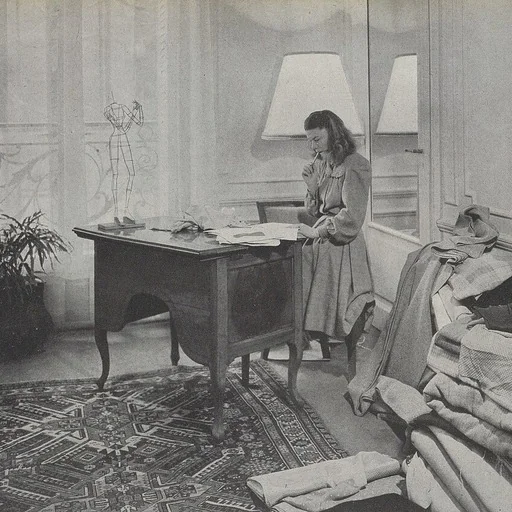
Marie-Louise Carven (31 August 1909 – 8 June 2015), born Carmen de Tommaso, was a French fashion designer who founded the house of Carven in 1945.
Museum
Palais Galliera - Musée de la Mode de la Ville de Paris
Continue through works from the same source collection.
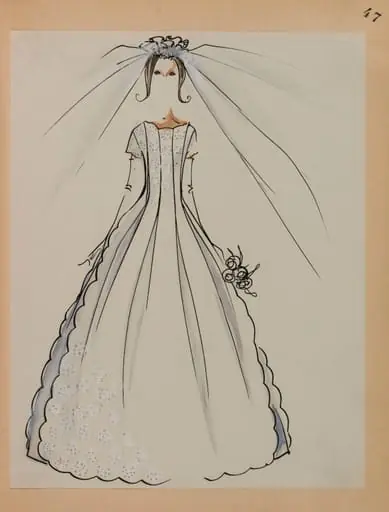 Robe de mariée festonnée et son voile
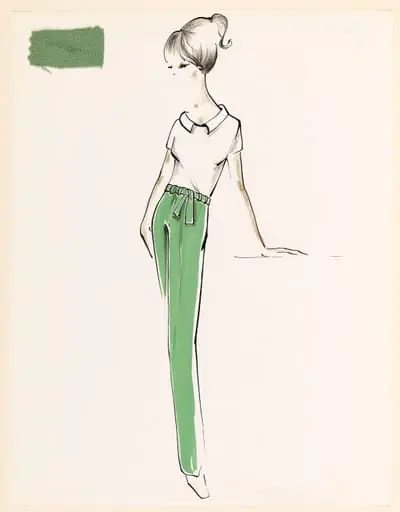 Haut blanc à manches courtes et pantalon vert à ceinture nouée
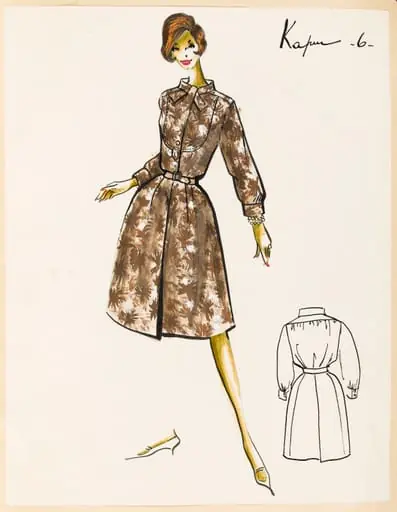 Kapur
Kapur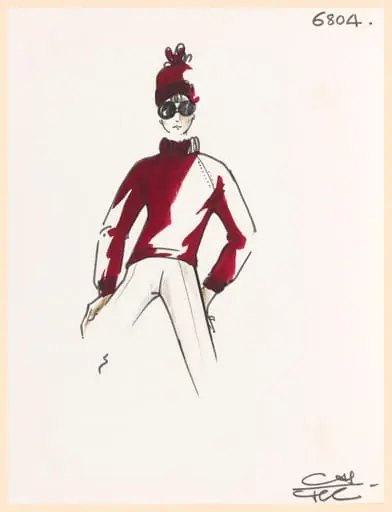 Pull-over à manches longues pourpre, bonnet assorti, pantalon et lunettes de soleil
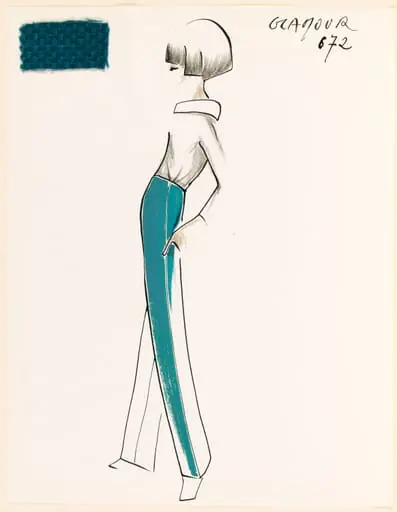 GLAMOUR
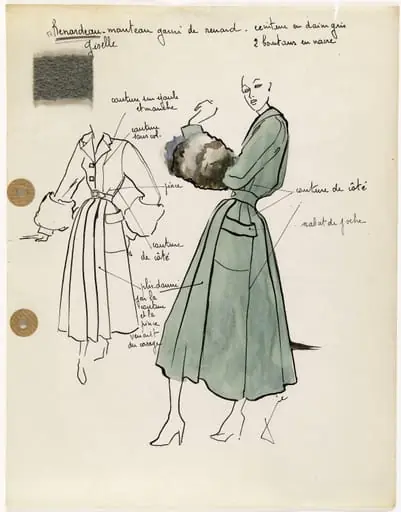 'Renardeau'
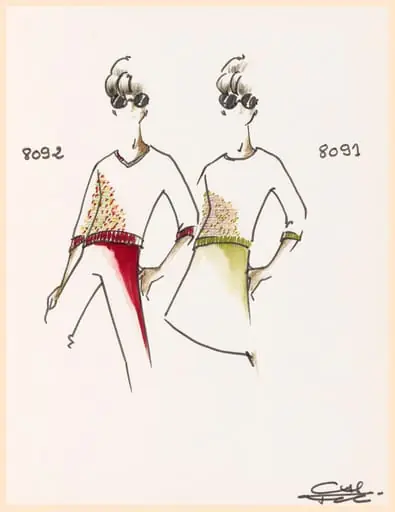 Pull-over à manches trois quarts et à encolure V à motifs multicolores, pantalon cerise et lunettes de soleil
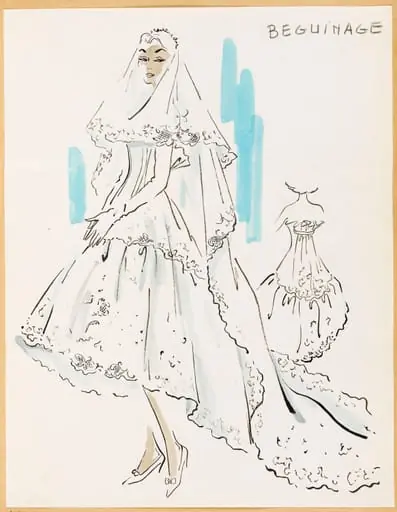 Béguinage