Artwork
Coquelicot
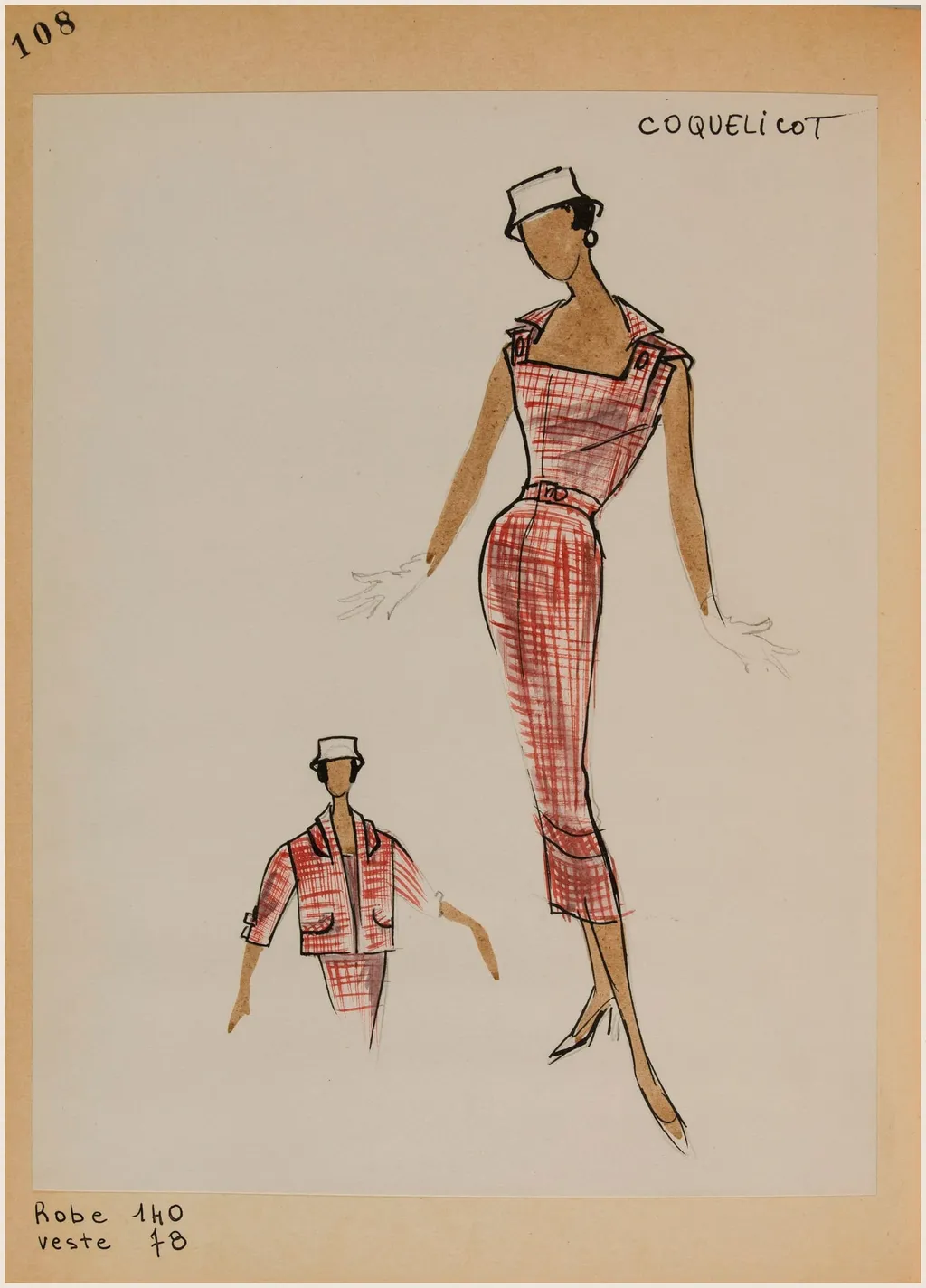
Coquelicot is a drawing by Marie-Louise Carven. It dates from 1956 and is held in the collection of the Palais Galliera - Musée de la Mode de la Ville de Paris.
About this work
One is a full-length dress with a belt, while the other is a shorter jacket with pockets.
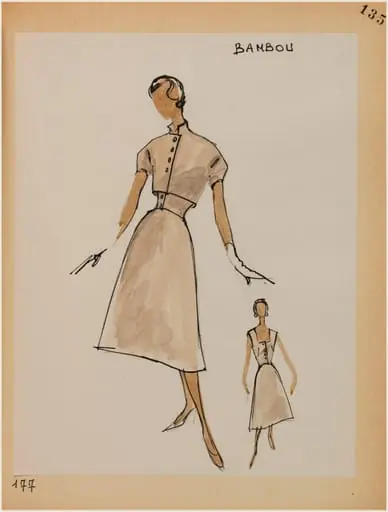
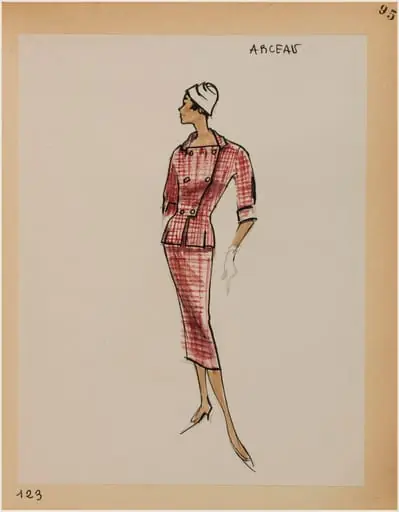
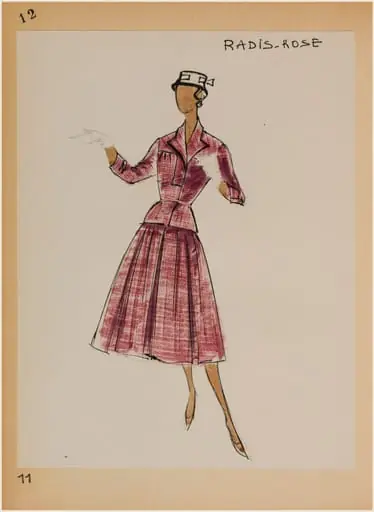
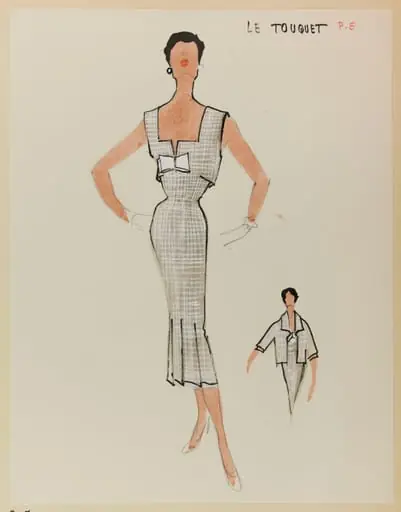
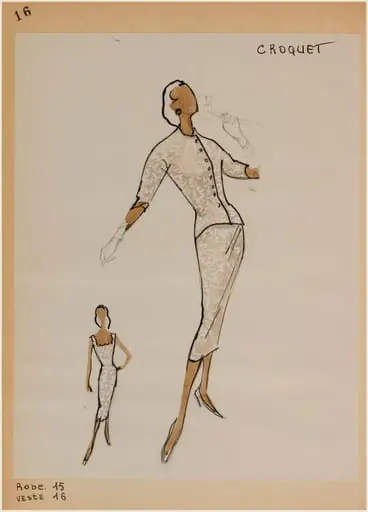
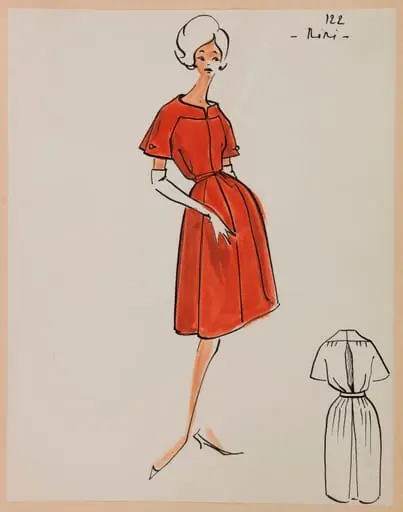
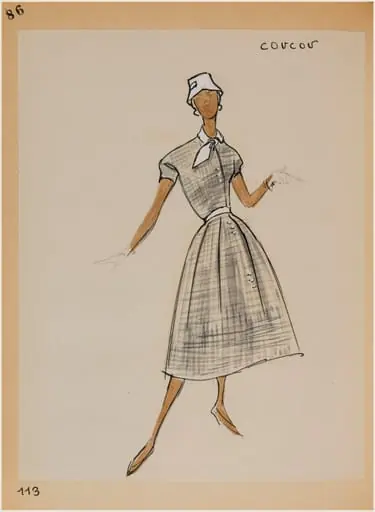
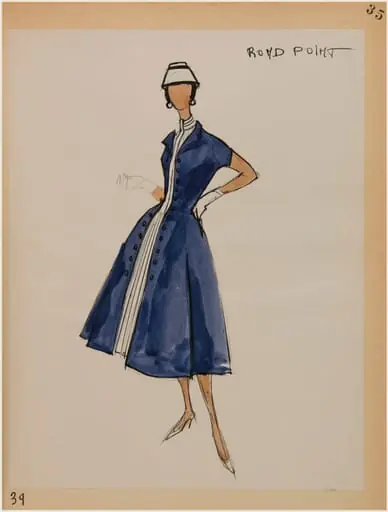
This sketch shows two figures wearing matching red-and-white checkered outfits. One is a full-length dress with a belt, while the other is a shorter jacket with pockets. Both have wide-brimmed hats and simple shoes.
The drawing is labeled "Coquelicot," which means poppy in French, and was made in 1956. The lines are loose but precise, focusing on shapes and fabric folds.
Next, look up Marie-Louise Carven to see more of her fashion sketches.
Overview
Created in 1956, *Coquelicot* is a fashion sketch by Marie-Louise Carven, founder of the Parisian label Carven established in 1945. The drawing captures two figures in coordinated red-and-white checkered attire, reflecting Carven’s interest in accessible, well-tailored designs. It was produced during a period when she was pioneering ready-to-wear fashion in France. The sketch is now part of the Museum of Ethnography’s collection, where it serves as a record of mid-century French design practice.
Subject & Meaning
The two figures in *Coquelicot* wear matching ensembles: one in a belted dress, the other in a short jacket with pockets, both paired with wide-brimmed hats and plain footwear. The title, meaning 'poppy' in French, suggests a connection to natural vibrancy and seasonal renewal, possibly evoking the boldness of the red-and-white pattern. The uniformity of the outfits implies a sense of harmony and cohesion, aligning with Carven’s aesthetic of refined simplicity for everyday wear.
Technique & Style
Carven rendered the figures with loose, confident lines that emphasize silhouette and fabric structure over fine detail. The folds of the clothing are suggested with economical strokes, conveying movement and texture without overworking the surface. The drawing’s precision lies in its clarity of form, reflecting Carven’s background in tailoring and her focus on wearable design. The absence of color or shading keeps attention on the cut and proportion of the garments.
History & Provenance
Produced in 1956, *Coquelicot* originates from Carven’s active design years, shortly after she launched one of France’s earliest prêt-à-porter lines. The sketch likely served as a prototype or presentation piece for a seasonal collection. It entered the Museum of Ethnography’s holdings as part of a broader effort to document fashion as cultural artifact, distinguishing it from traditional fine art collections by emphasizing its functional and social context.
Context
In postwar France, fashion was shifting from exclusive haute couture toward more democratic ready-to-wear. Carven, one of the first Parisian designers to embrace this change, designed for women seeking practical elegance. *Coquelicot* reflects this transition—its cheerful pattern and wearable forms catered to a growing middle class. The sketch embodies a broader cultural movement toward accessible, modern dress that prioritized function without sacrificing style.
Legacy
Though Carven’s label declined in prominence after her retirement, *Coquelicot* endures as a testament to her role in reshaping French fashion. The sketch illustrates how design innovation could be both modest and influential, prioritizing wearability over spectacle. Its preservation in an ethnographic museum underscores fashion’s significance as a reflection of social norms and daily life in mid-20th century Europe.
Artist & collection
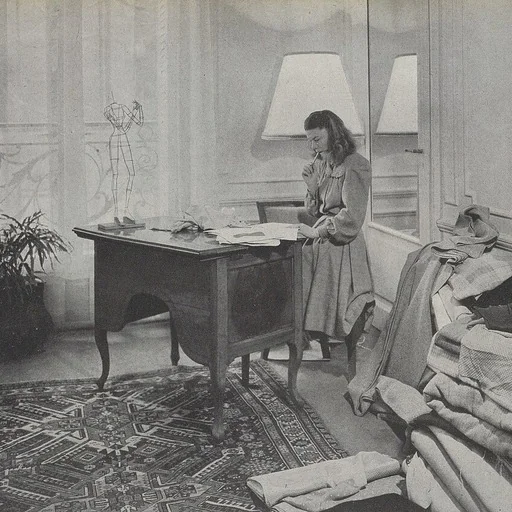
Artist
Marie-Louise Carven (31 August 1909 – 8 June 2015), born Carmen de Tommaso, was a French fashion designer who founded the house of Carven in 1945.
Museum
Palais Galliera - Musée de la Mode de la Ville de Paris
Continue through works from the same source collection.
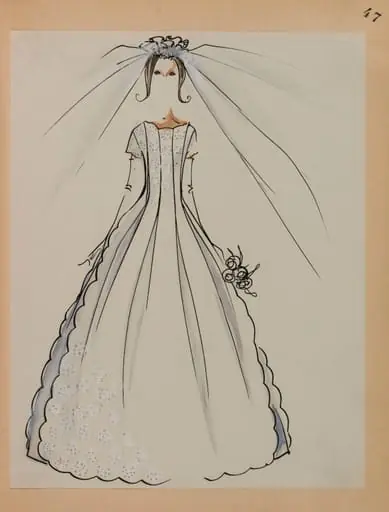 Robe de mariée festonnée et son voile
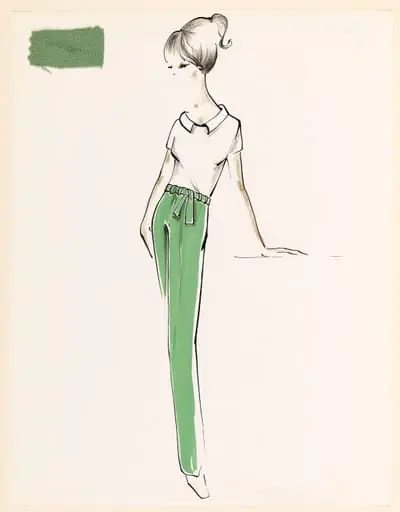 Haut blanc à manches courtes et pantalon vert à ceinture nouée
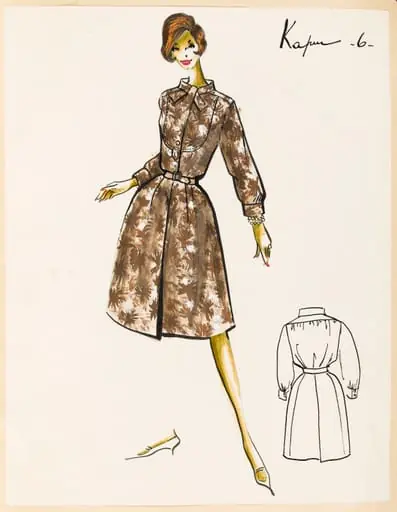 Kapur
Kapur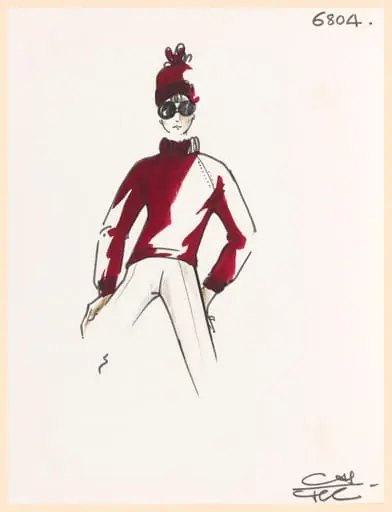 Pull-over à manches longues pourpre, bonnet assorti, pantalon et lunettes de soleil
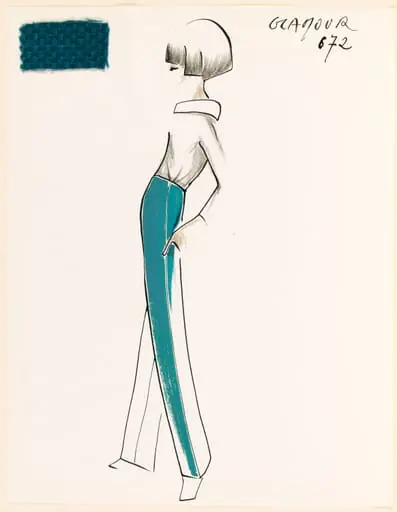 GLAMOUR
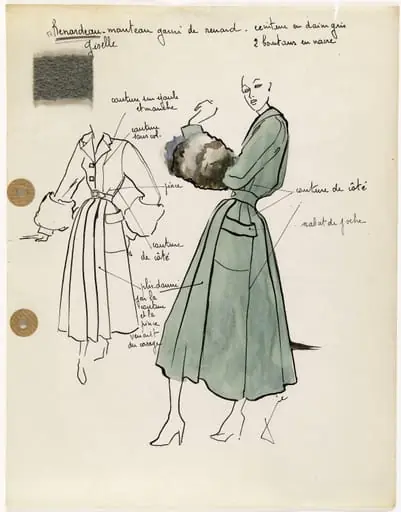 'Renardeau'
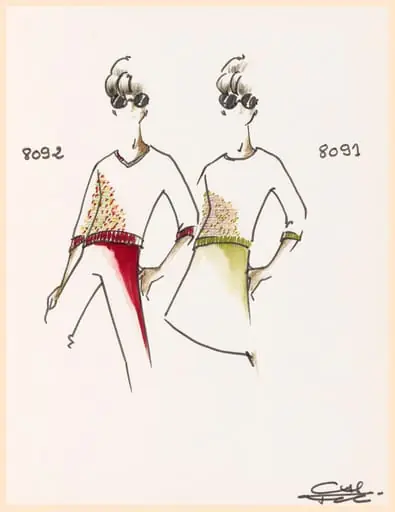 Pull-over à manches trois quarts et à encolure V à motifs multicolores, pantalon cerise et lunettes de soleil
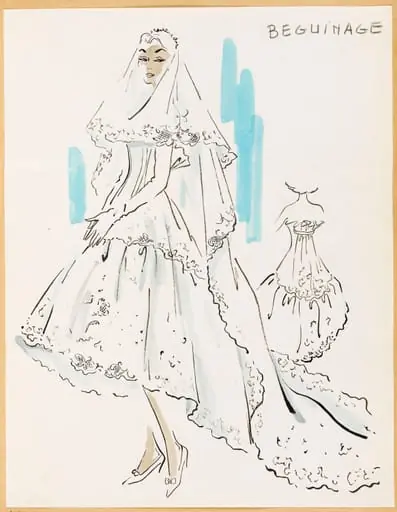 Béguinage