Artwork
Daisy
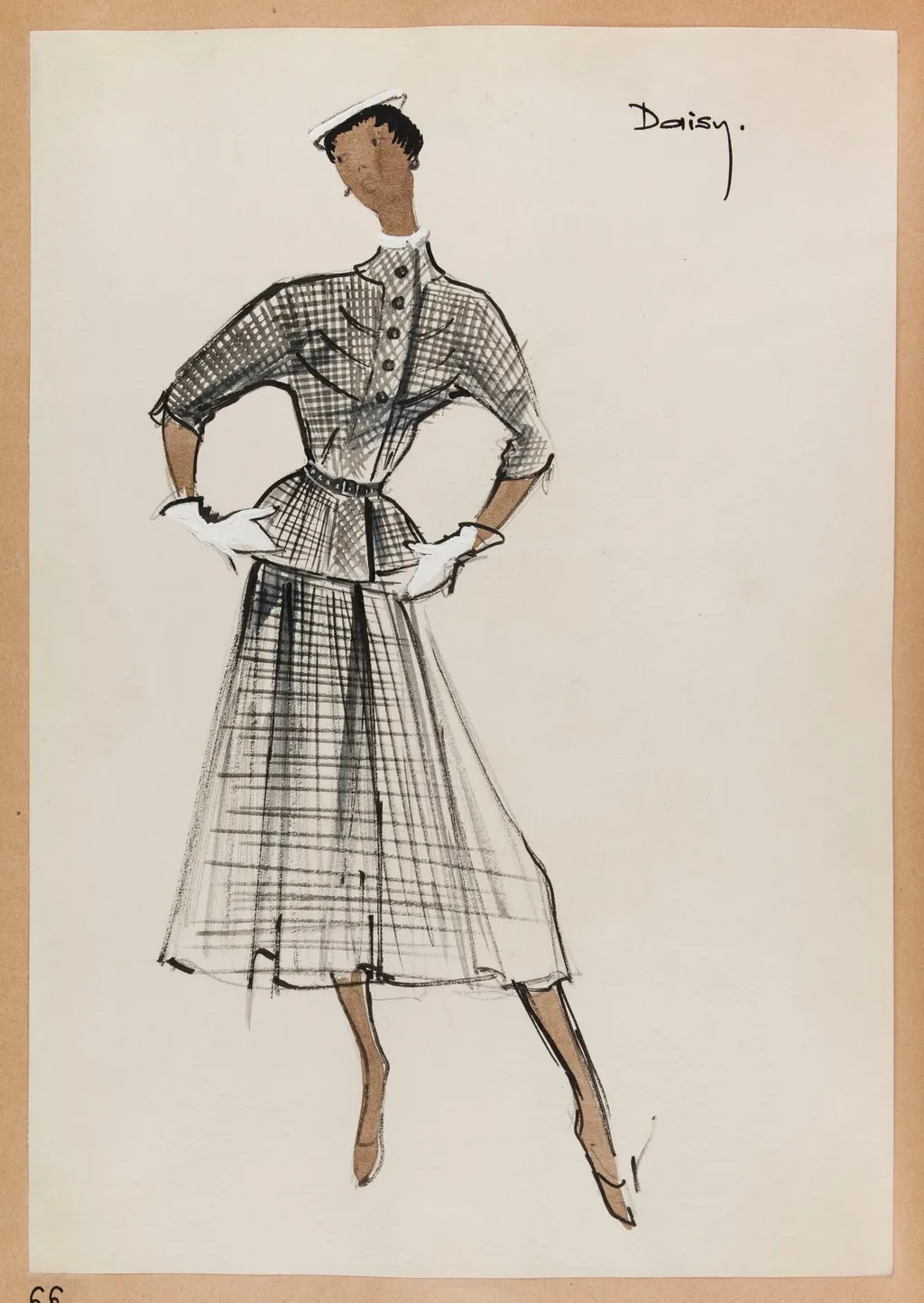
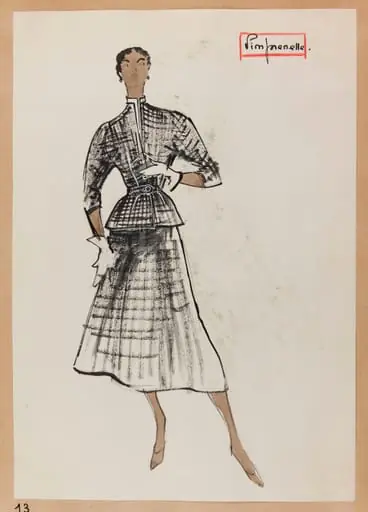
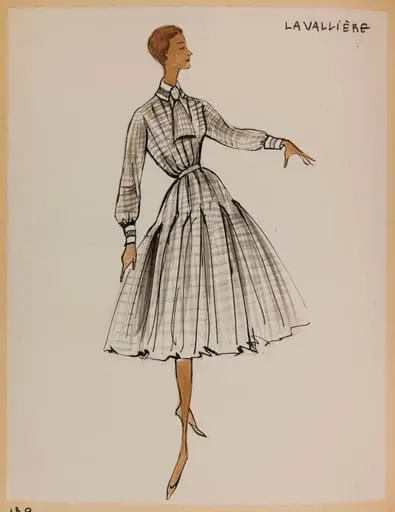
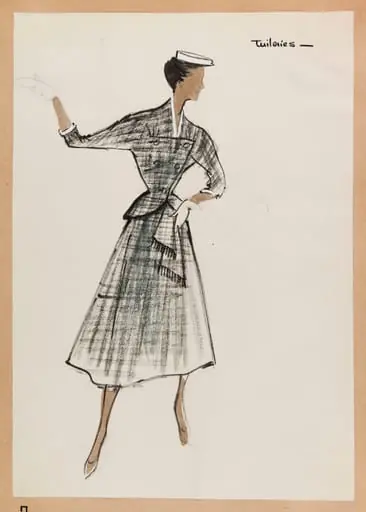
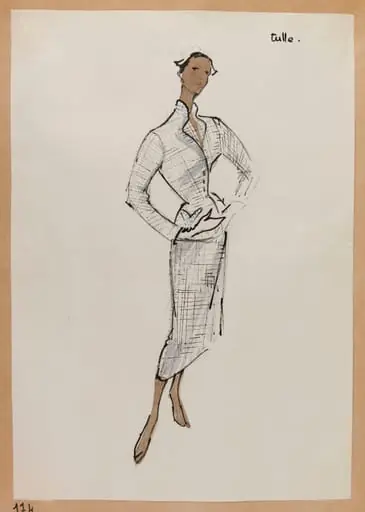
Daisy is a drawing by Marie-Louise Carven. It dates from 1951 and is held in the collection of the Palais Galliera - Musée de la Mode de la Ville de Paris.
About this work
Overview
The work is part of the Museum of Ethnography’s collection, where it is preserved as a record of mid-century French fashion design.
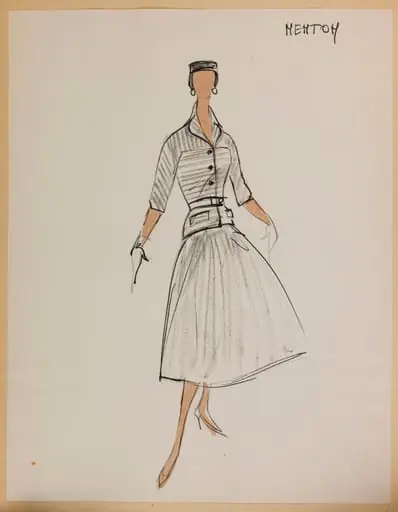
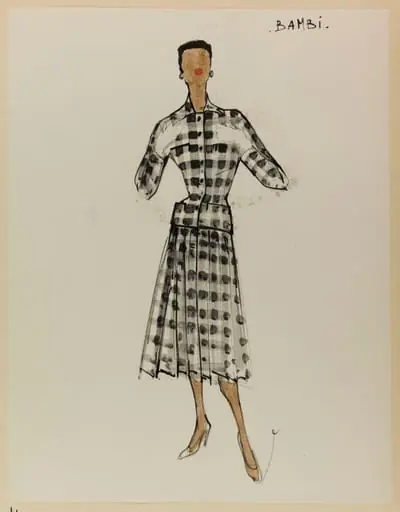
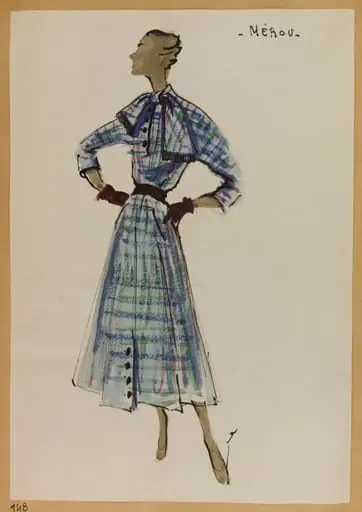
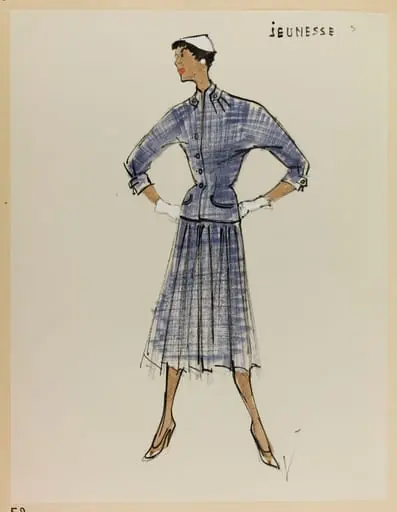
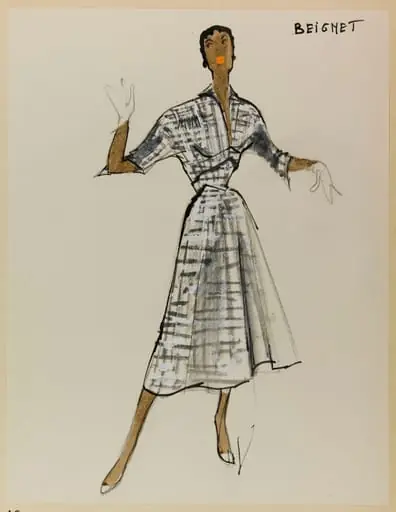
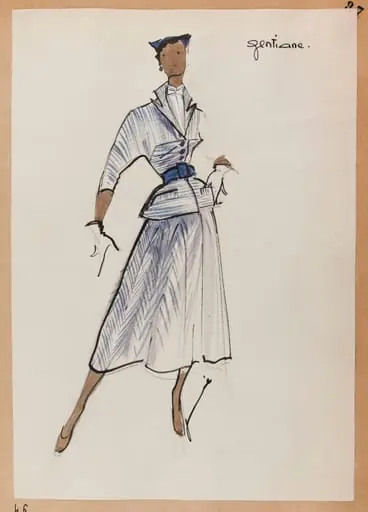
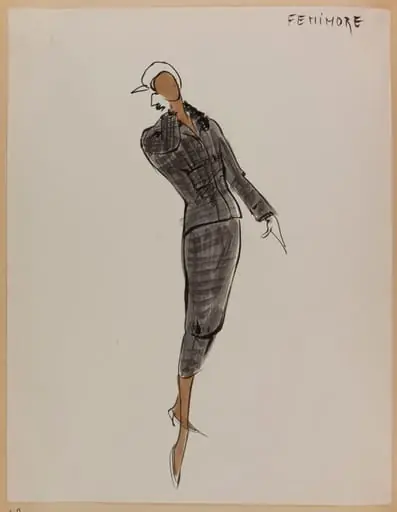
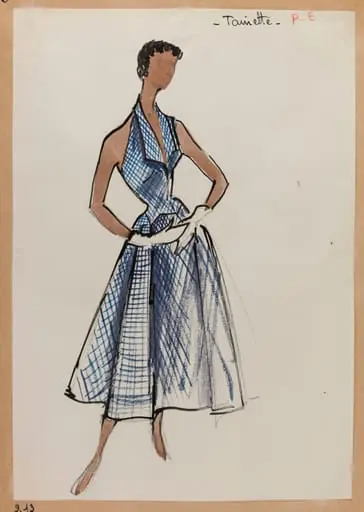
Daisy is a pencil sketch created around 1951 by Marie-Louise Carven, founder of the Parisian fashion house Carven. The drawing depicts a woman in a casual, knee-length ensemble with a checkered jacket and skirt. Executed with swift, assured lines, it reflects Carven’s interest in practical, wearable designs. The signature 'Daisy' in the upper corner suggests a personal or informal designation. The work is part of the Museum of Ethnography’s collection, where it is preserved as a record of mid-century French fashion design.
Subject & Meaning
The figure in the sketch embodies a relaxed, modern woman—her sleeves rolled, posture informal, and hand holding a small, indistinct object. This suggests a moment of everyday life rather than formal presentation. The attire, combining a structured jacket with a flowing skirt, reflects Carven’s focus on adapting couture elegance for the active, petite female body. The sketch functions as a design study, capturing movement and ease, values central to Carven’s approach to postwar fashion.
Technique & Style
Carven employed quick, fluid pencil strokes to define the figure’s form, with minimal shading and no background detail. Hair and hat are rendered with loose, gestural lines, conveying motion and spontaneity. The simplicity of the drawing emphasizes silhouette and proportion over ornamentation. The confident, unhesitant mark-making suggests familiarity with the subject and a focus on capturing essence rather than finish. The absence of color or texture reinforces its role as a preliminary design tool.
History & Provenance
Created during Carven’s early years as a couturier, the sketch dates to a period when she was pioneering ready-to-wear fashion in Paris. It likely served as a design reference for a garment produced in her atelier. The work entered the Museum of Ethnography’s collection as part of a broader effort to document everyday fashion practices, distinguishing it from high couture archives. Its preservation reflects an institutional interest in the material culture of mid-century women’s dress.
Context
In the early 1950s, Parisian fashion was transitioning from exclusive couture to accessible ready-to-wear. Carven, one of the first to launch a prêt-à-porter line, catered to women seeking stylish yet practical clothing. This sketch aligns with that ethos—prioritizing wearability and movement. It also reflects a broader cultural shift toward informal dress after wartime austerity, where simplicity and functionality gained new value in women’s fashion.
Legacy
Daisy stands as a quiet testament to Carven’s influence on democratizing fashion. Though not a finished garment, the sketch preserves the designer’s attention to proportion, ease, and the female form in motion. Its inclusion in a museum of ethnography underscores its value as a cultural artifact—not of elite fashion, but of everyday style. It continues to inform studies on the evolution of women’s clothing and the role of design sketches in fashion history.
Artist & collection
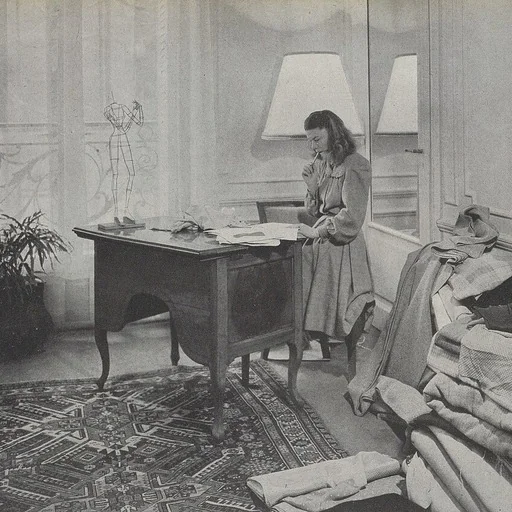
Artist
Marie-Louise Carven (31 August 1909 – 8 June 2015), born Carmen de Tommaso, was a French fashion designer who founded the house of Carven in 1945.
Museum
Palais Galliera - Musée de la Mode de la Ville de Paris
Continue through works from the same source collection.
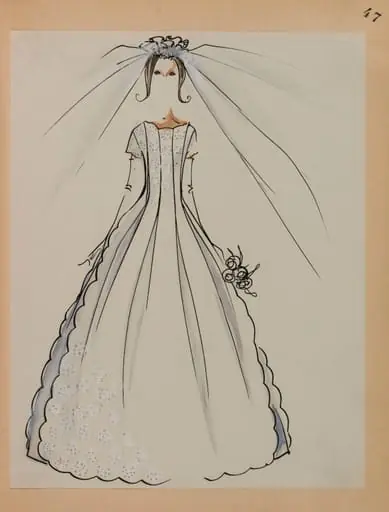 Robe de mariée festonnée et son voile
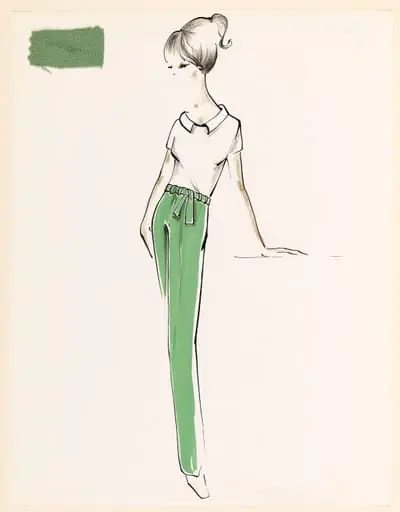 Haut blanc à manches courtes et pantalon vert à ceinture nouée
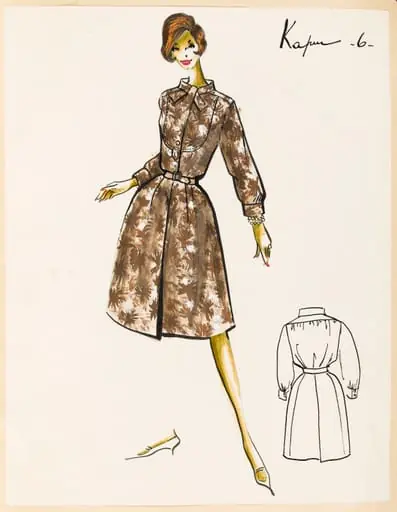 Kapur
Kapur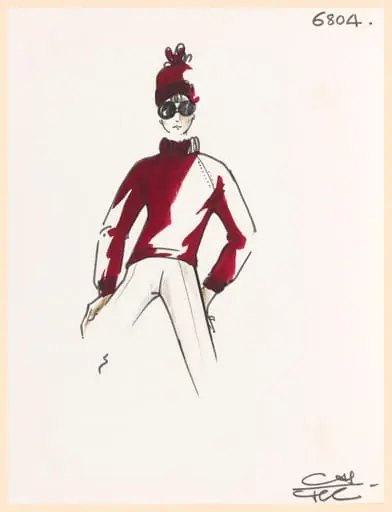 Pull-over à manches longues pourpre, bonnet assorti, pantalon et lunettes de soleil
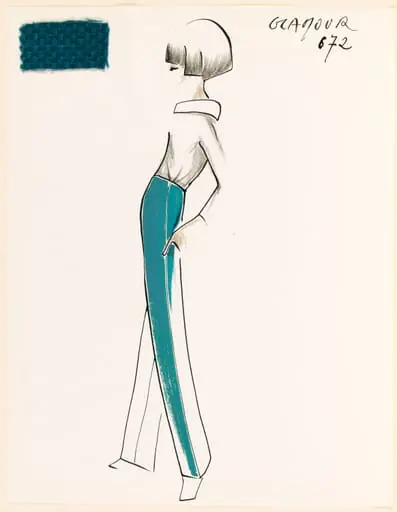 GLAMOUR
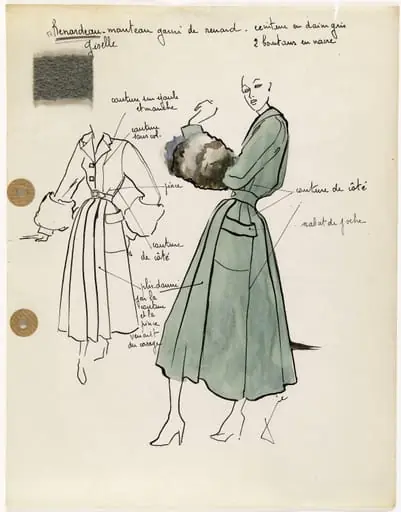 'Renardeau'
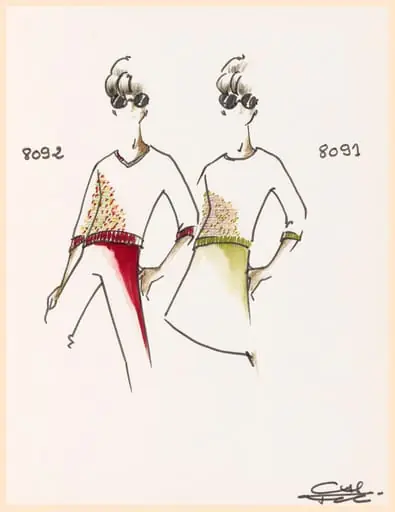 Pull-over à manches trois quarts et à encolure V à motifs multicolores, pantalon cerise et lunettes de soleil
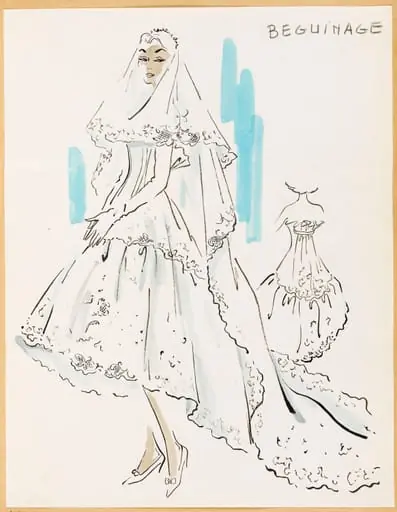 Béguinage