Artwork
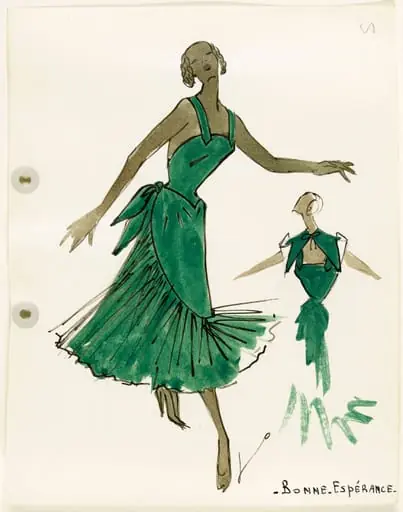
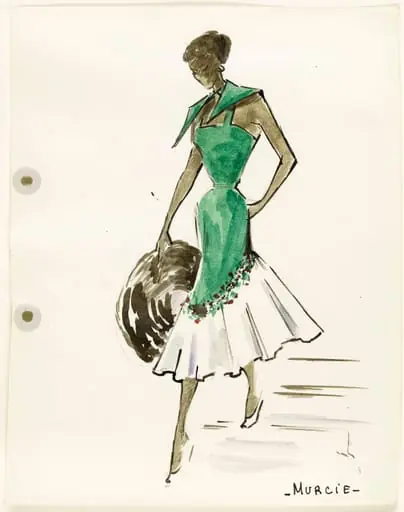
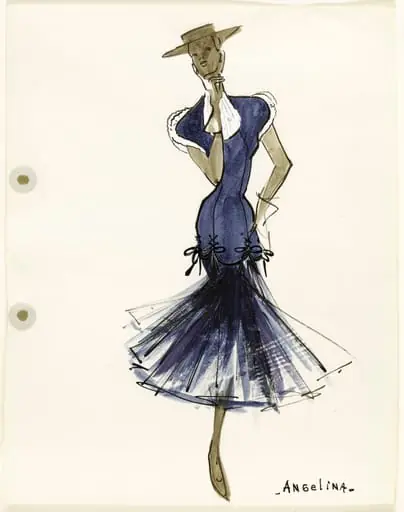
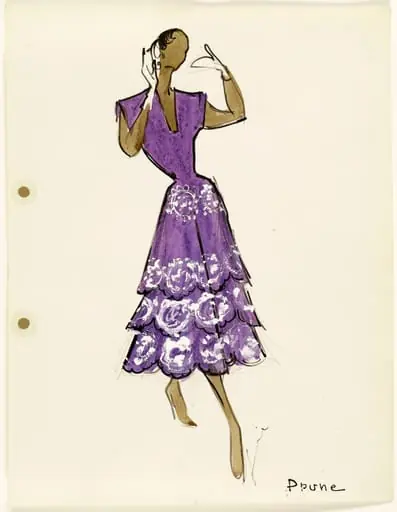
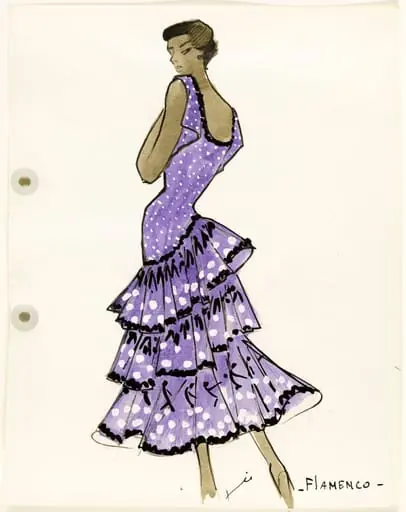
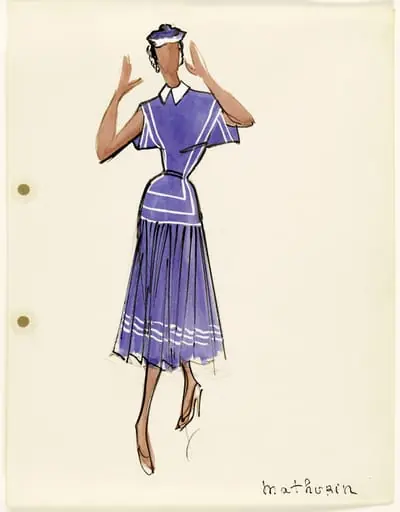
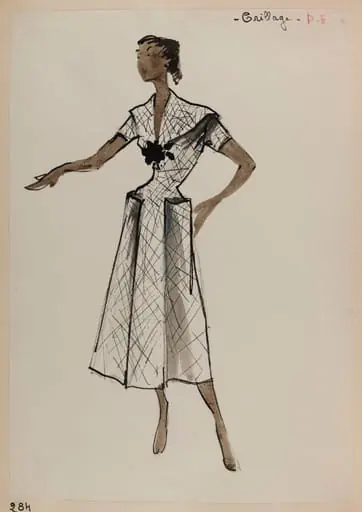
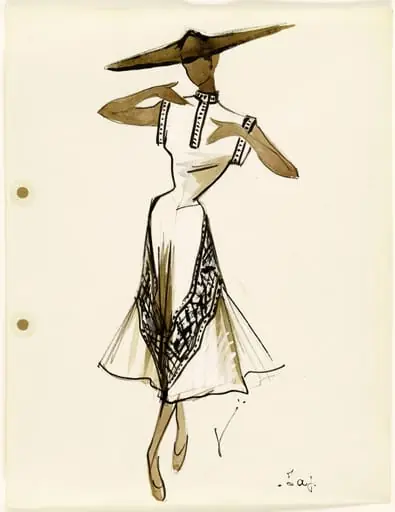
Dessin de collection de l'été 1951
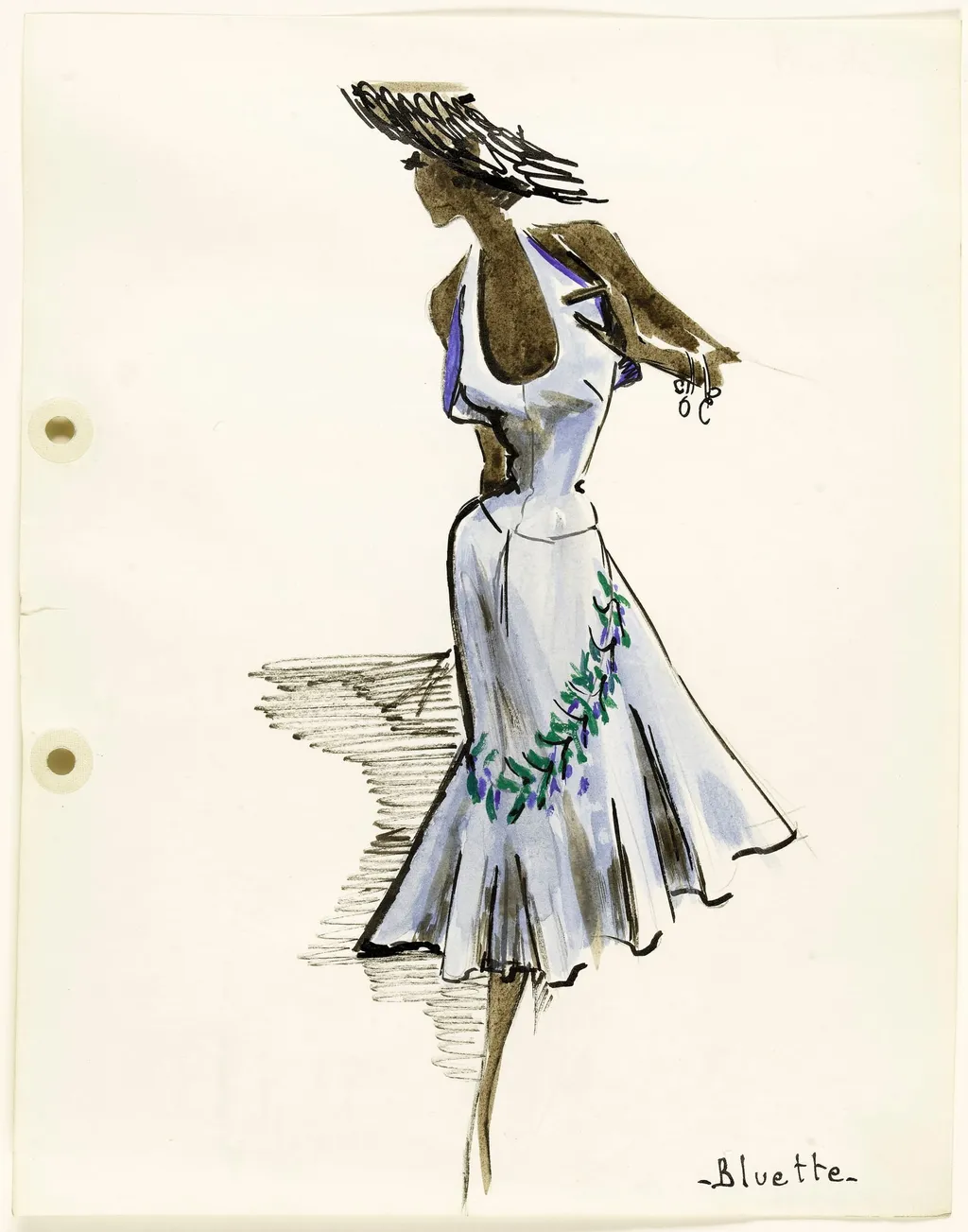
Dessin de collection de l'été 1951 is a drawing by Marie-Louise Carven. It dates from 1951 and is held in the collection of the Palais Galliera - Musée de la Mode de la Ville de Paris.
About this work
Overview
The drawing was later acquired by the Museum of Ethnography, where it serves as a record of postwar French design practices.
Created in 1951, this fashion sketch was produced by Marie-Louise Carven as part of her summer collection. Executed in a spontaneous, fluid hand, it reflects the designer’s approach to ready-to-wear fashion. The drawing was later acquired by the Museum of Ethnography, where it serves as a record of postwar French design practices. Its informal quality suggests it was a working study rather than a final presentation piece.
Subject & Meaning
The sketch depicts a woman in a light, full-skirted dress, accessorized with a broad-brimmed hat and a cigarette holder—elements evoking casual summer elegance of the early 1950s. The floral motifs near the hem suggest a playful, feminine aesthetic. The figure’s relaxed posture and attire reflect Carven’s focus on wearable, everyday style for petite frames, aligning with her brand’s ethos of practicality and charm.
Technique & Style
Rendered with loose, rapid lines, the drawing conveys movement and texture without detailed rendering. Colors are suggested through minimal washes of green and purple, while the figure’s form is defined by fluid contours. The signature 'Bluette' in the corner may indicate a personal or stylistic label, possibly used to distinguish this series of sketches. The work’s immediacy underscores its function as a design tool rather than a finished artwork.
History & Provenance
The sketch originated in Carven’s 1951 summer collection and entered the Museum of Ethnography’s holdings at an unknown date. Its inclusion in a museum focused on cultural artifacts, rather than fine art, signals its value as a document of everyday fashion practice. The piece remains part of the museum’s design collection, preserved as an example of mid-century French textile and garment development.
Context
In postwar Paris, Carven was among the first designers to prioritize accessible, mass-produced clothing for women of smaller stature. Her use of lightweight fabrics and cheerful patterns contrasted with the heavier silhouettes of haute couture. This sketch reflects a broader shift toward prêt-à-porter, where design efficiency and wearability took precedence over ornate craftsmanship, responding to changing social and economic conditions.
Legacy
The sketch stands as a quiet testament to Carven’s influence on democratizing fashion. By emphasizing comfort and proportion over grandeur, she helped redefine women’s wardrobes in mid-century Europe. Though not widely exhibited, such working drawings contribute to understanding how ready-to-wear fashion evolved from intuitive, hand-drawn concepts into commercially viable designs.
Artist & collection
Artist
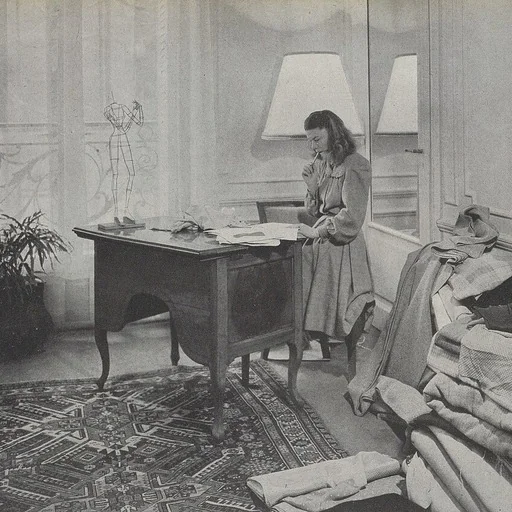
Marie-Louise Carven (31 August 1909 – 8 June 2015), born Carmen de Tommaso, was a French fashion designer who founded the house of Carven in 1945.
Museum
Palais Galliera - Musée de la Mode de la Ville de Paris
Continue through works from the same source collection.
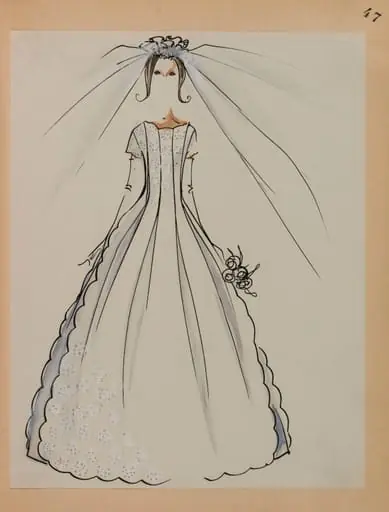 Robe de mariée festonnée et son voile
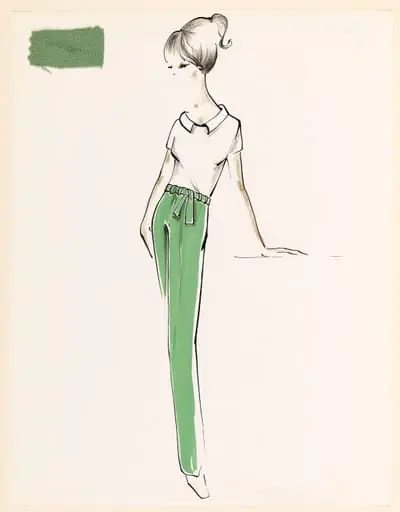 Haut blanc à manches courtes et pantalon vert à ceinture nouée
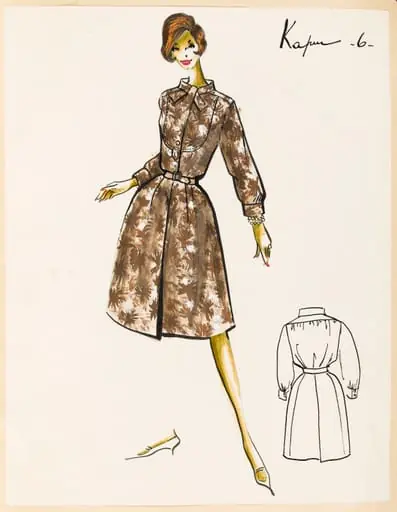 Kapur
Kapur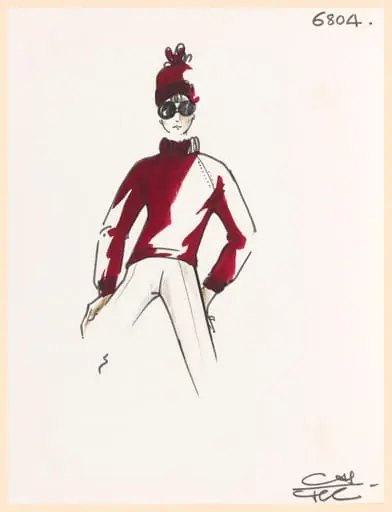 Pull-over à manches longues pourpre, bonnet assorti, pantalon et lunettes de soleil
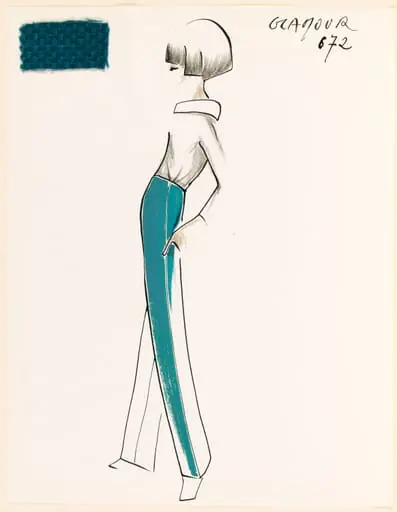 GLAMOUR
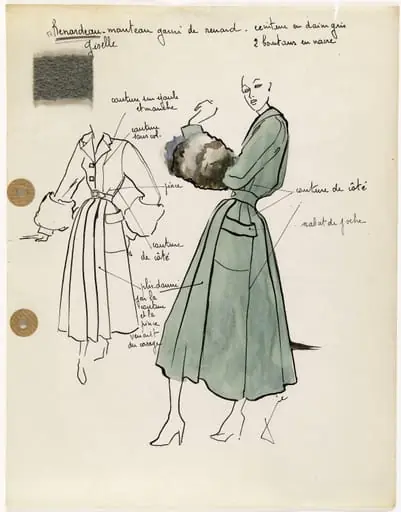 'Renardeau'
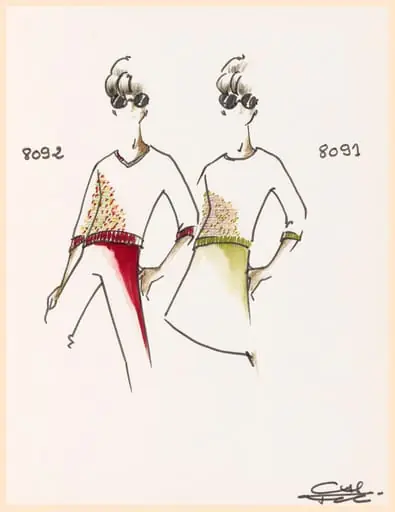 Pull-over à manches trois quarts et à encolure V à motifs multicolores, pantalon cerise et lunettes de soleil
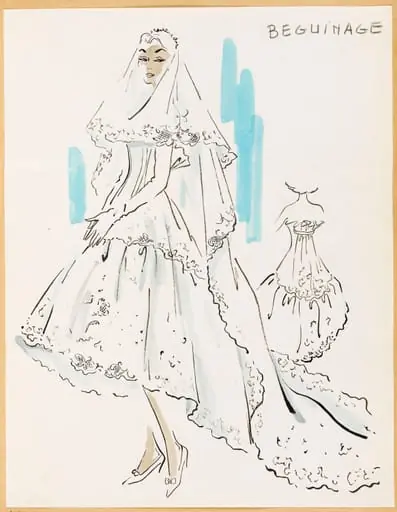 Béguinage