Artwork
Eglantine
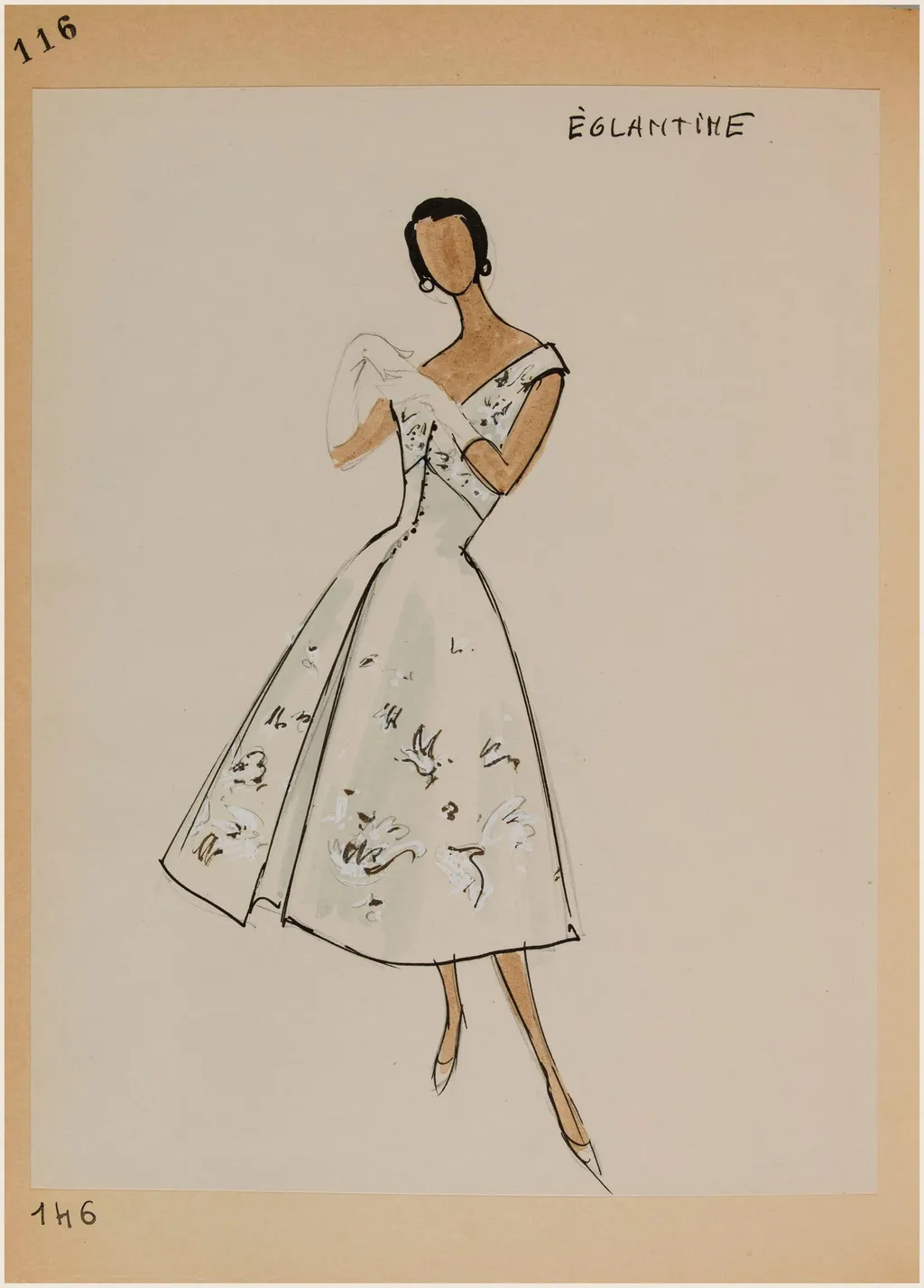
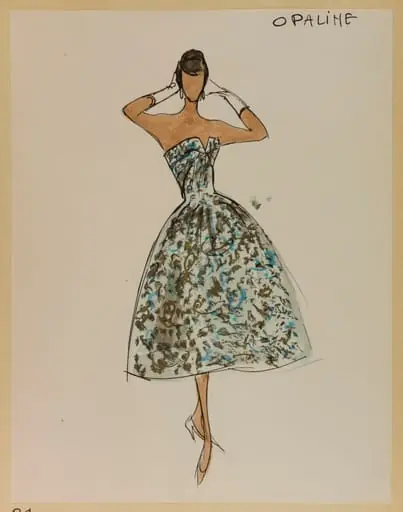
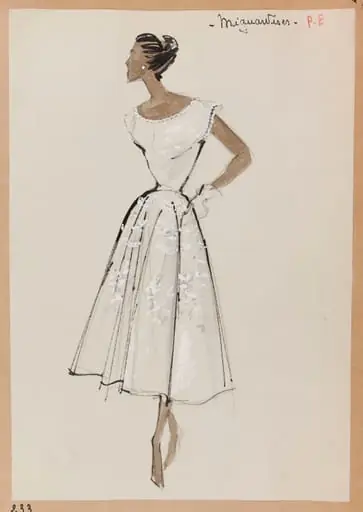
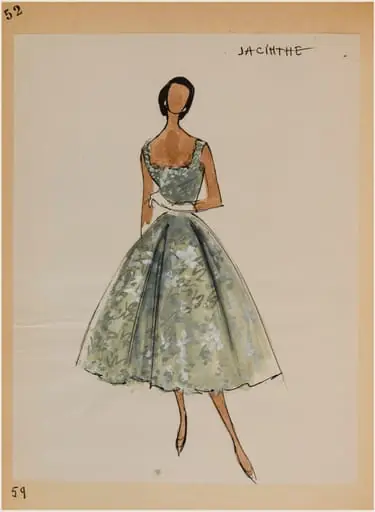
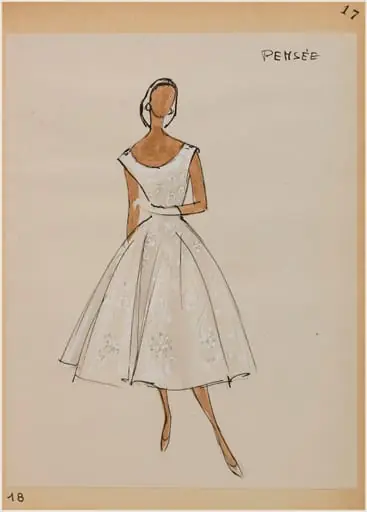
Eglantine is a drawing by Marie-Louise Carven. It dates from 1956 and is held in the collection of the Palais Galliera - Musée de la Mode de la Ville de Paris.
About this work
Overview
It is held in the collection of the Museum of Ethnography, where it represents mid-century French design innovation beyond haute couture.
Created in 1956, *Eglantine* is a fashion sketch by Marie-Louise Carven, founder of the Parisian house Carven established in 1945. The work captures a design for a lightweight, feminine garment intended for everyday wear. Executed in soft brown and gray ink, the drawing reflects Carven’s approach to accessible elegance. It is held in the collection of the Museum of Ethnography, where it represents mid-century French design innovation beyond haute couture.
Subject & Meaning
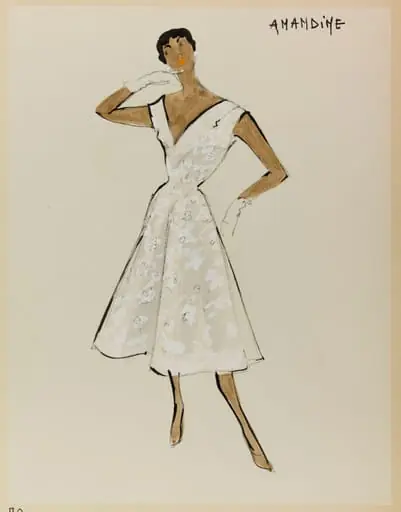
The sketch depicts a woman in a loose, knee-length dress with a deep V-neck and a flared skirt, accompanied by a short, draped cape. The relaxed posture and unstructured silhouette suggest comfort and ease, aligning with Carven’s focus on garments suited to petite frames and active lifestyles. The floral motifs, rendered with fluid strokes, evoke natural delicacy without ornamentation. The title *Eglantine*, referencing a wild rose, may signal the dress’s subtle botanical inspiration.
Technique & Style
Carven rendered the design with swift, economical ink lines, characteristic of fashion preparatory drawings. The absence of heavy shading and the use of muted tones emphasize form over detail, prioritizing movement and drape. The sketchy floral patterns suggest spontaneity, as if drawn from observation rather than rigid planning. This method reflects the immediacy of design thinking in mid-century ateliers, where ideas were captured quickly for development.
History & Provenance
Marie-Louise Carven launched one of France’s earliest prêt-à-porter lines in the late 1940s, challenging the dominance of exclusive couture. *Eglantine* emerged during this period of democratization in fashion. The sketch entered the Museum of Ethnography’s collection as part of a broader effort to document everyday clothing design. Its preservation underscores its role as a cultural artifact of postwar French textile innovation.
Context
In postwar Europe, fashion was shifting toward practicality and accessibility. Carven’s designs responded to women’s changing roles, offering refined yet wearable garments in light fabrics like cotton and lace. *Eglantine* fits within this movement, contrasting with the rigid silhouettes of earlier decades. Its inclusion in an ethnographic museum highlights how fashion began to be studied as a social practice, not merely an art form.
Legacy
Carven’s integration of ready-to-wear into high fashion paved the way for modern fashion systems. *Eglantine* exemplifies her philosophy: elegance rooted in simplicity and function. Though not a mass-produced garment, the sketch symbolizes a broader transition in design culture—where sketches became blueprints for accessible clothing. It remains a quiet testament to the quiet revolution in how women dressed after the war.
Artist & collection
Artist
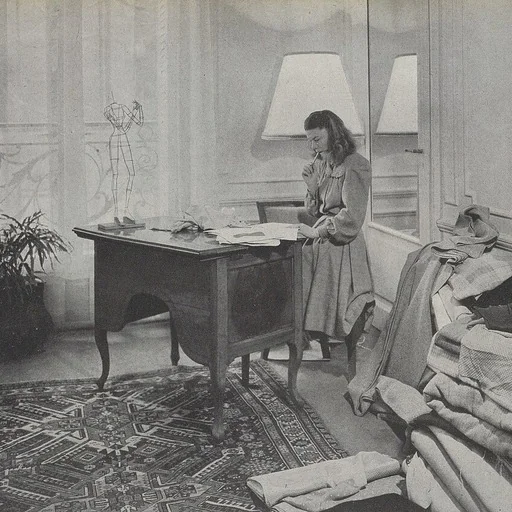
Marie-Louise Carven (31 August 1909 – 8 June 2015), born Carmen de Tommaso, was a French fashion designer who founded the house of Carven in 1945.
Museum
Palais Galliera - Musée de la Mode de la Ville de Paris
Continue through works from the same source collection.
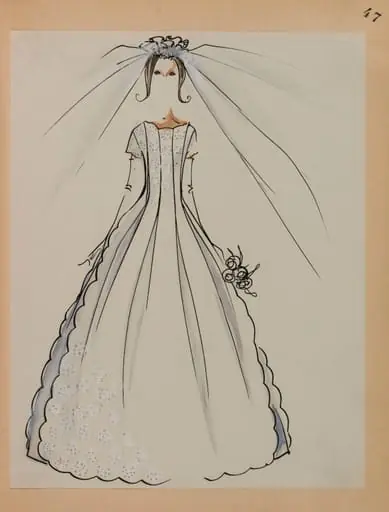 Robe de mariée festonnée et son voile
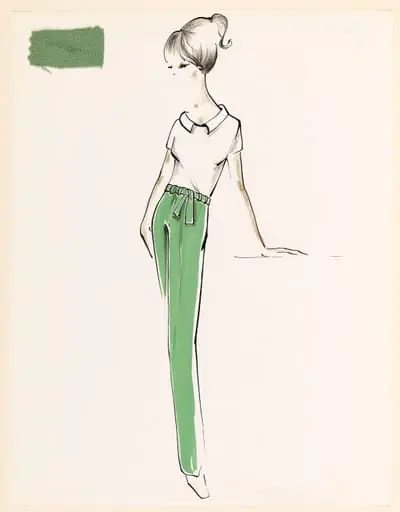 Haut blanc à manches courtes et pantalon vert à ceinture nouée
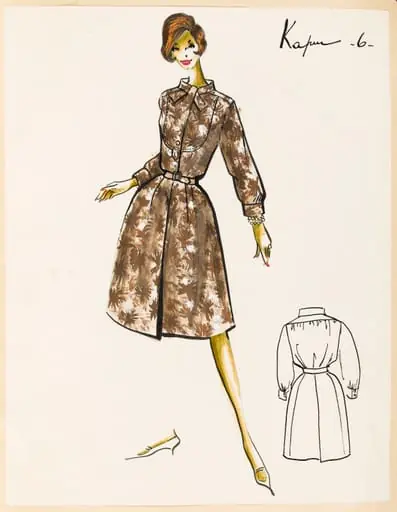 Kapur
Kapur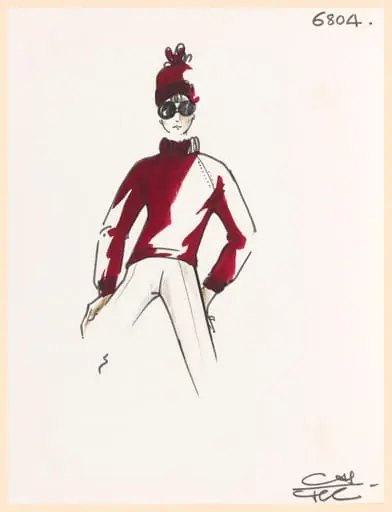 Pull-over à manches longues pourpre, bonnet assorti, pantalon et lunettes de soleil
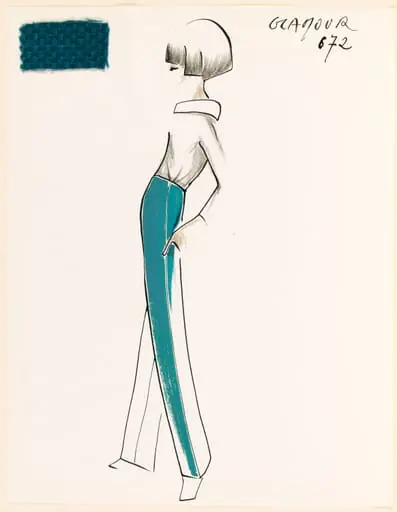 GLAMOUR
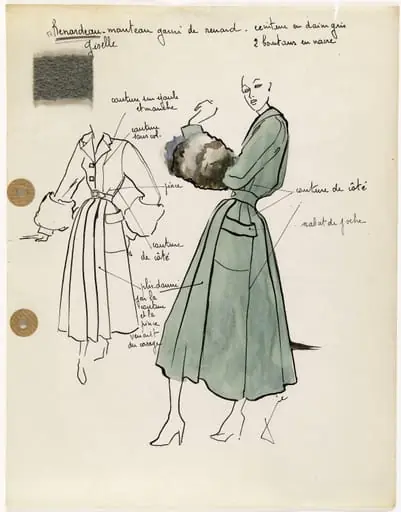 'Renardeau'
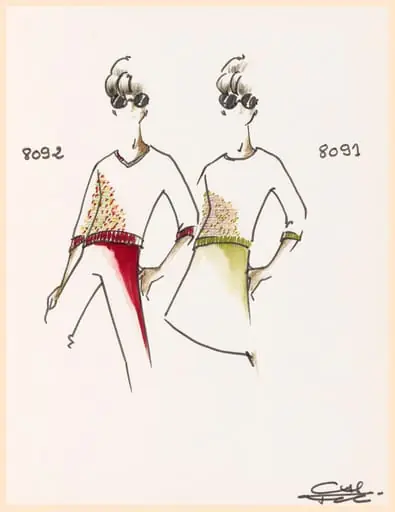 Pull-over à manches trois quarts et à encolure V à motifs multicolores, pantalon cerise et lunettes de soleil
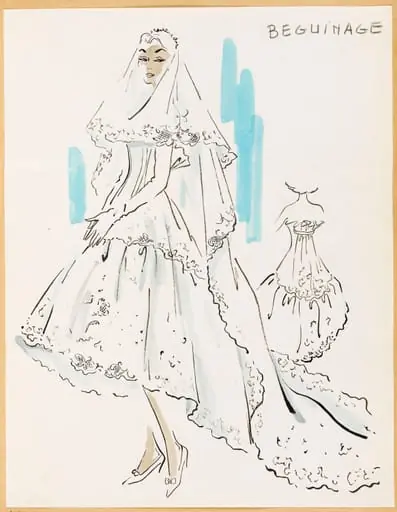 Béguinage