Artwork
'Equipage'
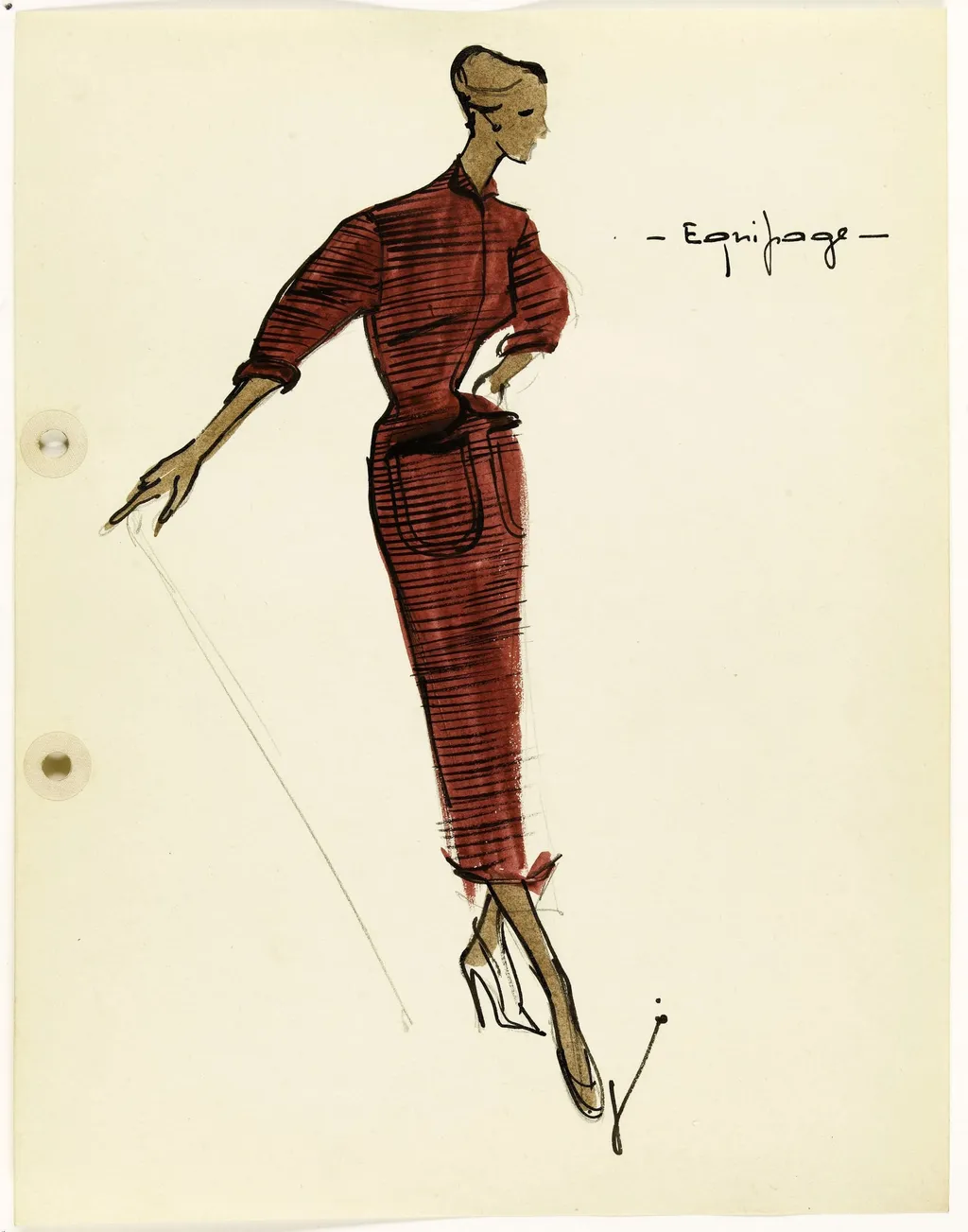
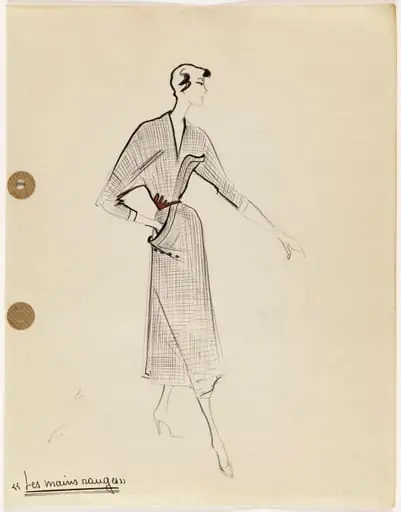
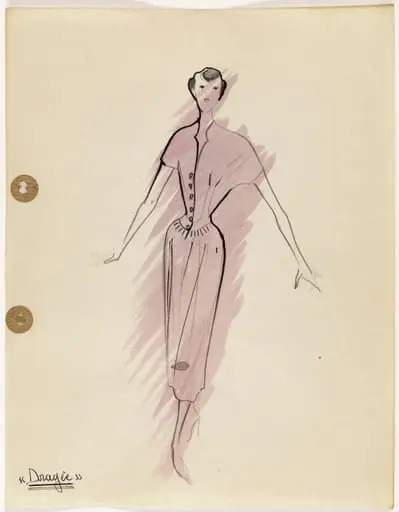
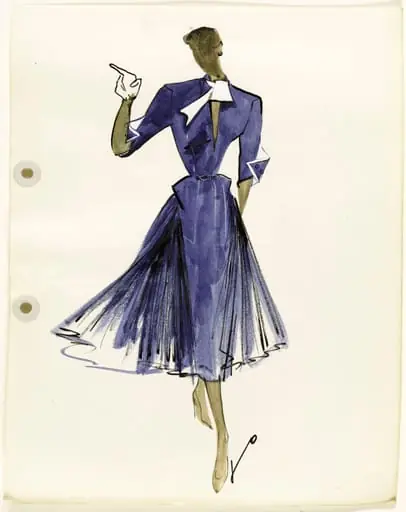
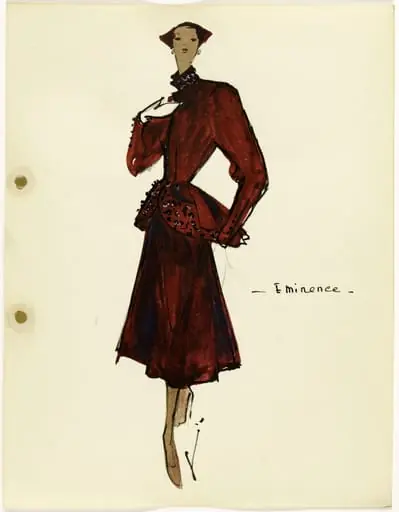
'Equipage' is a drawing by Marie-Louise Carven. It dates from 1951 and is held in the collection of the Palais Galliera - Musée de la Mode de la Ville de Paris.
About this work
Overview
As the founder of the Carven label in 1945, she pioneered ready-to-wear fashion in Paris, emphasizing practicality without sacrificing refinement.
Created around 1951 by French designer Marie-Louise Carven, *Equipage* is a fashion sketch that reflects her approach to wearable elegance. As the founder of the Carven label in 1945, she pioneered ready-to-wear fashion in Paris, emphasizing practicality without sacrificing refinement. This drawing, part of the Museum of Ethnography’s collection, captures a garment designed for movement and daily life, aligning with her broader mission to serve petite figures with thoughtful tailoring.
Subject & Meaning
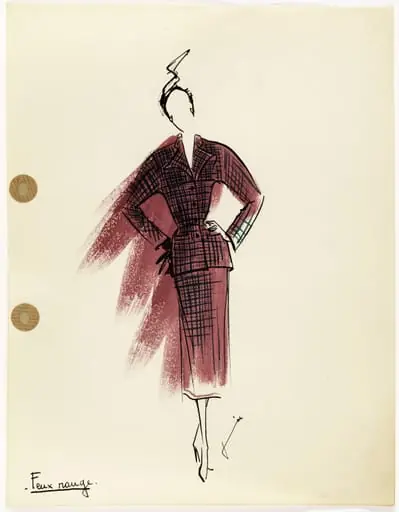
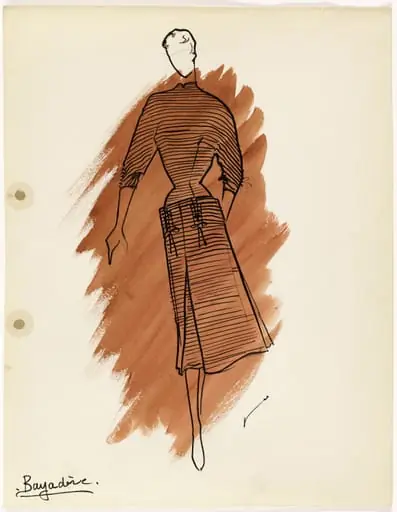
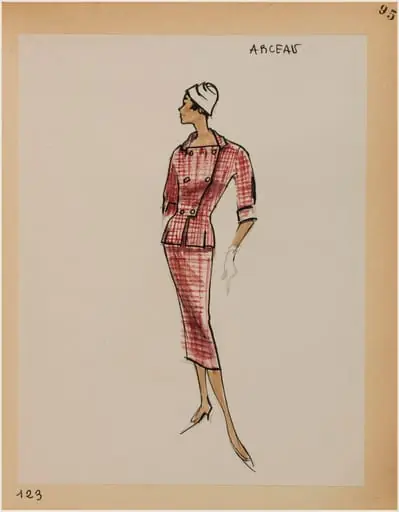
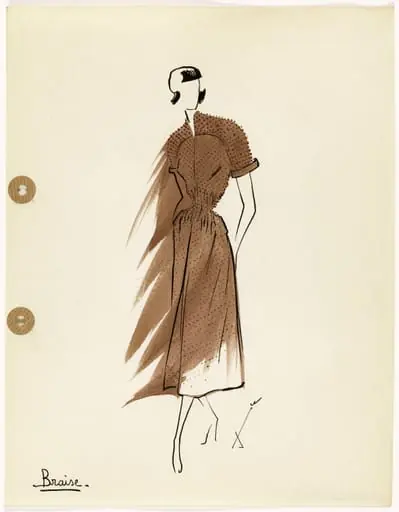
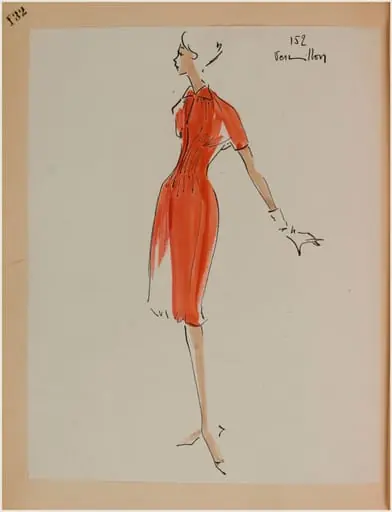
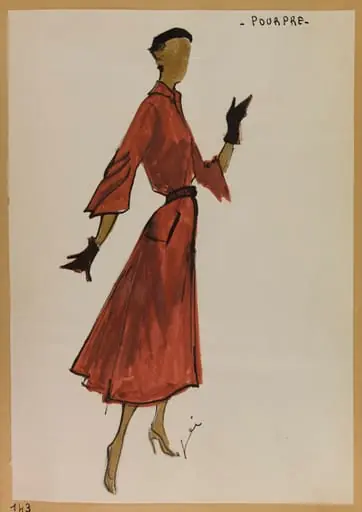
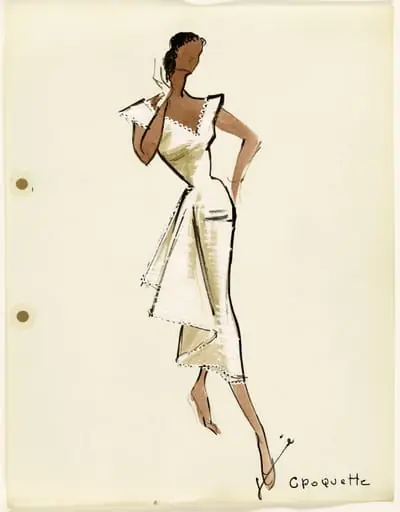
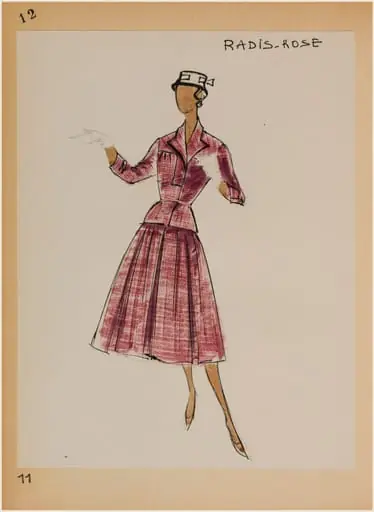
The sketch depicts a woman in a long, red striped dress paired with a matching jacket, her posture relaxed yet assured—one hand on her hip, the other hanging naturally. The title *Equipage*, scrawled in the corner, suggests the outfit is conceived as a complete ensemble for travel or urban mobility. The term evokes carriage or travel gear, implying the clothing is both functional and dignified, suited for a woman navigating modern life with poise.
Technique & Style
Carven rendered the design with swift, confident lines that define silhouette over detail. Fabric folds and pocket shapes are suggested through clean, uncluttered strokes rather than intricate shading. The bold red stripes are implied by parallel lines, emphasizing rhythm and structure. The absence of facial features or background focuses attention entirely on the garment’s form, reflecting a designer’s eye for cut and proportion rather than illustrative flourish.
History & Provenance
The drawing entered the collection of the Museum of Ethnography as part of a broader effort to document fashion as cultural artifact. While Carven’s label gained prominence in postwar Paris, this sketch offers insight into her design process before mass production. Its preservation underscores the growing recognition of fashion design as a legitimate field of material culture, distinct from fine art yet equally reflective of its era’s social norms and aspirations.
Context
In the early 1950s, Parisian couture was dominated by elaborate, custom-made garments. Carven stood apart by designing for everyday women, prioritizing comfort and accessibility. *Equipage* reflects this shift—its streamlined form and practical details cater to an emerging middle class seeking stylish, affordable clothing. The sketch embodies a quiet revolution: fashion as service, not spectacle.
Legacy
Carven’s early adoption of prêt-à-porter influenced the democratization of fashion in Europe. *Equipage*, though a single sketch, represents a philosophy that prioritized the wearer’s experience over theatrical display. Today, it remains a quiet testament to how design choices—simplicity, proportion, and function—can redefine what clothing means in daily life, paving the way for modern ready-to-wear traditions.
Artist & collection
Artist
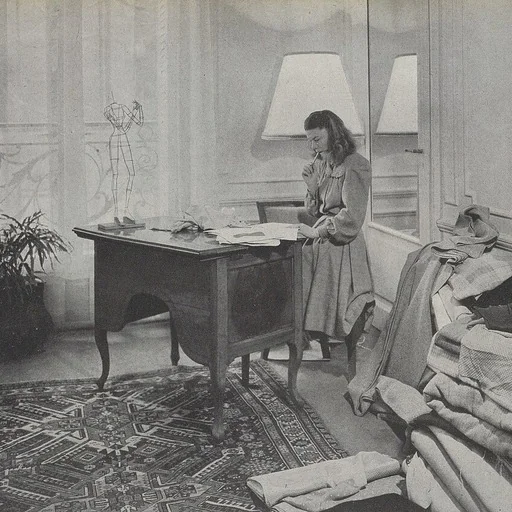
Marie-Louise Carven (31 August 1909 – 8 June 2015), born Carmen de Tommaso, was a French fashion designer who founded the house of Carven in 1945.
Museum
Palais Galliera - Musée de la Mode de la Ville de Paris
Continue through works from the same source collection.
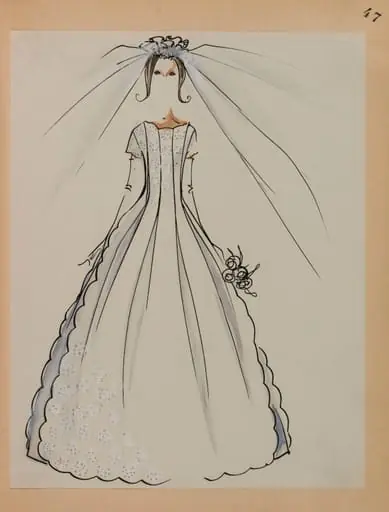 Robe de mariée festonnée et son voile
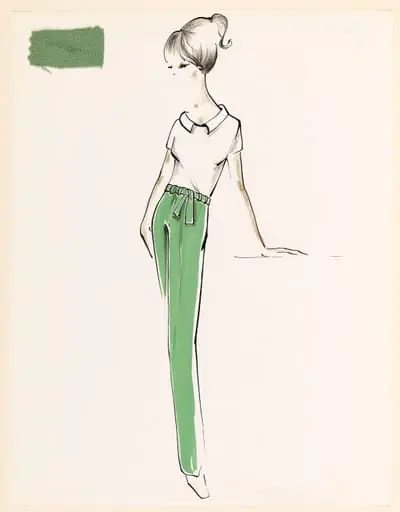 Haut blanc à manches courtes et pantalon vert à ceinture nouée
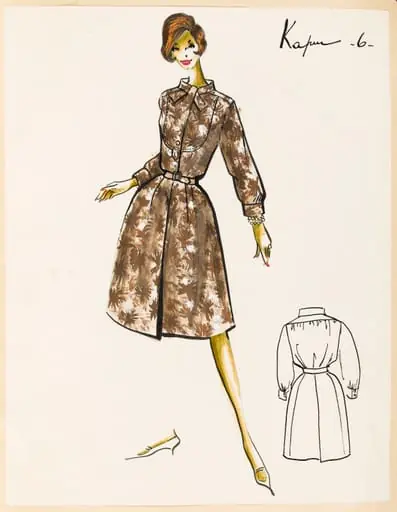 Kapur
Kapur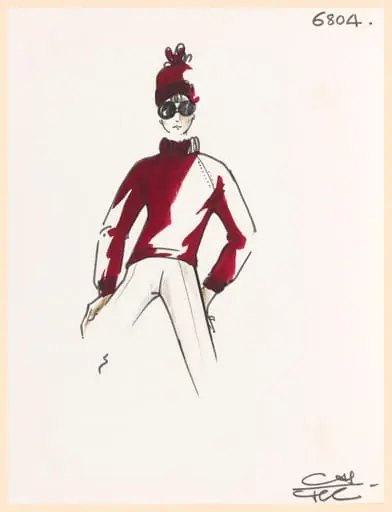 Pull-over à manches longues pourpre, bonnet assorti, pantalon et lunettes de soleil
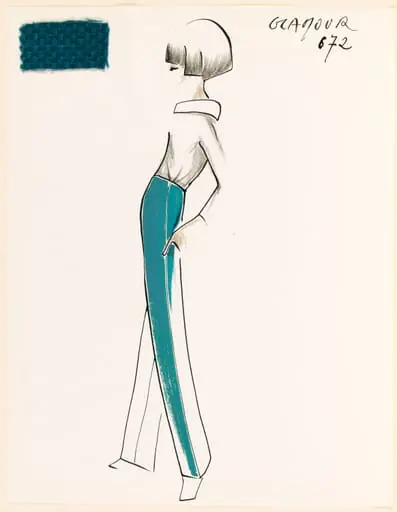 GLAMOUR
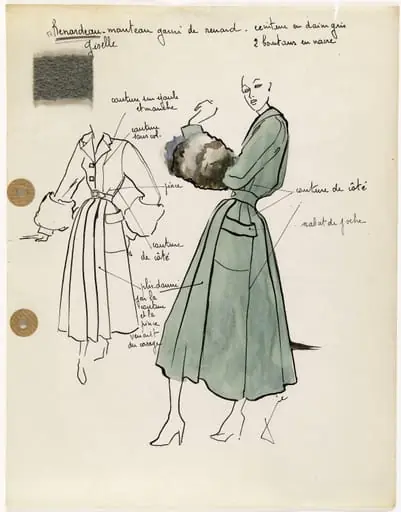 'Renardeau'
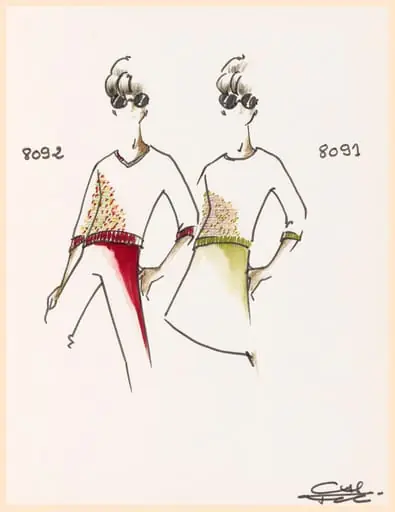 Pull-over à manches trois quarts et à encolure V à motifs multicolores, pantalon cerise et lunettes de soleil
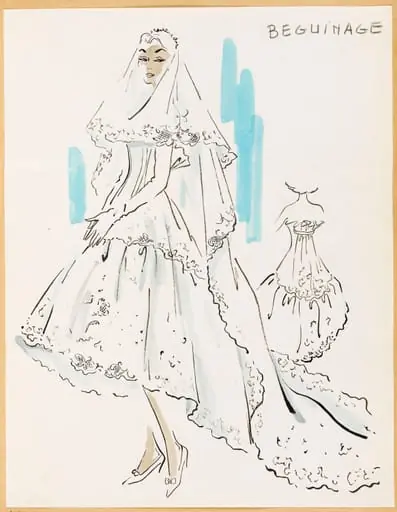 Béguinage