Artwork
'Espanita'
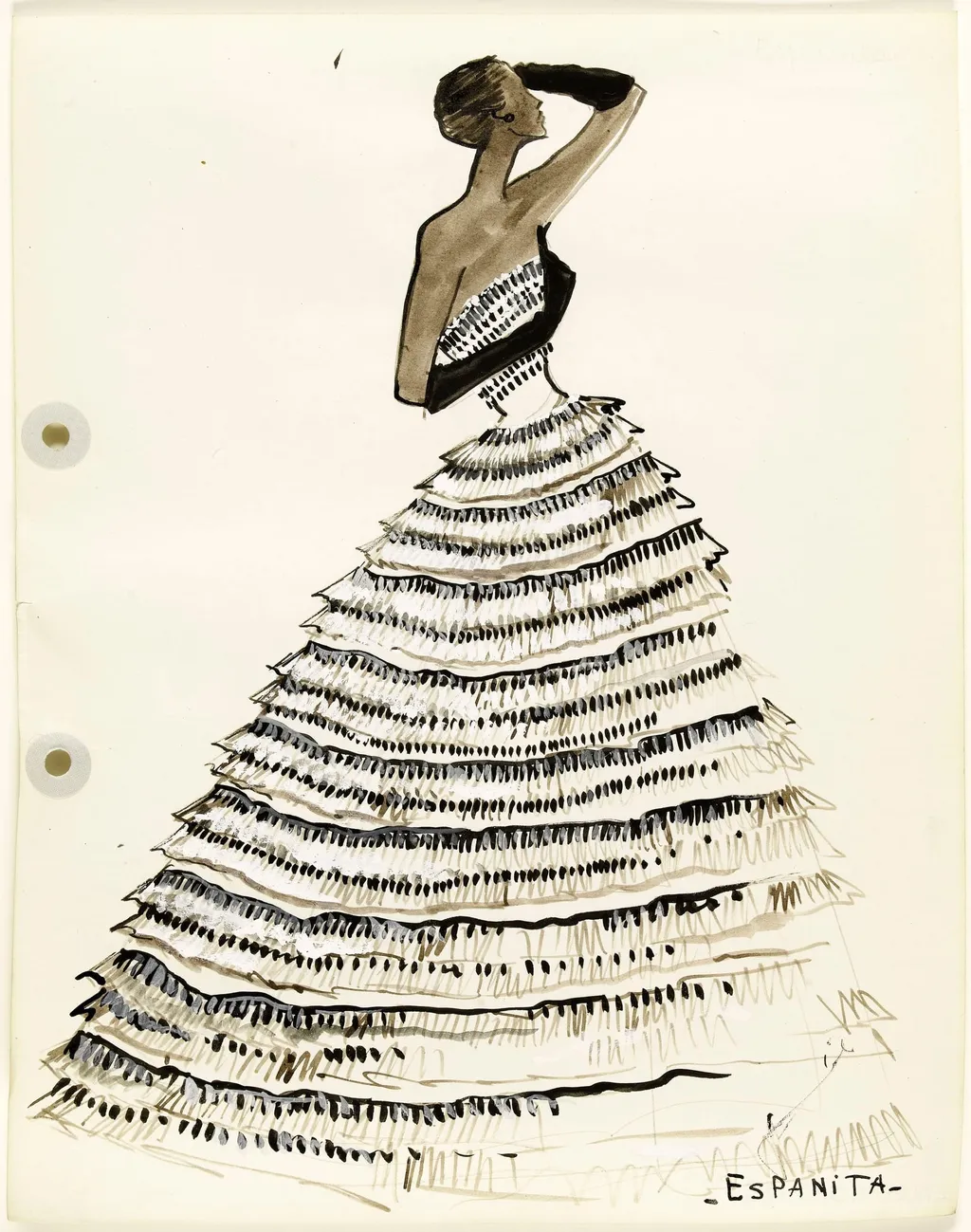
'Espanita' is a drawing by Marie-Louise Carven. It dates from 1951 and is held in the collection of the Palais Galliera - Musée de la Mode de la Ville de Paris.
About this work
Overview
The drawing titled 'Espanita' is a fashion sketch by Marie-Louise Carven, created in 1951 as part of her early prêt-à-porter collection.
The drawing titled 'Espanita' is a fashion sketch by Marie-Louise Carven, created in 1951 as part of her early prêt-à-porter collection. Executed in ink with bold, fluid lines, it captures a stylized female figure in a voluminous ruffled dress. Though not a finished garment, the sketch reflects Carven’s design philosophy—lightweight construction, feminine silhouettes, and attention to petite proportions. It resides in the Museum of Ethnography’s collection as a document of mid-century French fashion design.
Subject & Meaning
The figure in 'Espanita' embodies a relaxed, almost casual elegance, with one hand resting lightly on her head, suggesting ease rather than formality. The dress, with its cascading ruffles and narrow belt, evokes Spanish-inspired folk dress without literal replication. The title hints at cultural reference, but the interpretation remains suggestive rather than ethnographic. Carven uses the motif to explore volume and movement, not to represent a specific regional costume.
Technique & Style
Carven employed rapid, confident ink strokes to define the dress’s layered ruffles, alternating between solid black lines and lighter, sketchy shading to suggest texture and depth. The absence of fine detail emphasizes gesture over precision, aligning with fashion illustration traditions of the time. Cross-hatching is used sparingly, primarily in shadowed areas of the skirt, creating subtle tonal variation without overwhelming the drawing’s spontaneity.
History & Provenance
Created in 1951, 'Espanita' emerged during Carven’s rise as a pioneer of ready-to-wear fashion in postwar Paris. The sketch likely served as a design proposal or internal reference for garment production. It entered the Museum of Ethnography’s collection as part of a broader effort to document everyday fashion as cultural artifact, distinguishing it from haute couture archives and emphasizing its accessibility and mass appeal.
Context
In the early 1950s, Parisian fashion was transitioning from bespoke tailoring to accessible, industrially produced clothing. Carven’s work, including 'Espanita', responded to demand for stylish yet affordable garments for everyday women. The sketch reflects this shift—its simplicity, lightweight aesthetic, and focus on movement align with the practical needs of a new consumer base, while retaining a sense of romantic flair.
Legacy
Though not widely exhibited, 'Espanita' remains a tangible example of Carven’s influence on democratizing fashion. Its preservation in a museum of ethnography signals recognition of ready-to-wear as culturally significant. The drawing illustrates how design innovation in mid-century France extended beyond couture houses, embedding practicality and charm into garments meant for ordinary lives.
Artist & collection
Artist
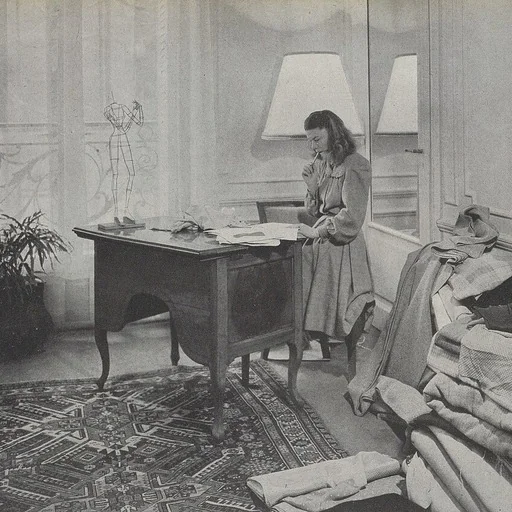
Marie-Louise Carven (31 August 1909 – 8 June 2015), born Carmen de Tommaso, was a French fashion designer who founded the house of Carven in 1945.
Museum
Palais Galliera - Musée de la Mode de la Ville de Paris
Continue through works from the same source collection.
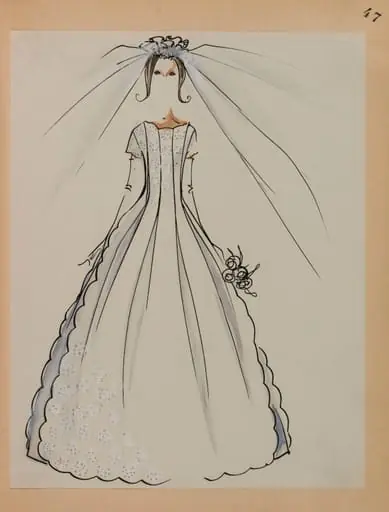 Robe de mariée festonnée et son voile
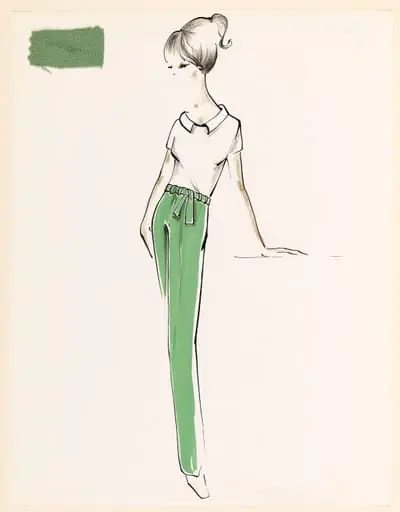 Haut blanc à manches courtes et pantalon vert à ceinture nouée
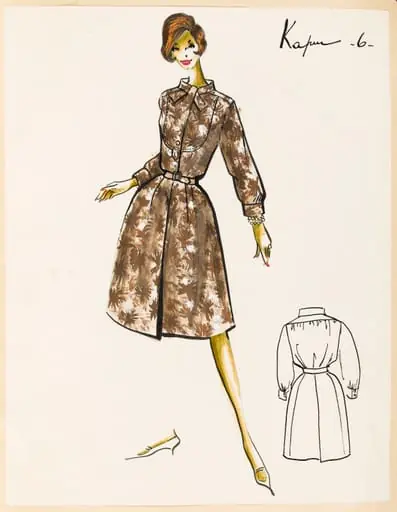 Kapur
Kapur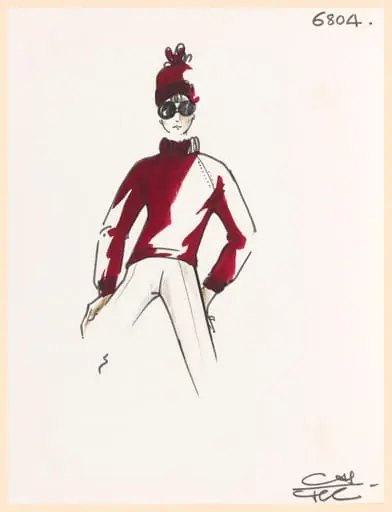 Pull-over à manches longues pourpre, bonnet assorti, pantalon et lunettes de soleil
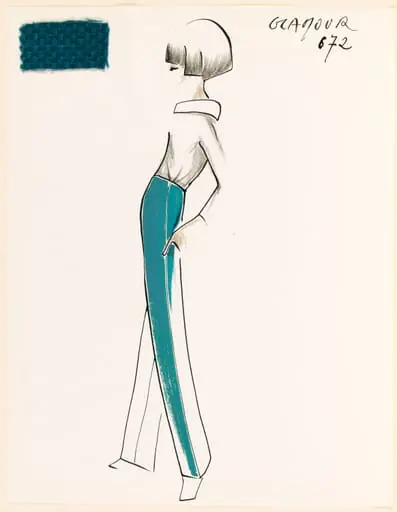 GLAMOUR
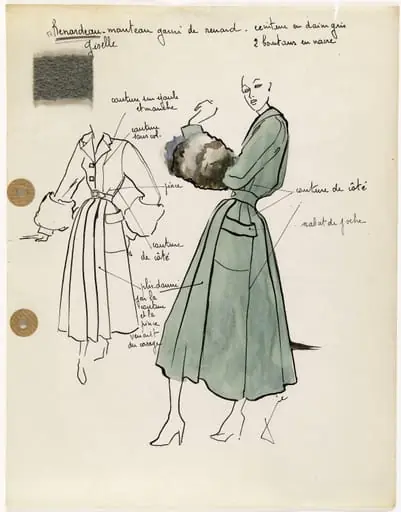 'Renardeau'
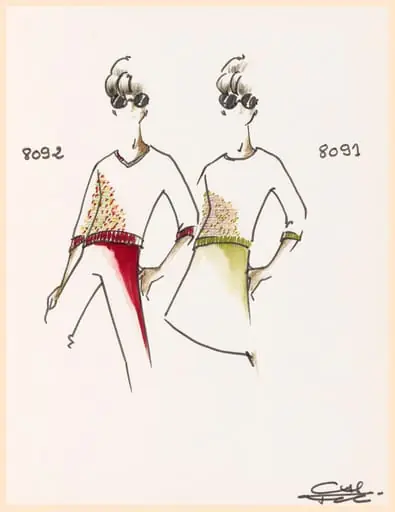 Pull-over à manches trois quarts et à encolure V à motifs multicolores, pantalon cerise et lunettes de soleil
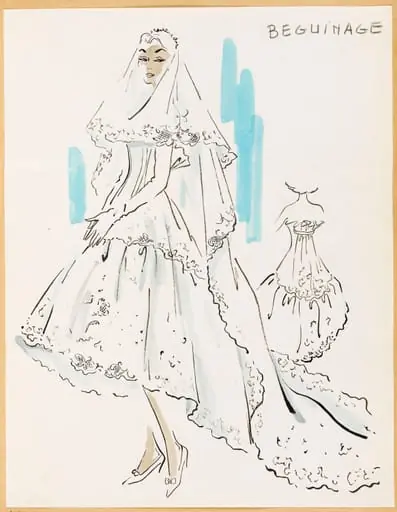 Béguinage