Artwork
'Mainara
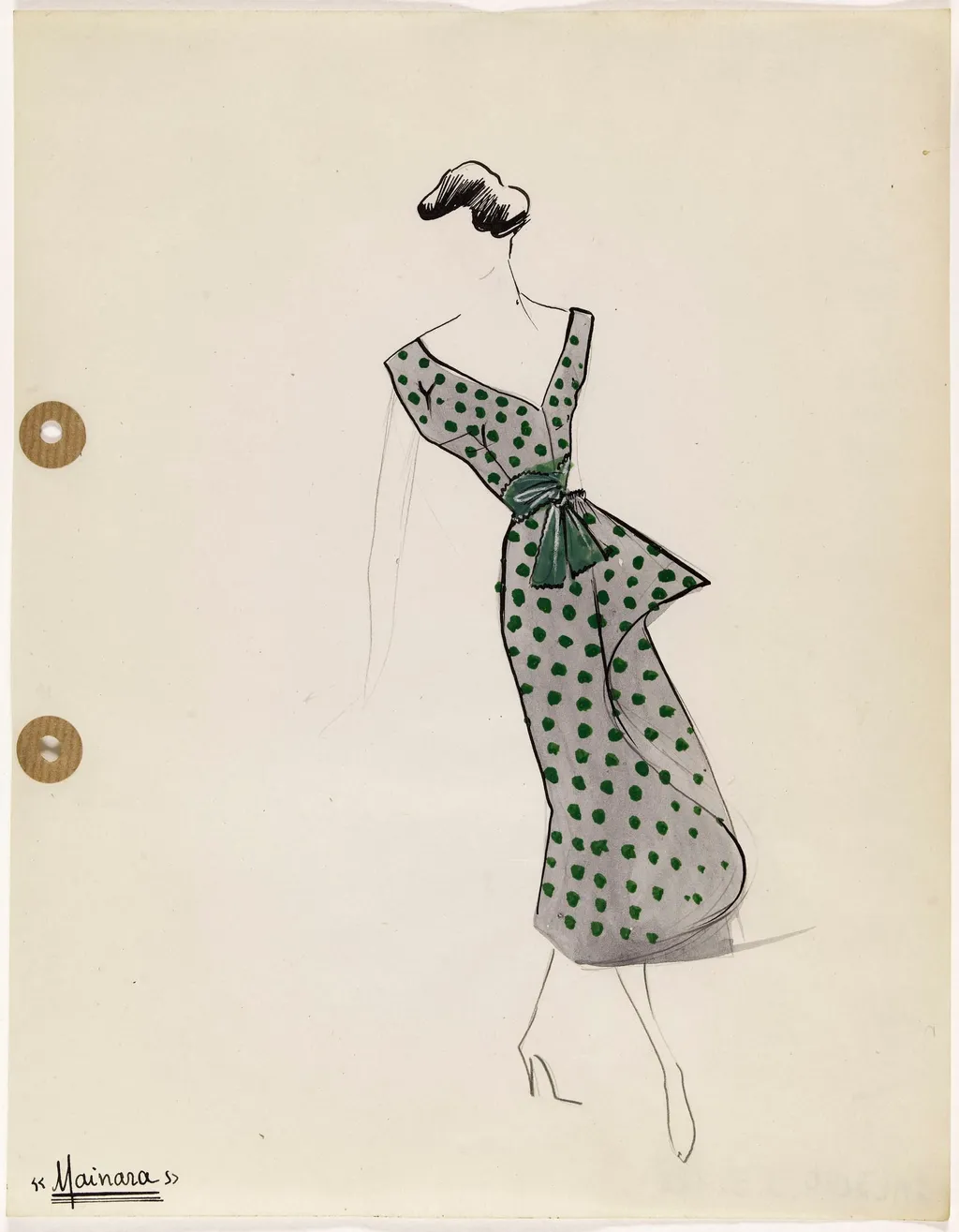
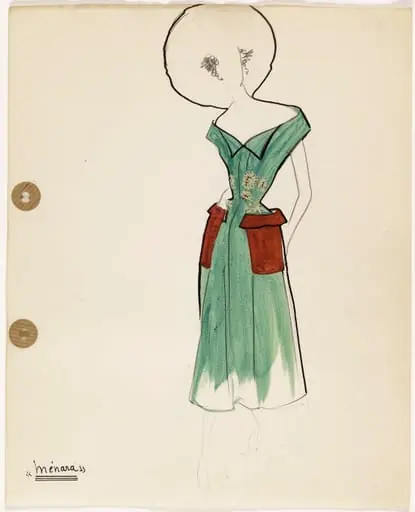
'Mainara is a drawing by Marie-Louise Carven. It dates from 1949 and is held in the collection of the Palais Galliera - Musée de la Mode de la Ville de Paris.
About this work
Overview
The drawing’s spontaneous lines and minimal detail suggest it was made as a design study rather than a finished illustration.
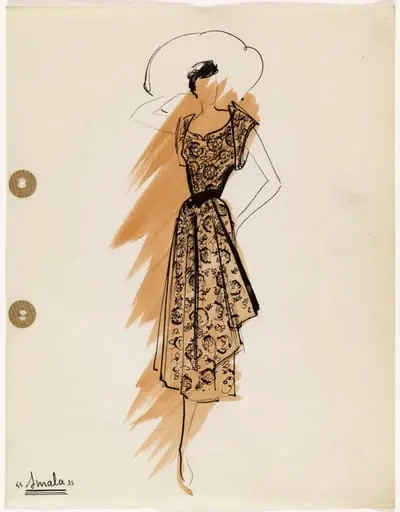
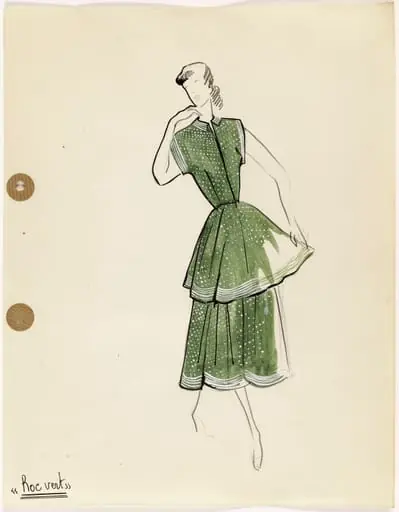
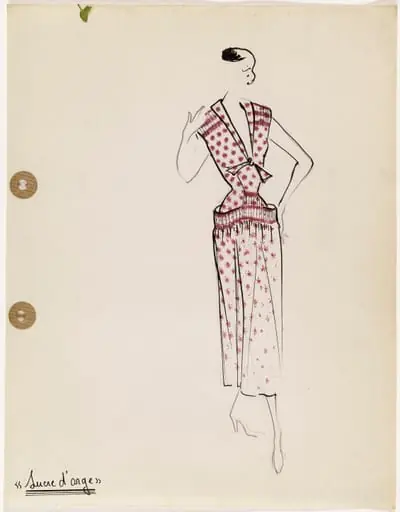
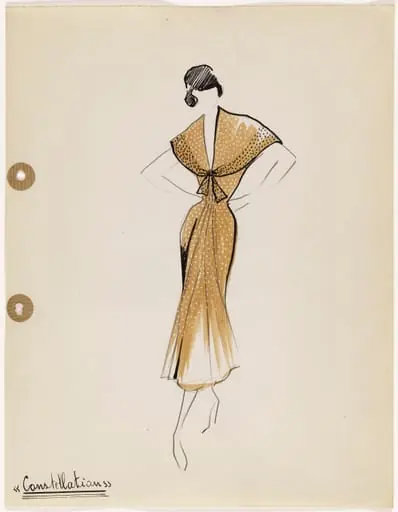
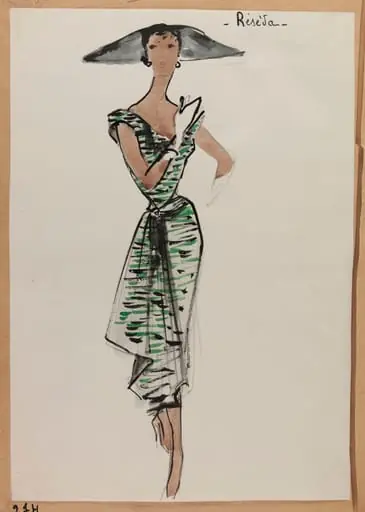
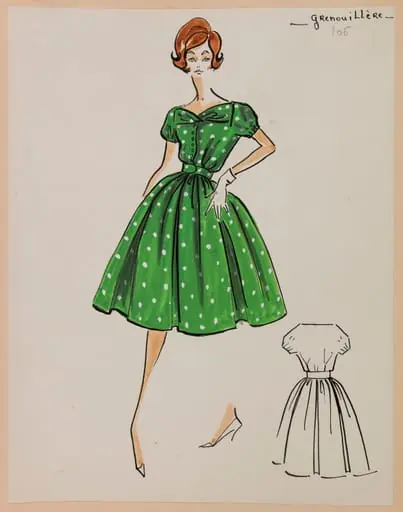
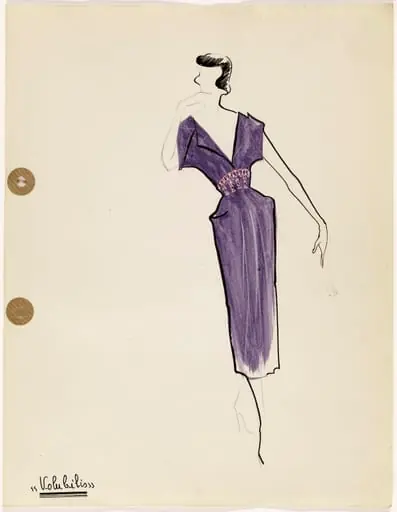
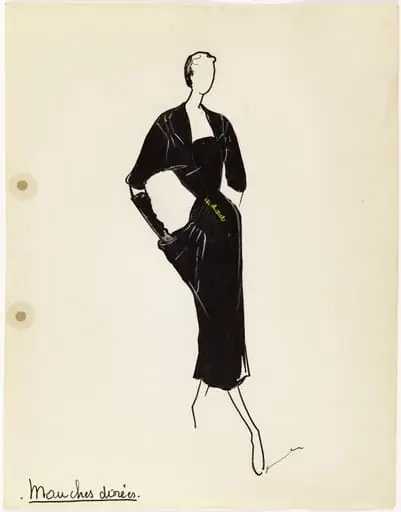
Mainara is a fashion sketch attributed to Marie-Louise Carven, created around 1949. Executed in ink or pencil, it depicts a woman in a loose, polka-dotted dress with a waist belt. The drawing’s spontaneous lines and minimal detail suggest it was made as a design study rather than a finished illustration. Signed 'Mainara' in the corner, the piece reflects Carven’s practice of using personal identifiers for her creations.
Subject & Meaning
The figure in Mainara wears a lightweight, flowing garment adorned with green polka dots—a signature motif in Carven’s work. The loose silhouette and defined waist emphasize comfort and movement, aligning with her vision of modern, wearable design. The absence of facial detail and simplified hair suggests the focus is on the garment’s form and drape, not the wearer’s identity, reinforcing the sketch’s function as a design tool.
Technique & Style
Carven rendered Mainara with swift, assured strokes that capture volume and motion without heavy shading. The fabric’s flow is suggested through curved lines, while the polka dots are applied as rhythmic, evenly spaced marks. The drawing’s economy of line and lack of background elements reflect the conventions of fashion illustration, prioritizing clarity and wearability over realism or ornamentation.
History & Provenance
Mainara entered the collection of the Museum of Ethnography as part of a broader effort to document mid-century French fashion design. Created in 1949, it predates the full rise of prêt-à-porter but aligns with Carven’s early experiments in accessible clothing. Its preservation suggests recognition of its role in documenting the transition from haute couture to ready-to-wear in postwar Paris.
Context
In the late 1940s, Parisian fashion was redefining itself after wartime austerity. Carven, among others, shifted toward lighter materials and simpler forms to meet new consumer needs. Mainara exemplifies this shift: its casual silhouette and playful pattern contrast with the structured silhouettes of earlier decades, reflecting a cultural turn toward informality and practical elegance in women’s dress.
Legacy
Mainara stands as a quiet testament to Carven’s influence on democratizing fashion. Though not a finished garment, the sketch captures the ethos of her brand—lightness, movement, and accessibility. Its inclusion in a museum of ethnography signals its value as a cultural artifact, illustrating how design thinking evolved beyond the atelier into everyday life.
Artist & collection
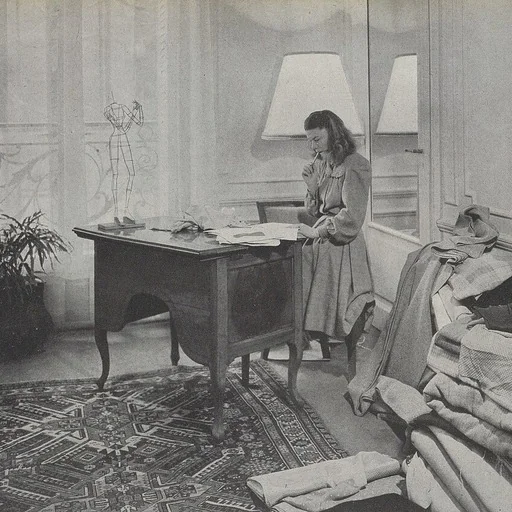
Artist
Marie-Louise Carven (31 August 1909 – 8 June 2015), born Carmen de Tommaso, was a French fashion designer who founded the house of Carven in 1945.
Museum
Palais Galliera - Musée de la Mode de la Ville de Paris
Continue through works from the same source collection.
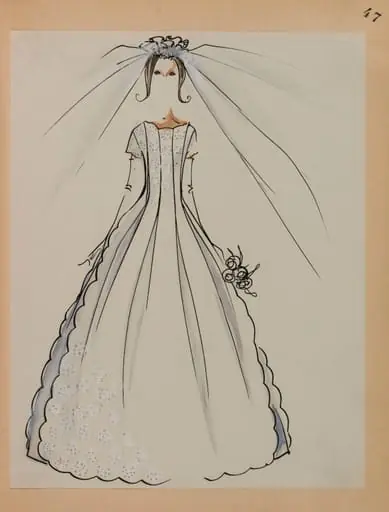 Robe de mariée festonnée et son voile
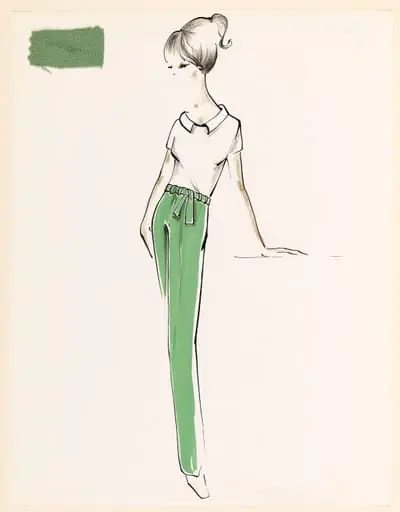 Haut blanc à manches courtes et pantalon vert à ceinture nouée
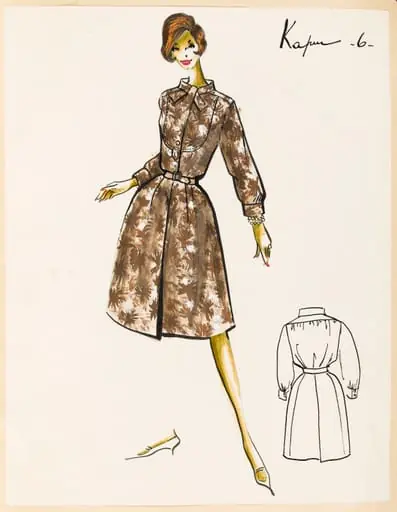 Kapur
Kapur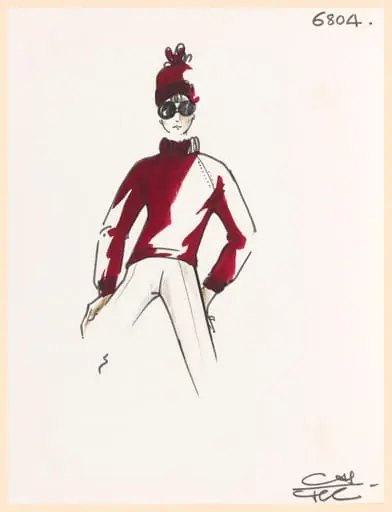 Pull-over à manches longues pourpre, bonnet assorti, pantalon et lunettes de soleil
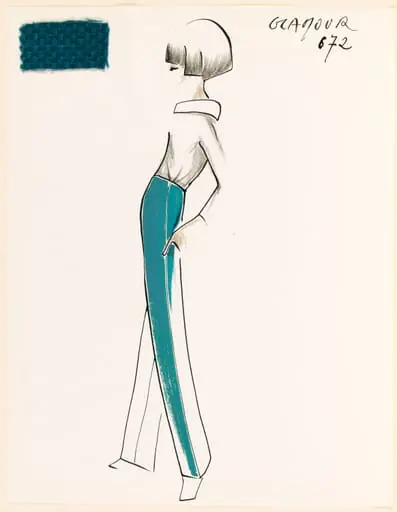 GLAMOUR
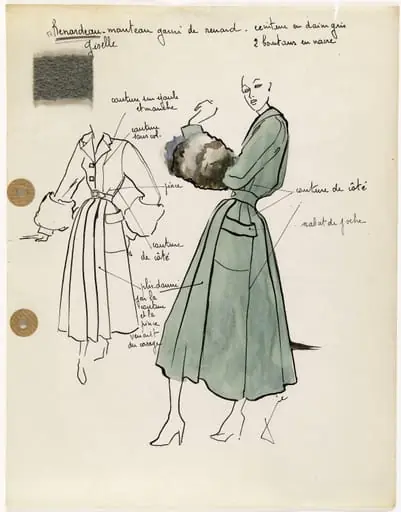 'Renardeau'
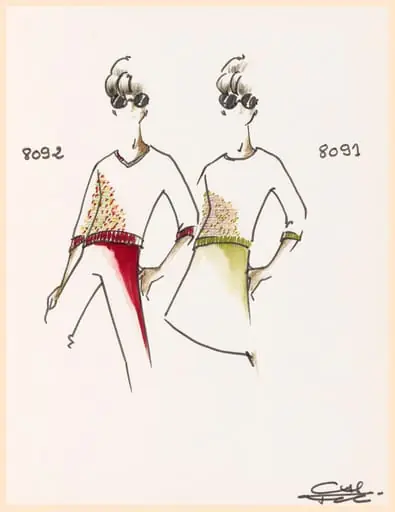 Pull-over à manches trois quarts et à encolure V à motifs multicolores, pantalon cerise et lunettes de soleil
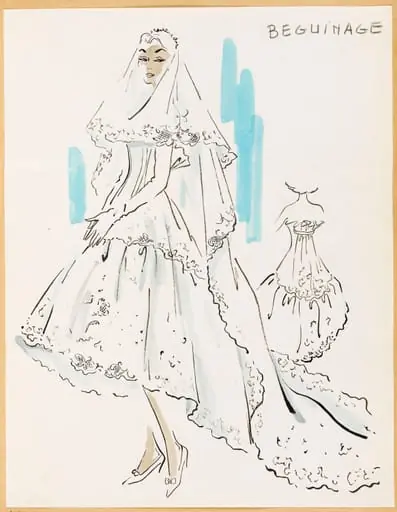 Béguinage