Artwork
Mont Joly
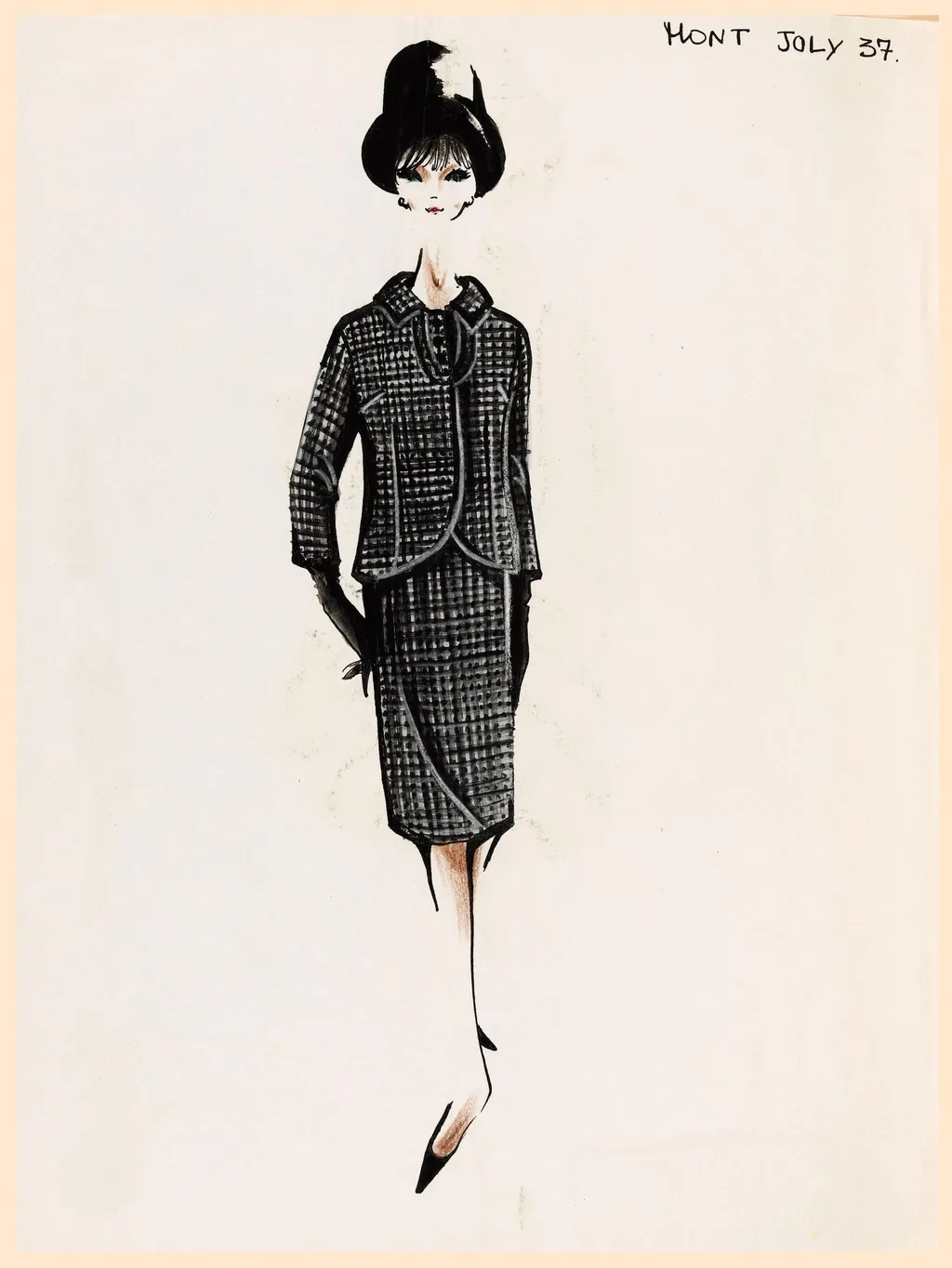
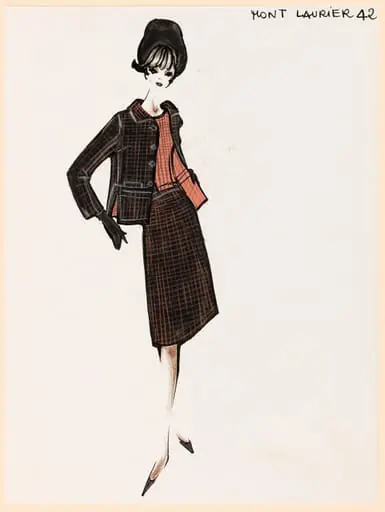
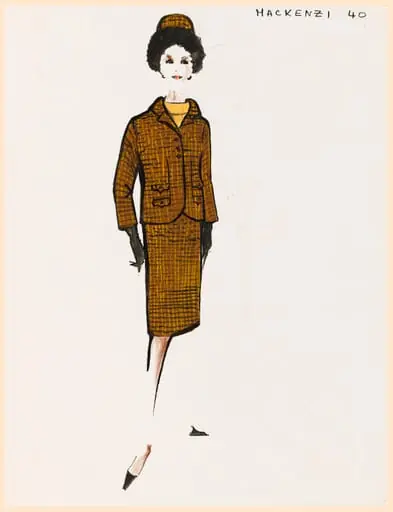
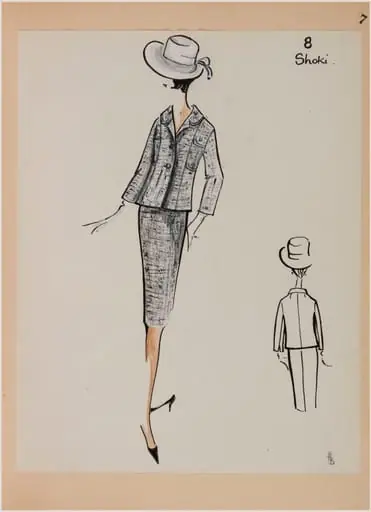
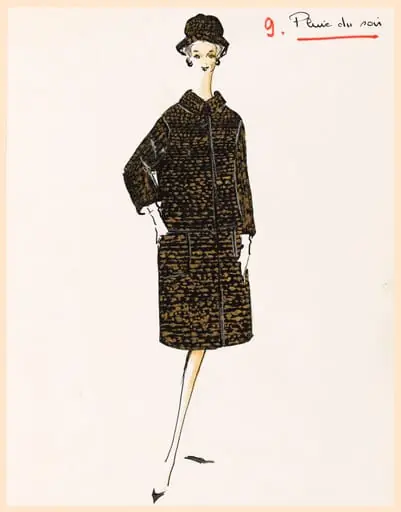
Mont Joly is a drawing by Marie-Louise Carven. It dates from 1962 and is held in the collection of the Palais Galliera - Musée de la Mode de la Ville de Paris.
About this work
Overview
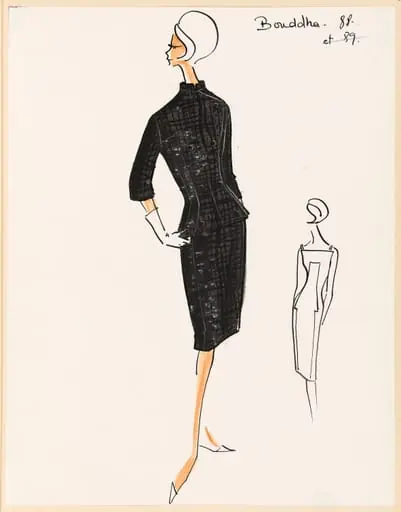
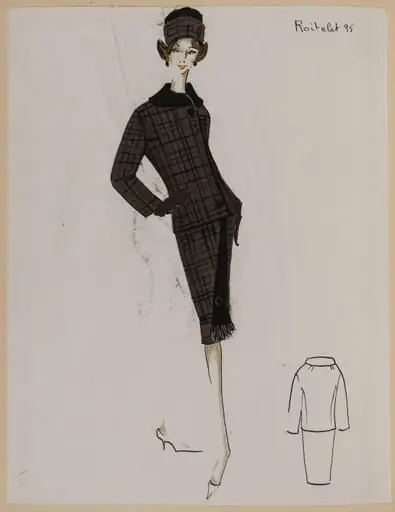
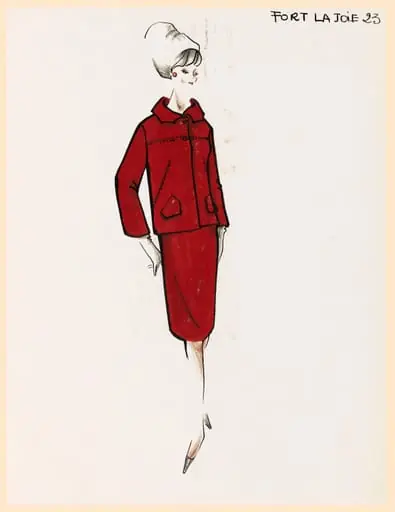
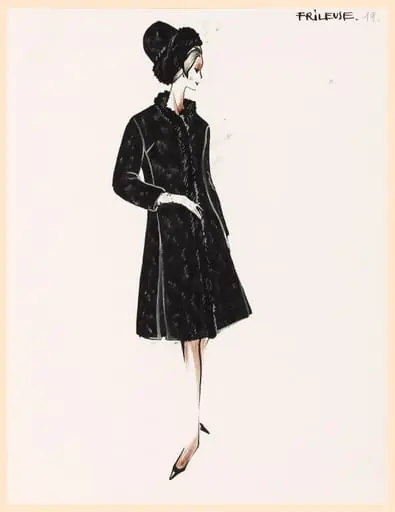
Mont Joly is a fashion illustration created around 1962 by Marie-Louise Carven, founder of the Parisian fashion house established in 1945.
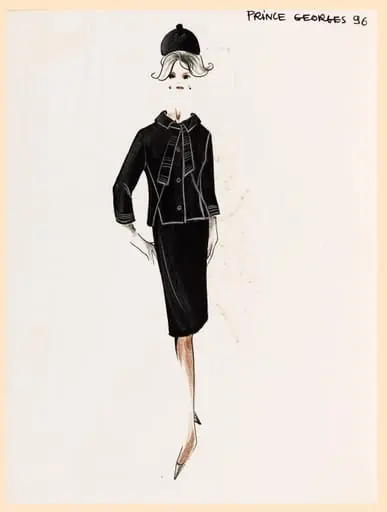
Mont Joly is a fashion illustration created around 1962 by Marie-Louise Carven, founder of the Parisian fashion house established in 1945. The work depicts a woman in a tailored ensemble, rendered in precise line work against a plain white background. It reflects Carven’s focus on refined, wearable designs for petite figures and belongs to the collection of the Museum of Ethnography, where it serves as a record of mid-century French fashion practice.
Subject & Meaning
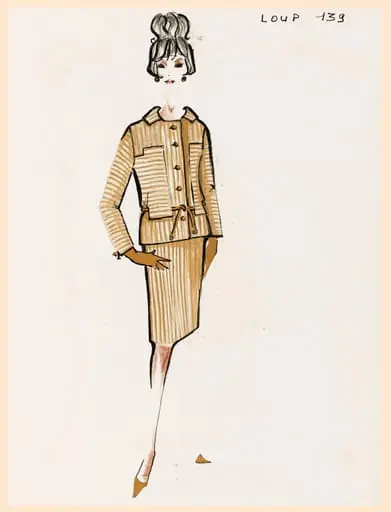
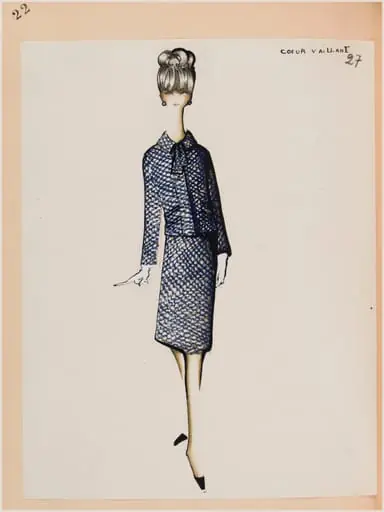
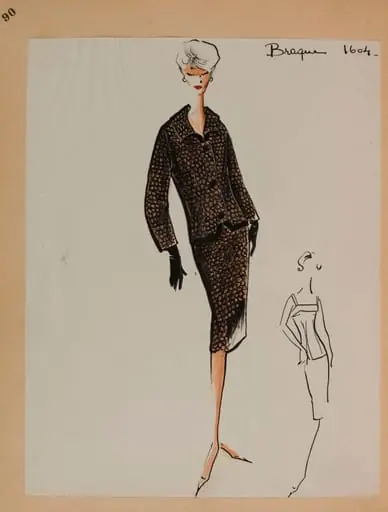
The figure in Mont Joly is posed formally, hands at her sides, conveying composure and elegance. Her attire—a black hat, jacket, skirt, and gloves—suggests a structured, daytime ensemble suited for urban life. The pale complexion and dark features emphasize facial stillness, reinforcing a sense of quiet sophistication. The drawing does not depict action but rather presence, aligning with Carven’s philosophy of clothing as an extension of restrained, confident femininity.
Technique & Style
The illustration employs clean, controlled linework to define the garment’s silhouette and surface texture, with a grid pattern indicating a woven fabric such as gingham. The absence of color and the minimal background focus attention on form and detail. The rendering is neither photorealistic nor expressive but deliberately restrained, reflecting the precision expected in fashion design portfolios of the era and Carven’s emphasis on clarity over ornamentation.
History & Provenance
Created during Carven’s active design years, Mont Joly emerged from her atelier in the early 1960s, a period when she was expanding her prêt-à-porter lines. The drawing was later acquired by the Museum of Ethnography, likely as part of a broader effort to document 20th-century European fashion. Its preservation there underscores its value as a primary artifact of design intent, rather than a finished garment.
Context
In the early 1960s, Parisian fashion was shifting toward accessible, ready-to-wear styles, and Carven was among designers championing this movement. Her work catered specifically to smaller frames, a niche often overlooked. Mont Joly exemplifies this focus, presenting a cohesive look that balanced elegance with practicality, reflecting broader societal changes in women’s dress and the growing market for tailored, non-bespoke clothing.
Legacy
Mont Joly endures as a representative example of Carven’s design ethos: understated, precise, and attentive to the needs of the individual wearer. Though not widely exhibited, its presence in a museum collection affirms its role in documenting the evolution of French fashion illustration and the quiet influence of designers who prioritized fit and function over spectacle.
Artist & collection
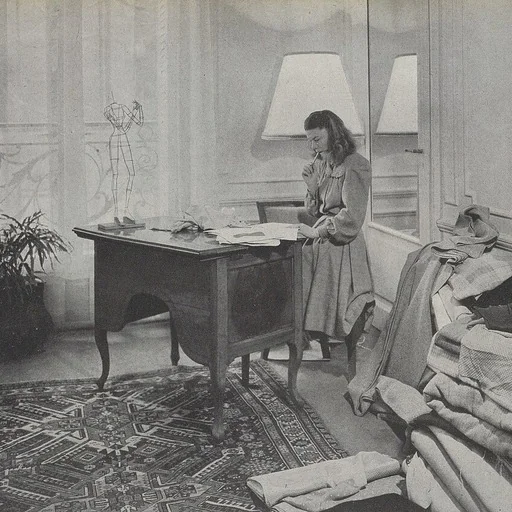
Artist
Marie-Louise Carven (31 August 1909 – 8 June 2015), born Carmen de Tommaso, was a French fashion designer who founded the house of Carven in 1945.
Museum
Palais Galliera - Musée de la Mode de la Ville de Paris
Continue through works from the same source collection.
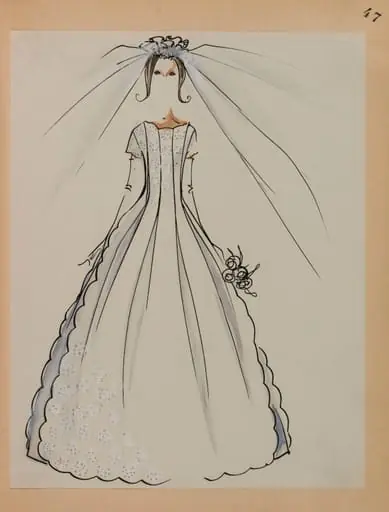 Robe de mariée festonnée et son voile
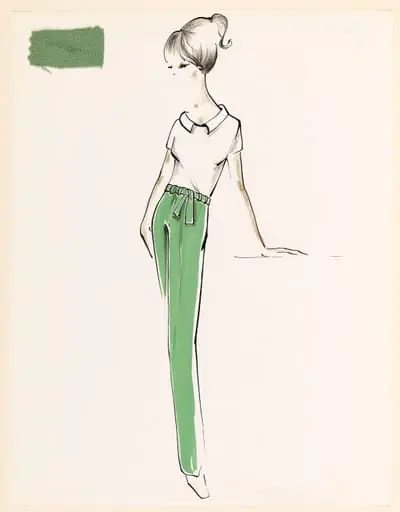 Haut blanc à manches courtes et pantalon vert à ceinture nouée
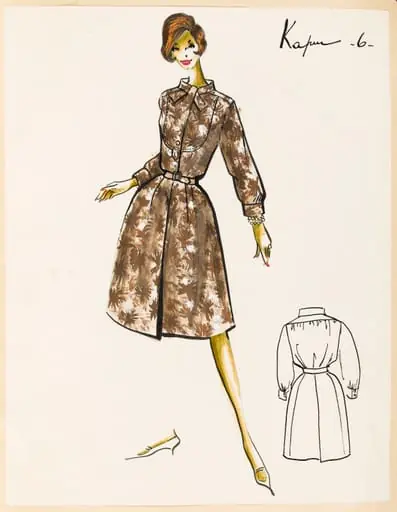 Kapur
Kapur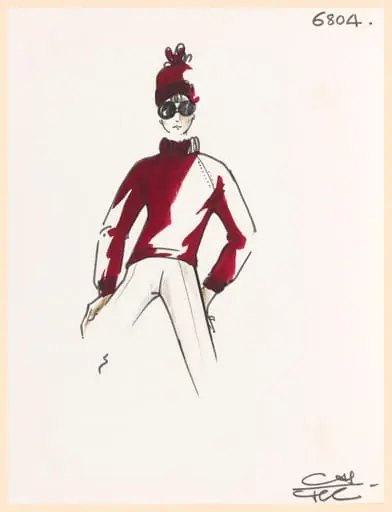 Pull-over à manches longues pourpre, bonnet assorti, pantalon et lunettes de soleil
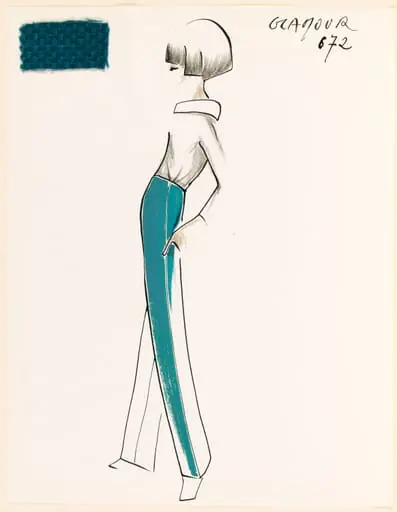 GLAMOUR
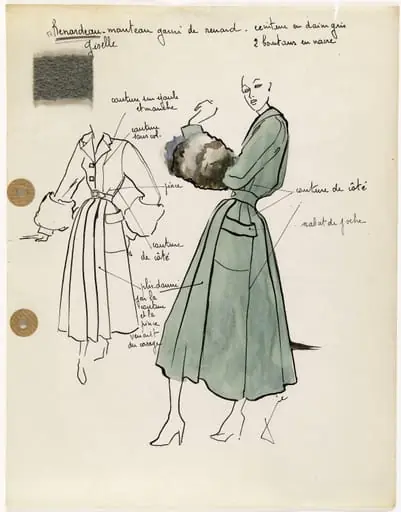 'Renardeau'
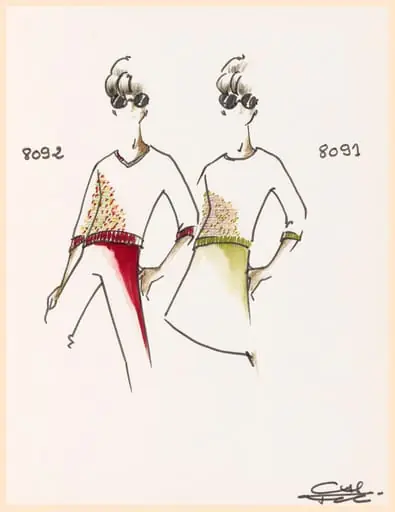 Pull-over à manches trois quarts et à encolure V à motifs multicolores, pantalon cerise et lunettes de soleil
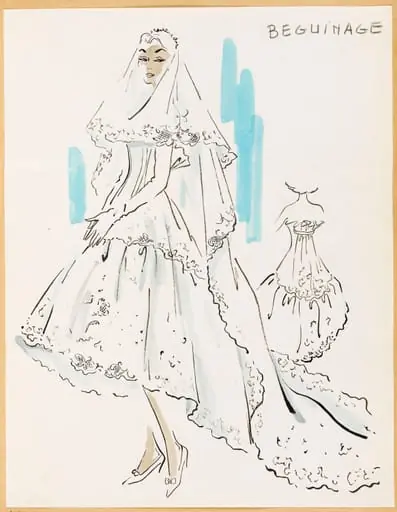 Béguinage