Artwork
'Neveria'
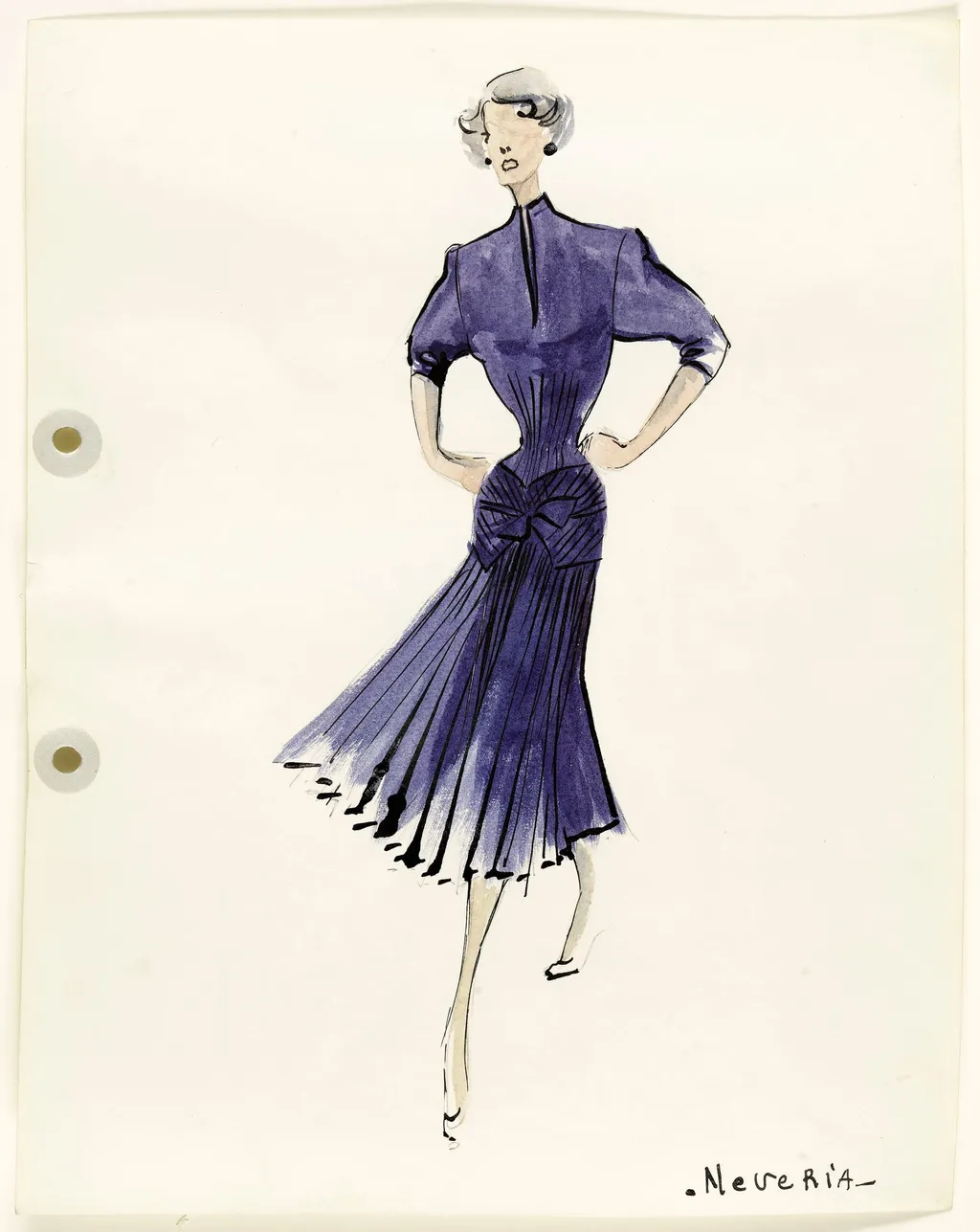
'Neveria' is a drawing by Marie-Louise Carven. It dates from 1951 and is held in the collection of the Palais Galliera - Musée de la Mode de la Ville de Paris.
About this work
Overview
The piece resides in the Museum of Ethnography’s collection, where it is preserved as a record of mid-century French fashion illustration.
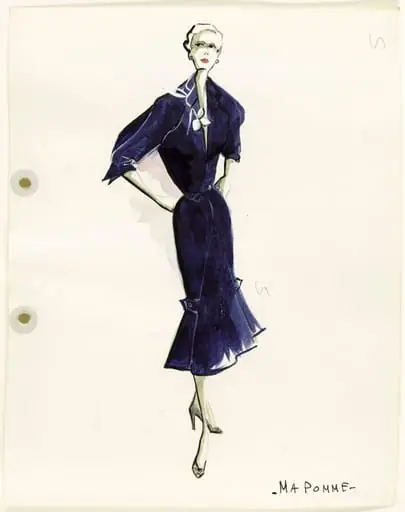
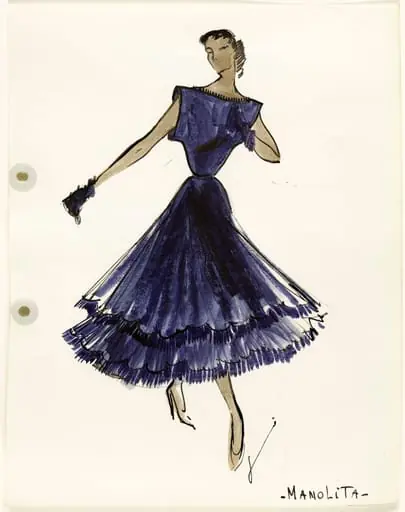
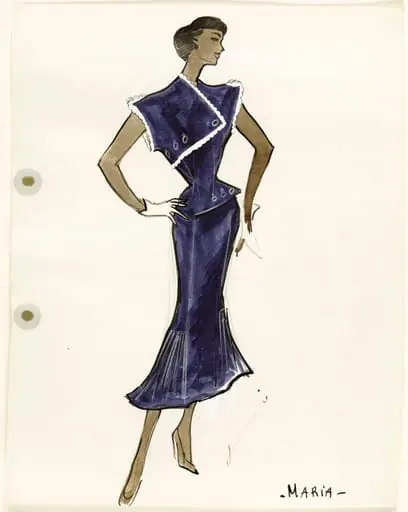
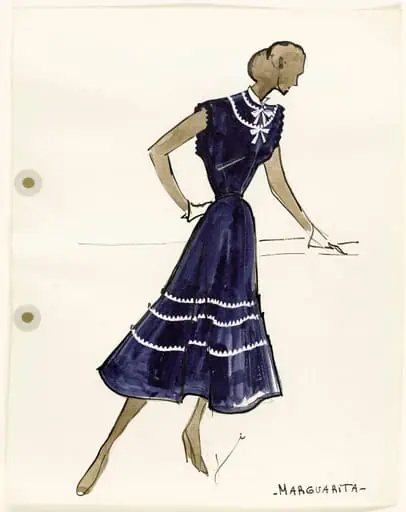
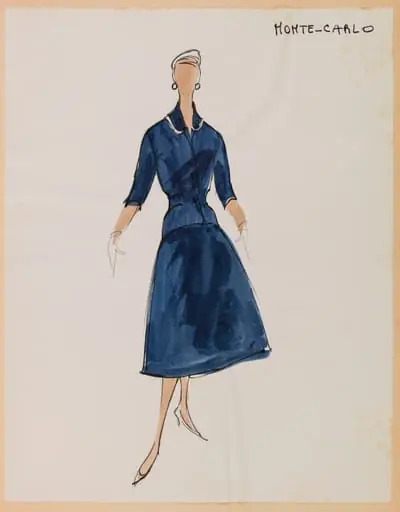
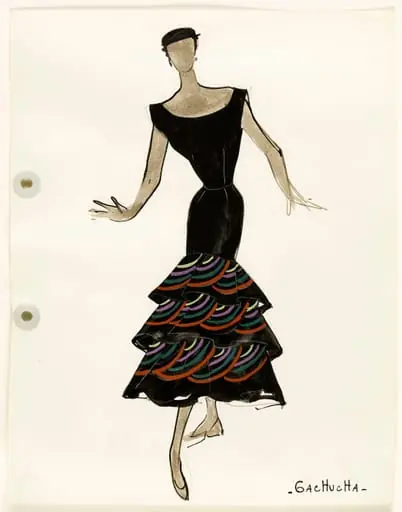
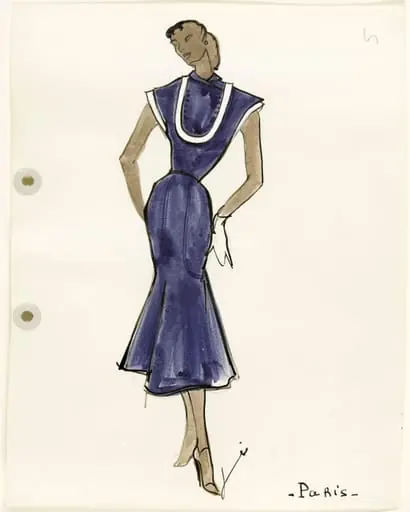
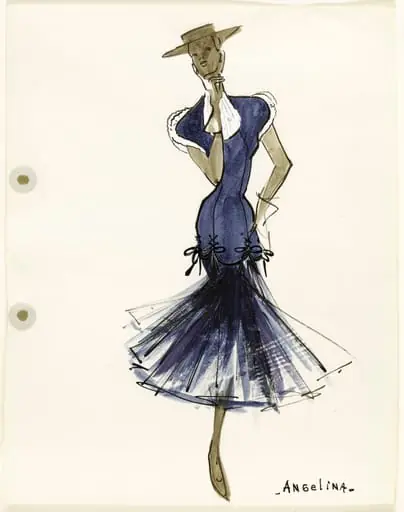
Created in 1951 by French designer Marie-Louise Carven, the drawing titled 'Neveria' is a fashion sketch that captures a full-length female figure in a tailored evening gown. Executed in loose brushwork, it reflects Carven’s approach to design as both art and wearable form. The piece resides in the Museum of Ethnography’s collection, where it is preserved as a record of mid-century French fashion illustration.
Subject & Meaning
The figure in 'Neveria' stands with poised confidence, one hand on her hip, suggesting self-assurance and grace. The dress—dark purple, high-necked, with short sleeves and a flared skirt—emphasizes elegance without excess. The title, identical to the signature, implies the design was conceived as a named creation, possibly for a specific client or collection, reinforcing Carven’s practice of treating each garment as a distinct expression.
Technique & Style
Carven employed rapid, fluid brushstrokes to convey the movement and texture of fabric, avoiding rigid outlines in favor of suggestive form. The dark purple gown emerges through layered washes, while the figure’s posture and minimal detail in the face direct attention to silhouette and drape. This technique aligns with her broader aesthetic: simplicity, lightness, and an emphasis on how clothing interacts with the body in motion.
History & Provenance
The drawing entered the Museum of Ethnography’s collection as part of a broader effort to document fashion as cultural artifact. Though Carven’s label was known for ready-to-wear garments, her sketches like 'Neveria' reveal the artistic process behind mass-produced clothing. Its preservation underscores the museum’s interest in everyday elegance and the role of women designers in shaping postwar French identity.
Context
In the early 1950s, Carven was among the first French designers to champion prêt-à-porter, making stylish clothing accessible beyond haute couture clientele. Her focus on petite figures and delicate fabrics like lace and gingham distinguished her from contemporaries. 'Neveria' reflects this philosophy—refined yet practical, designed for real movement and daily life, not just ceremonial display.
Legacy
Though Carven’s fashion house evolved over decades, 'Neveria' remains a quiet testament to her design ethos: modesty in scale, precision in cut, and sensitivity to the wearer’s experience. As a surviving sketch from her early postwar period, it offers insight into the transition from couture tradition to modern ready-to-wear, influencing how fashion is both drawn and worn.
Artist & collection
Artist
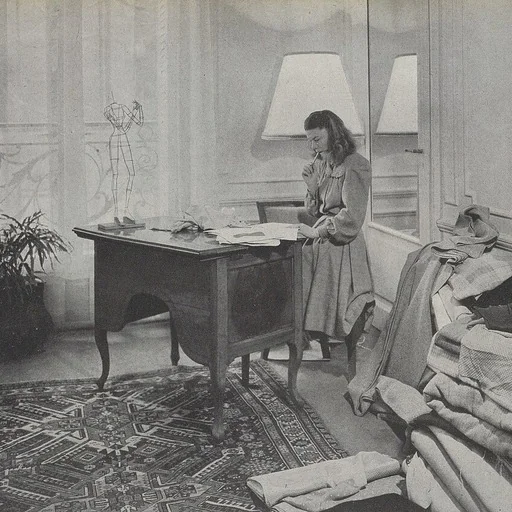
Marie-Louise Carven (31 August 1909 – 8 June 2015), born Carmen de Tommaso, was a French fashion designer who founded the house of Carven in 1945.
Museum
Palais Galliera - Musée de la Mode de la Ville de Paris
Continue through works from the same source collection.
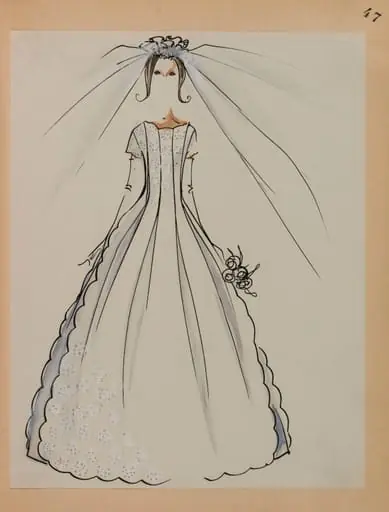 Robe de mariée festonnée et son voile
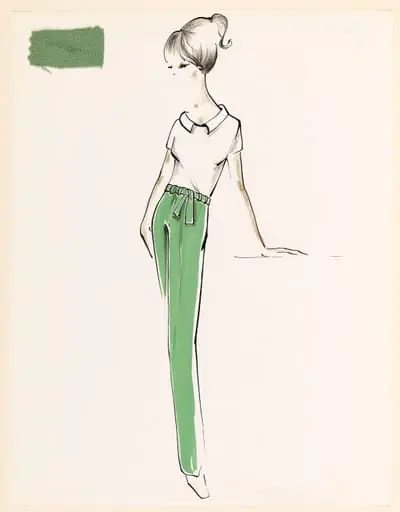 Haut blanc à manches courtes et pantalon vert à ceinture nouée
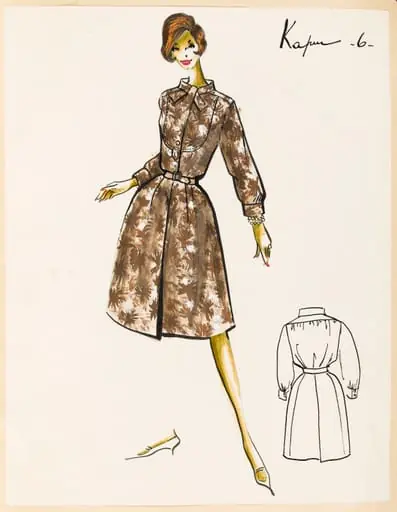 Kapur
Kapur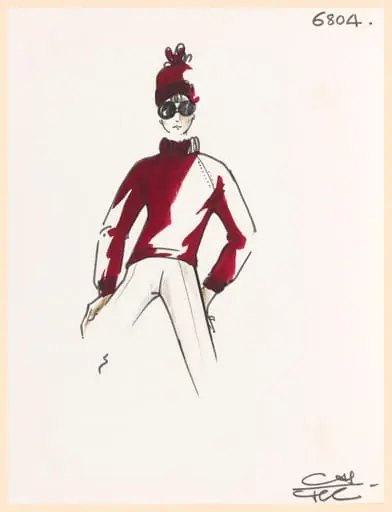 Pull-over à manches longues pourpre, bonnet assorti, pantalon et lunettes de soleil
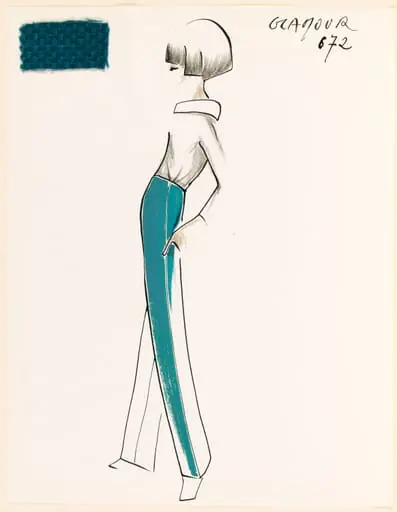 GLAMOUR
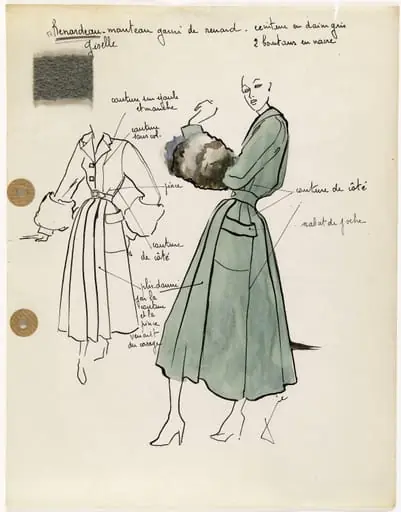 'Renardeau'
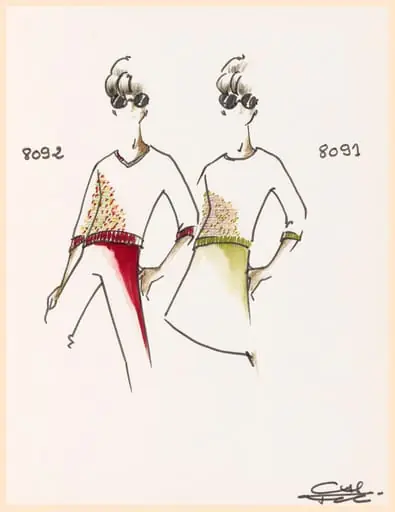 Pull-over à manches trois quarts et à encolure V à motifs multicolores, pantalon cerise et lunettes de soleil
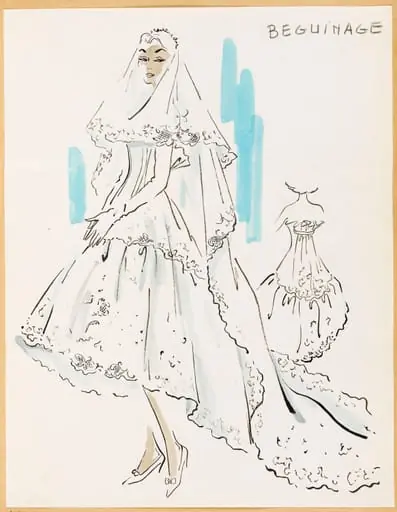 Béguinage