Artwork
'Oudaïa'
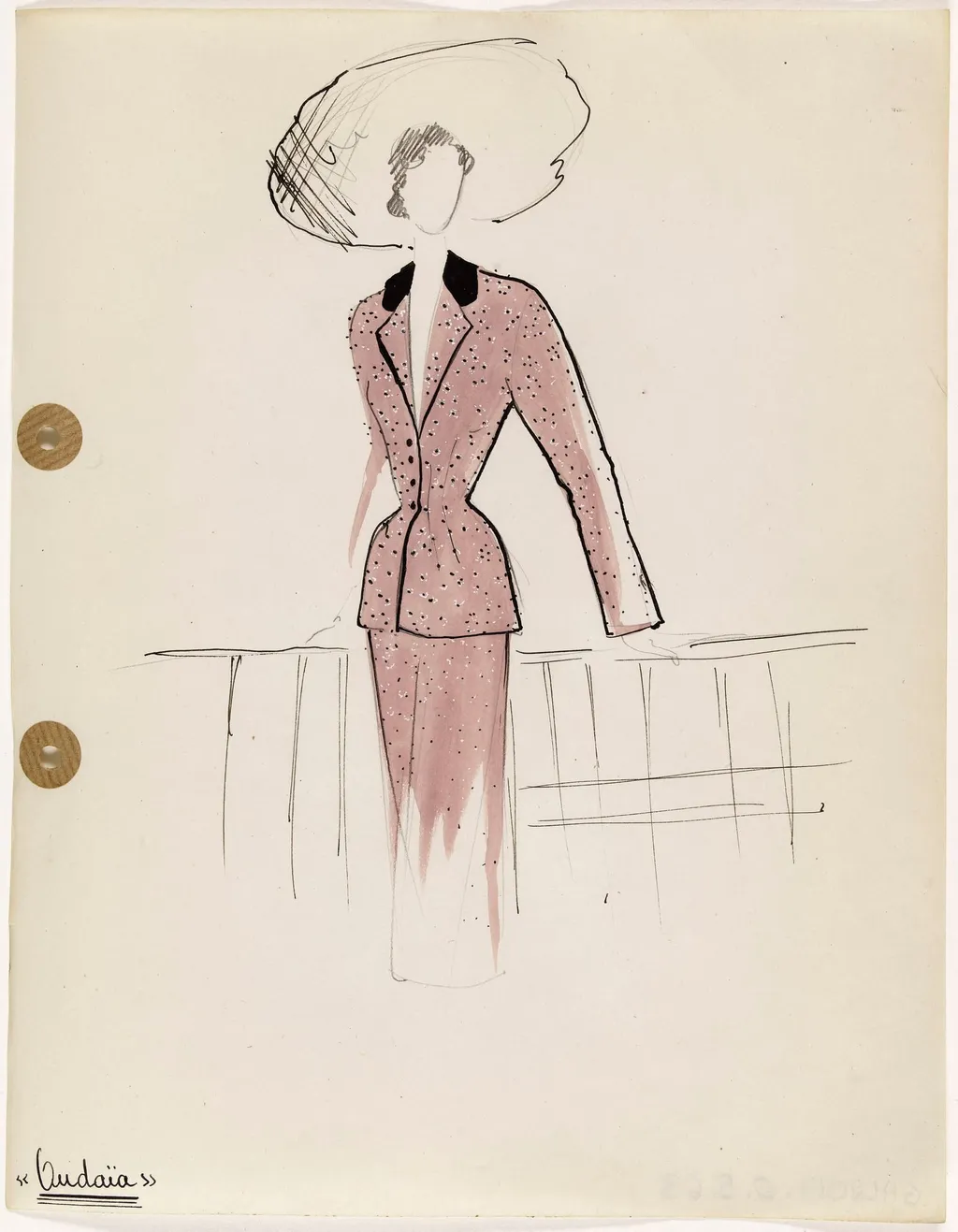
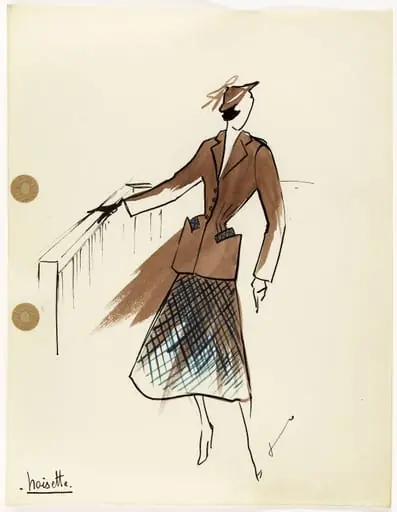
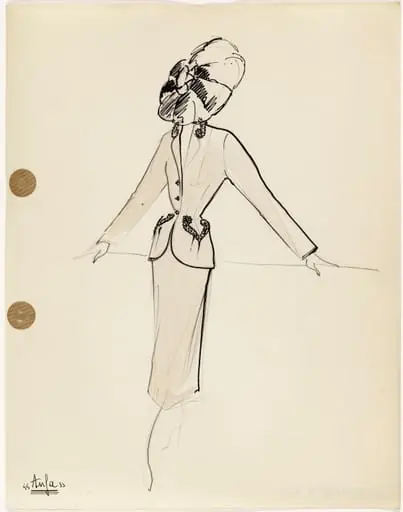
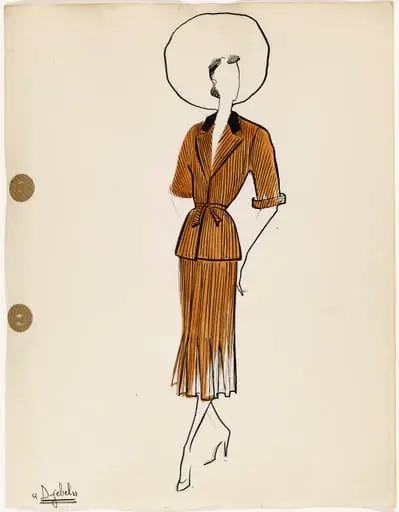
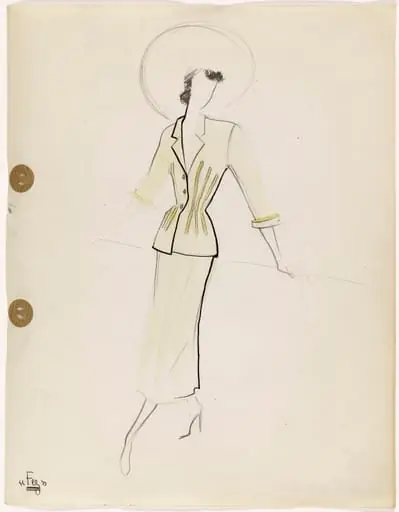
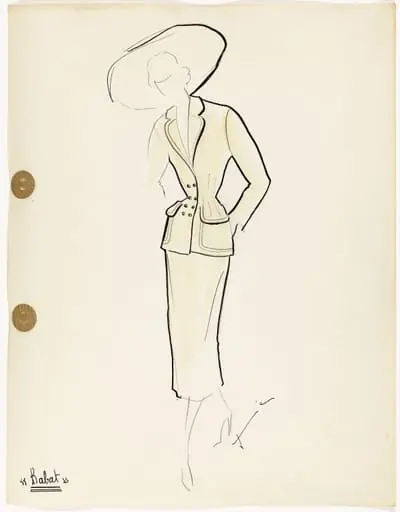
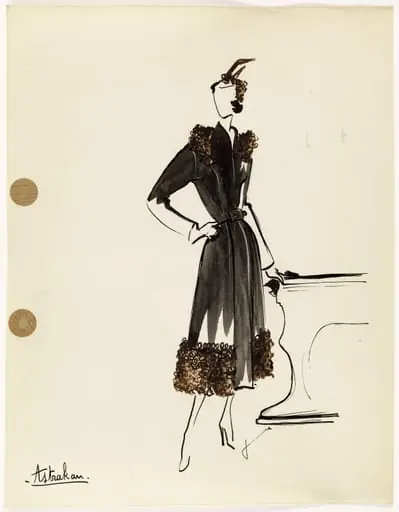
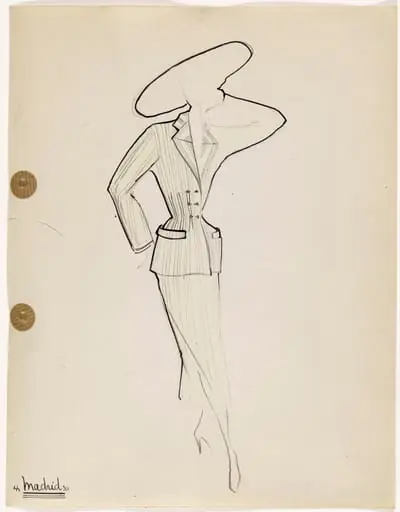
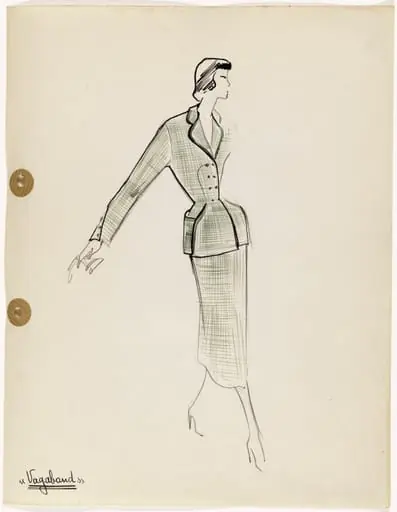
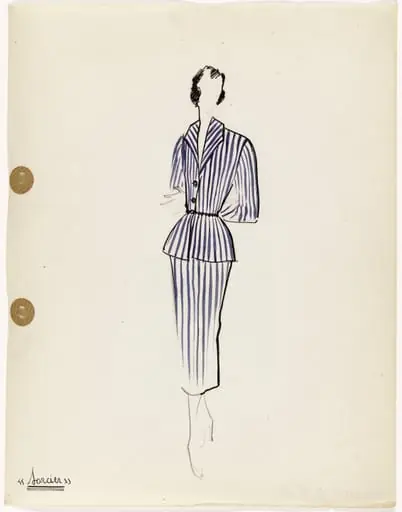
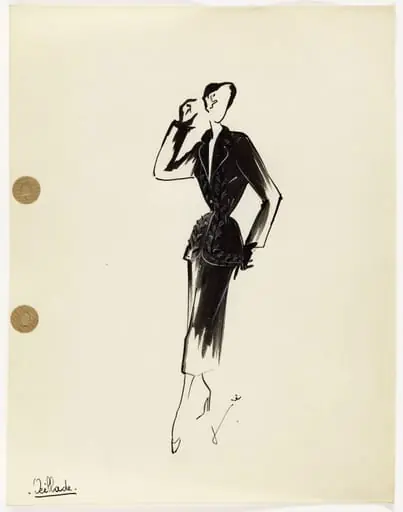
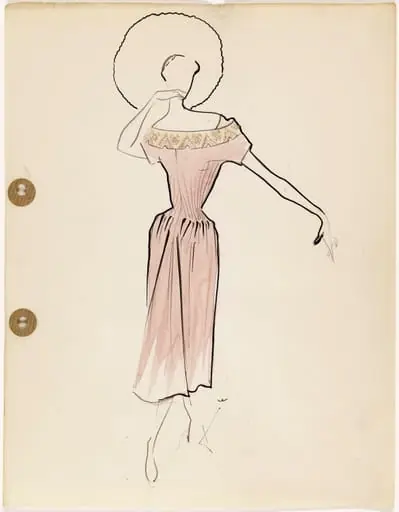
'Oudaïa' is a drawing by Marie-Louise Carven. It dates from 1949 and is held in the collection of the Palais Galliera - Musée de la Mode de la Ville de Paris.
About this work
Overview
Though not a garment itself, the drawing functions as a design study, capturing the silhouette and detailing of an ensemble intended for a modern woman.
Created in 1949, *Oudaïa* is a fashion illustration by Marie-Louise Carven, founder of the Parisian fashion house Carven. The piece reflects her early engagement with ready-to-wear design and her sensitivity to refined, wearable forms. Though not a garment itself, the drawing functions as a design study, capturing the silhouette and detailing of an ensemble intended for a modern woman. It resides in the Museum of Ethnography’s collection, suggesting its cultural resonance beyond fashion circles.
Subject & Meaning
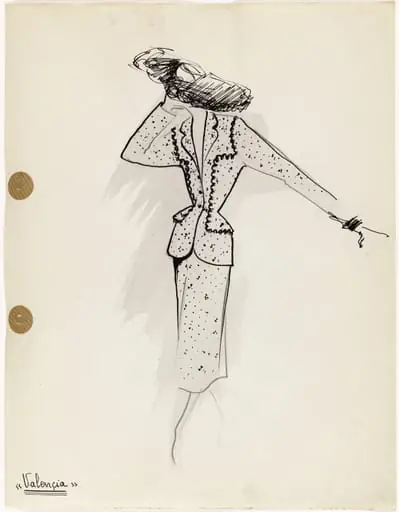
The figure depicted is a woman dressed in a coordinated jacket and trousers, both tailored with precision. Her face is intentionally left blank, removing individual identity to emphasize the garment’s form and structure. The large hat and updo suggest a formal context, while the absence of facial features invites viewers to project their own sense of poise and elegance onto the figure. The design avoids ornamentation, favoring quiet confidence over spectacle.
Technique & Style
Rendered in clean, restrained lines, the illustration uses minimal detail to convey structure and texture. The jacket’s black collar and scattered white dots are the only decorative elements, suggesting subtle embellishment rather than overt embellishment. The solid-colored trousers ground the composition, allowing the jacket’s pattern to stand out. The drawing’s simplicity reflects Carven’s design philosophy: clarity, proportion, and understated refinement.
History & Provenance
Marie-Louise Carven established her fashion house in 1945 and was among the first French couturiers to develop a prêt-à-porter line, making high design accessible beyond elite clients. *Oudaïa* was produced during this pivotal period of transition in fashion. Its inclusion in the Museum of Ethnography’s holdings indicates recognition of its cultural significance as a document of postwar French design practices and evolving gendered dress norms.
Context
In postwar Europe, fashion was redefining itself through practicality and modernity. Carven’s work responded to women’s changing roles, offering tailored, mobile clothing that balanced elegance with ease. *Oudaïa*’s trousers and structured jacket reflect a broader shift away from restrictive silhouettes. The illustration’s anonymity aligns with contemporary design trends that prioritized the garment over the individual wearer.
Legacy
As a design artifact, *Oudaïa* exemplifies Carven’s influence in democratizing fashion through thoughtful, accessible forms. Its preservation in an ethnographic museum underscores its role as a cultural record—not merely of style, but of social change. The illustration’s enduring presence highlights how fashion drawings functioned as both creative tools and historical witnesses to evolving identities in mid-century Europe.
Artist & collection
Artist
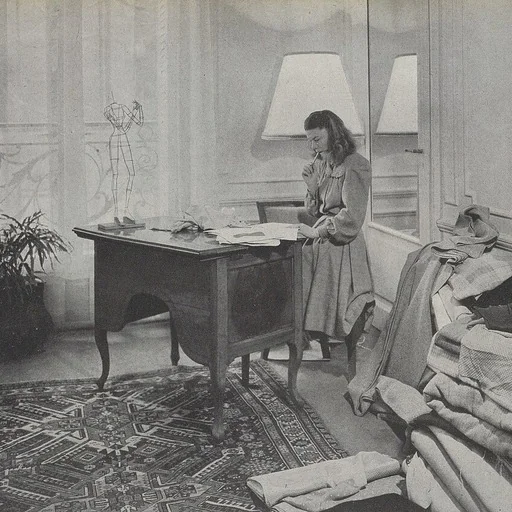
Marie-Louise Carven (31 August 1909 – 8 June 2015), born Carmen de Tommaso, was a French fashion designer who founded the house of Carven in 1945.
Museum
Palais Galliera - Musée de la Mode de la Ville de Paris
Continue through works from the same source collection.
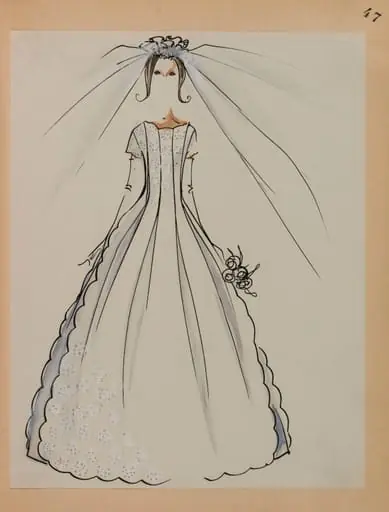 Robe de mariée festonnée et son voile
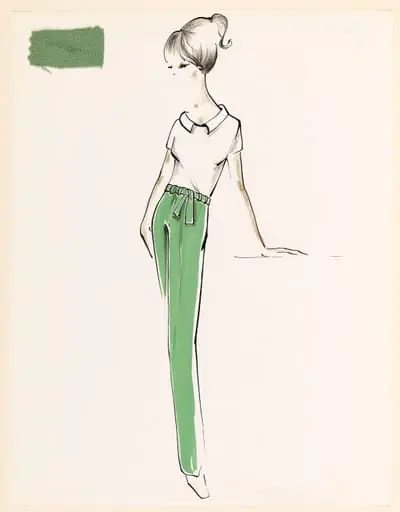 Haut blanc à manches courtes et pantalon vert à ceinture nouée
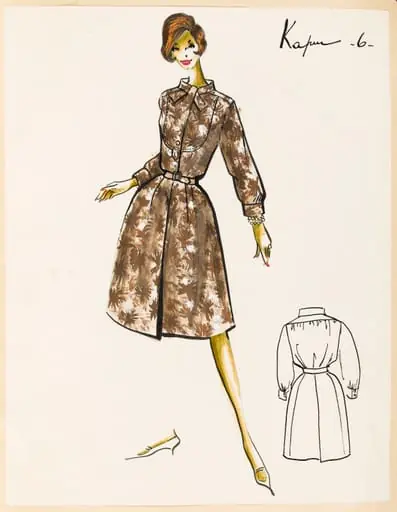 Kapur
Kapur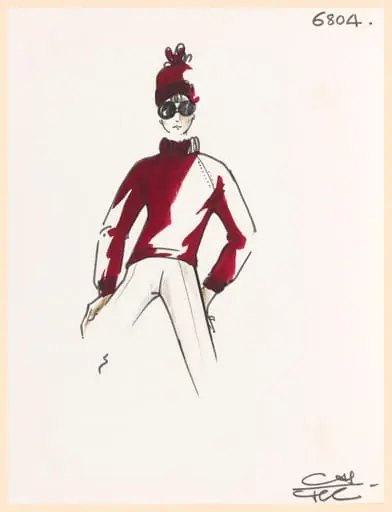 Pull-over à manches longues pourpre, bonnet assorti, pantalon et lunettes de soleil
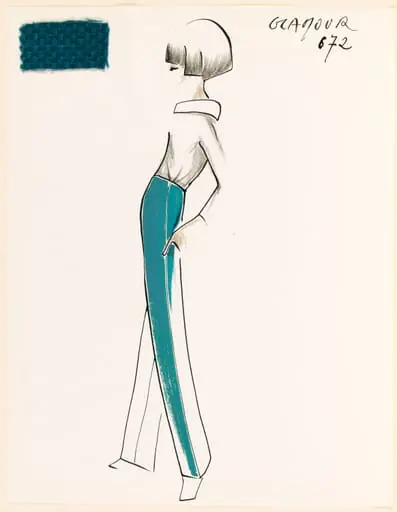 GLAMOUR
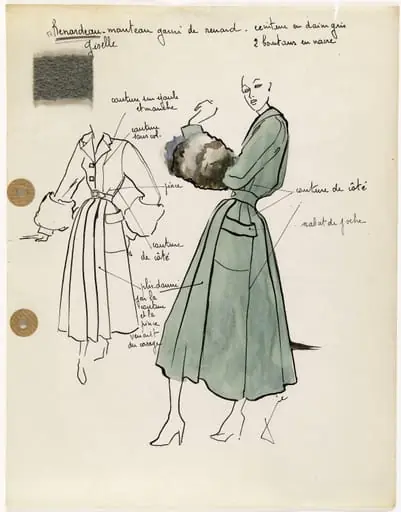 'Renardeau'
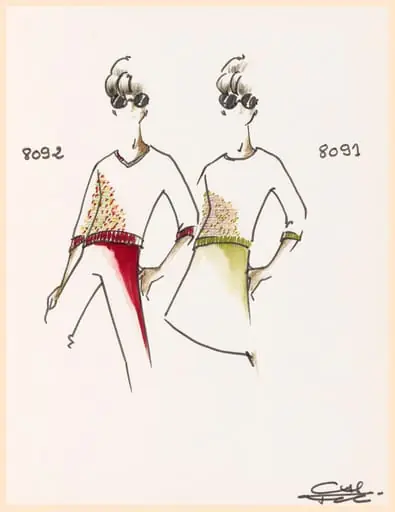 Pull-over à manches trois quarts et à encolure V à motifs multicolores, pantalon cerise et lunettes de soleil
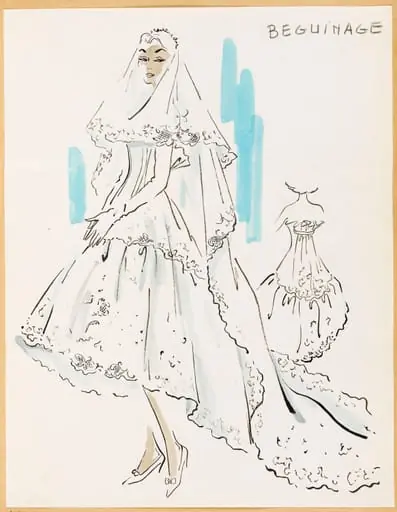 Béguinage