Artwork
Pintade
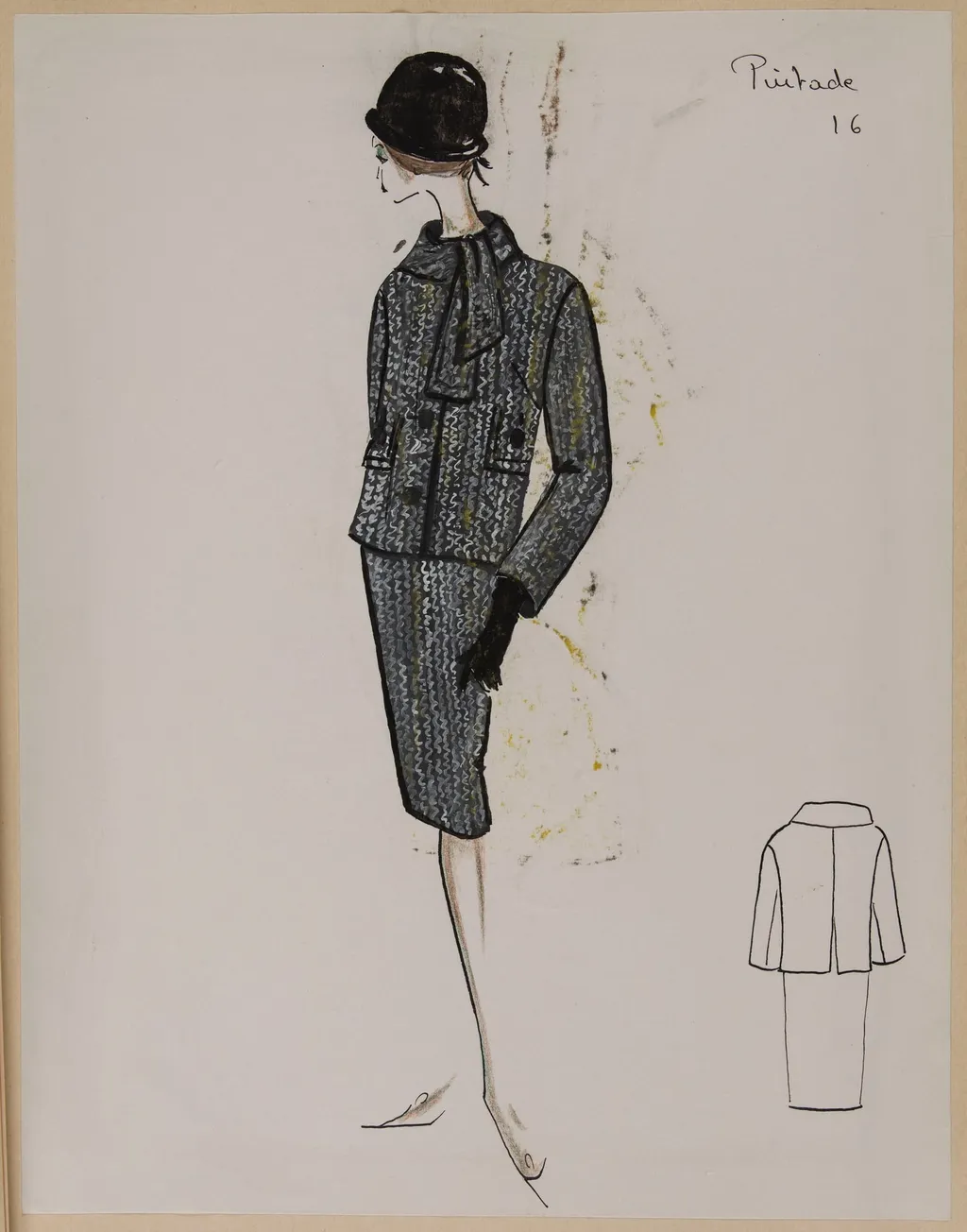
Pintade is a drawing by Marie-Louise Carven. It dates from 1960 and is held in the collection of the Palais Galliera - Musée de la Mode de la Ville de Paris.
About this work
Overview
Signed by the artist in the upper corner, the piece reflects Carven’s habit of sketching directly on paper during early design stages.
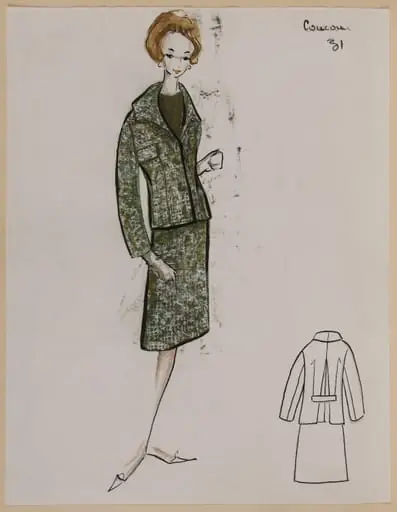
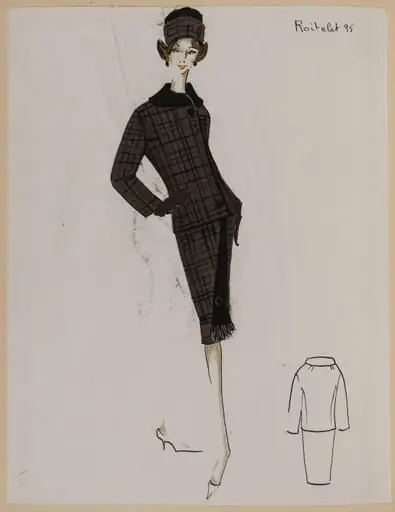
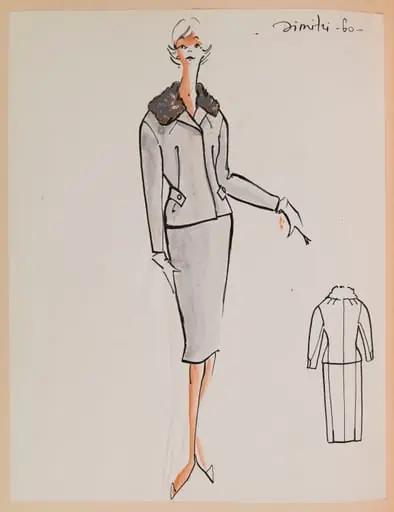
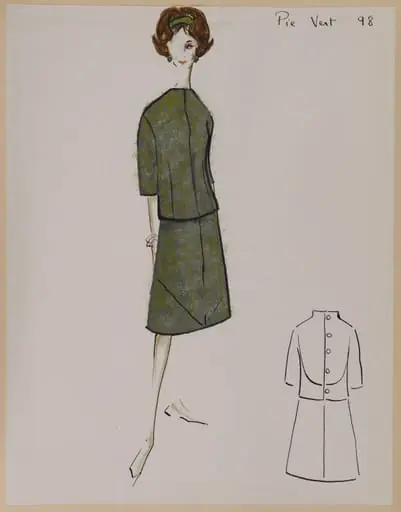
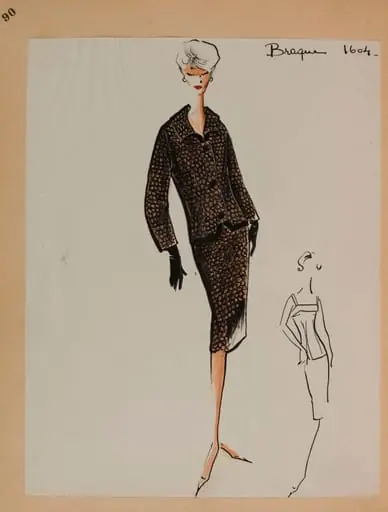
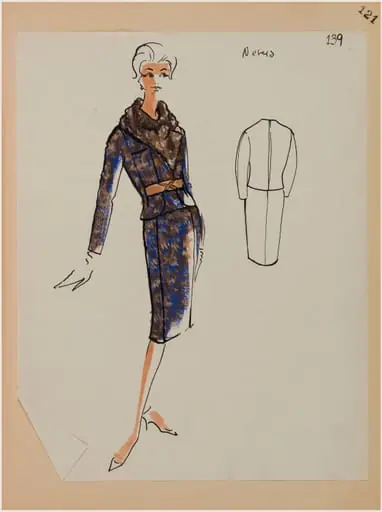
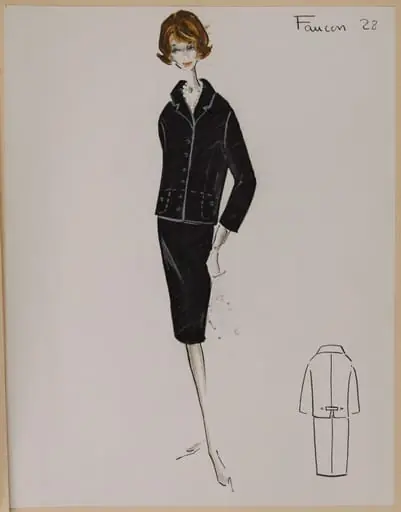
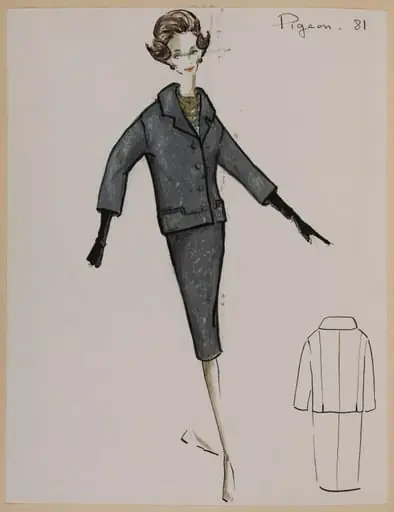
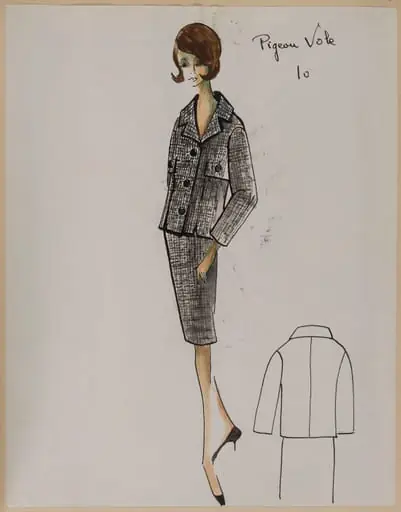
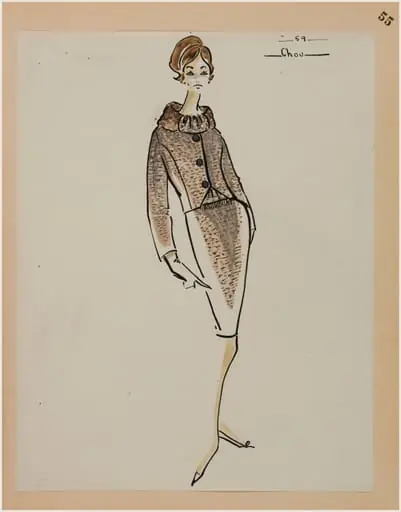
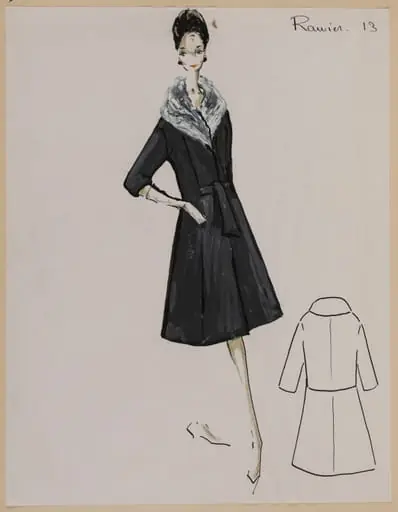
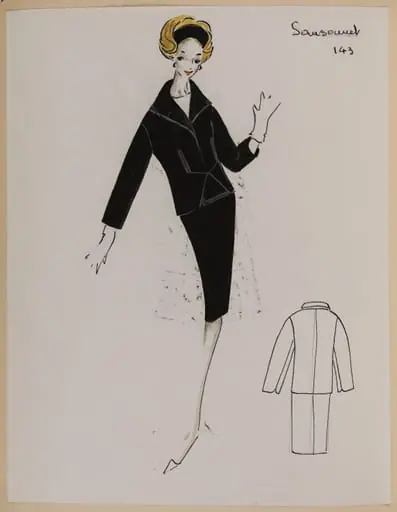
Created around 1960, *Pintade* is a pencil sketch by Marie-Louise Carven, founder of the Parisian fashion house Carven. The work captures a female figure from behind, dressed in a dark, patterned jacket with a high collar and matching skirt, accompanied by a hat and plain footwear. A secondary outline of a white, round-necked jacket appears to the right, suggesting exploratory design thinking. Signed by the artist in the upper corner, the piece reflects Carven’s habit of sketching directly on paper during early design stages.
Subject & Meaning
The figure in *Pintade* embodies Carven’s focus on tailored, petite silhouettes suited to everyday wear. The restrained palette and structured yet lightweight forms align with her philosophy of elegant simplicity. The inclusion of a second garment sketch indicates a process of variation—considering alternatives in fabric, cut, or color—rather than a final presentation. The title, referencing the guinea fowl, may allude to the bird’s speckled plumage, mirroring the patterned fabric.
Technique & Style
Executed in pencil with loose, rapid strokes, the drawing reveals the immediacy of a working sketch. Smudges and uneven lines suggest spontaneous handling, typical of design notes made during studio sessions. The absence of shading or fine detail emphasizes form over finish, prioritizing compositional clarity over polished presentation. This unembellished approach reflects Carven’s practical, hands-on methodology in fashion development.
History & Provenance
The sketch entered the collection of the Museum of Ethnography, an institution more commonly associated with cultural artifacts than fashion. Its inclusion signals a growing recognition of fashion design as a material expression of social and aesthetic values. The work’s preservation outside a traditional fashion archive underscores its value as a document of mid-century design practice, rather than merely a garment prototype.
Context
In the 1950s and 60s, Carven was among the first French couturiers to embrace prêt-à-porter, making fashion more accessible beyond elite clients. Her designs favored light fabrics, modest proportions, and functional elegance—qualities evident in *Pintade*. The sketch reflects a broader shift in postwar fashion toward practicality and democratization, even as Paris remained the epicenter of haute couture.
Legacy
*Pintade* exemplifies how fashion design operated in the margins of finished garments—through quick, personal notations that shaped production. Carven’s sketches, preserved in institutional collections, offer insight into the quiet labor behind accessible fashion. The work stands as a testament to the intellectual and tactile processes that underpinned mid-century French design, bridging couture tradition with modern retail realities.
Artist & collection
Artist
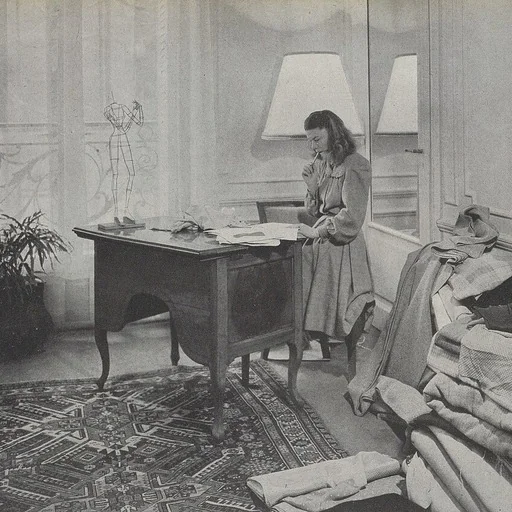
Marie-Louise Carven (31 August 1909 – 8 June 2015), born Carmen de Tommaso, was a French fashion designer who founded the house of Carven in 1945.

Museum
Palais Galliera - Musée de la Mode de la Ville de Paris
Continue through works from the same source collection.
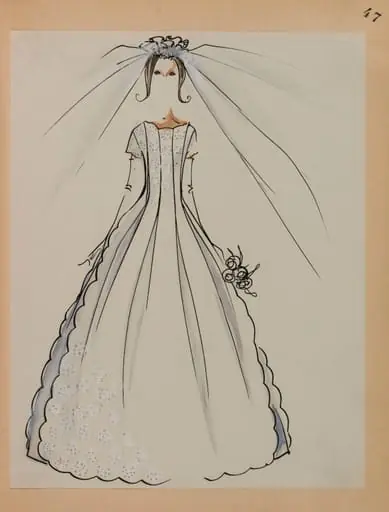 Robe de mariée festonnée et son voile
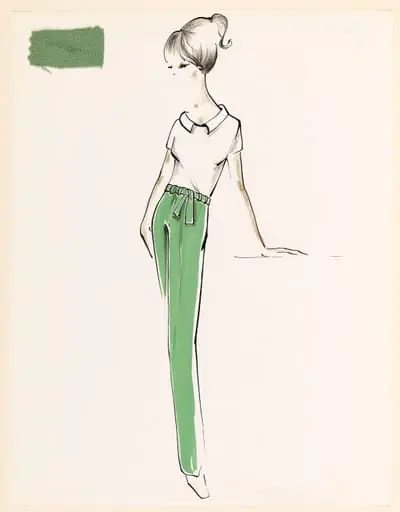 Haut blanc à manches courtes et pantalon vert à ceinture nouée
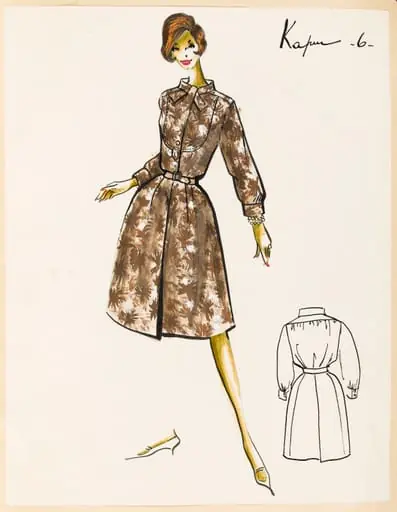 Kapur
Kapur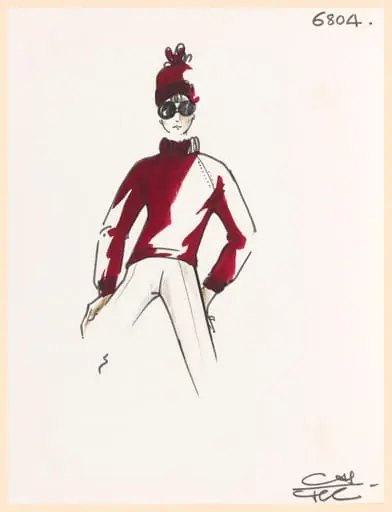 Pull-over à manches longues pourpre, bonnet assorti, pantalon et lunettes de soleil
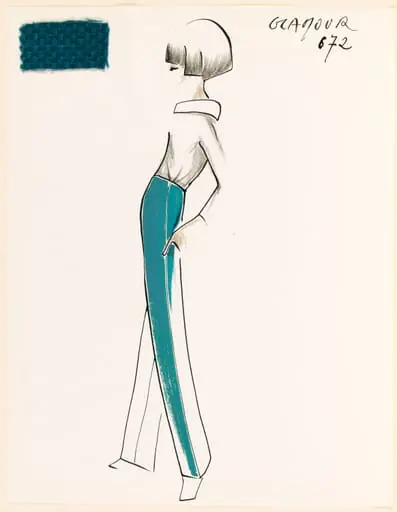 GLAMOUR
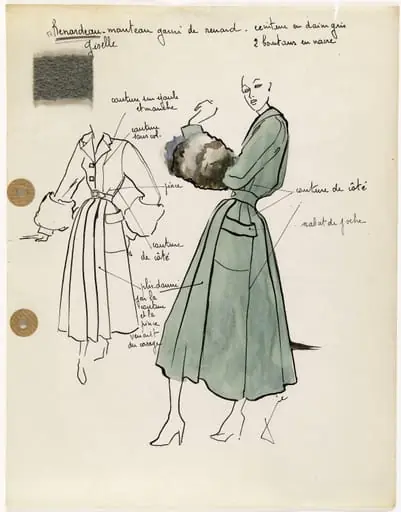 'Renardeau'
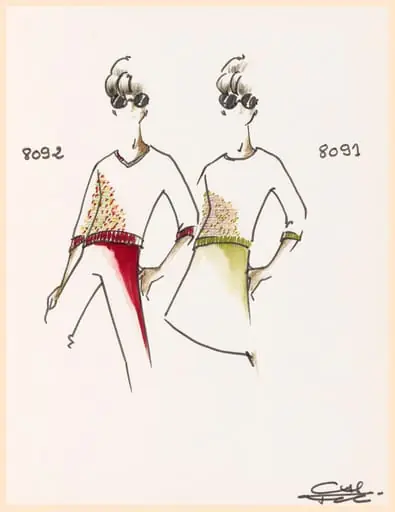 Pull-over à manches trois quarts et à encolure V à motifs multicolores, pantalon cerise et lunettes de soleil
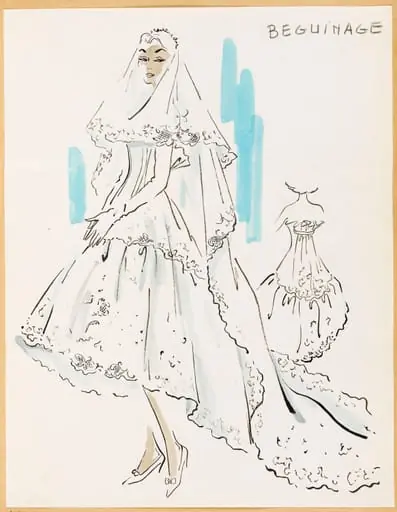 Béguinage