Artwork
Plastron
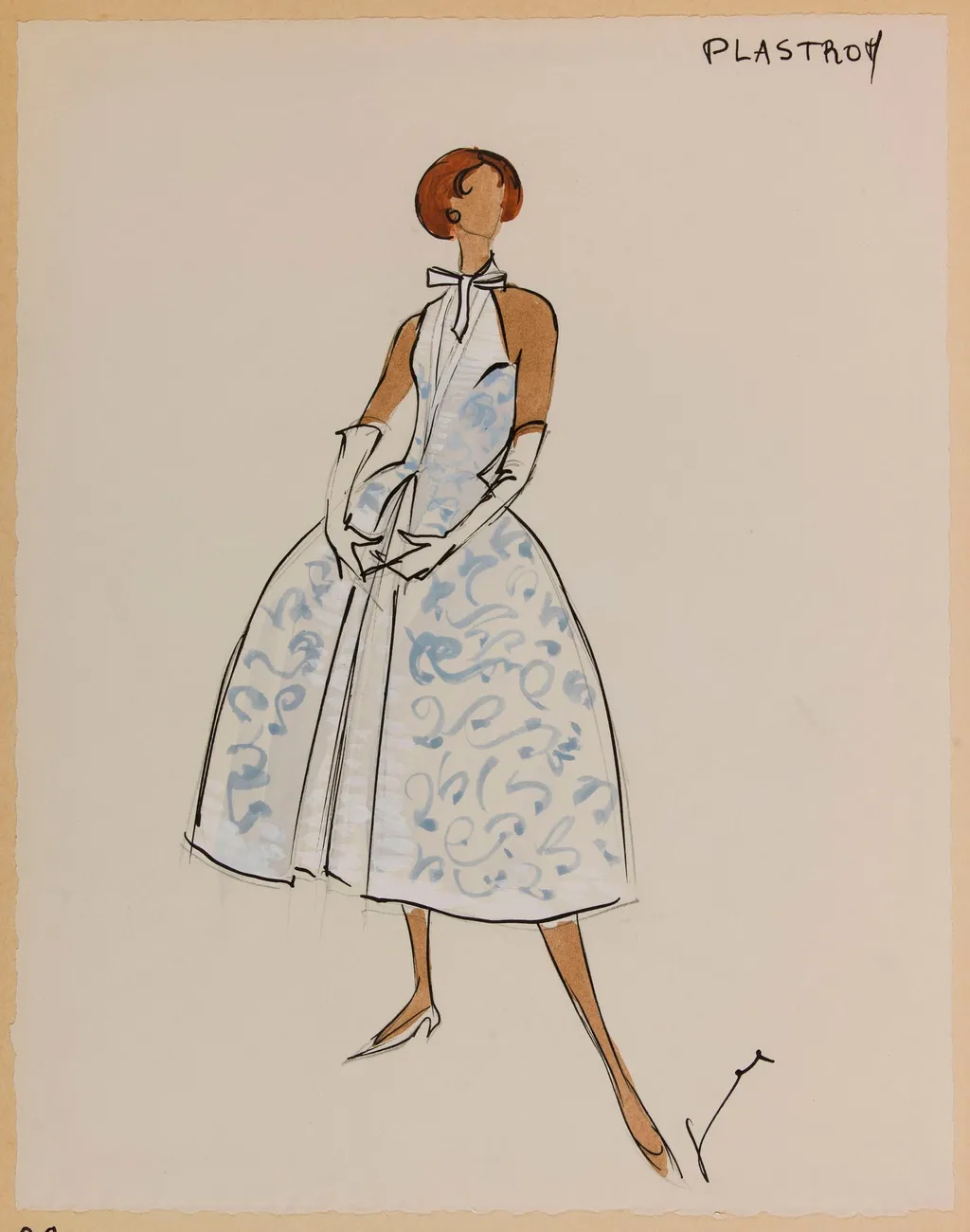
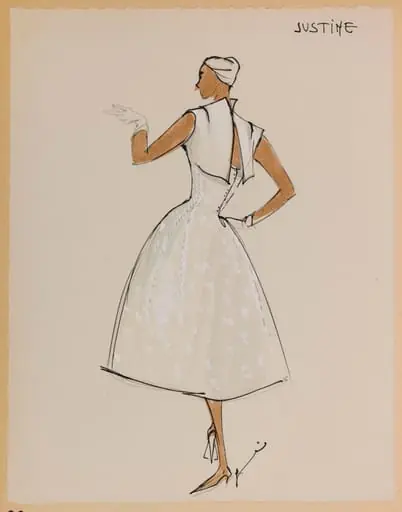
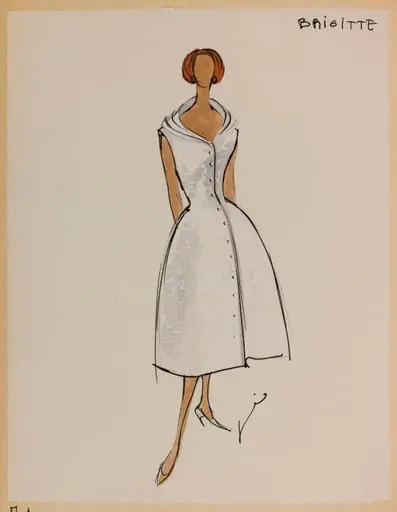
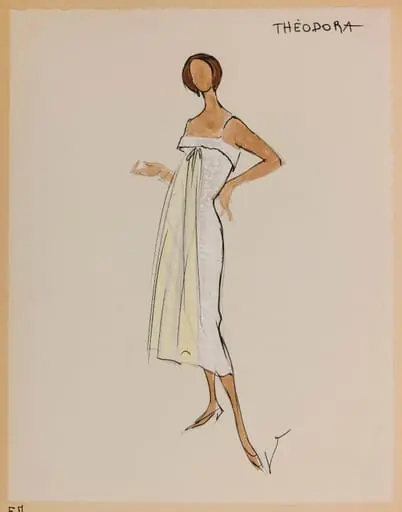
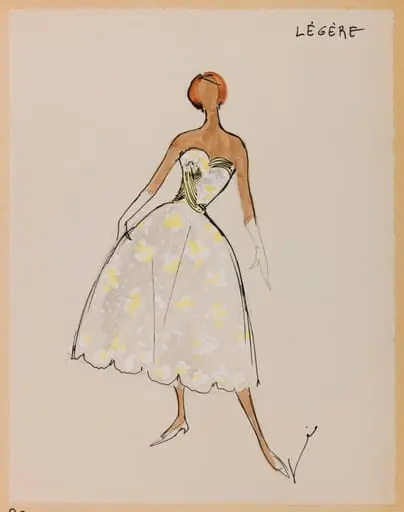
Plastron is a drawing by Marie-Louise Carven. It dates from 1956 and is held in the collection of the Palais Galliera - Musée de la Mode de la Ville de Paris.
About this work
The image depicts a woman in a white dress with a blue pattern, standing with her left leg slightly bent.
The image depicts a woman in a white dress with a blue pattern, standing with her left leg slightly bent. She wears long white gloves and has short brown hair. The dress features a high neckline and a full skirt.
The woman's pose and attire suggest a formal or elegant setting, possibly from the mid-20th century. The artist's use of simple lines and minimal shading creates a clean and understated visual style.
This piece reminds me of the work of artist Marie-Louise Carven.
Overview
Created around 1956, the plastron is a garment designed by French couturier Marie-Louise Carven, known for her refined approach to women’s wear. Though often associated with ready-to-wear innovation, this piece reflects her attention to structure and proportion. It is preserved in the Museum of Ethnography, where it is presented as an artifact of mid-century fashion rather than a high-fashion exhibit.
Subject & Meaning
The image depicts a woman in a white dress with a blue decorative pattern, standing in a poised, formal stance. Her long gloves and high-necked, full-skirted silhouette suggest an occasion of elegance, perhaps a social or ceremonial event. The attire conveys modesty and refinement, aligning with Carven’s aesthetic of understated sophistication tailored for the petite figure.
Technique & Style
The visual representation employs clean lines and minimal shading, avoiding ornate detail in favor of clarity. This restrained approach mirrors Carven’s design philosophy, emphasizing silhouette over embellishment. The flat rendering of fabric and pattern suggests a stylistic affinity with mid-century illustration, prioritizing form over texture or realism.
History & Provenance
Marie-Louise Carven founded her fashion house in 1945 and later pioneered one of the first prêt-à-porter lines in French couture. While the plastron itself is not documented as a commercial design, its inclusion in the Museum of Ethnography indicates its value as a representative example of postwar French women’s dress, possibly collected for its cultural significance rather than celebrity association.
Context
In the 1950s, French fashion balanced tradition with modernity, as designers responded to changing lifestyles and emerging mass production. Carven’s work stood apart by focusing on wearable elegance for smaller frames, distinct from the voluminous silhouettes of larger houses. This garment reflects that niche, embodying a quiet rebellion against excess in favor of tailored simplicity.
Legacy
Though Carven’s innovations in ready-to-wear and lingerie are better documented, this image preserves a visual record of her design ethos. The plastron’s presence in an ethnographic collection signals its role as a cultural artifact, illustrating how mid-century fashion communicated social norms through form, fabric, and posture.
Artist & collection
Artist
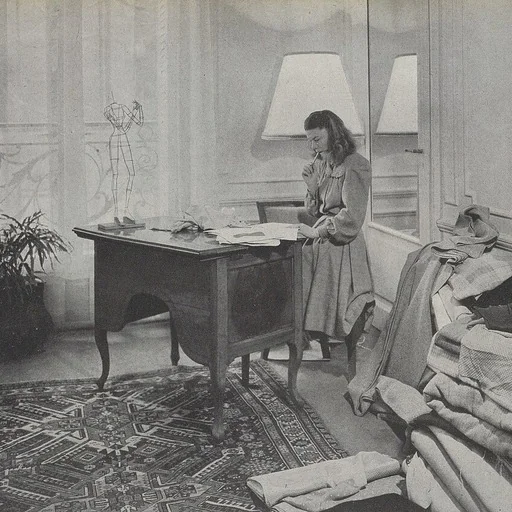
Marie-Louise Carven (31 August 1909 – 8 June 2015), born Carmen de Tommaso, was a French fashion designer who founded the house of Carven in 1945.
Museum
Palais Galliera - Musée de la Mode de la Ville de Paris
Continue through works from the same source collection.
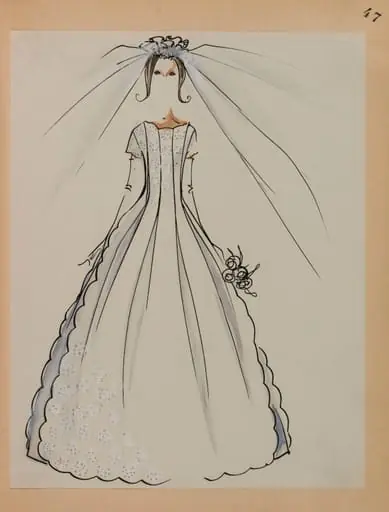 Robe de mariée festonnée et son voile
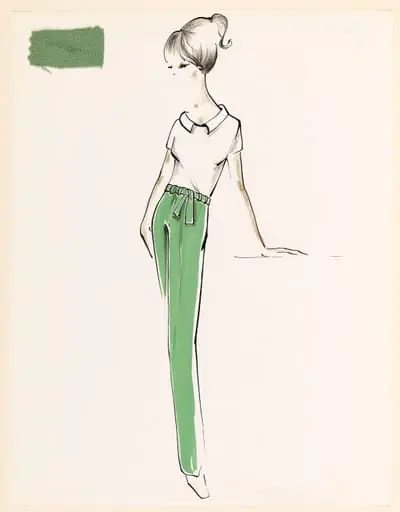 Haut blanc à manches courtes et pantalon vert à ceinture nouée
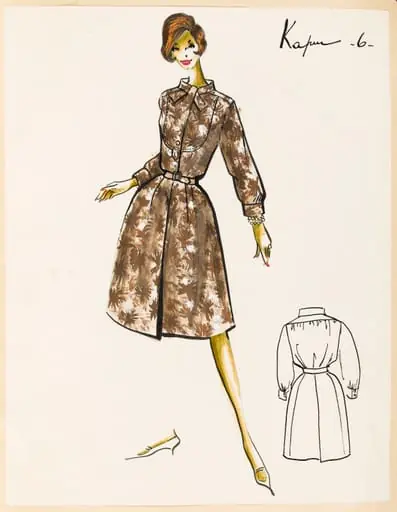 Kapur
Kapur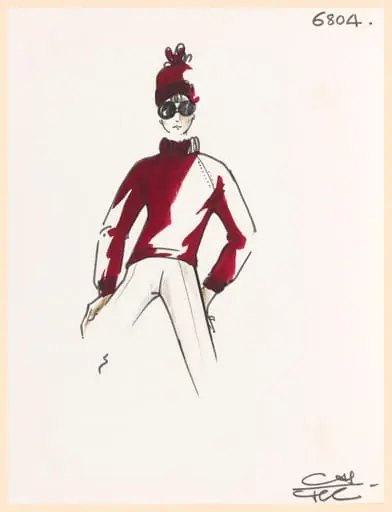 Pull-over à manches longues pourpre, bonnet assorti, pantalon et lunettes de soleil
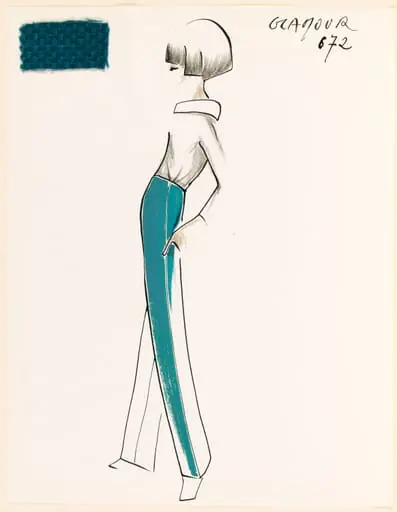 GLAMOUR
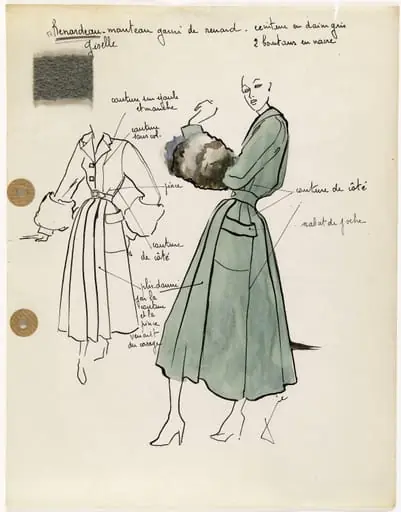 'Renardeau'
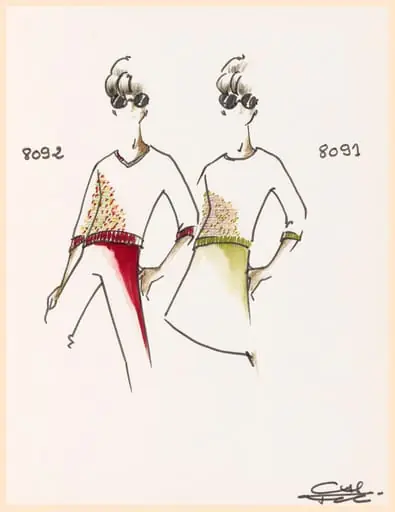 Pull-over à manches trois quarts et à encolure V à motifs multicolores, pantalon cerise et lunettes de soleil
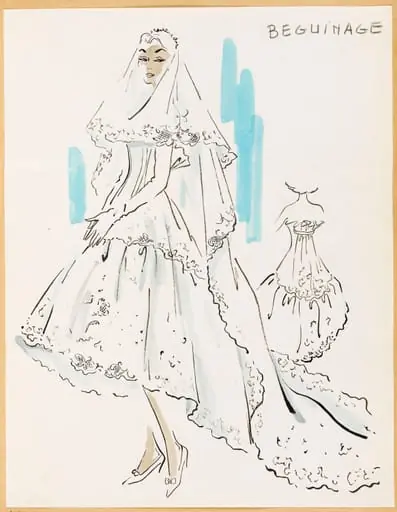 Béguinage