Artwork
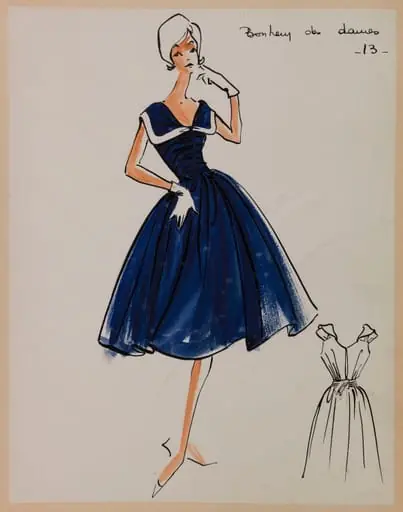
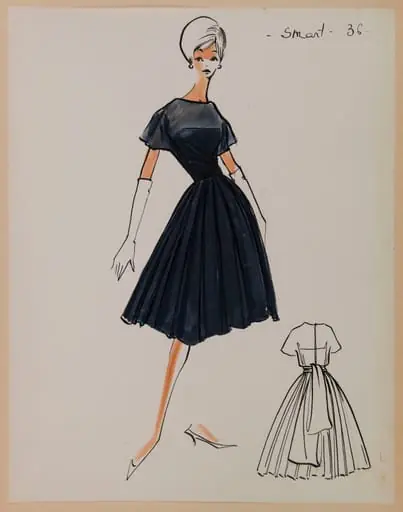
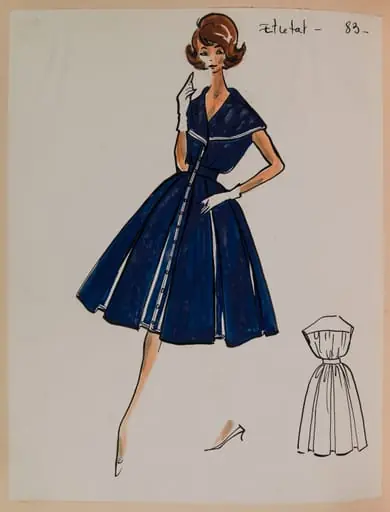
Robe cintrée bleu marine
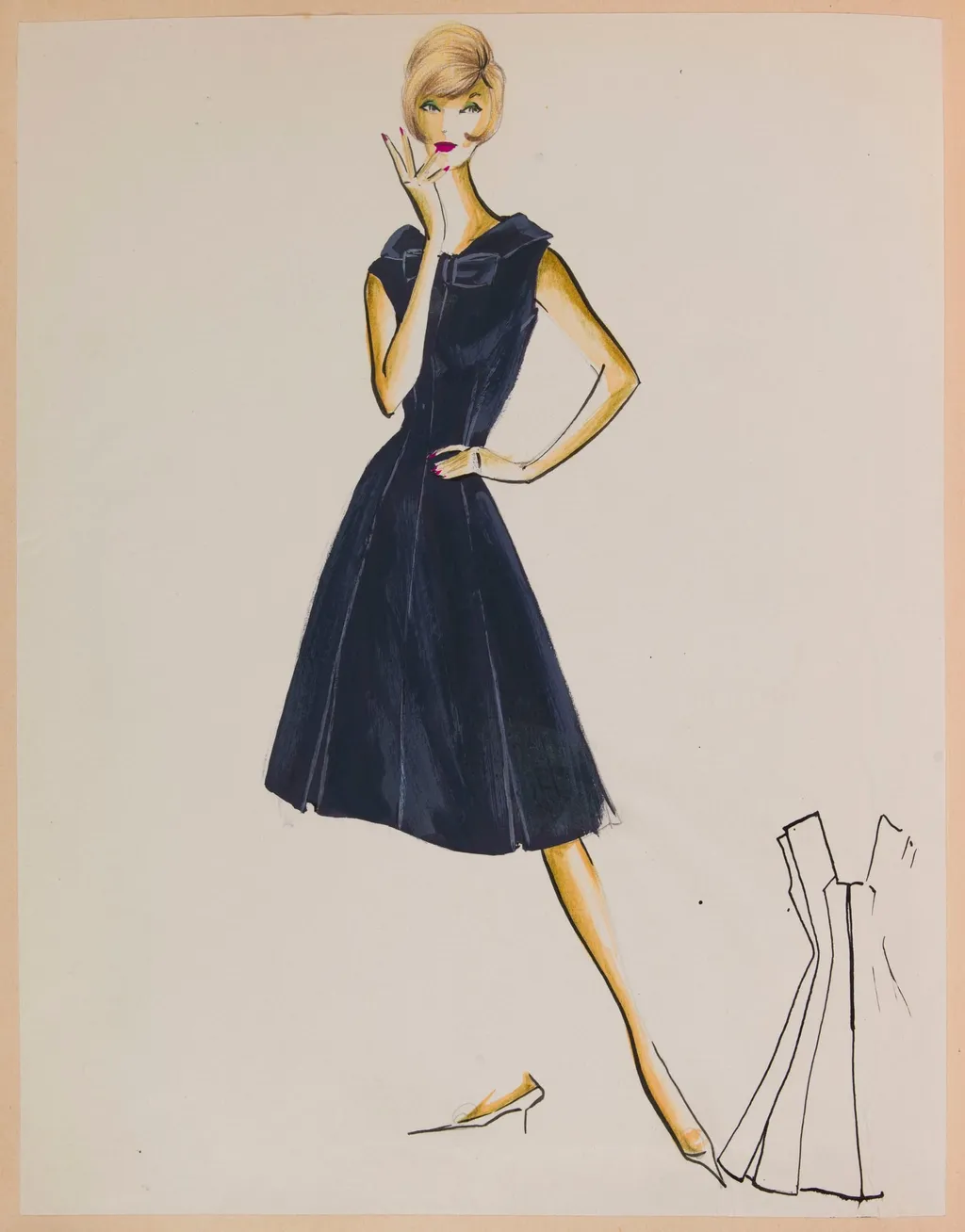
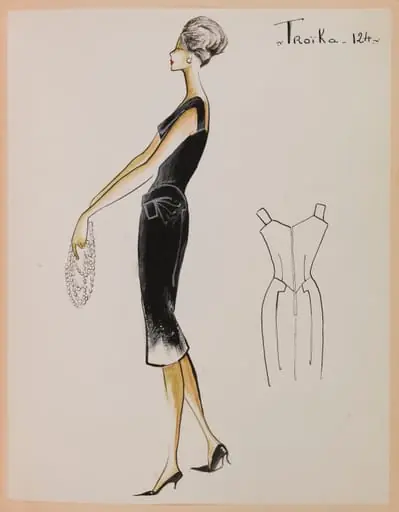
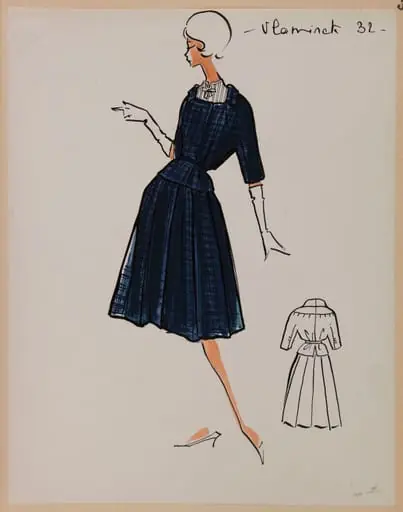
Robe cintrée bleu marine is a drawing by Marie-Louise Carven. It dates from 1959 and is held in the collection of the Palais Galliera - Musée de la Mode de la Ville de Paris.
About this work
Overview
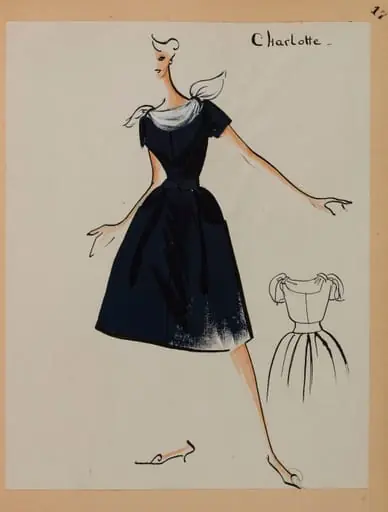
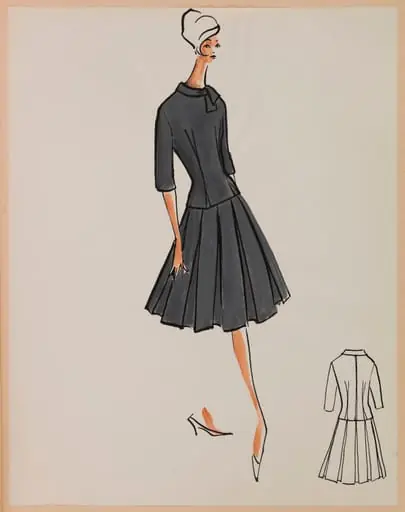
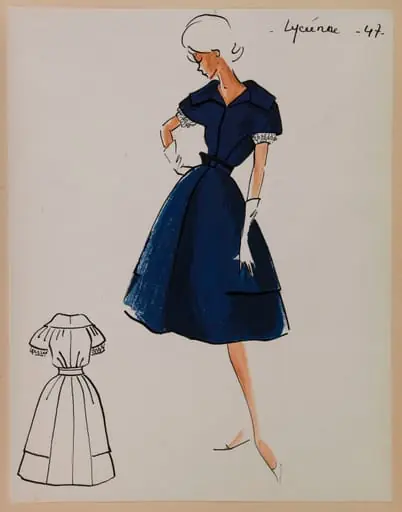
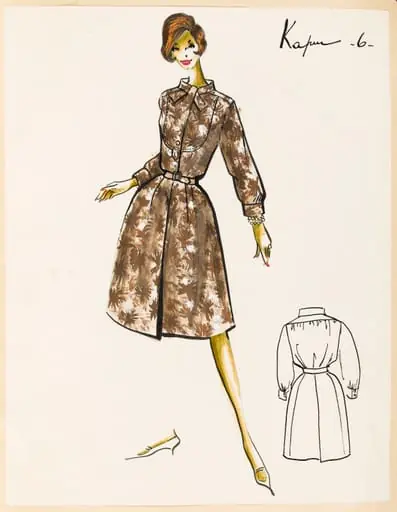
Created around 1959 by French designer Marie-Louise Carven, this ink-and-wash sketch depicts a tailored navy-blue dress with a defined waist and flared silhouette. Executed in fluid, assured brushwork, the drawing captures both the garment’s structure and its movement. Though labeled as an image, it functions as a design study, reflecting Carven’s approach to wearable elegance for smaller frames.
Subject & Meaning
The figure in the sketch wears a modest, high-necked dress with a delicate bow, suggesting refined femininity without ornamentation. Her poised stance—one hand on the hip—conveys confidence and ease. The emphasis on fit and proportion, rather than embellishment, aligns with Carven’s philosophy of clothing designed for the active, modern woman, prioritizing comfort and clarity of form.
Technique & Style
A small side profile illustrates the dress’s three-dimensional construction, revealing Carven’s attention to how material behaves on the body.
The drawing employs loose, rapid brushstrokes to suggest fabric drape and volume, particularly along the skirt’s flare. A small side profile illustrates the dress’s three-dimensional construction, revealing Carven’s attention to how material behaves on the body. The minimal line work avoids excess detail, focusing instead on silhouette and motion, characteristic of fashion illustration meant for quick client or atelier reference.
History & Provenance
Marie-Louise Carven established her label in 1945 and was among the first Parisian couturiers to launch a ready-to-wear collection in the late 1950s. This sketch likely originated in her studio as part of a design portfolio. It entered the collection of the Museum of Ethnography, where it is preserved not as high fashion artifact but as a document of everyday dressmaking practices in postwar France.
Context
In the late 1950s, Parisian fashion was shifting from exclusive couture toward accessible, mass-produced garments. Carven’s designs responded to this change by offering tailored, feminine silhouettes in lightweight fabrics suitable for daily life. This sketch reflects a broader cultural move toward practicality in women’s clothing, balancing structure with ease, and form with function.
Legacy
Carven’s integration of ready-to-wear into the couture world helped democratize fashion design. This sketch, though modest in scale, embodies her lasting influence: a focus on proportion, restraint, and the needs of the wearer. It stands as a quiet testament to a designer who redefined elegance not through grandeur, but through thoughtful, wearable form.
Artist & collection
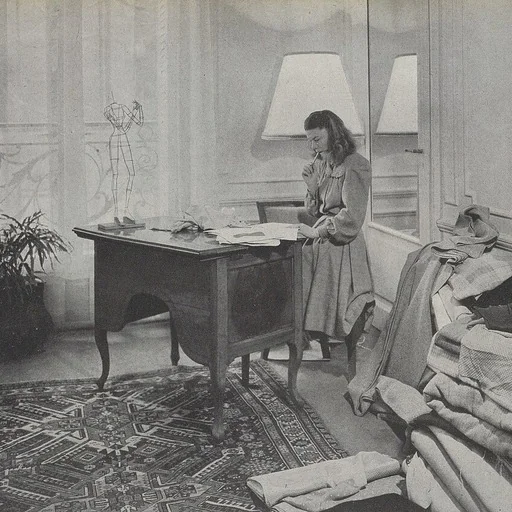
Artist
Marie-Louise Carven (31 August 1909 – 8 June 2015), born Carmen de Tommaso, was a French fashion designer who founded the house of Carven in 1945.

Museum
Palais Galliera - Musée de la Mode de la Ville de Paris
Continue through works from the same source collection.
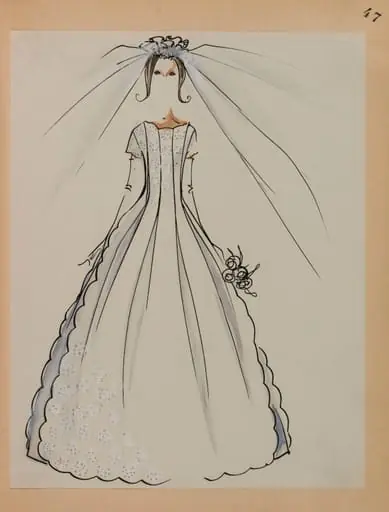 Robe de mariée festonnée et son voile
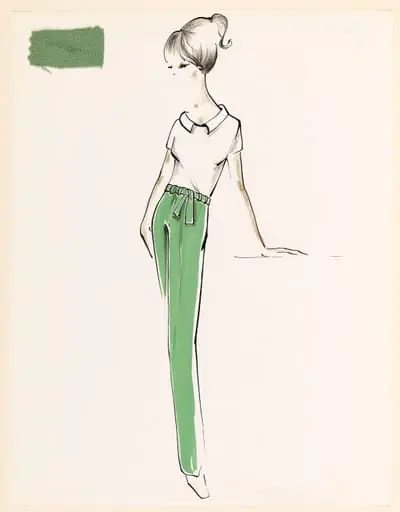 Haut blanc à manches courtes et pantalon vert à ceinture nouée
 Kapur
Kapur Pull-over à manches longues pourpre, bonnet assorti, pantalon et lunettes de soleil
 GLAMOUR
 'Renardeau'
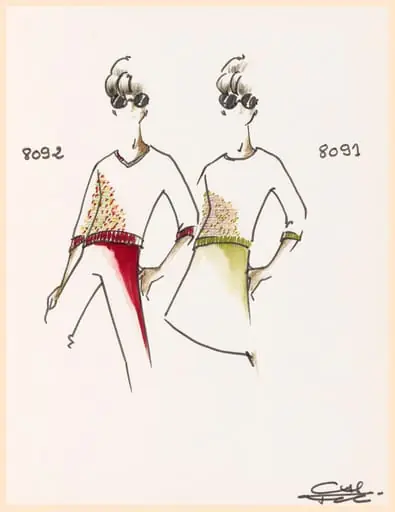 Pull-over à manches trois quarts et à encolure V à motifs multicolores, pantalon cerise et lunettes de soleil
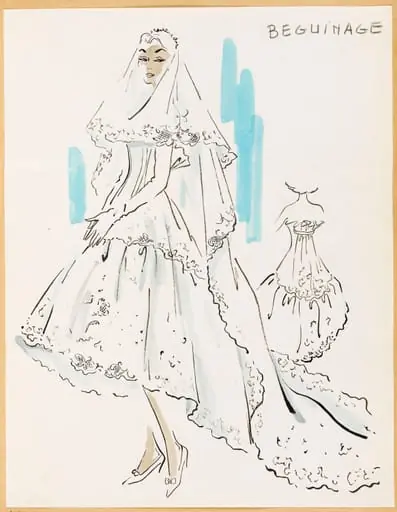 Béguinage