Artwork
Saphir
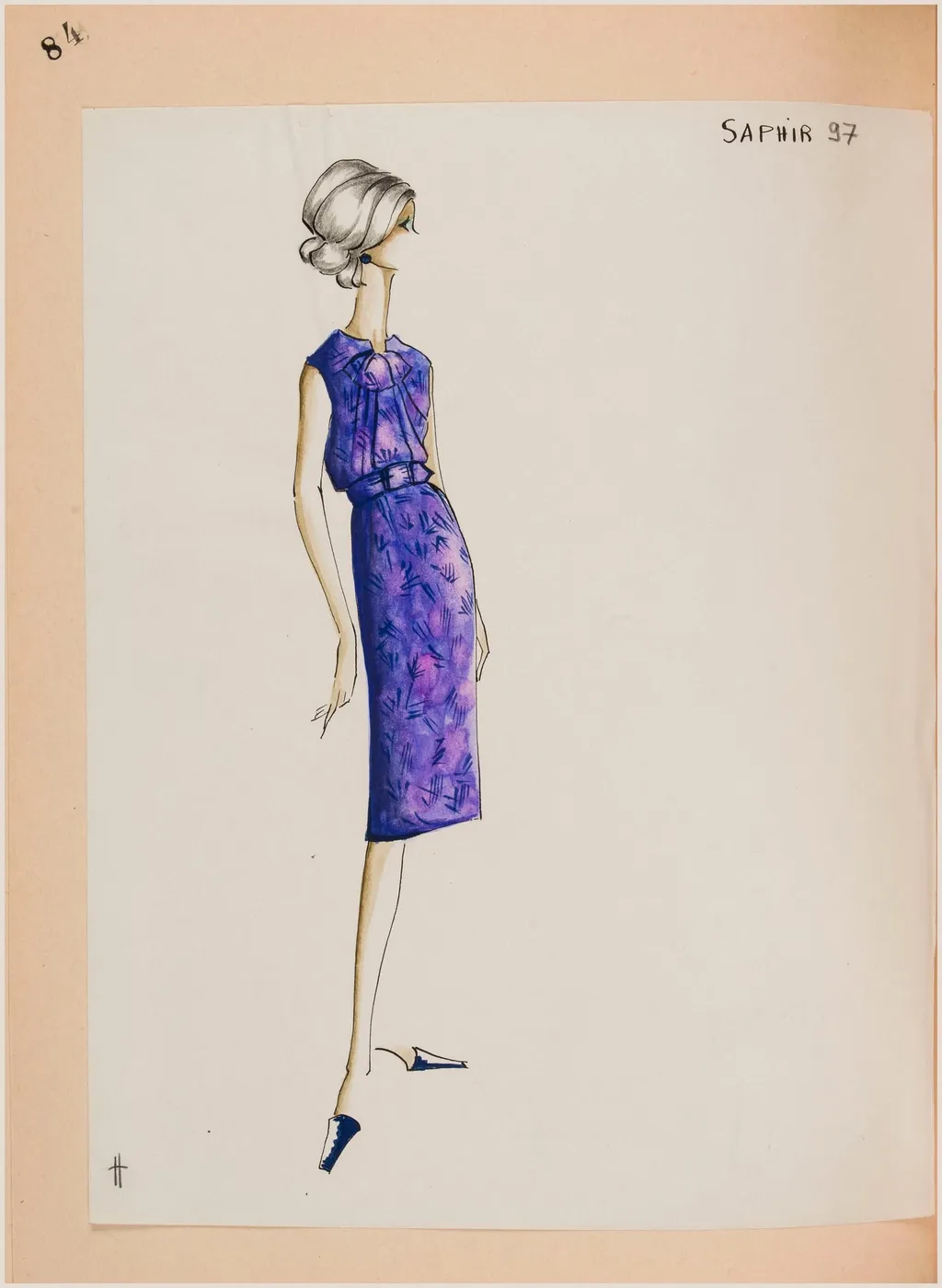
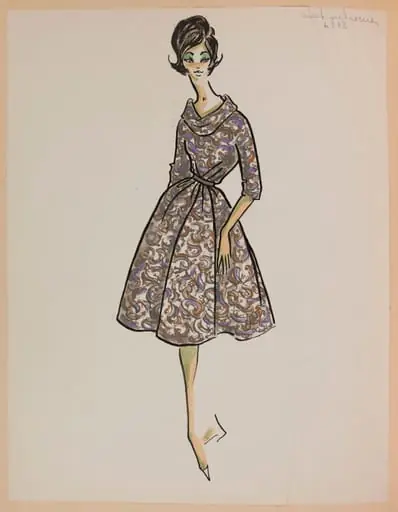
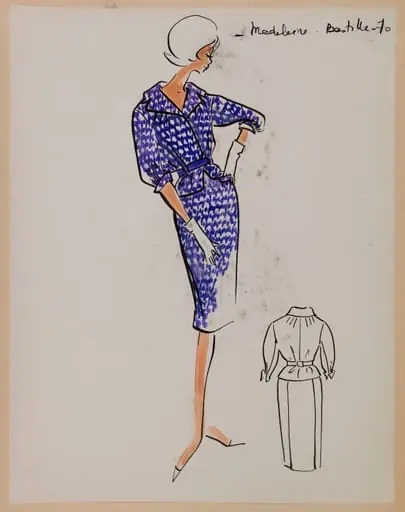
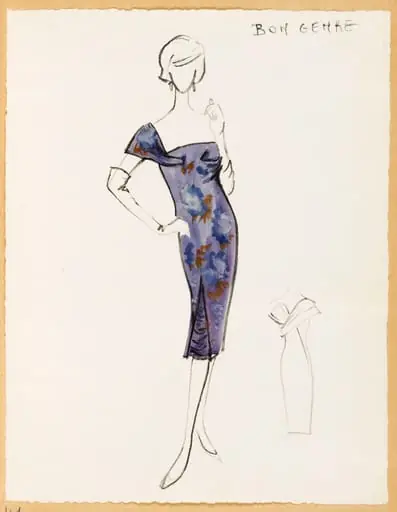
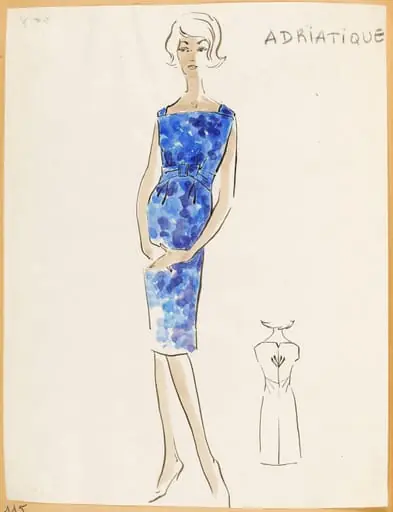
Saphir is a drawing by Marie-Louise Carven. It dates from 1963 and is held in the collection of the Palais Galliera - Musée de la Mode de la Ville de Paris.
About this work
Overview
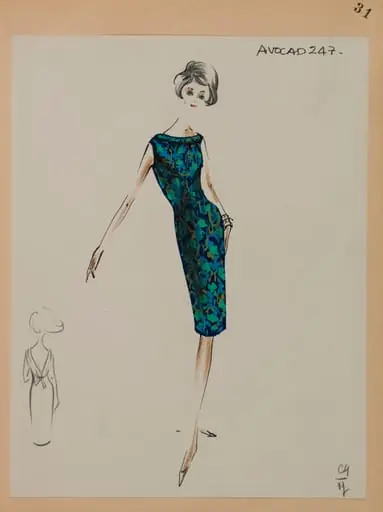
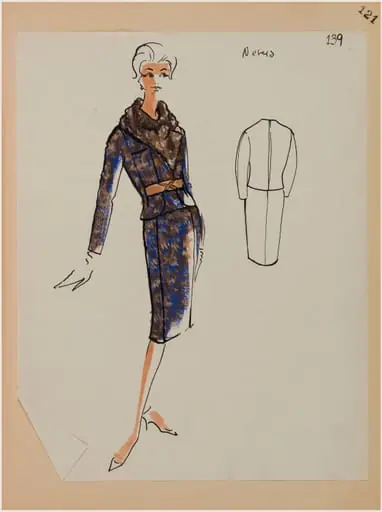
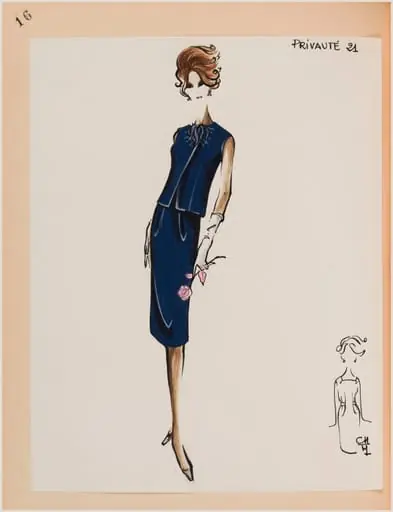
Created in 1963 by French designer Marie-Louise Carven, *Saphir* is a fashion sketch reflecting her approach to refined, wearable design.
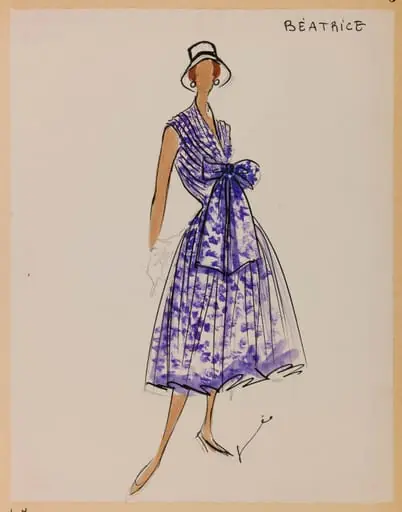
Created in 1963 by French designer Marie-Louise Carven, *Saphir* is a fashion sketch reflecting her approach to refined, wearable design. Carven, who founded her house in 1945, was among the early Parisian couturiers to embrace ready-to-wear. This drawing, part of the Museum of Ethnography’s collection, captures a sleeveless dress with subtle detailing, emphasizing proportion and ease rather than ornamentation.
Subject & Meaning
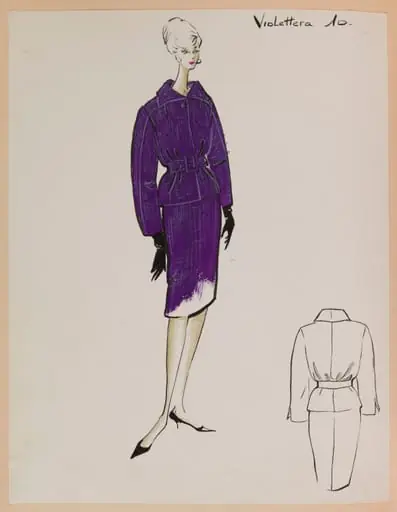
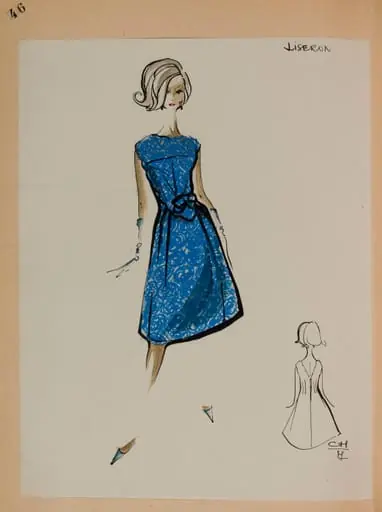
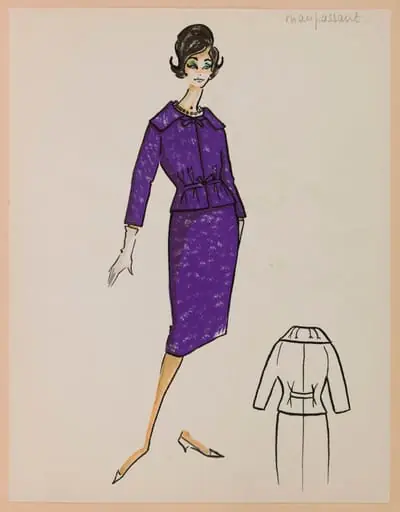
The sketch depicts a woman in a fitted, purple dress with a defined waistline, paired with dark heels and a neatly tailored hat. The absence of sleeves and the snug belt suggest a focus on clean lines and bodily harmony. The restrained palette and minimal embellishment reflect a postwar shift toward practical elegance, aligning with Carven’s philosophy of dressing petite frames with quiet sophistication.
Technique & Style
Executed in loose yet deliberate ink lines, the drawing balances spontaneity with precision. The contours of the dress and hat are rendered with confident strokes, while the subtle pattern on the fabric is suggested rather than detailed. The posture is upright and composed, conveying poise without theatricality. This method mirrors Carven’s design ethos: clarity over flourish, structure over excess.
History & Provenance
*Saphir* originates from Carven’s 1963 collection, a period when her brand was expanding its ready-to-wear line. The sketch entered the Museum of Ethnography’s holdings as part of a broader effort to document 20th-century fashion as cultural artifact. Its preservation underscores the growing institutional recognition of design as a reflection of social norms, not merely aesthetic choice.
Context
In the early 1960s, Parisian fashion was transitioning from haute couture dominance to accessible, mass-produced styles. Carven’s work, including *Saphir*, contributed to this shift by offering tailored silhouettes suited to everyday life. The dress’s sleeveless cut and waist emphasis align with contemporary trends, yet its restraint distinguishes it from more flamboyant designs of the era.
Legacy
*Saphir* exemplifies Carven’s lasting influence on modern womenswear: prioritizing fit, proportion, and understated detail. Her early adoption of prêt-à-porter helped democratize fashion, making thoughtful design available beyond elite clients. The sketch remains a quiet testament to a design philosophy that valued functionality without sacrificing grace.
Artist & collection
Artist
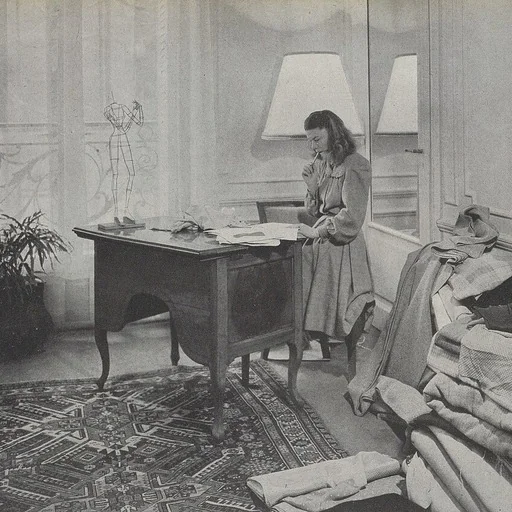
Marie-Louise Carven (31 August 1909 – 8 June 2015), born Carmen de Tommaso, was a French fashion designer who founded the house of Carven in 1945.

Museum
Palais Galliera - Musée de la Mode de la Ville de Paris
Continue through works from the same source collection.
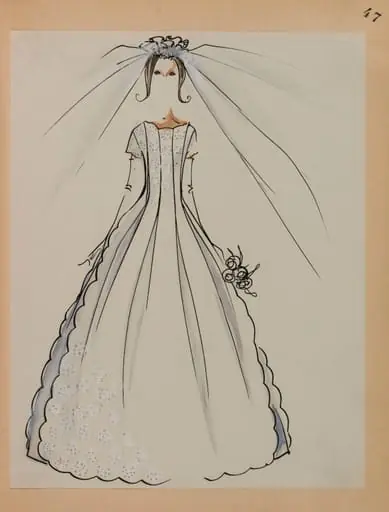 Robe de mariée festonnée et son voile
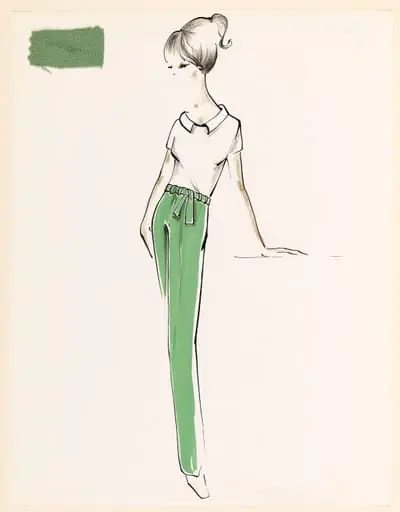 Haut blanc à manches courtes et pantalon vert à ceinture nouée
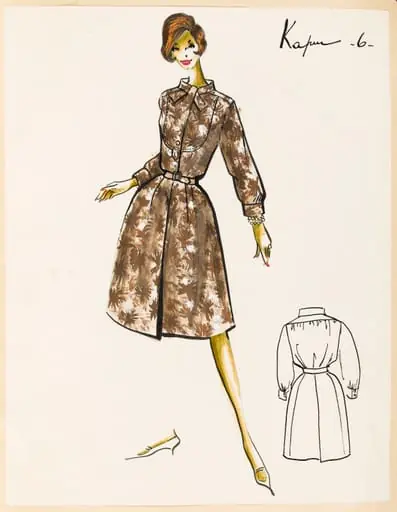 Kapur
Kapur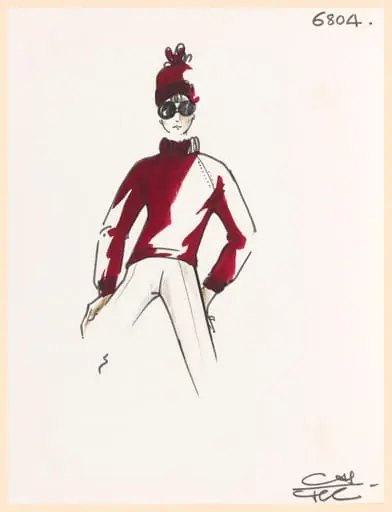 Pull-over à manches longues pourpre, bonnet assorti, pantalon et lunettes de soleil
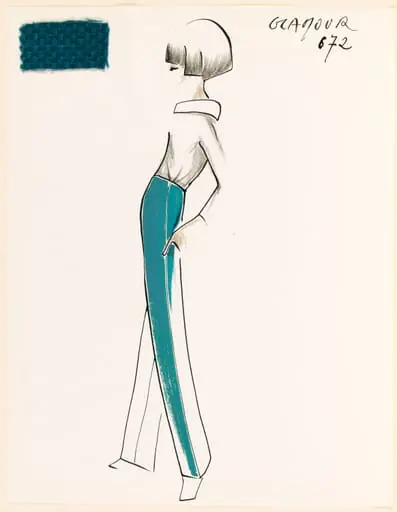 GLAMOUR
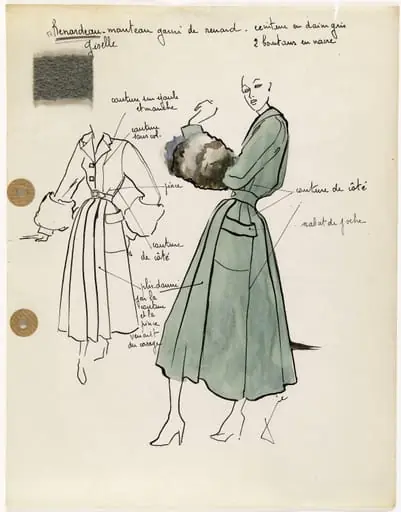 'Renardeau'
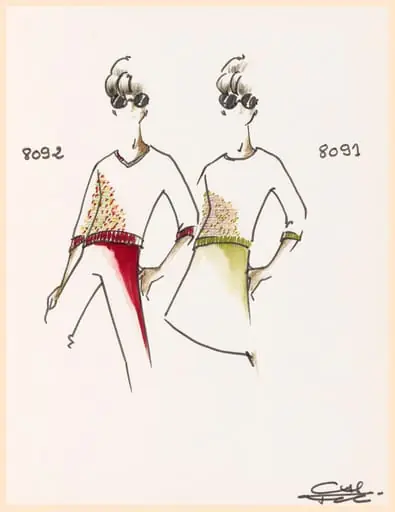 Pull-over à manches trois quarts et à encolure V à motifs multicolores, pantalon cerise et lunettes de soleil
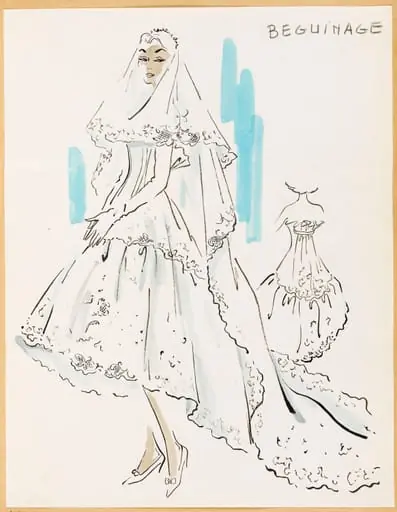 Béguinage