Artwork
Squale
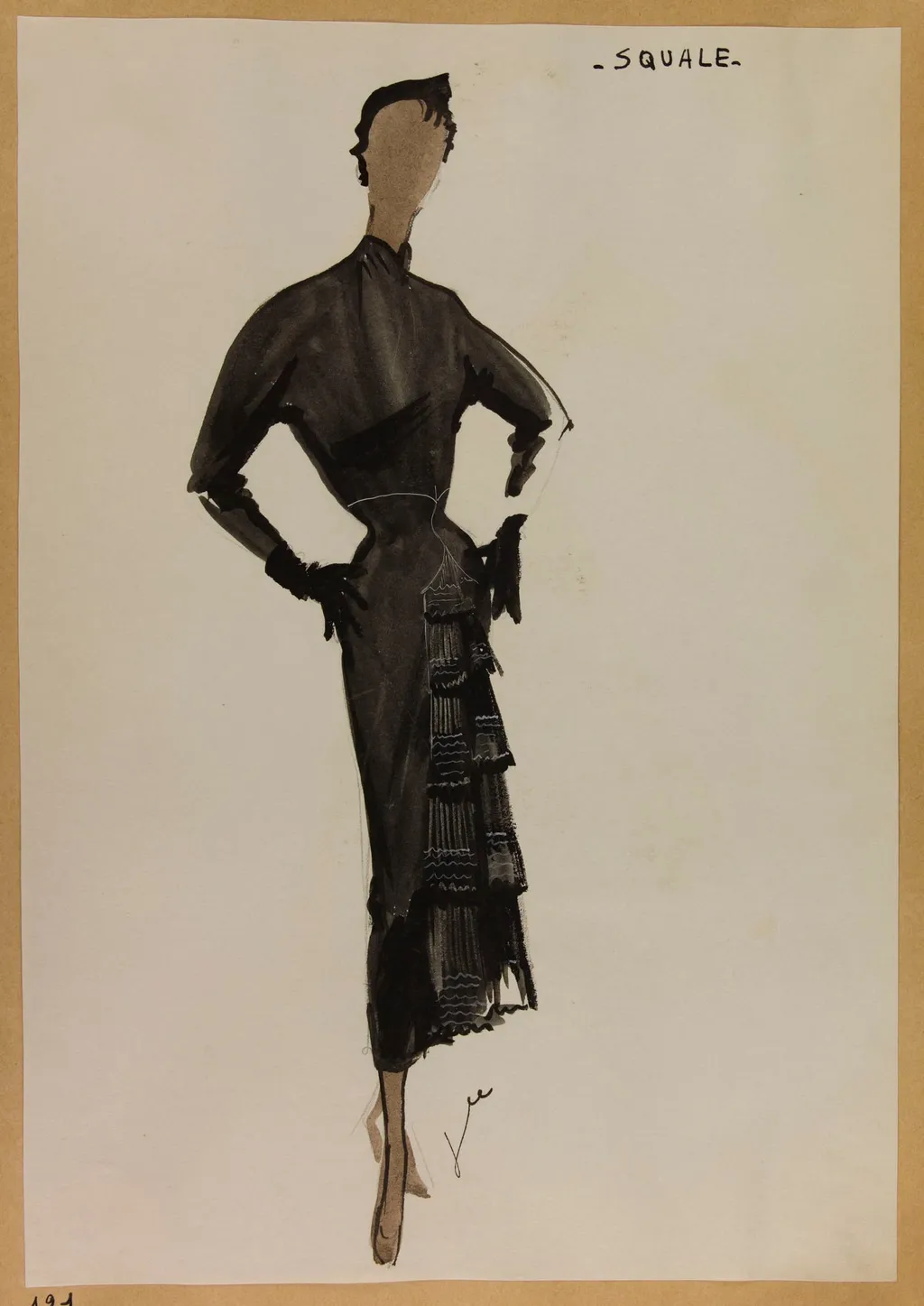
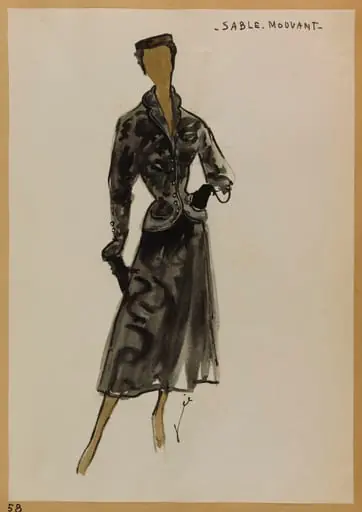
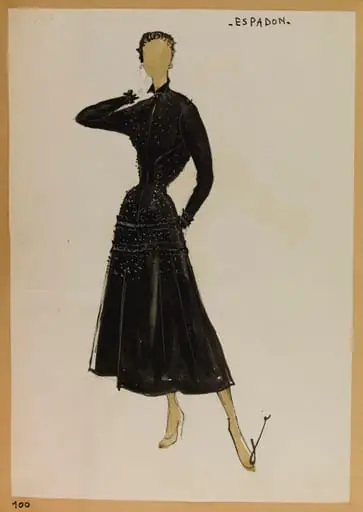
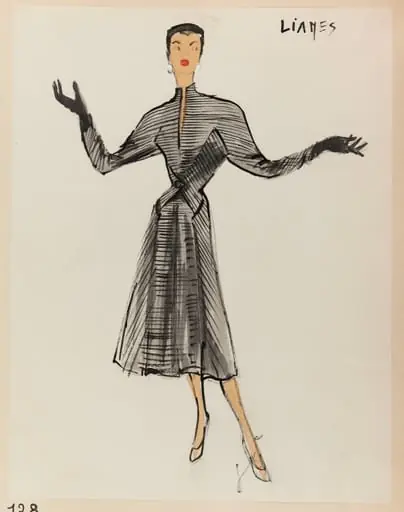
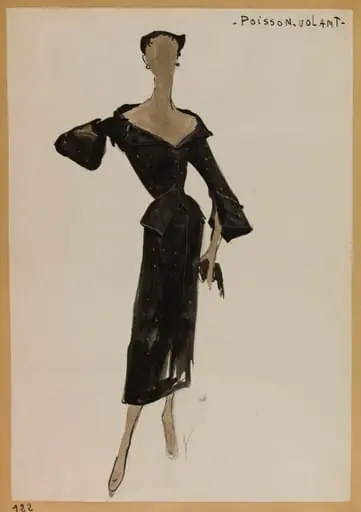
Squale is a drawing by Marie-Louise Carven. It dates from 1952 and is held in the collection of the Palais Galliera - Musée de la Mode de la Ville de Paris.
About this work
Overview
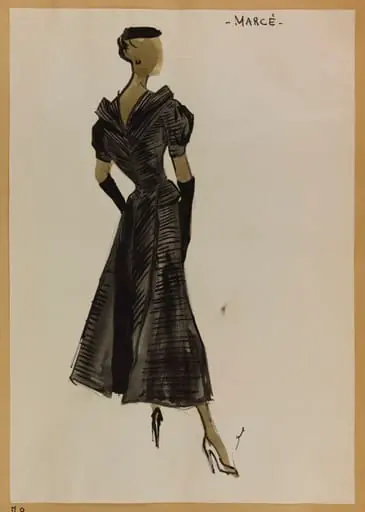
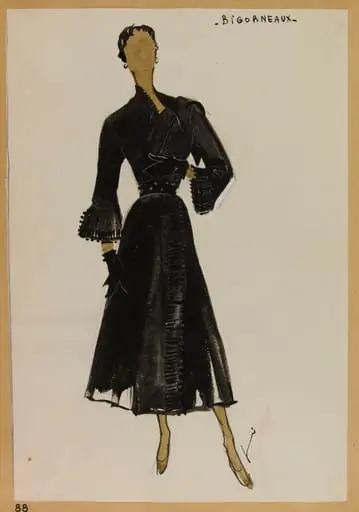
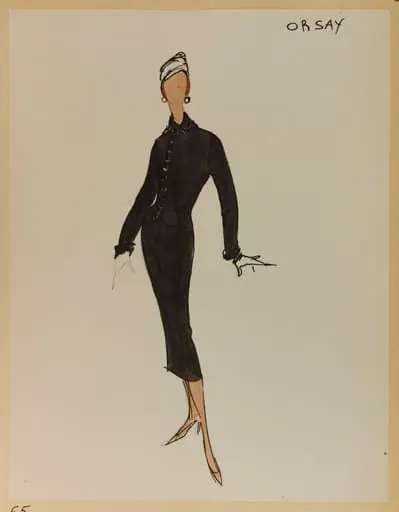
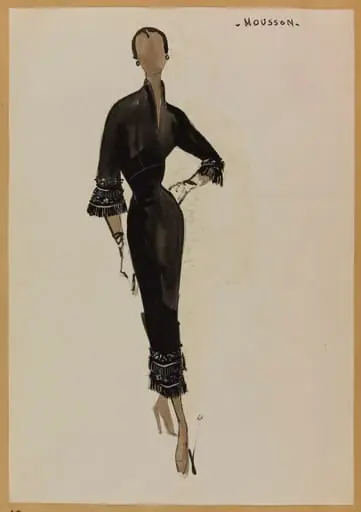
Created in 1952, *Squale* is an image attributed to French designer Marie‑Louise Carven. The work belongs to the collection of the Museum of Ethnography and presents a solitary female figure dressed in a dark, flowing garment. The composition emphasizes the posture and silhouette rather than facial features, inviting attention to the clothing’s form.
Subject & Meaning
The central figure stands with hands on her hips, exuding confidence. A high‑necked, long‑sleeved dress with a ruffled skirt and a cinched belt frames the body, suggesting an elegant, self‑assured presence. The anonymity of the face directs focus toward the attire, underscoring the garment as the primary subject.
Technique & Style
Rendered in smooth, dark tones that hint at silk or a similarly lustrous fabric, the image employs a restrained palette to convey sophistication. The contrast between the sleek surface of the dress and the textured ruffles creates visual depth, while the crisp lines highlight the garment’s structure.
History & Provenance
Marie‑Louise Carven, who founded the Carven fashion house in 1945, was a pioneer of ready‑to‑wear fashion and the inventor of the push‑up bra. *Squale* reflects her design aesthetic and was incorporated into the Museum of Ethnography’s holdings, where it remains accessible for study.
Context
The work emerges from the post‑war era when Carven was establishing a reputation for designing for petite figures and using lightweight materials such as lace and gingham. Although *Squale* portrays a darker, more formal garment, it aligns with her broader interest in tailoring and refined silhouette.
Artist & collection
Artist
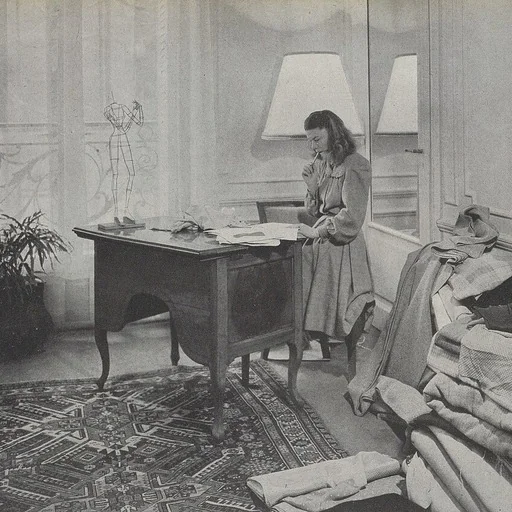
Marie-Louise Carven (31 August 1909 – 8 June 2015), born Carmen de Tommaso, was a French fashion designer who founded the house of Carven in 1945.
Museum
Palais Galliera - Musée de la Mode de la Ville de Paris
Continue through works from the same source collection.
 Robe de mariée festonnée et son voile
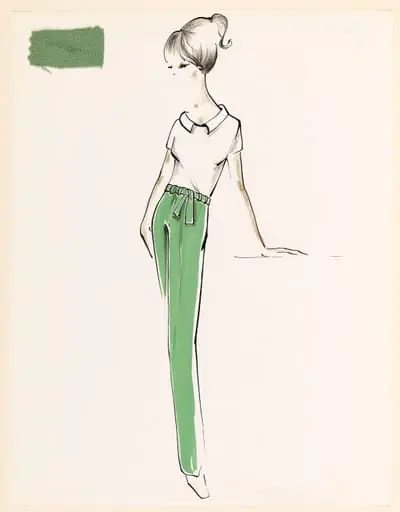 Haut blanc à manches courtes et pantalon vert à ceinture nouée
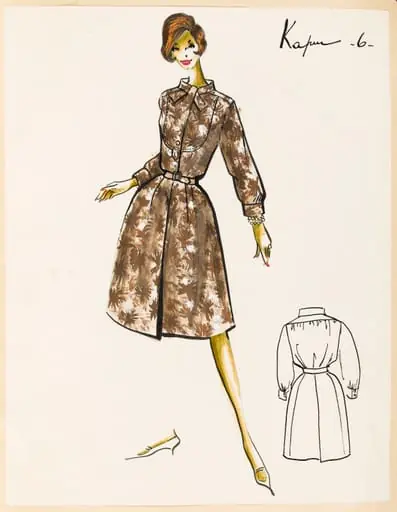 Kapur
Kapur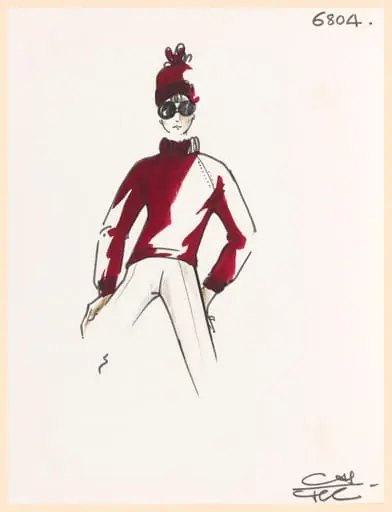 Pull-over à manches longues pourpre, bonnet assorti, pantalon et lunettes de soleil
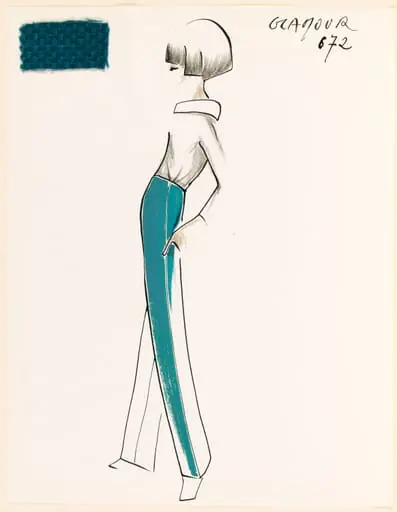 GLAMOUR
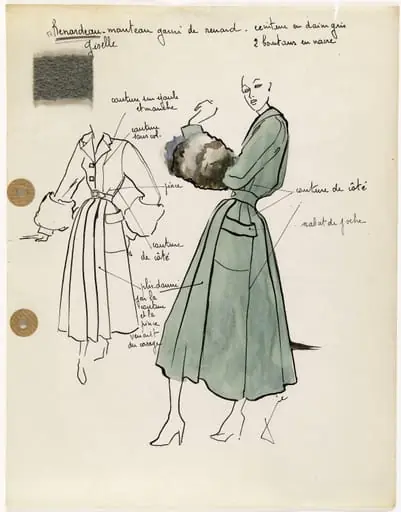 'Renardeau'
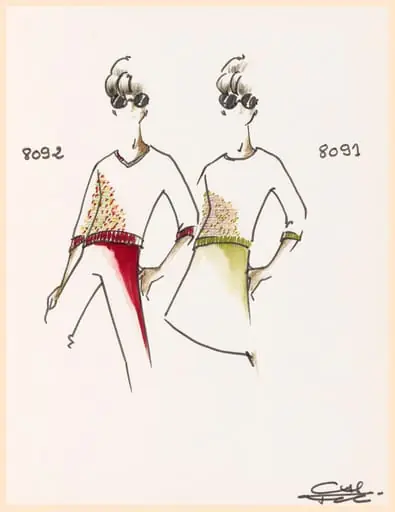 Pull-over à manches trois quarts et à encolure V à motifs multicolores, pantalon cerise et lunettes de soleil
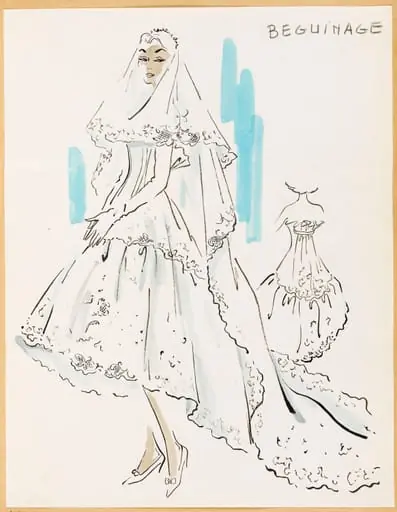 Béguinage