Artwork
Tangage
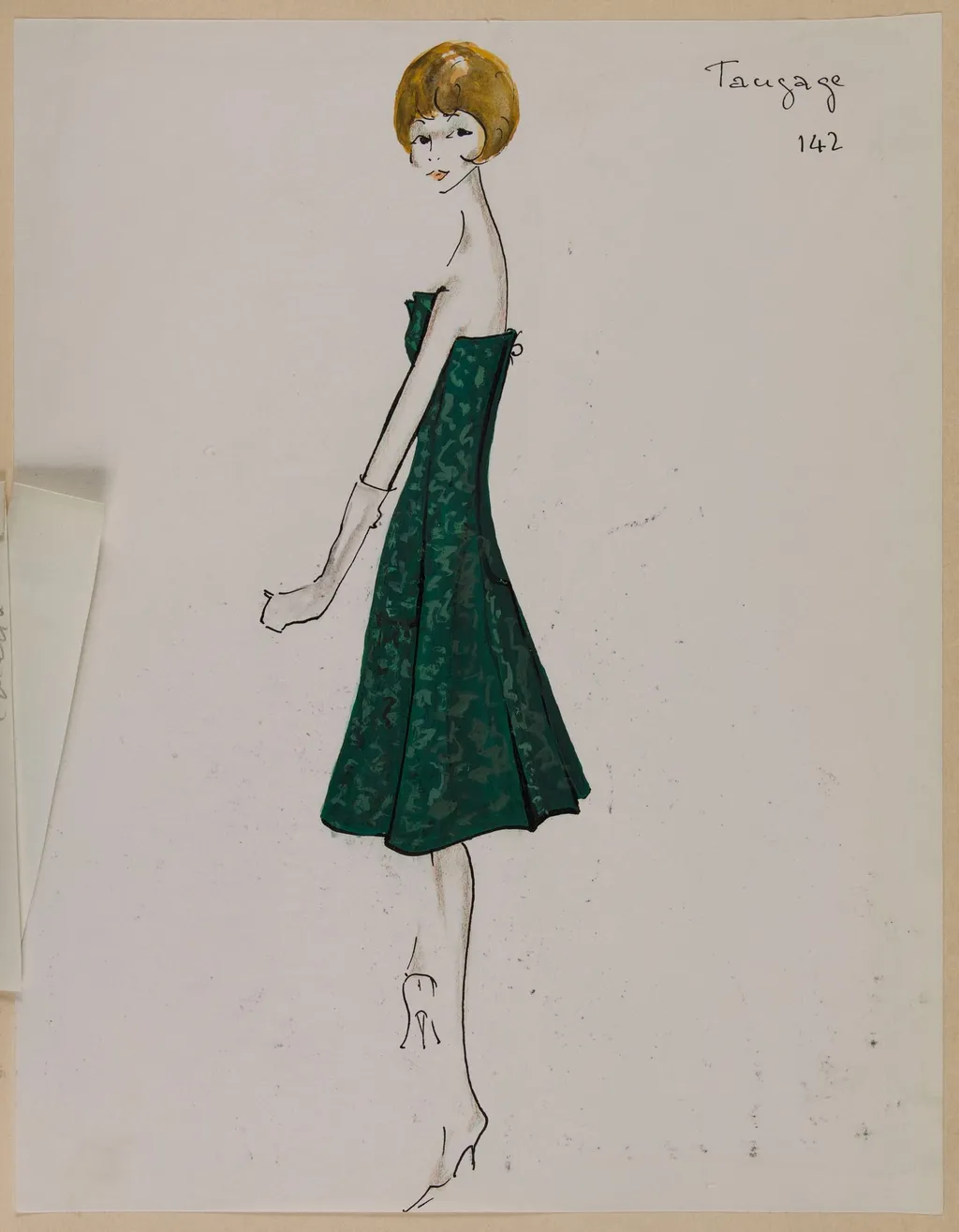
Tangage is a drawing by Marie-Louise Carven. It dates from 1960 and is held in the collection of the Palais Galliera - Musée de la Mode de la Ville de Paris.
About this work
Overview
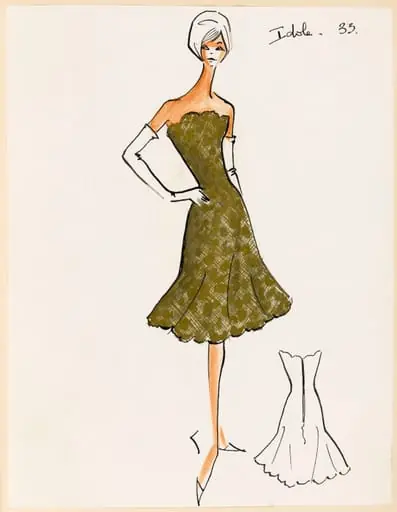
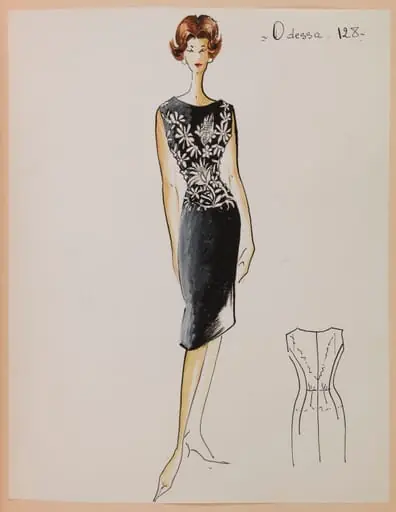
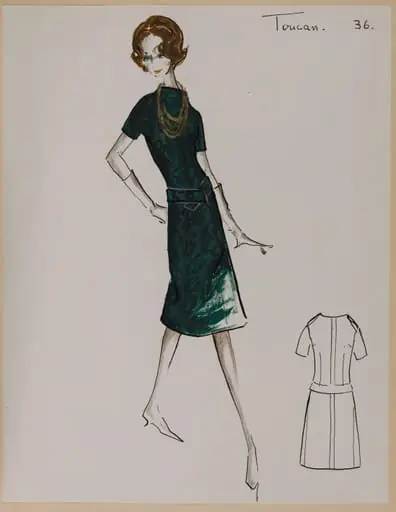
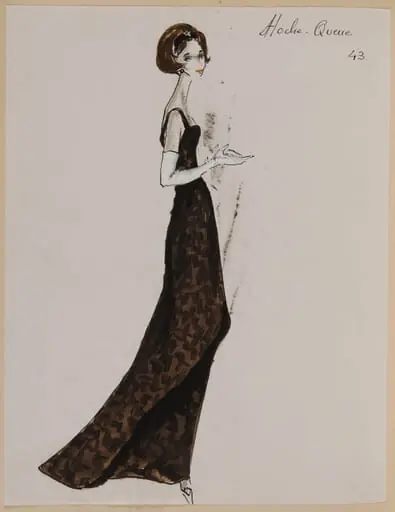
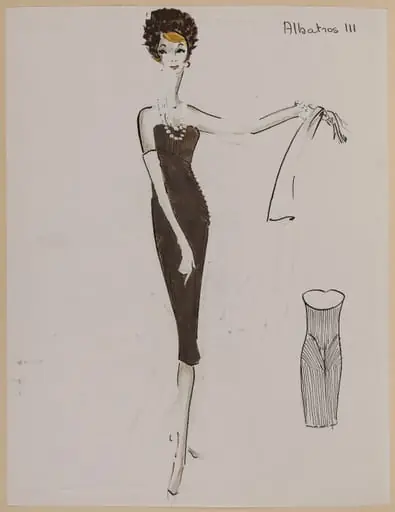
Tangage is a pencil drawing created around 1960 by French fashion designer Marie-Louise Carven. It depicts a woman in a strapless green dress, rendered with restrained linework and subtle tonal variation. The piece originates from Carven’s personal design archive and is now part of the Museum of Ethnography’s collection, reflecting her influence beyond fashion into visual documentation of style.
Subject & Meaning
The dress, though stylized, aligns with Carven’s design philosophy: practical, flattering, and tailored for the petite form.
The figure in Tangage embodies a quiet, modern femininity—composed, unposed, and self-possessed. Her neutral expression and relaxed posture suggest an everyday elegance rather than theatrical display. The dress, though stylized, aligns with Carven’s design philosophy: practical, flattering, and tailored for the petite form. The drawing functions as both a fashion study and a portrait of postwar French womanhood.
Technique & Style
Carven employed delicate pencil lines to define form, avoiding heavy shading in favor of clean contours and minimal detail. The light beige background isolates the figure, emphasizing silhouette and movement. The dress’s dark green pattern is suggested through sparse, rhythmic strokes, conveying texture without literalism. The style is understated, prioritizing clarity and grace over ornamentation.
History & Provenance
Created during Carven’s active years as a designer, Tangage likely served as a preparatory sketch for a garment or a personal record of aesthetic ideals. After her fashion house’s decline in the late 20th century, her archives were preserved by institutions interested in design history. The drawing entered the Museum of Ethnography’s holdings as part of a broader effort to document material culture tied to everyday life.
Context
In the 1950s and 60s, Parisian couture was shifting toward accessible ready-to-wear. Carven, one of the first to launch a prêt-à-porter line, responded to changing social norms and women’s lifestyles. Tangage reflects this transition: its simplicity, wearable silhouette, and focus on the individual rather than spectacle mirror the democratization of fashion in postwar Europe.
Legacy
Tangage endures as a quiet testament to Carven’s design ethos—elegance rooted in restraint and functionality. Though not widely exhibited, its presence in a museum of ethnography signals its value as a cultural artifact. It represents a moment when fashion design was increasingly seen as part of daily life, not just high art, influencing later approaches to documenting personal style.
Artist & collection
Artist
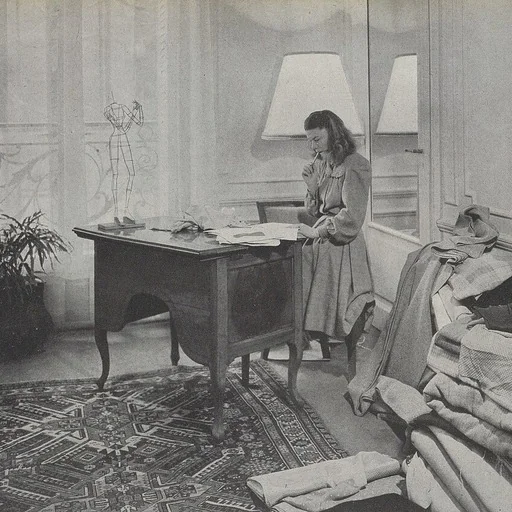
Marie-Louise Carven (31 August 1909 – 8 June 2015), born Carmen de Tommaso, was a French fashion designer who founded the house of Carven in 1945.
Museum
Palais Galliera - Musée de la Mode de la Ville de Paris
Continue through works from the same source collection.
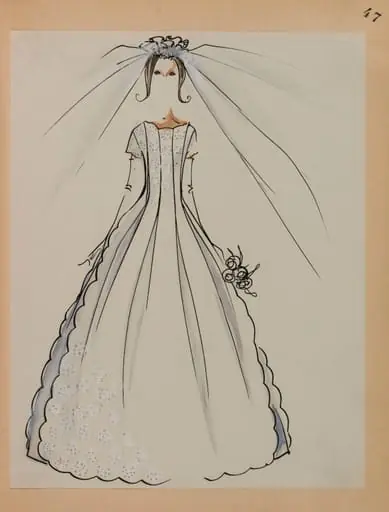 Robe de mariée festonnée et son voile
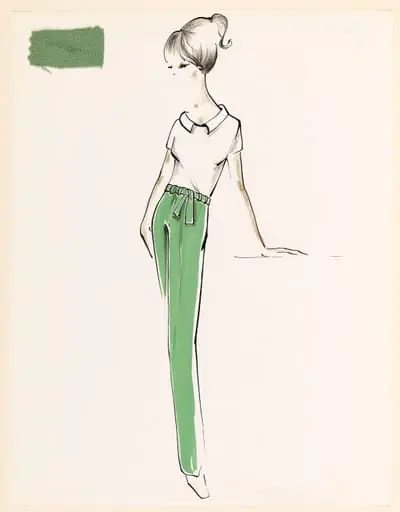 Haut blanc à manches courtes et pantalon vert à ceinture nouée
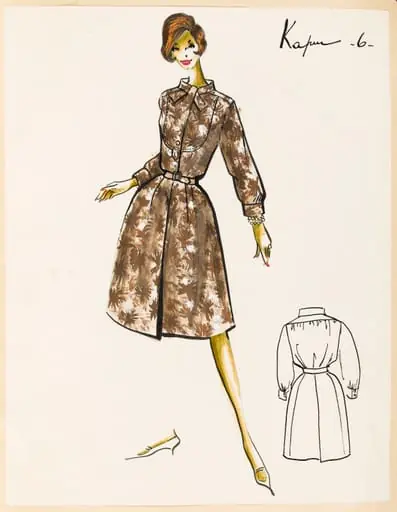 Kapur
Kapur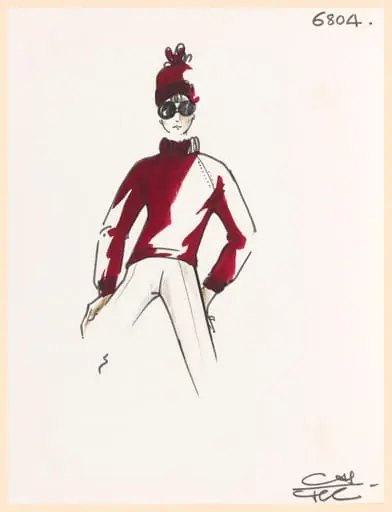 Pull-over à manches longues pourpre, bonnet assorti, pantalon et lunettes de soleil
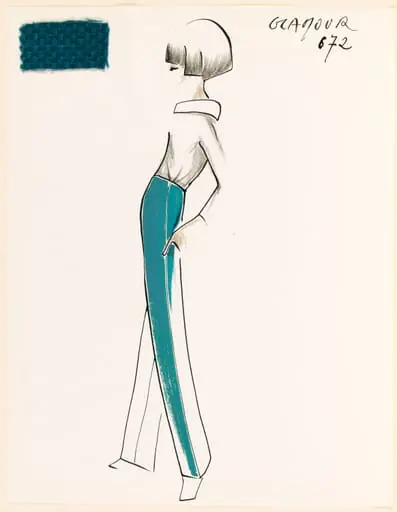 GLAMOUR
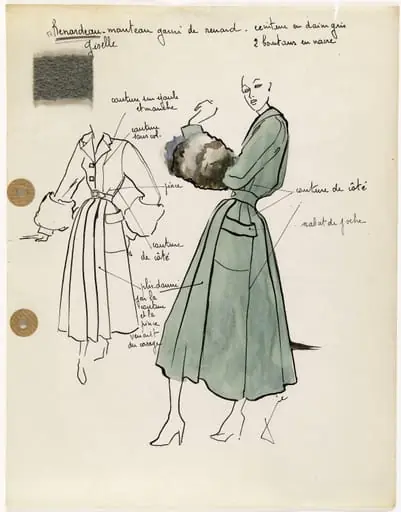 'Renardeau'
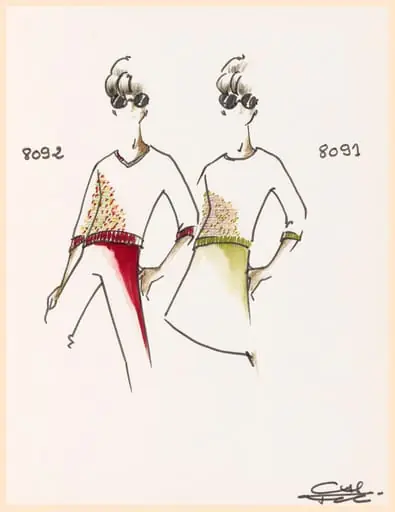 Pull-over à manches trois quarts et à encolure V à motifs multicolores, pantalon cerise et lunettes de soleil
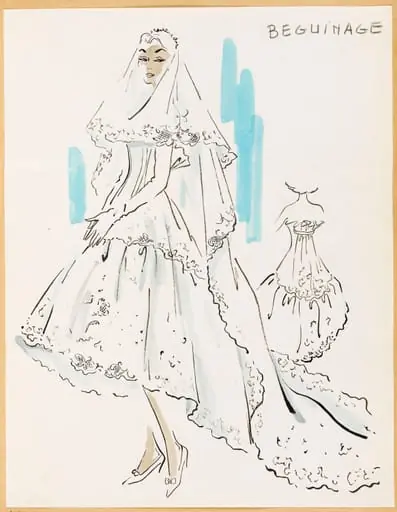 Béguinage