Artwork
Véra
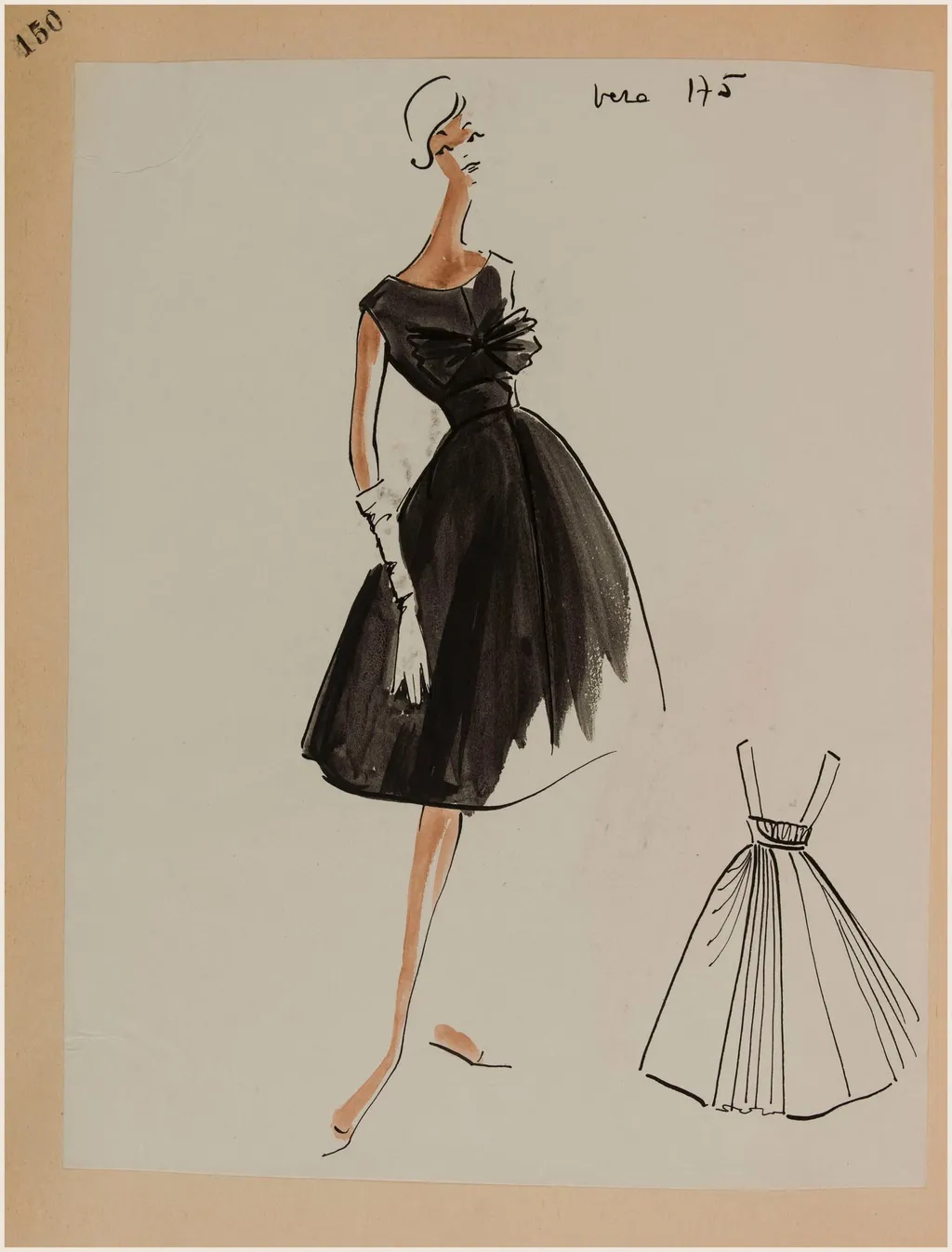
Véra is a drawing by Marie-Louise Carven. It dates from 1958 and is held in the collection of the Palais Galliera - Musée de la Mode de la Ville de Paris.
About this work
Overview
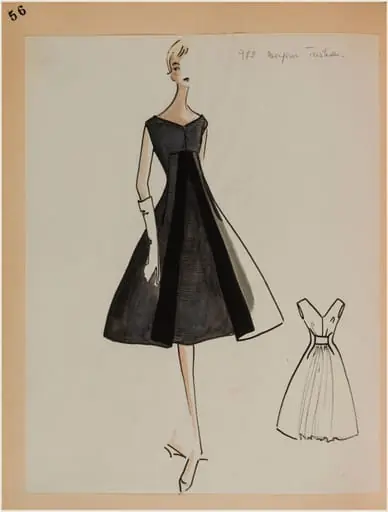
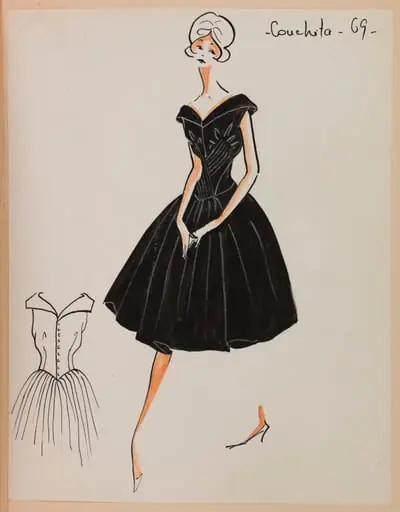
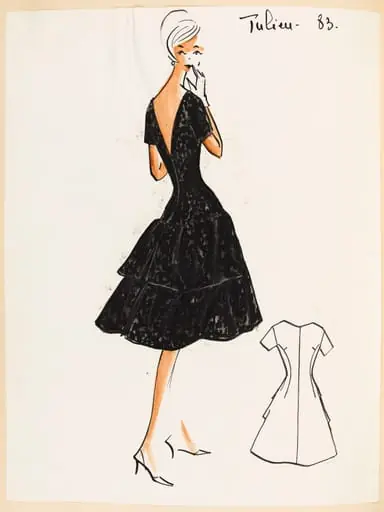
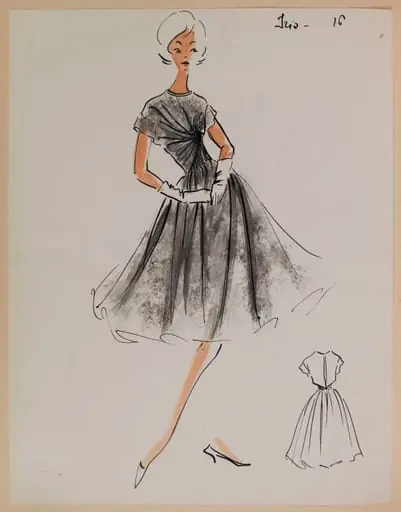
Created around 1958, *Véra* is a pencil sketch by French designer Marie-Louise Carven, capturing a figure in a tailored black dress. Executed with swift, fluid lines, the drawing reflects the immediacy of a design concept rather than a finished illustration. It belongs to the collection of the Museum of Ethnography, where it serves as a record of Carven’s approach to wearable form and movement.
Subject & Meaning
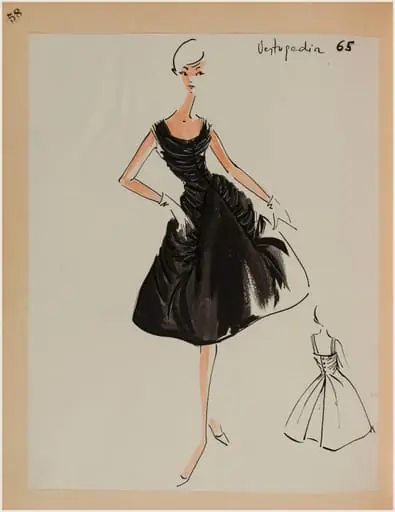
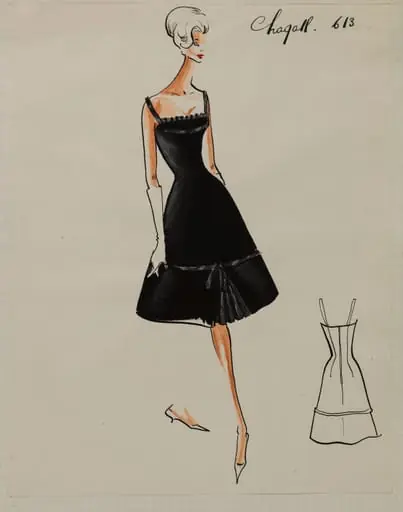
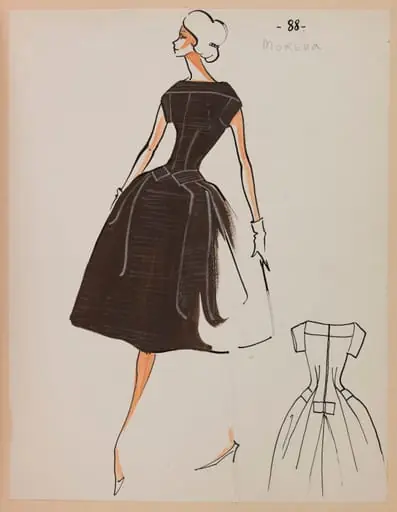
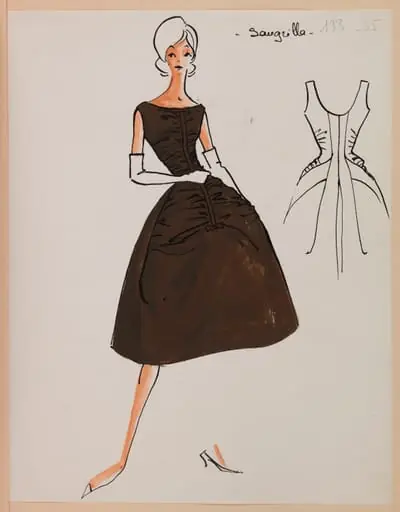
The figure in *Véra* wears a fitted bodice with a small bow at the waist and a gently flared skirt, suggesting a silhouette designed for ease and elegance.
The figure in *Véra* wears a fitted bodice with a small bow at the waist and a gently flared skirt, suggesting a silhouette designed for ease and elegance. The inclusion of a small purse and pointed shoes reinforces the practicality of the ensemble, while the supplementary sketch of the back view reveals Carven’s attention to structural detail. The drawing embodies a vision of modern femininity—refined yet unencumbered.
Technique & Style
Carven rendered *Véra* with minimal shading and loose, confident strokes, emphasizing gesture over precision. The sketch’s spontaneity conveys the rhythm of fabric and posture, using line weight to suggest volume and motion. The back view, drawn in miniature to the right, functions as a technical footnote, illustrating how the skirt opens in movement—a hallmark of Carven’s focus on dynamic wearability.
History & Provenance
Marie-Louise Carven founded her eponymous fashion house in 1945 and was among the first Parisian couturiers to develop a prêt-à-porter line, bridging haute couture and accessible fashion. *Véra* emerged during this period of innovation, likely as a working sketch for a garment intended for her growing ready-to-wear collection. Its preservation in the Museum of Ethnography underscores its significance as a cultural artifact of postwar French design.
Context
In the late 1950s, Parisian fashion was shifting toward lighter, more mobile silhouettes suited to changing social rhythms. Carven’s designs, including *Véra*, responded to this by prioritizing fit for petite frames and ease of movement. The sketch reflects broader trends in postwar Europe, where clothing was increasingly conceived for active, urban life rather than formal display.
Legacy
*Véra* exemplifies Carven’s influence in democratizing fashion through thoughtful, wearable design. Though a simple sketch, it captures the essence of her philosophy: elegance rooted in function. The drawing remains a quiet testament to her role in redefining women’s dress in mid-century France, bridging the gap between couture craftsmanship and everyday life.
Artist & collection
Artist
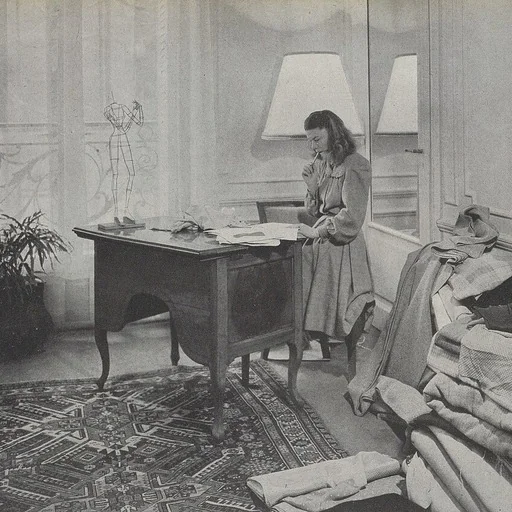
Marie-Louise Carven (31 August 1909 – 8 June 2015), born Carmen de Tommaso, was a French fashion designer who founded the house of Carven in 1945.
Museum
Palais Galliera - Musée de la Mode de la Ville de Paris
Continue through works from the same source collection.
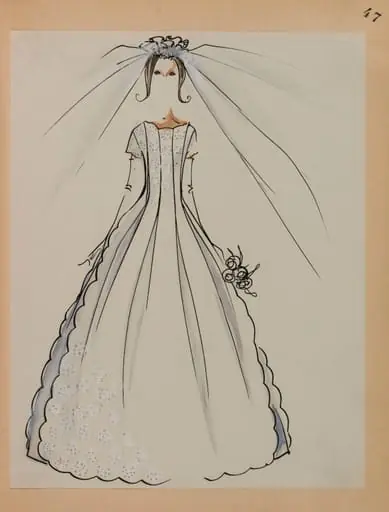 Robe de mariée festonnée et son voile
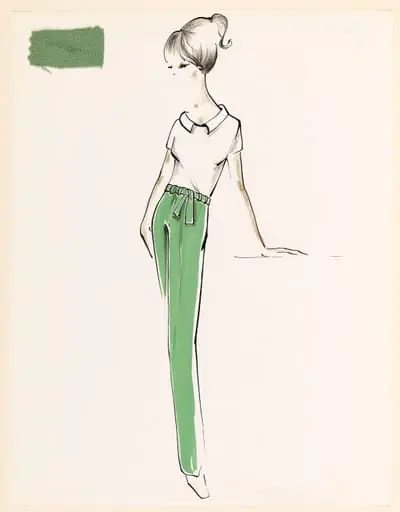 Haut blanc à manches courtes et pantalon vert à ceinture nouée
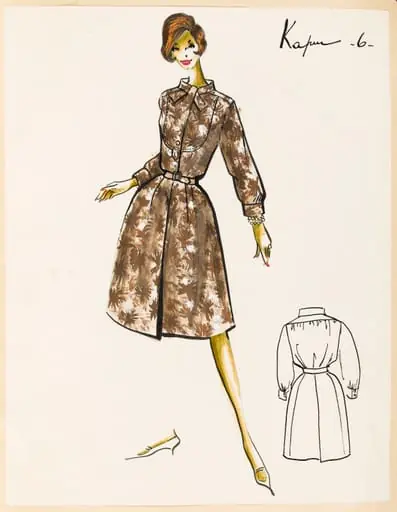 Kapur
Kapur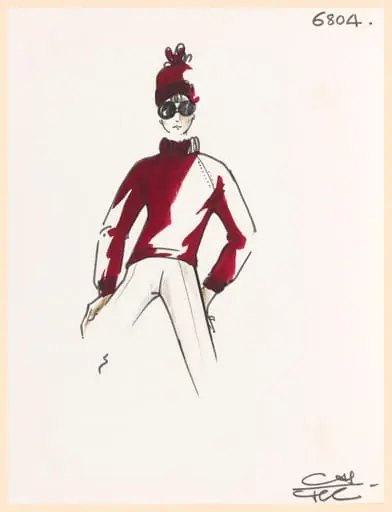 Pull-over à manches longues pourpre, bonnet assorti, pantalon et lunettes de soleil
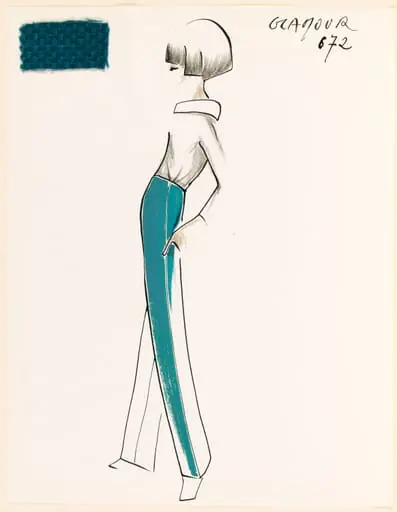 GLAMOUR
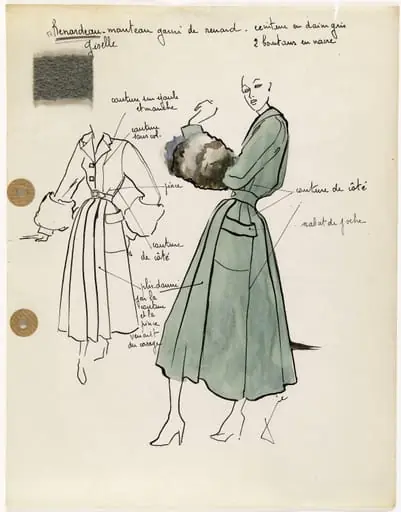 'Renardeau'
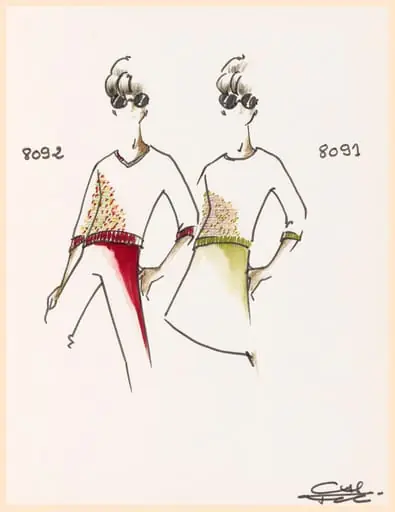 Pull-over à manches trois quarts et à encolure V à motifs multicolores, pantalon cerise et lunettes de soleil
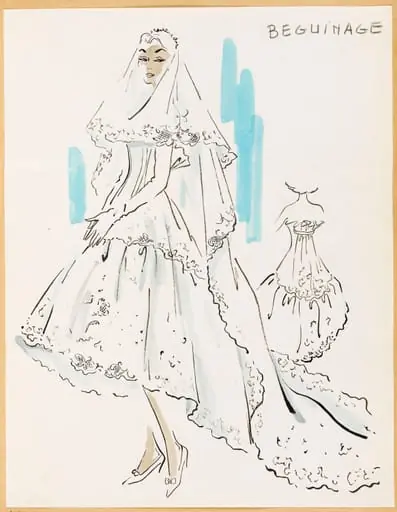 Béguinage