Artwork
Copy of Painting inside the Caves of Ajanta (cave 1)
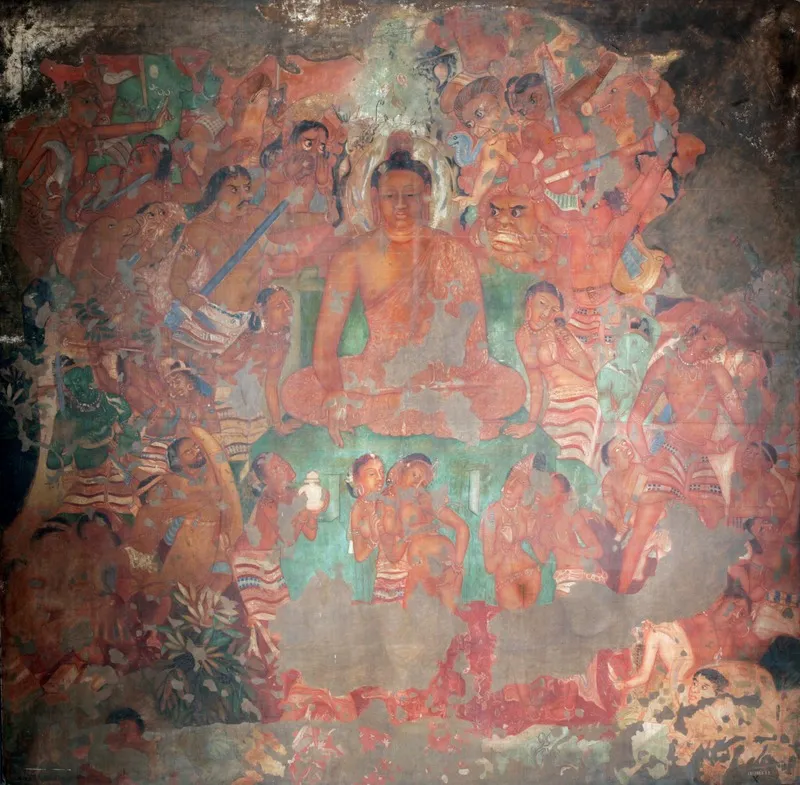
Copy of Painting inside the Caves of Ajanta (cave 1) is an oil painting by Unknown. It dates from 1875 and is held in the collection of the Victoria and Albert Museum. This oil painting, completed in 1875, is a faithful reproduction of a mural from Cave 1 at Ajanta, India.
About this work
You can learn more about the technique of glazing, which was used to create the rich colors and textures in this painting.
This painting is a copy of a mural from the Ajanta Caves in India, created in 1875. It depicts a large Buddha figure surrounded by smaller human and animal figures. The Buddha is shown in a meditative pose, with his hands resting in his lap. He is dressed in a simple robe and has a serene expression on his face.
The surrounding figures are engaged in various activities, such as playing musical instruments or dancing. The painting is done in oil paint and features a range of colors, including shades of red, orange, and green. The overall effect is one of vibrant energy and movement.
The painting is held at the Victoria and Albert Museum. You can learn more about the technique of glazing, which was used to create the rich colors and textures in this painting.
Overview
This oil painting, completed in 1875, is a faithful reproduction of a mural from Cave 1 at Ajanta, India. Created during a period of heightened European interest in South Asian art, it captures the scale and composition of the original Buddhist fresco. Executed in oil on canvas, it preserves the vivid palette and dynamic arrangement of figures found in the ancient site, now housed in the Victoria and Albert Museum.
Subject & Meaning
The central figure is the Buddha in a meditative posture, hands resting gently in his lap, embodying tranquility and inner focus. Surrounding him are attendants and animals engaged in music, dance, and ritual movement, suggesting a celestial assembly or devotional scene. The composition reflects early Indian Buddhist iconography, where the Buddha’s stillness contrasts with the lively devotion of his followers, reinforcing spiritual harmony.
Technique & Style
The artist employed oil paint to replicate the layered pigments of the original mural, using glazes to achieve depth in reds, oranges, and greens. Brushwork is precise yet fluid, capturing the flowing lines of robes and the rhythmic gestures of dancers. While oil was not used in ancient Ajanta, the medium allowed for richer color saturation and detail, bridging traditional Indian aesthetics with 19th-century European techniques.
History & Provenance
The painting was produced during a British-led effort to document Ajanta’s murals in the 1870s. Artist John Griffiths, commissioned by the South Kensington Museum (now the V&A), made detailed copies to preserve the deteriorating originals. This work entered the museum’s collection as part of a broader initiative to archive non-European art for study and public display in London.
Context
Created during the height of British colonial rule in India, the painting reflects both scholarly curiosity and imperial cultural collection practices. While intended as an academic record, it also positioned Indian art within European museum frameworks. Contemporary viewers encountered Ajanta’s Buddhist imagery for the first time through such reproductions, shaping Western perceptions of South Asian religious art.
Legacy
The painting remains a key artifact in understanding 19th-century art documentation practices. It preserves details of the Ajanta mural now faded or damaged, serving as a reference for conservators and historians. Its presence in the V&A underscores the global circulation of cultural heritage and the complex role of reproduction in art history.
Artist & collection

 Domestic Scene
 Giacomo and Cardinal Marco, investing Andrea, Abbot of San Zeno, with his Benefice
 The Nymph of Fontainebleau
 Portrait of a Woman
 Madonna and Child with Saints in the Enclosed Garden
 Venus and Minerva
 Family Group of Four on Sofa
 Wall painting from Room H of the Villa of P. Fannius Synistor at Boscoreale
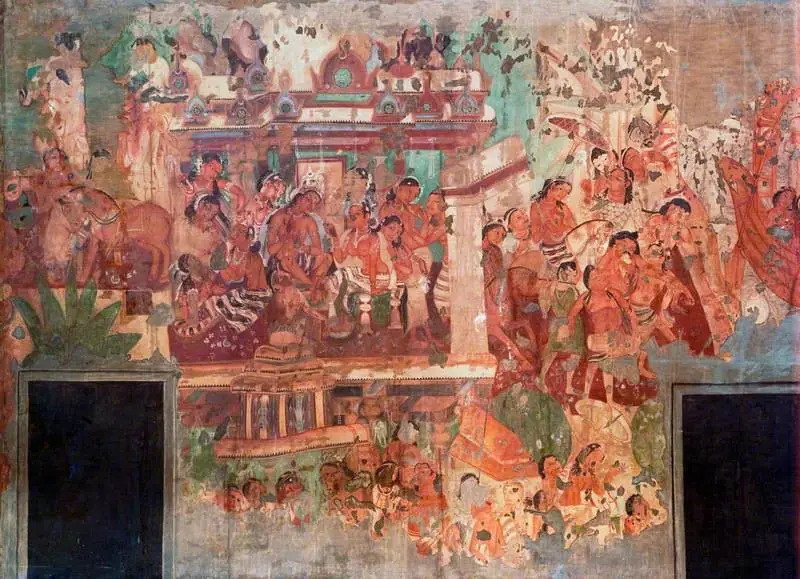 Copy of Painting inside the Caves of Ajanta (cave 1)
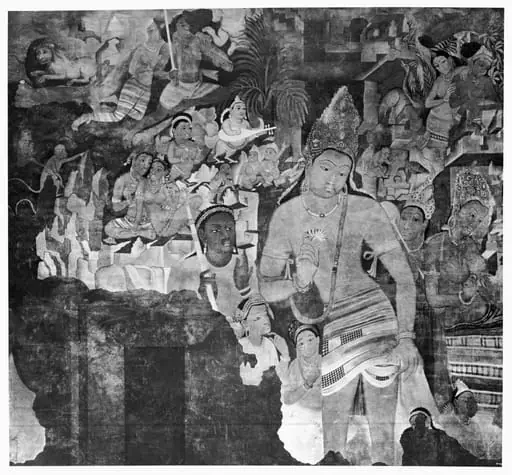 Copy of painting inside the caves of Ajanta (cave 1)
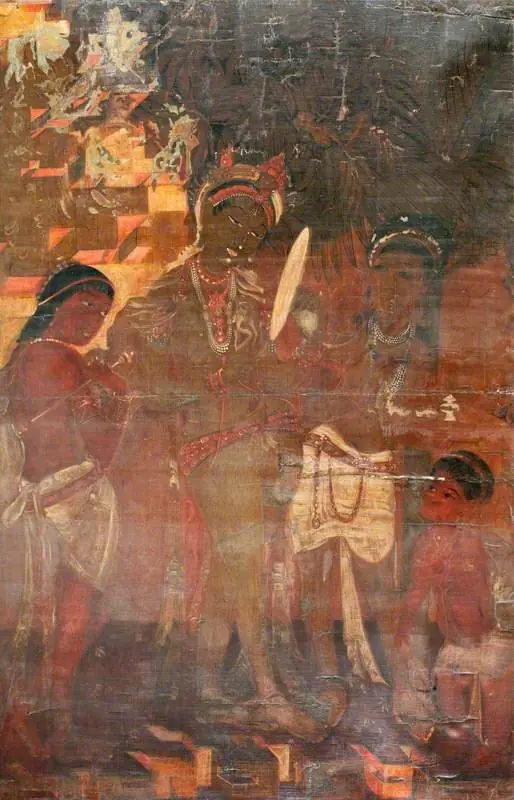 Copy of Painting inside the Caves of Ajanta (cave 17)
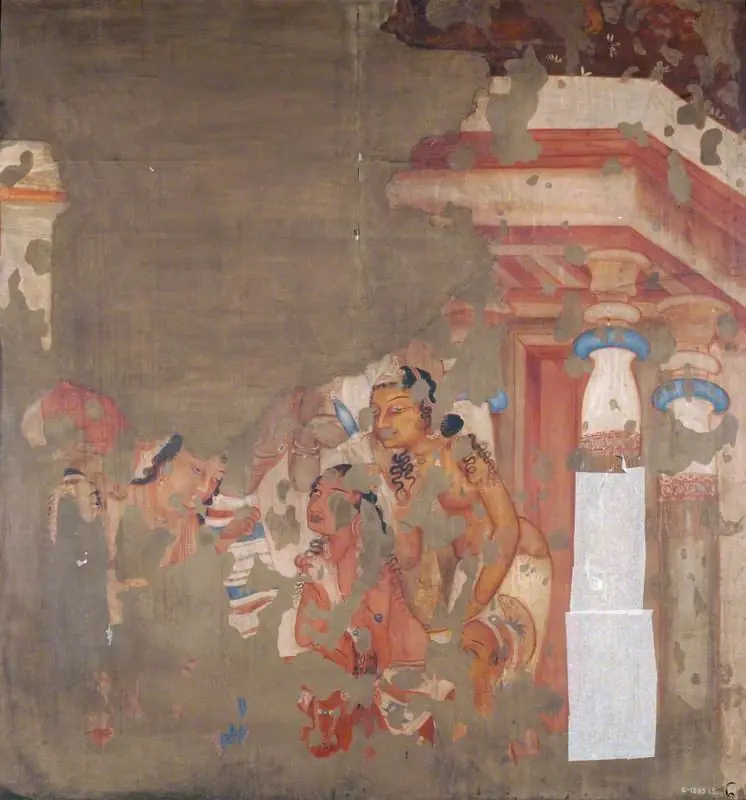 Copy of Painting inside the Caves of Ajanta (cave 1)
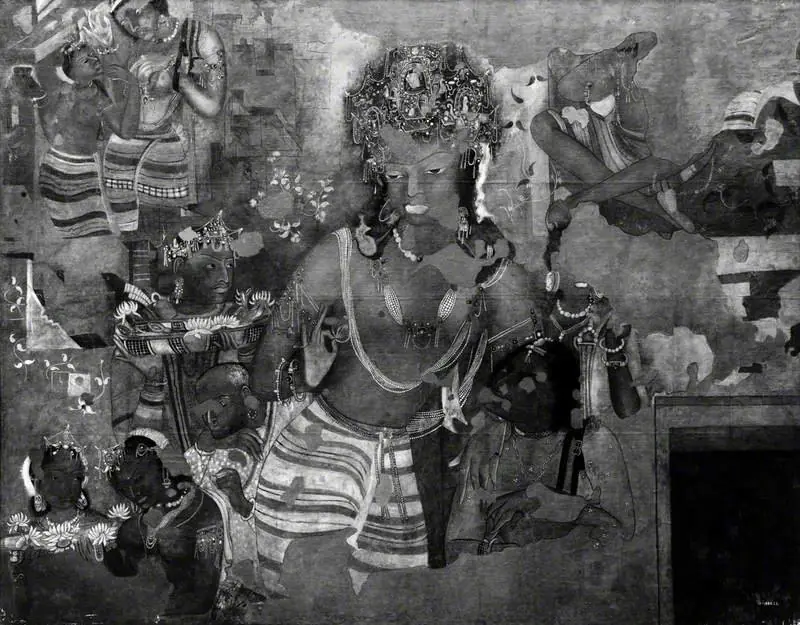 Copy of Painting inside the Caves of Ajanta (cave 1)
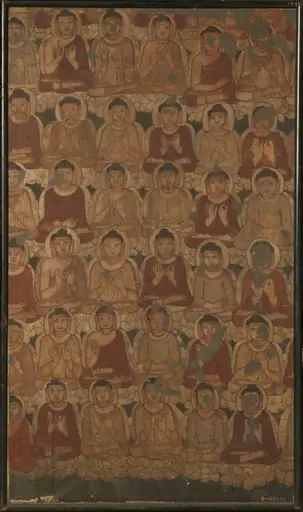 Copy of painting inside the Ajanta caves (cave 2)
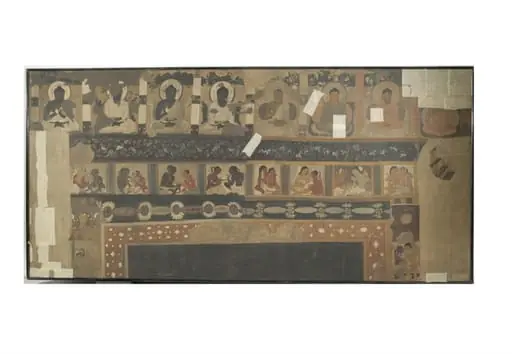 Copy of painting inside the Ajanta caves (cave 17)