Artwork
The Trinity
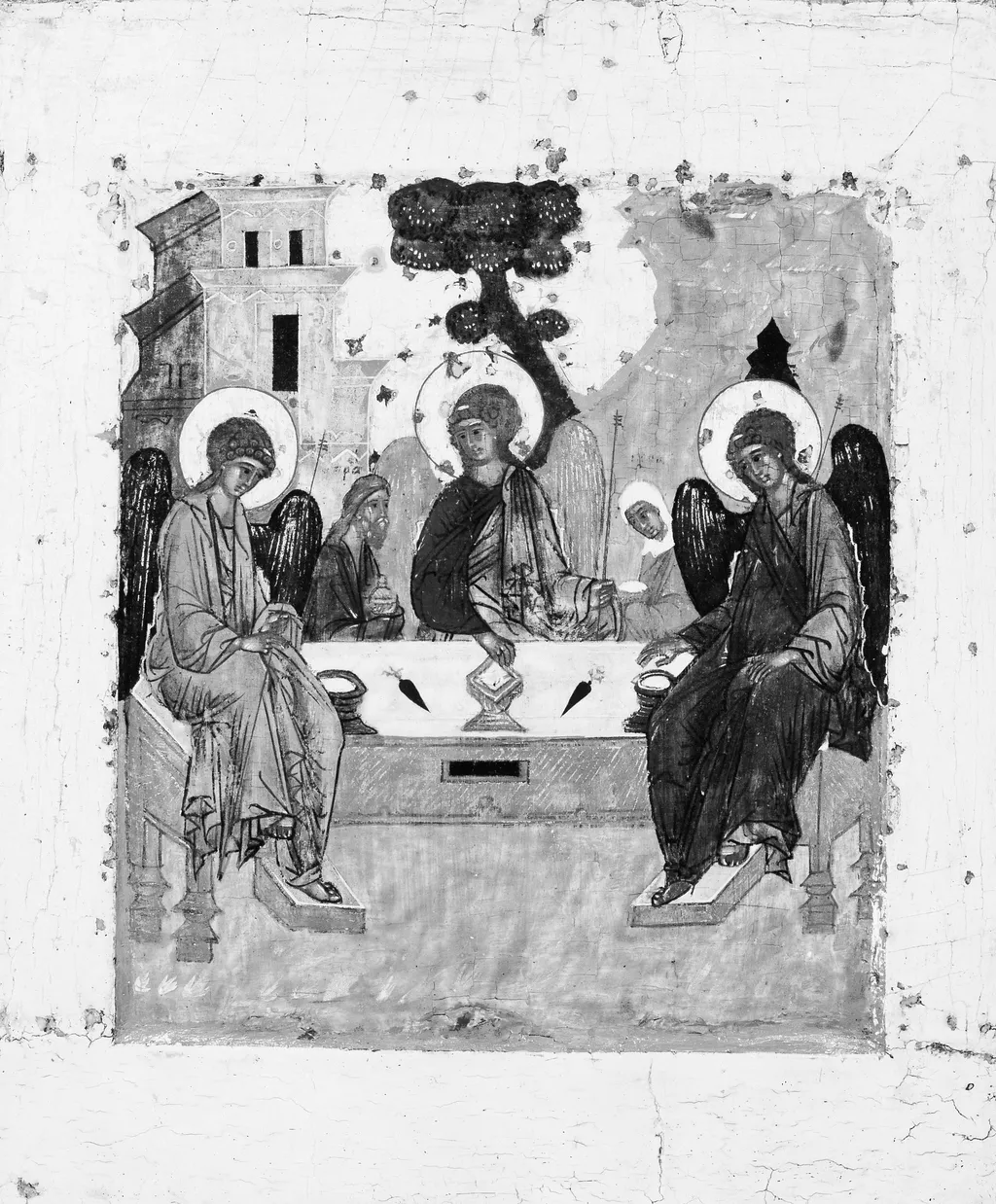
The Trinity is a tempera painting. It dates from 1700 and is held in the collection of the Metropolitan Museum of Art.
About this work
Overview
The work titled “The Trinity” is a tempera painting that presents three cloaked figures seated around a table. The central figure grasps a small object, while the figure to the right is distinguished by wings and a halo. A modest building and a stylized tree form a simple backdrop, rendered in muted tones with dark outlines that define the composition.
Subject & Meaning
The trio of figures suggests a theological grouping, with the winged, haloed presence indicating a divine or angelic role. The central figure’s small object may allude to a sacramental element, reinforcing the religious connotation of the scene. The calm demeanor of the participants conveys a moment of contemplation or ritual.
Technique & Style
Executed in tempera, the painting employs a dry, fast‑drying medium that yields crisp edges and a matte surface. The artist used restrained, muted colors and emphasized contour through dark outlines, a characteristic approach in medieval and early Renaissance panel work. The overall effect is one of subdued solemnity.
History & Provenance
The panel shows signs of age, including visible cracks and surface wear, indicating it has endured considerable time. While specific ownership records are not provided, the condition points to an artifact that has been preserved, likely within a religious or institutional setting, before entering a contemporary collection.
Artist & collection