Artwork
Aaron (dummy board)
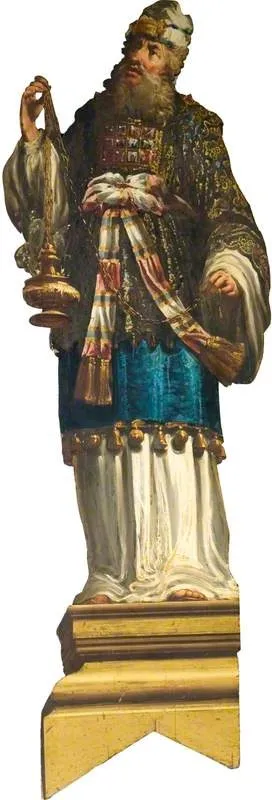
Aaron (dummy board) is an unspecified painting by the Barbizon school artist Unknown. It dates from 1708 and is held in the collection of the Victoria and Albert Museum. This painted dummy board depicts a male figure in ceremonial attire, mounted on a gilded base.
About this work
Overview
The use of light and shadow enhances the three-dimensionality of the form, anchoring the figure in a tangible space despite its likely architectural role.
This painted dummy board depicts a male figure in ceremonial attire, mounted on a gilded base. The figure stands upright, rendered with attention to textile detail and luminous accents. The composition emphasizes verticality and stillness, suggesting a functional or ritualistic purpose rather than a portrait. The use of light and shadow enhances the three-dimensionality of the form, anchoring the figure in a tangible space despite its likely architectural role.
Subject & Meaning
The figure is likely intended to represent Aaron, the biblical high priest, identified by his ornate garments and the censer or lamp he holds—a symbol of priestly duty and divine service. The rich fabrics and gold embellishments reflect ecclesiastical authority and sacred ritual. The stillness and frontal pose convey solemnity, aligning with devotional imagery used in religious settings to evoke reverence and presence.
Technique & Style
The artist employed chiaroscuro to model the figure’s form, creating subtle transitions between light and shadow that define the contours of the robe and face. Fine brushwork renders intricate patterns on the fabric, while metallic pigments highlight the gold accents, lending a tactile sense of luxury. The surface is smooth and controlled, avoiding expressive brushstrokes in favor of clarity and symbolic precision.
History & Provenance
Dummy boards like this were often used in churches or monasteries as static, life-sized figures to fill architectural niches or accompany processions. This example likely dates to the late medieval or early Renaissance period, when such objects served both decorative and liturgical functions. Its survival suggests it was preserved within a religious context, possibly in a region with strong traditions of devotional sculpture and painted imagery.
Context
In ecclesiastical spaces of the period, painted figures like this one functioned as visual anchors for worship, bridging the physical and spiritual realms. They were often paired with real statues or altarpieces to reinforce ritual narratives. The choice of Aaron reflects the importance of Old Testament priesthood in Christian liturgy, particularly in communities emphasizing continuity between Jewish and Christian sacred traditions.
Legacy
Though not widely known today, such dummy boards contributed to the immersive environments of pre-modern worship. Their survival offers insight into how religious communities used art to embody sacred roles physically. This work exemplifies a transitional phase in devotional art, where painting began to emulate sculpture’s presence, foreshadowing later innovations in theatrical religious display.
Artist & collection

 Domestic Scene
 Giacomo and Cardinal Marco, investing Andrea, Abbot of San Zeno, with his Benefice
 The Nymph of Fontainebleau
 Portrait of a Woman
 Madonna and Child with Saints in the Enclosed Garden
 Venus and Minerva
 Family Group of Four on Sofa
 Wall painting from Room H of the Villa of P. Fannius Synistor at Boscoreale
 Saint John the Evangelist
 Woman with a Tall Head-Dress (dummy board)
 A Man Wearing a Blue Cloak
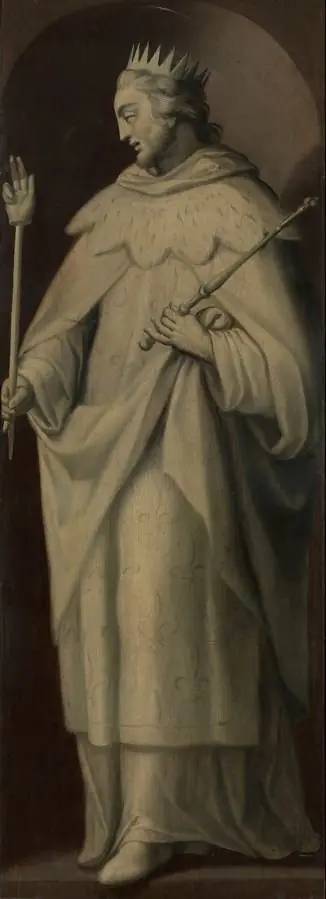 St Louis IX, King of France
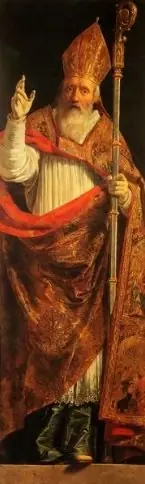 Saint Germanus of Auxerre
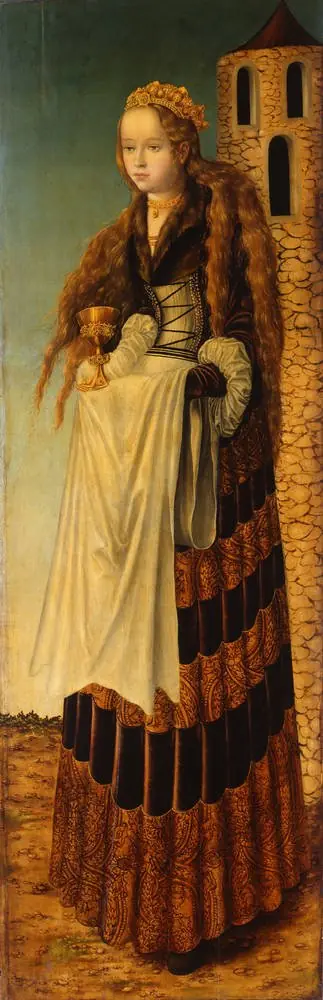 Saint Barbara
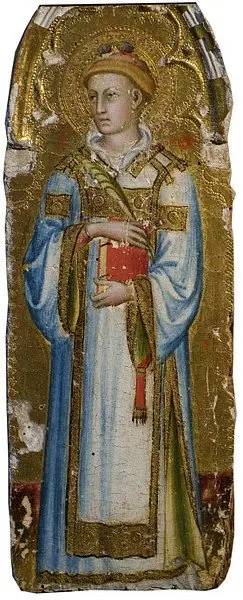 St. Stephen
 Bishop Saint from an Augustinian altarpiece
 Raphael (1483–1520) (design for a mosaic in the Victoria and Albert Museum, not executed)
 Saint Ann