Artwork
Mary of Portugal (1527–1545)
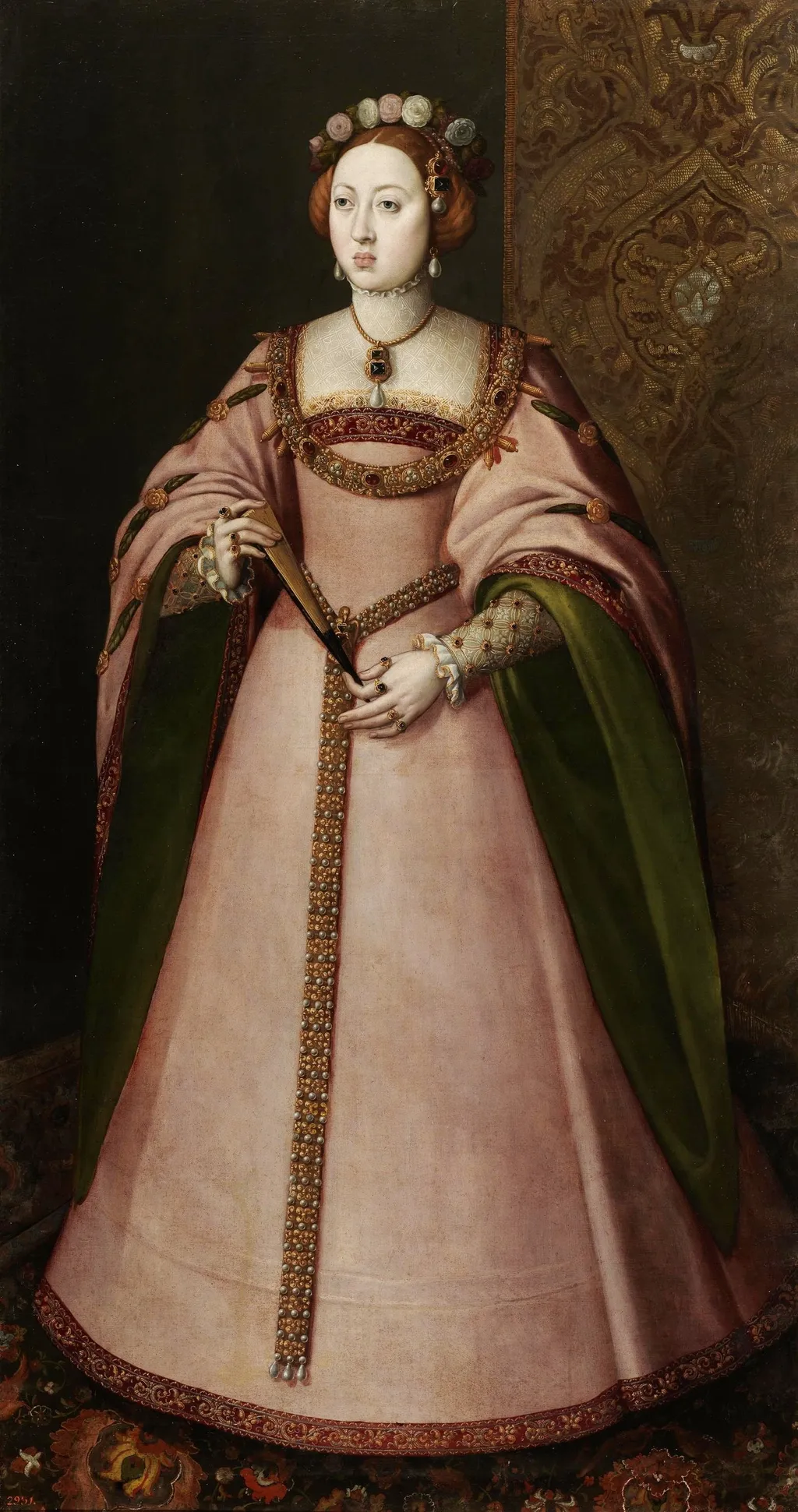
Mary of Portugal (1527–1545) is an oil painting. It dates from 1501 and is held in the collection of the Museo del Prado.
About this work
Overview
The portrait depicts a young woman dressed in a sumptuous pink gown with dark green sleeves, standing upright and holding a fan in one hand and a string of beads in the other. Gold embroidery decorates the high collar, while a pearl necklace and matching earrings enhance the refined appearance. The figure dominates a patterned backdrop, illuminated by a subtle play of light on her face.
Subject & Meaning
Identified as Mary of Portugal, the work presents the princess in courtly attire, emphasizing her status through luxurious fabrics and accessories. The fan and beads may allude to contemporary notions of femininity and aristocratic leisure, while the composed pose conveys dignity appropriate to her royal lineage.
Technique & Style
Executed in oil on canvas, the painting employs a delicate handling of light that models the facial features and fabric folds, reflecting early Renaissance chiaroscuro practices. The intricate gold threadwork and the rendering of translucent pearls demonstrate the artist’s attention to texture and materiality.
History & Provenance
Created between 1527 and 1545, the portrait likely originated from a court workshop serving the Portuguese royal family. Its subsequent ownership trail remains limited, with the work eventually entering a museum collection where it is displayed as part of the European portraiture holdings.
Context
The portrait belongs to a period when Iberian courts commissioned portraits to affirm dynastic connections and political alliances. The inclusion of opulent dress and jewelry aligns with the visual language used to assert the wealth and influence of Portugal’s ruling house during the early sixteenth century.
Artist & collection
