Artwork
Gentleman huntsman with dog
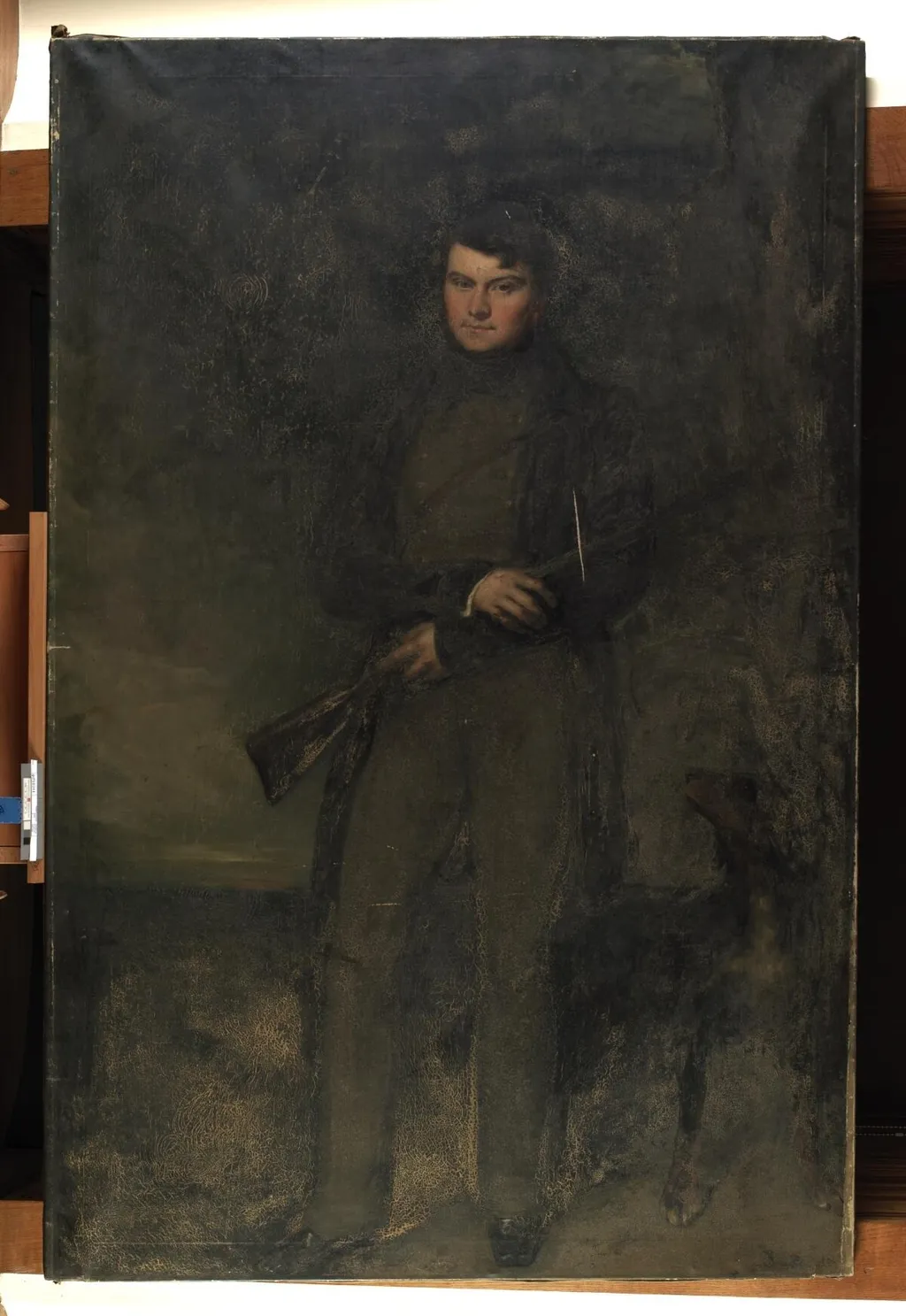
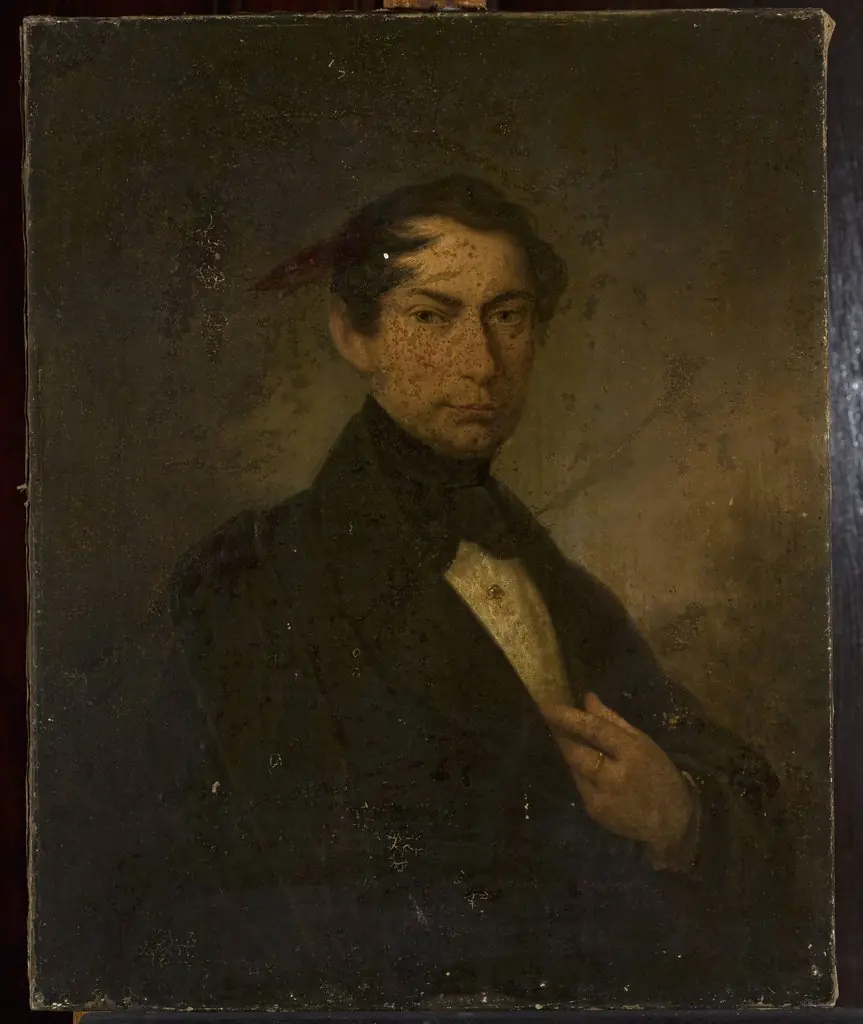
Gentleman huntsman with dog is an oil painting by the Biedermeier artist Unknown. It dates from 1820 and is held in the collection of the National Library of Wales. This oil painting depicts a man in formal attire, standing motionless with a small dog at his side.
About this work
Overview
The composition focuses tightly on the figure, set against a deep, unmodulated background that enhances the contrast between light and shadow.
This oil painting depicts a man in formal attire, standing motionless with a small dog at his side. The composition focuses tightly on the figure, set against a deep, unmodulated background that enhances the contrast between light and shadow. The subject’s poised posture and the dog’s quiet attention suggest a moment of stillness, perhaps after a hunt or during a pause in routine. The surface shows minor wear, particularly along the frame’s edge, indicating age and handling.
Subject & Meaning
The figure is likely a member of the landed gentry, dressed in a dark coat over a lighter shirt, suggesting both status and practicality for outdoor pursuits. The presence of the dog, leashed and attentive, implies a relationship of control and companionship. The stillness of the scene conveys dignity and restraint rather than action, possibly reflecting ideals of self-possession and quiet authority common in 17th- to 18th-century portraiture.
Technique & Style
The artist employs chiaroscuro to define form through sharp contrasts between light and dark, drawing attention to the man’s face and the texture of his clothing. The background is rendered without detail, isolating the subject and heightening the sense of intimacy. Brushwork is controlled but not overly refined; subtle wear on the paint surface suggests the passage of time and possible repainting or varnishing over the years.
History & Provenance
The painting’s origins are undocumented, but its style and subject align with Northern European portraiture of the late 1600s to early 1700s. The condition, including edge wear and surface abrasion, indicates it was once displayed in a domestic setting, possibly moved or stored without protective framing. No known records trace its early ownership or exhibition history.
Context
During the period this work likely dates from, portraits of gentlemen with hunting dogs were common among the aristocracy, serving as markers of social standing and leisure pursuits. Unlike dynamic hunting scenes, this image emphasizes composure and restraint, reflecting a shift toward introspective portraiture that valued character over action. Such works were often commissioned to affirm identity and lineage within a stable social order.
Legacy
Though not attributed to a known master, the painting exemplifies the quiet dignity of provincial portraiture from the early modern era. Its emphasis on psychological presence over narrative detail anticipates later developments in character-driven portraiture. The work survives as a modest but evocative record of how personal identity was visually constructed outside major artistic centers.
Artist & collection

 Domestic Scene
 Giacomo and Cardinal Marco, investing Andrea, Abbot of San Zeno, with his Benefice
 The Nymph of Fontainebleau
 Portrait of a Woman
 Madonna and Child with Saints in the Enclosed Garden
 Venus and Minerva
 Family Group of Four on Sofa
 Wall painting from Room H of the Villa of P. Fannius Synistor at Boscoreale
 Gentleman in his study
 Tânăr din familia Cantacuzino
 Rev. Owen Thomas
 Portrait of Ignacy Innocenty Makowielski
 Pieter Onderwater
 Paulus Usteri als Jäger im Walde
 Male portrait
 Portrait of I.P. Novosiltsev
 Portrait of a gentleman holding a book
 Portrait of Antoni Olechowski
 Portrait of Captain William J. Ferrell
 Portrait of Koronat Cyrański