Artwork
Aleksej Mikhajlovitj (1645-76), russisk zar
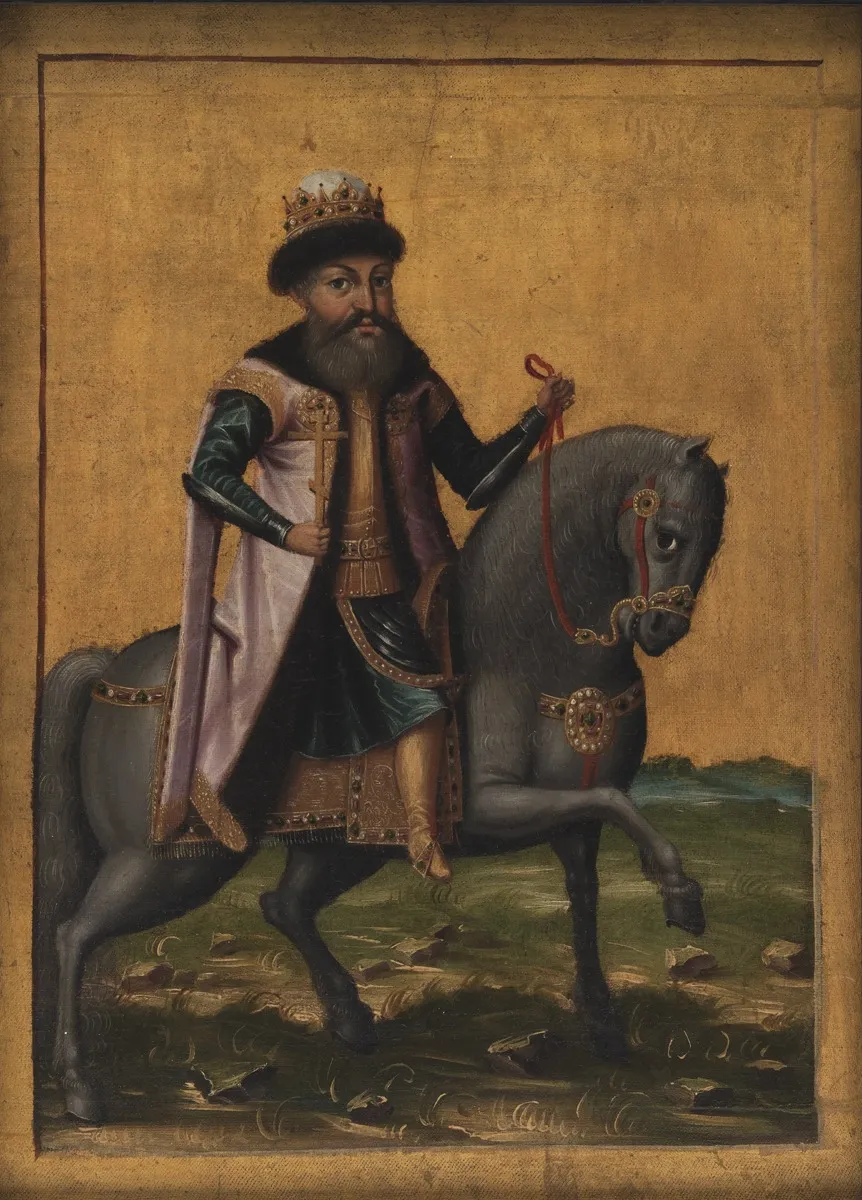
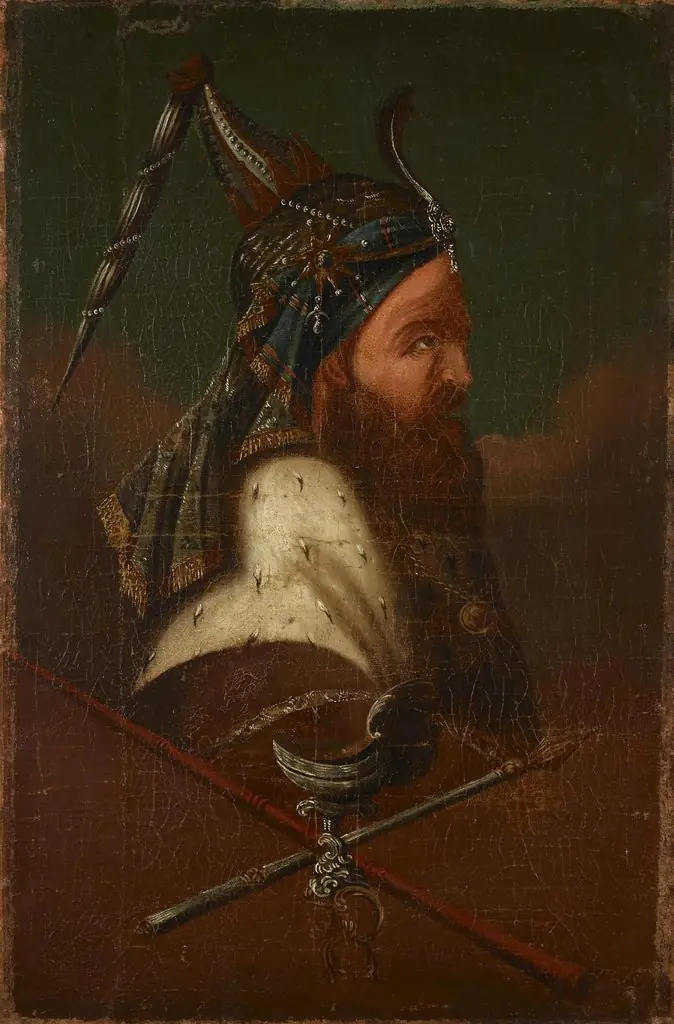
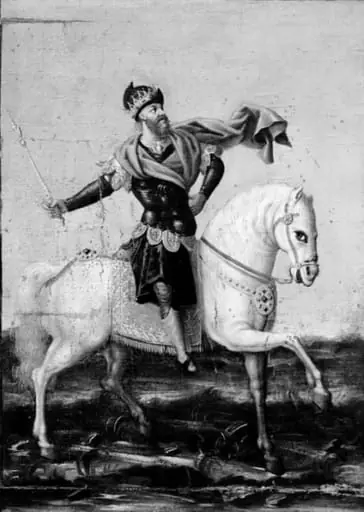
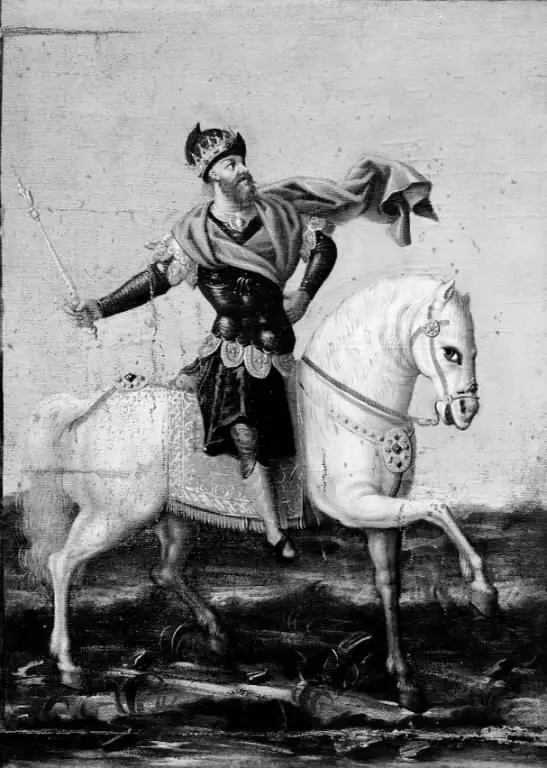
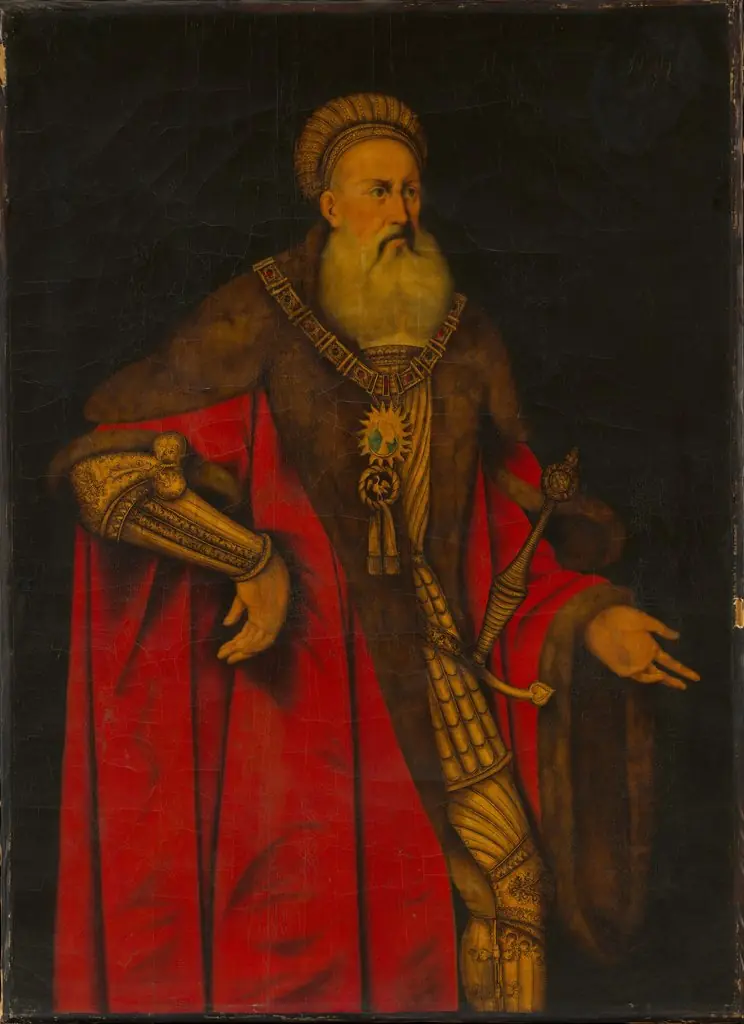
Aleksej Mikhajlovitj (1645-76), russisk zar is an unspecified painting by Unknown. It dates from 1675 and is held in the collection of the Statens Museum for Kunst. Aleksej Mikhajlovitj (1645‑1676) presents a solitary rider astride a dark horse, traversing a stark, rocky plain.
About this work
Overview
Aleksej Mikhajlovitj (1645‑1676) presents a solitary rider astride a dark horse, traversing a stark, rocky plain. The figure, crowned and bearded, grips a red rope attached to the animal’s harness. The composition is dominated by a flat, warm palette, with minimal background detail beyond faint distant hills.
Subject & Meaning
The central figure is identified as a Russian tsar, his regal attire and crown emphasizing authority. The red rope may symbolize control or power, while the barren landscape underscores the ruler’s dominion over a harsh environment, reflecting themes of sovereignty and resilience.
Technique & Style
Executed in a simplified, almost decorative manner, the painting employs broad washes of color without deep chiaroscuro. Layered garments in green, gold, and purple are rendered with flat tones, and the horse’s ornate gold‑set bridle is highlighted against the muted terrain, illustrating a stylized rather than naturalistic approach.
History & Provenance
Created during the mid‑17th century, the work aligns with Russian court portraiture that emphasized regal presence over realistic setting. Its provenance traces back to private collections of the Russian nobility before entering public holdings, though specific acquisition records remain scarce.
Context
The image reflects the era’s visual conventions for portraying monarchs, where elaborate dress and symbolic accessories conveyed status. The stark, unadorned landscape mirrors contemporary Russian artistic tendencies to foreground the sovereign against a minimal backdrop, reinforcing the centrality of the ruler.
Legacy
While not widely reproduced, the painting contributes to the visual record of Russian tsarist iconography, illustrating the period’s blend of courtly opulence and austere environmental depiction. It serves as a reference point for scholars examining the evolution of regal portraiture in Eastern Europe.
Artist & collection

 Domestic Scene
 Giacomo and Cardinal Marco, investing Andrea, Abbot of San Zeno, with his Benefice
 The Nymph of Fontainebleau
 Portrait of a Woman
 Madonna and Child with Saints in the Enclosed Garden
 Venus and Minerva
 Family Group of Four on Sofa
 Wall painting from Room H of the Villa of P. Fannius Synistor at Boscoreale