Artwork
Tantric Manuscript "Sangrahani Sutra"
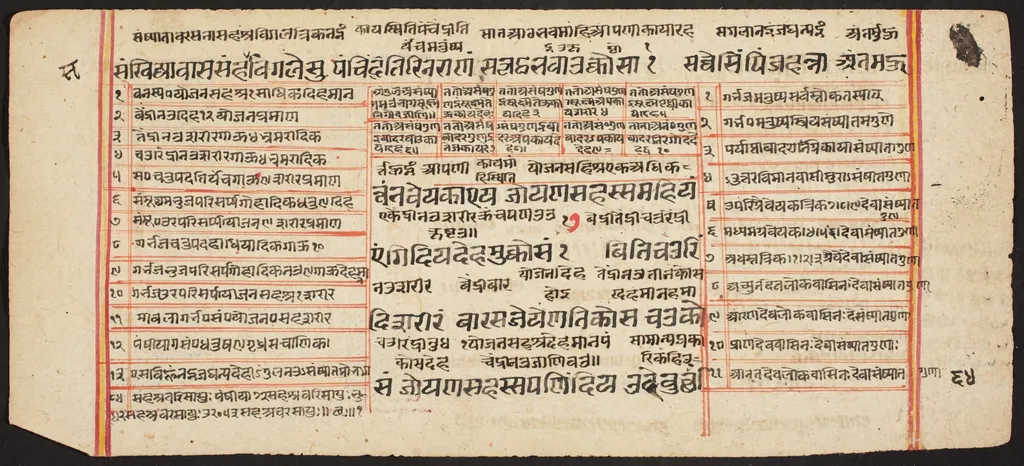
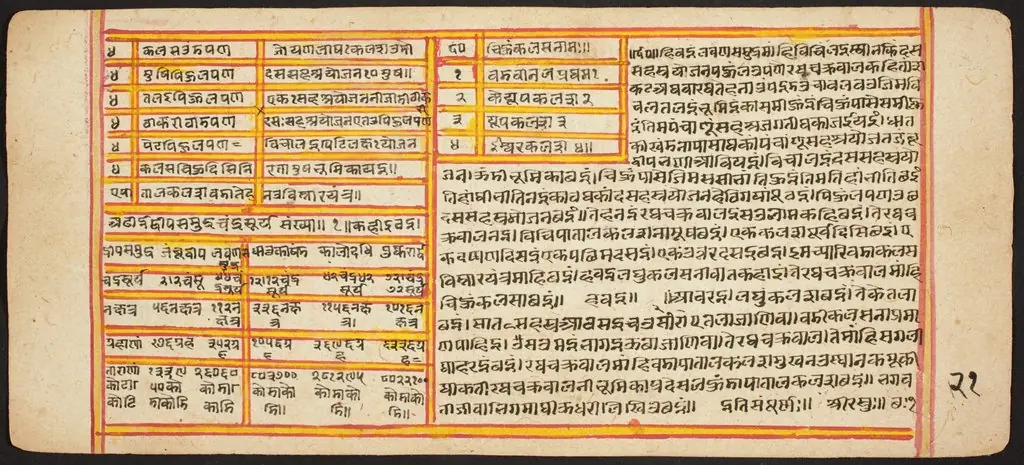
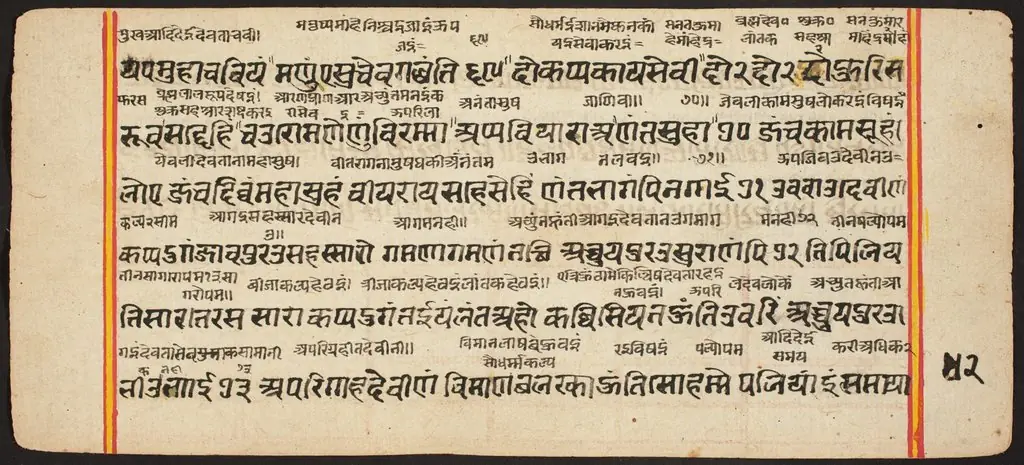
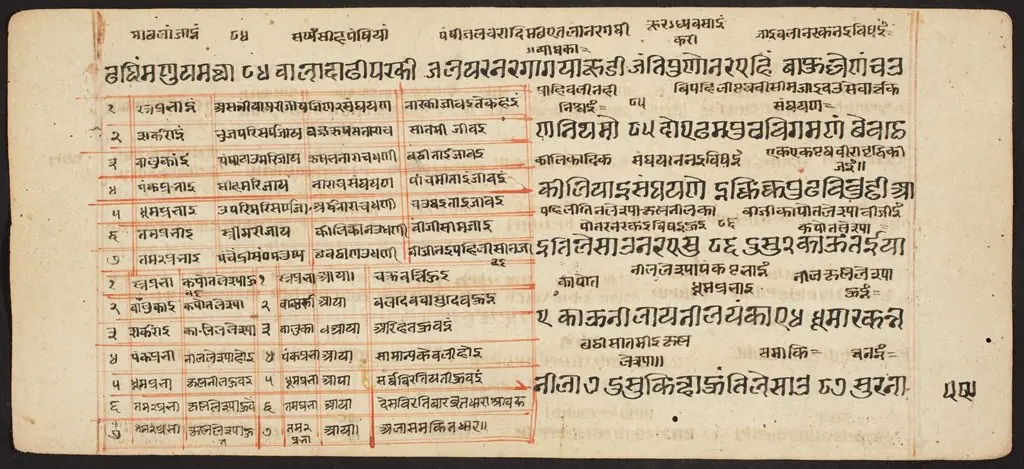
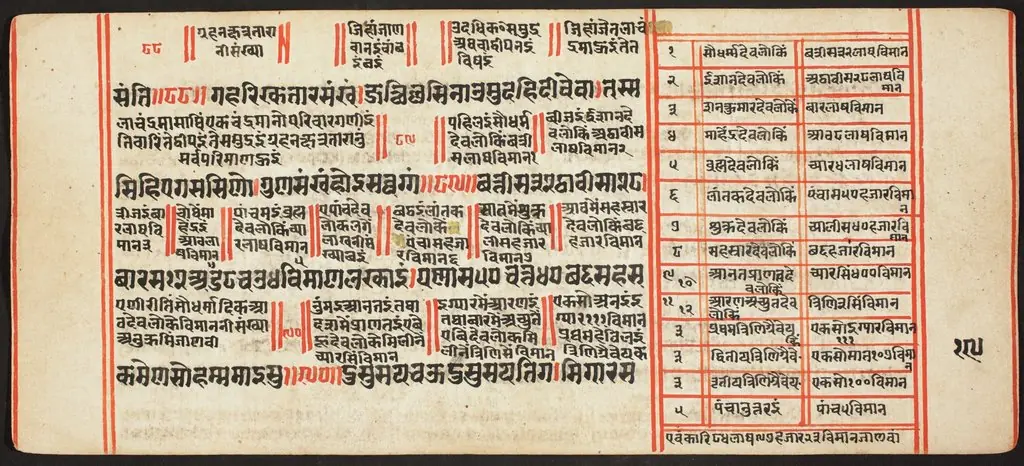
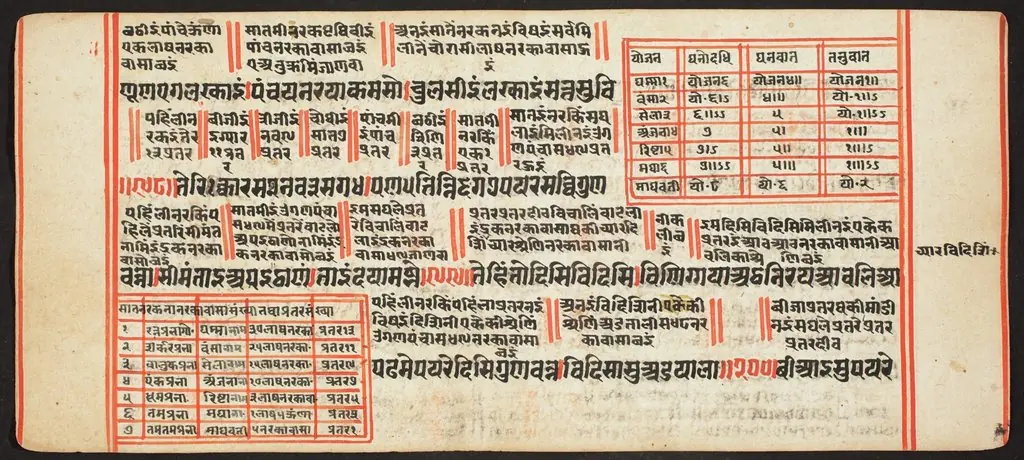
Tantric Manuscript "Sangrahani Sutra" is an unspecified painting by Unknown. It is held in the collection of the Detroit Institute of Arts. This manuscript fragment contains handwritten text in an obscure script, likely from a Tantric Buddhist tradition.
About this work
Overview
The deliberate, uniform script indicates ritual or liturgical use, though the specific language remains unidentified.
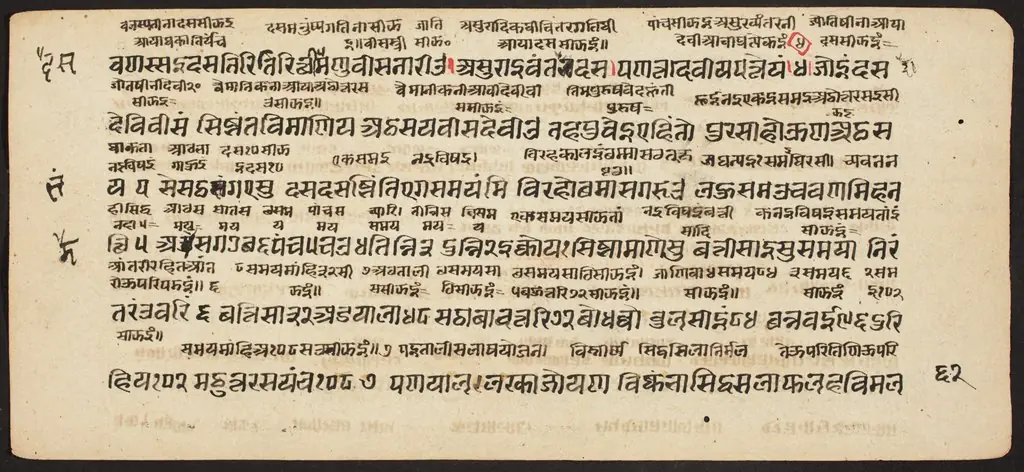
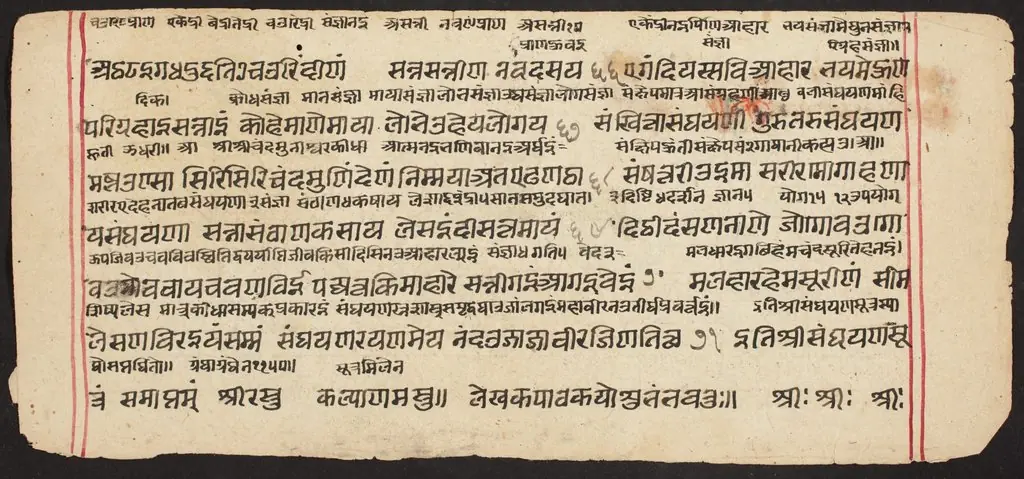
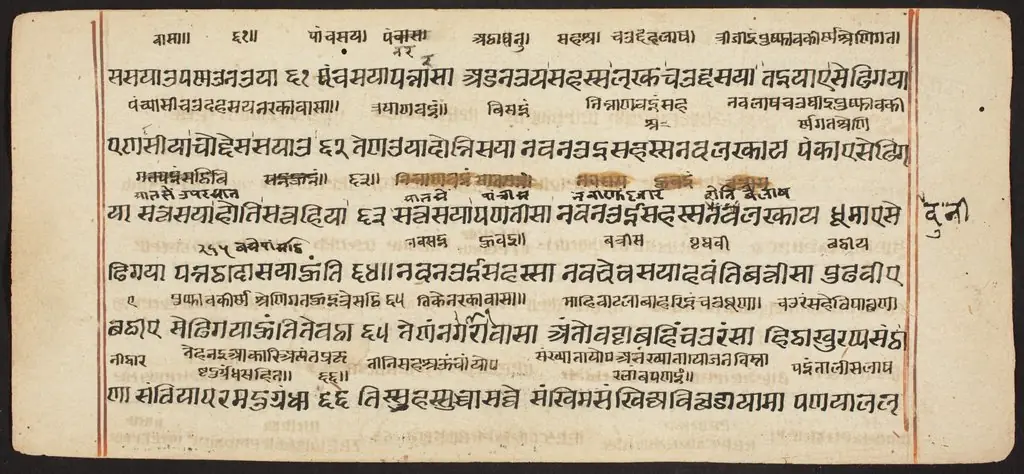
This manuscript fragment contains handwritten text in an obscure script, likely from a Tantric Buddhist tradition. Rendered in black ink on off-white, textured paper, it features red ink lines dividing sections of content. Visible wear—including tears and creases—suggests prolonged handling. The deliberate, uniform script indicates ritual or liturgical use, though the specific language remains unidentified.
Subject & Meaning
The text is believed to be part of the Sangrahani Sutra, a Tantric Buddhist scripture concerned with doctrinal compilation and meditative practice. The red divisions may denote structural units for recitation or ritual performance. While the precise content is untranslatable without linguistic context, its formal presentation aligns with sacred texts used in esoteric Buddhist traditions of South or Southeast Asia.
Technique & Style
Ink was applied with precision using a fine brush or stylus, producing consistent letterforms across the surface. Red lines, drawn with a separate tool, serve as visual separators rather than decorative elements. The paper’s rough texture and age-related damage reflect handmade materials common in pre-modern manuscript production, prioritizing function over aesthetic refinement.
History & Provenance
The manuscript’s origin is unconfirmed, but comparable fragments are documented in collections from Nepal, Tibet, or Bengal. The Detroit Institute of Arts holds similar items, suggesting regional continuity in manuscript production during the medieval period. Its survival implies preservation within monastic or ritual contexts, though its exact provenance prior to modern collection remains undocumented.
Context
Tantric Buddhist manuscripts like this were often copied by trained scribes for use in meditation, ritual, or teaching. They circulated within monastic networks and were treated as sacred objects, not merely texts. The use of red for structural markers reflects a broader tradition in South Asian religious writing, where color denoted liturgical function rather than ornamentation.
Legacy
Surviving fragments such as this contribute to scholarly efforts to reconstruct lost or understudied Buddhist textual traditions. They offer insight into scribal practices, material culture, and the transmission of esoteric teachings across regions. While not widely exhibited, they remain vital to the study of religious literacy and manuscript conservation in pre-modern Asia.
Artist & collection

 Domestic Scene
 Giacomo and Cardinal Marco, investing Andrea, Abbot of San Zeno, with his Benefice
 The Nymph of Fontainebleau
 Portrait of a Woman
 Madonna and Child with Saints in the Enclosed Garden
 Venus and Minerva
 Family Group of Four on Sofa
 Wall painting from Room H of the Villa of P. Fannius Synistor at Boscoreale
 Tantric Manuscript "Sangrahani Sutra"
 Tantric Manuscript "Sangrahani Sutra"
 Tantric Manuscript "Sangrahani Sutra"
 Tantric Manuscript "Sangrahani Sutra"
 Tantric Manuscript "Sangrahani Sutra"
 Tantric Manuscript "Sangrahani Sutra"
 Tantric Manuscript, "Sangrahani Sutra"
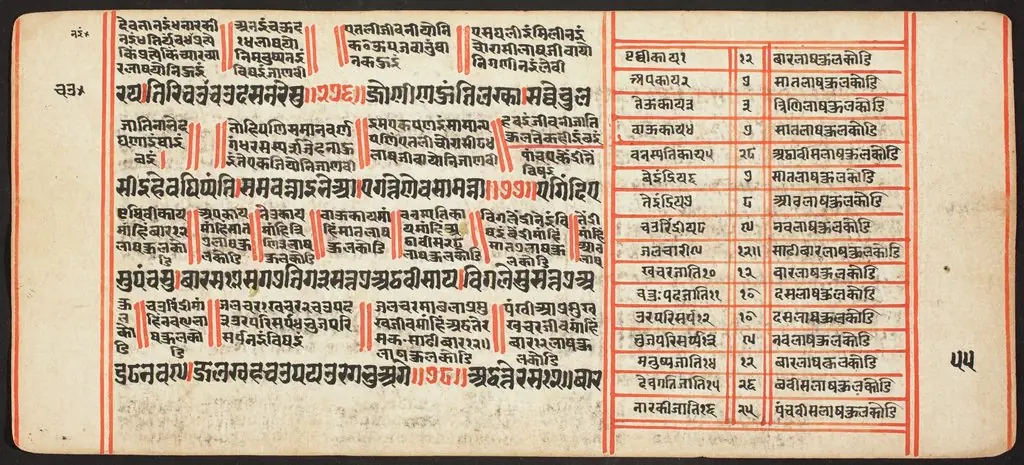 Tantric Manuscript, "Sangrahani Sutra"
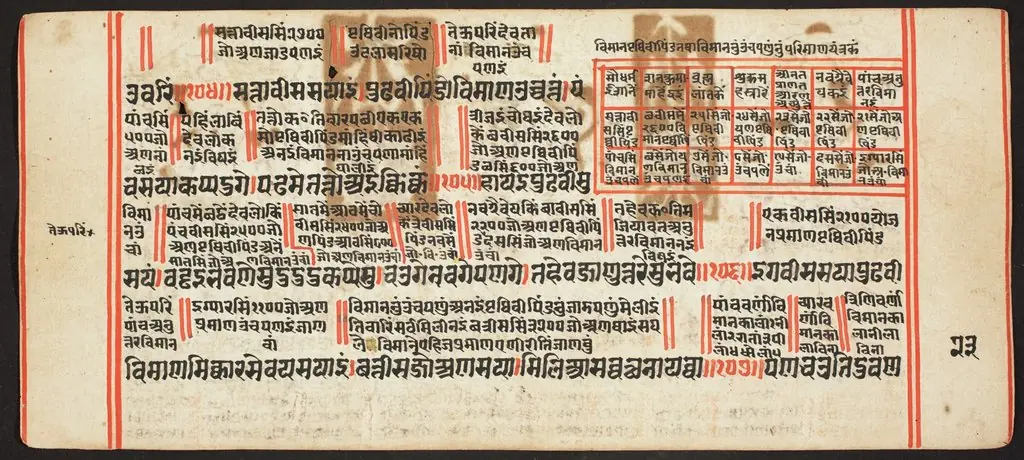 Tantric Manuscript, "Sangrahani Sutra"
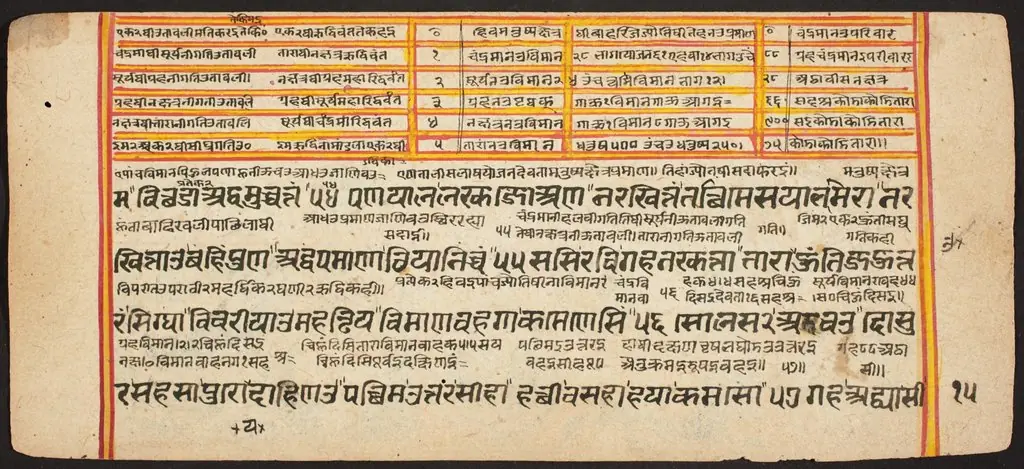 Tantric Manuscript "Sangrahani Sutra"
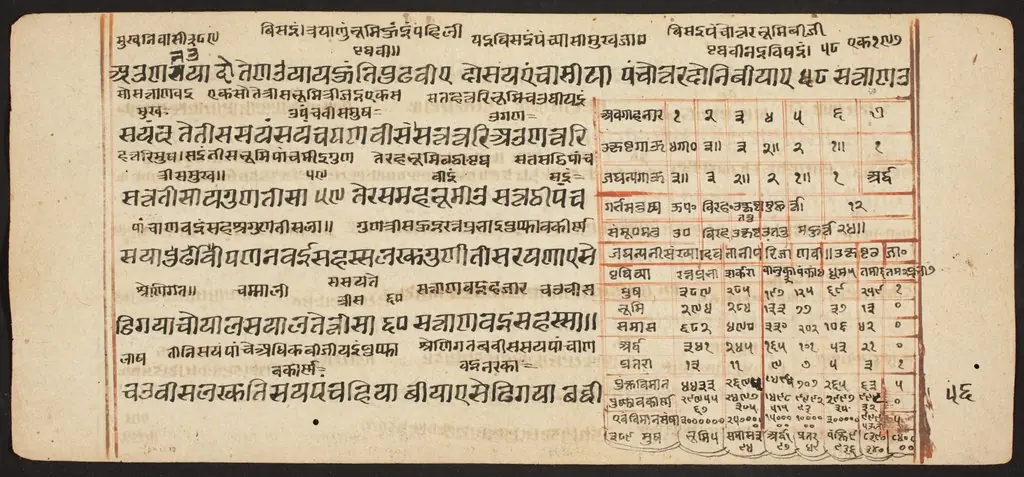 Tantric Manuscript "Sangrahani Sutra"
 Tantric Manuscript, "Sangrahani Sutra"