Artwork
Tantric Manuscript, "Sangrahani Sutra"
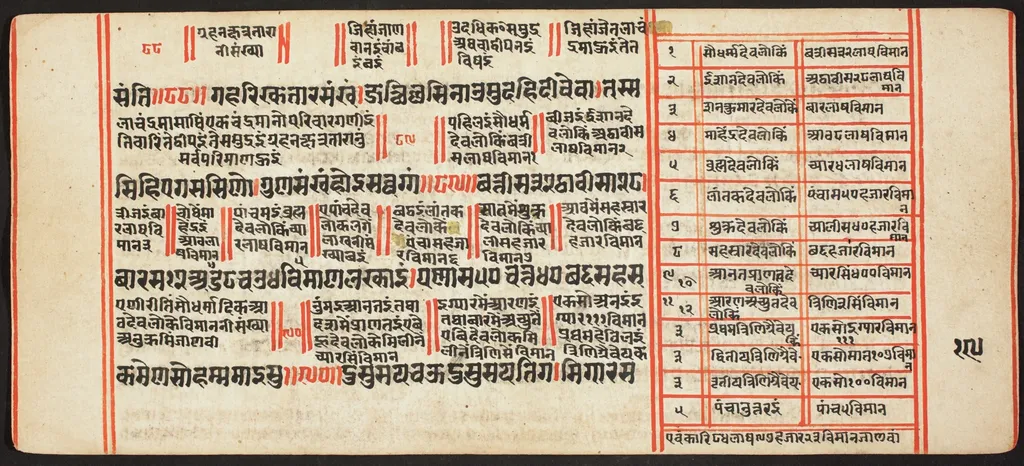
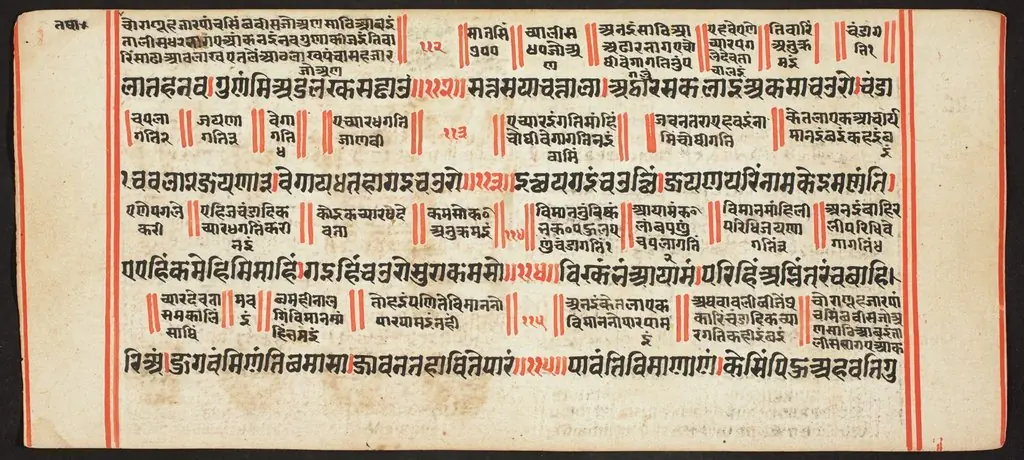
Tantric Manuscript, "Sangrahani Sutra" is an unspecified painting by Unknown. It is held in the collection of the Detroit Institute of Arts. This page originates from a handwritten Buddhist manuscript known as the Sangrahani Sutra, produced in medieval India or Nepal.
About this work
Overview
The physical form reflects centuries of careful preservation: the paper has yellowed, ink has softened in places, yet the script remains distinctly readable.
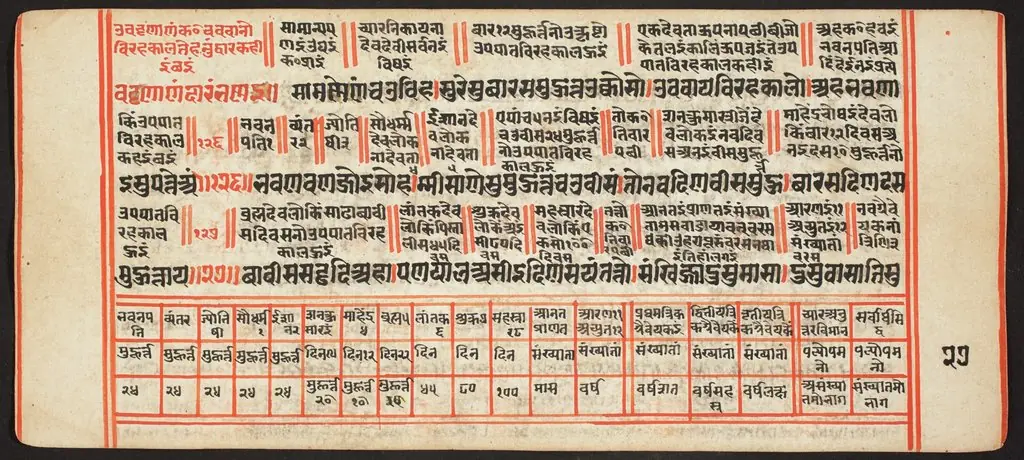
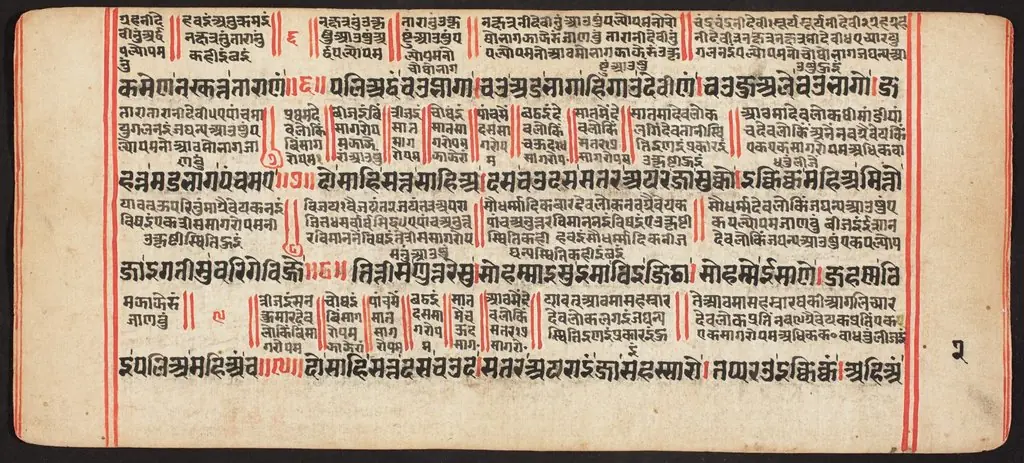
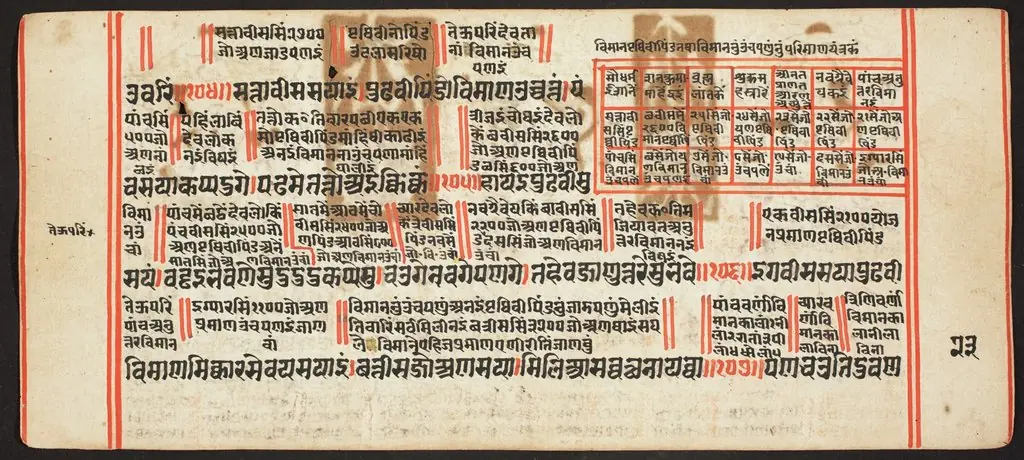
This page originates from a handwritten Buddhist manuscript known as the Sangrahani Sutra, produced in medieval India or Nepal. It is part of a larger codex composed for ritual or scholarly use, featuring sacred texts in Sanskrit. The physical form reflects centuries of careful preservation: the paper has yellowed, ink has softened in places, yet the script remains distinctly readable. Red ink lines structure the text into columns, guiding the reader’s eye and reinforcing the manuscript’s liturgical function.
Subject & Meaning
The Sangrahani Sutra is a doctrinal text compiling key teachings of the Mahayana Buddhist tradition, often used in monastic study and recitation. Its content organizes essential principles into digestible sections, aiding memorization and transmission. The meticulous script and structured layout suggest it was intended for repeated use by trained monks, not merely as a devotional object but as a working guide to philosophical and ethical practice.
Technique & Style
The script is executed in a fine, cursive Brahmi-derived script with deliberate flourishes at line endings, typical of regional scribal traditions. Red ink, likely derived from vermilion, delineates paragraph divisions and enhances legibility. The ink, made from soot and gum, has oxidized over time, but the precision of the brushwork remains evident. The paper, possibly mulberry bark, was treated to resist moisture and insect damage, reflecting advanced material knowledge.
History & Provenance
The manuscript likely originated in a monastic center in the eastern Himalayas between the 10th and 14th centuries. Its survival suggests it was preserved in temple libraries or private collections, shielded from environmental decay. While its exact provenance is undocumented, comparable manuscripts are held in institutions such as the Detroit Institute of Arts, indicating a broader network of preservation among South Asian and Tibetan Buddhist communities.
Context
During the medieval period, Buddhist texts were copied by hand as acts of merit, often commissioned by patrons or monastic communities. The Sangrahani Sutra belonged to a genre of didactic compendia used in monastic education. Its production required skilled scribes, access to quality materials, and a stable religious environment—conditions found in regions like Bihar, Bengal, and Nepal, where Buddhist learning persisted despite political changes.
Legacy
Though replaced by printed editions in later centuries, such manuscripts remain vital to the study of Buddhist textual history and scribal culture. They offer insight into how doctrine was transmitted before mass printing, preserving not only content but also the material practices of religious communities. Today, they serve as primary sources for scholars reconstructing the evolution of Buddhist thought and manuscript traditions across Asia.
Artist & collection

 Domestic Scene
 Giacomo and Cardinal Marco, investing Andrea, Abbot of San Zeno, with his Benefice
 The Nymph of Fontainebleau
 Portrait of a Woman
 Madonna and Child with Saints in the Enclosed Garden
 Venus and Minerva
 Family Group of Four on Sofa
 Wall painting from Room H of the Villa of P. Fannius Synistor at Boscoreale
 Tantric Manuscript, "Sangrahani Sutra"
 Tantric Manuscript, "Sangrahani Sutra"
 Tantric Manuscript, "Sangrahani Sutra"
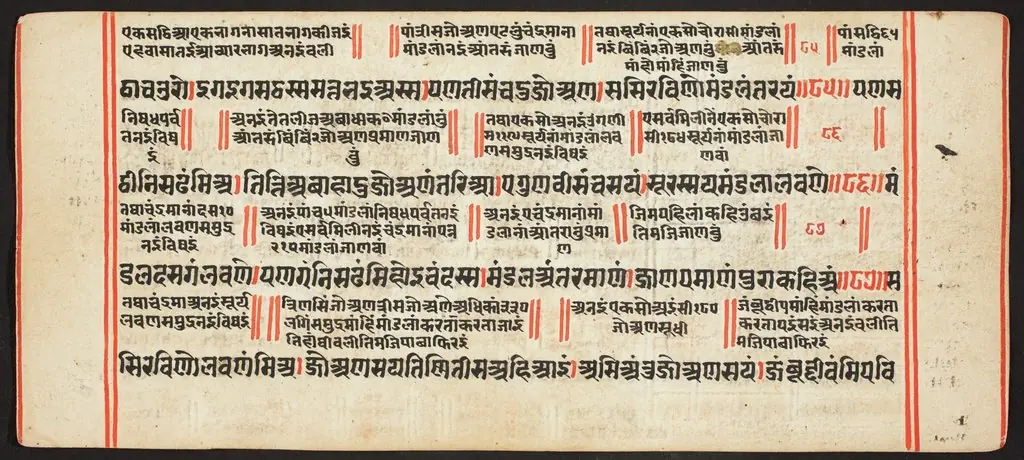 Tantric Manuscript, "Sangrahani Sutra"
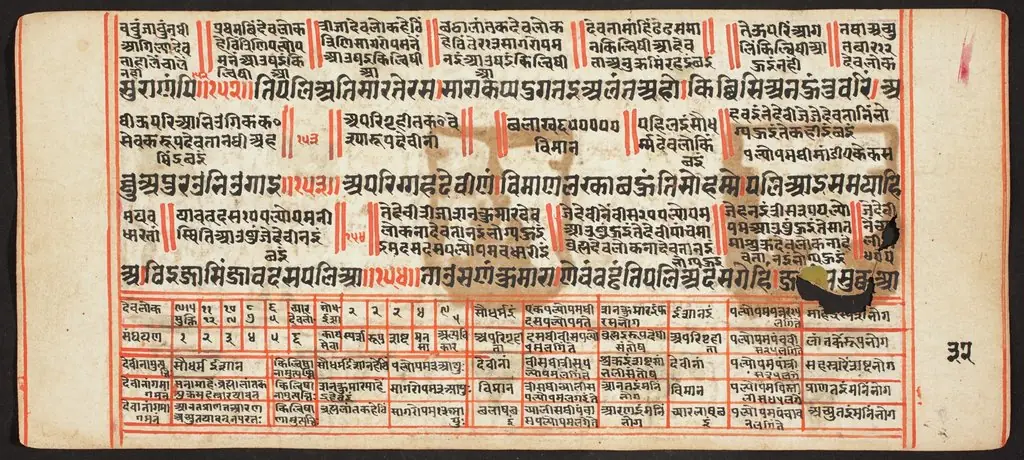 Tantric Manuscript, "Sangrahani Sutra"
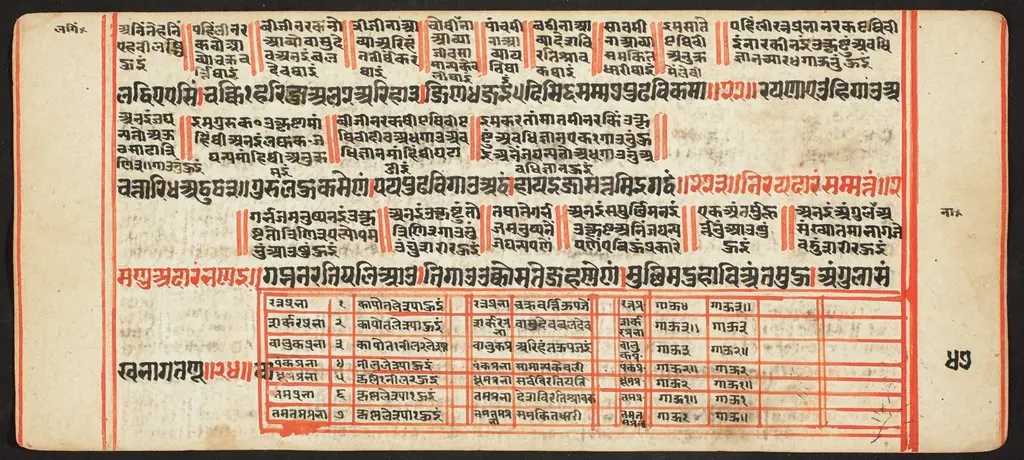 Tantric Manuscript, "Sangrahani Sutra"
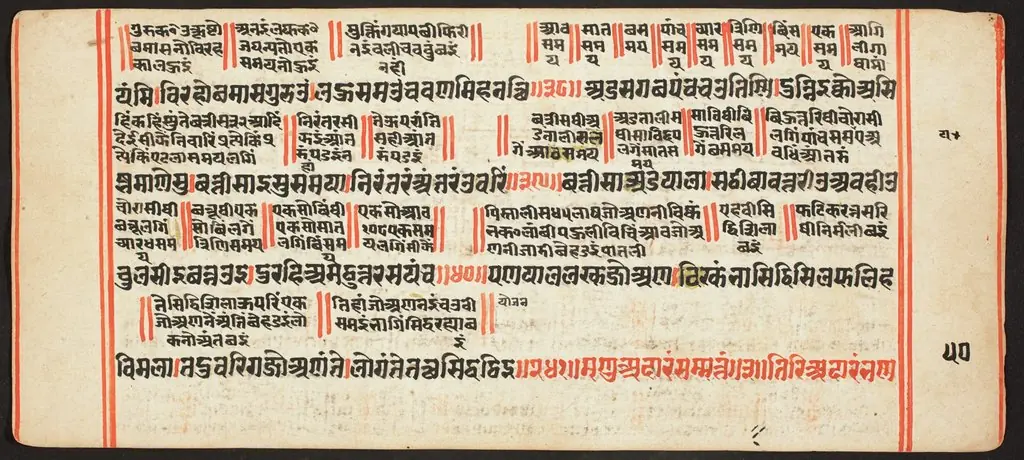 Tantric Manuscript, "Sangrahani Sutra"
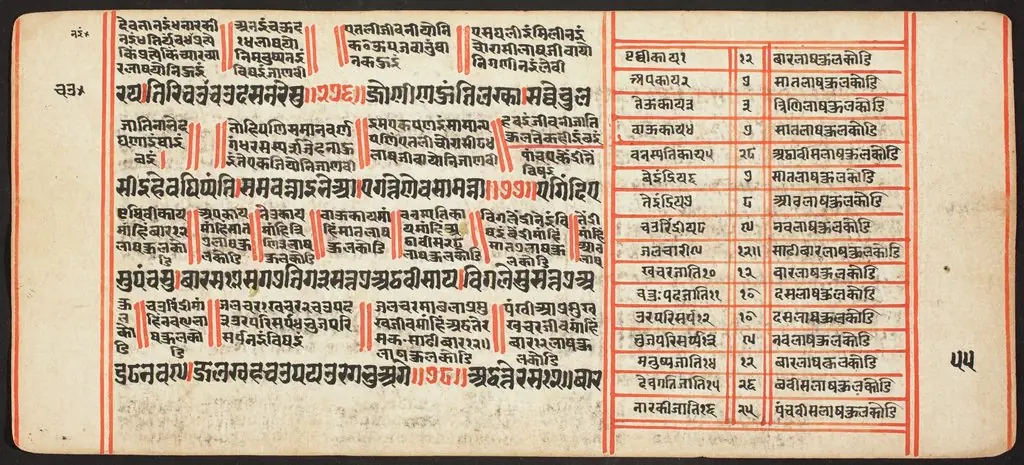 Tantric Manuscript, "Sangrahani Sutra"
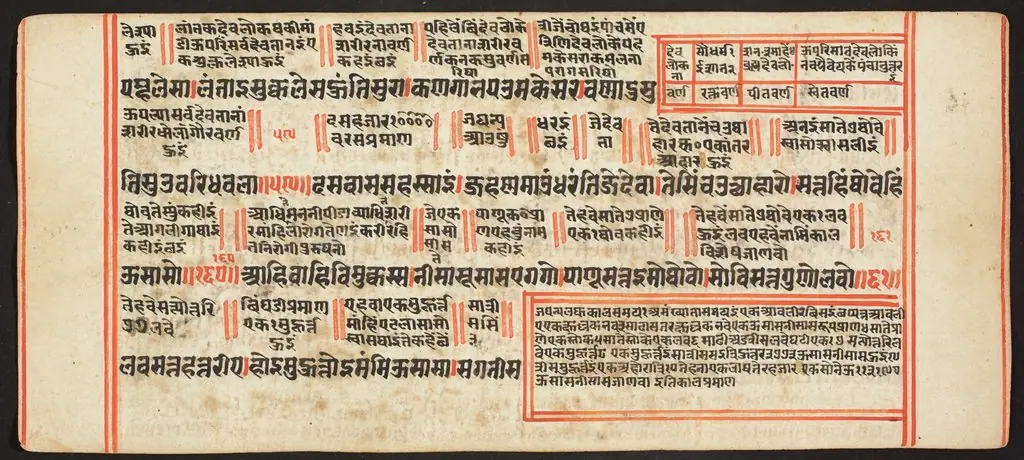 Tantric Manuscript, "Sangrahani Sutra"
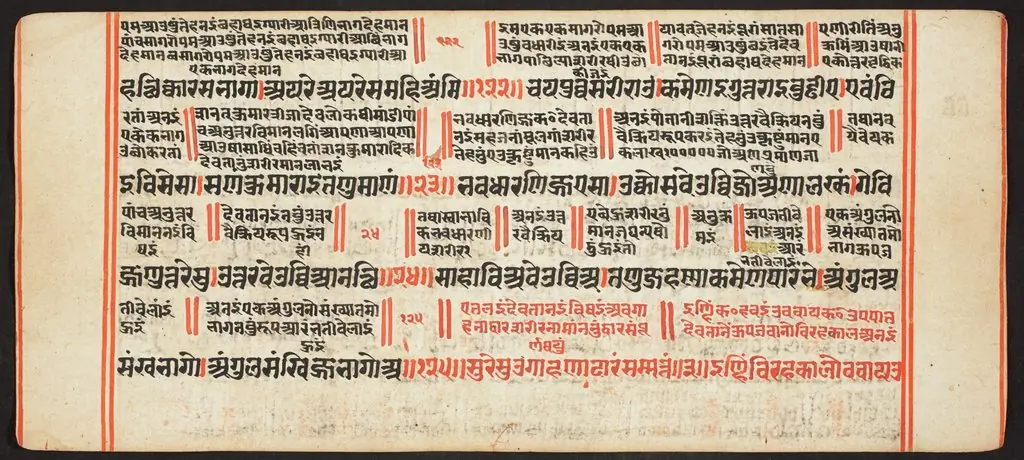 Tantric Manuscript, "Sangrahani Sutra"
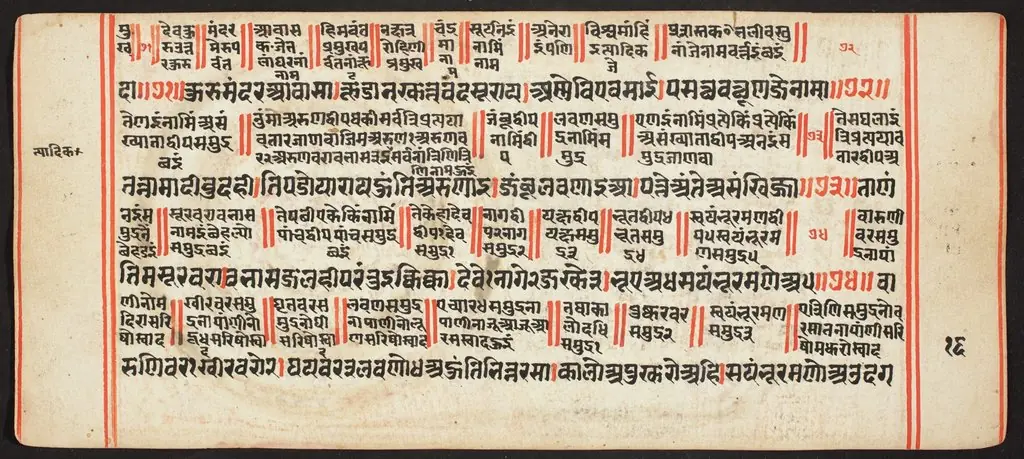 Tantric Manuscript, "Sangrahani Sutra"
 Tantric Manuscript, "Sangrahani Sutra"