Artwork
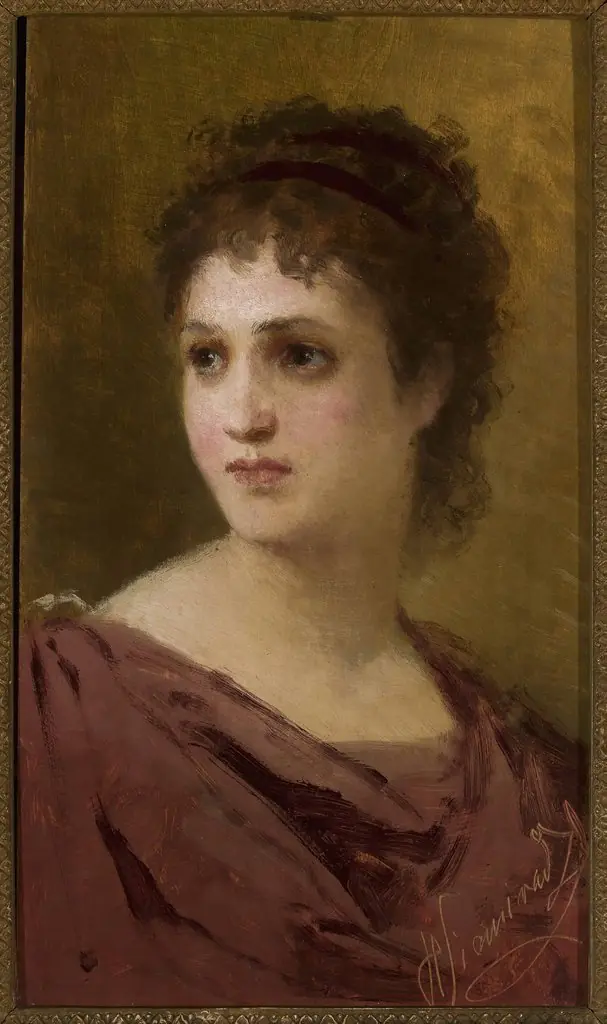
Roman Woman
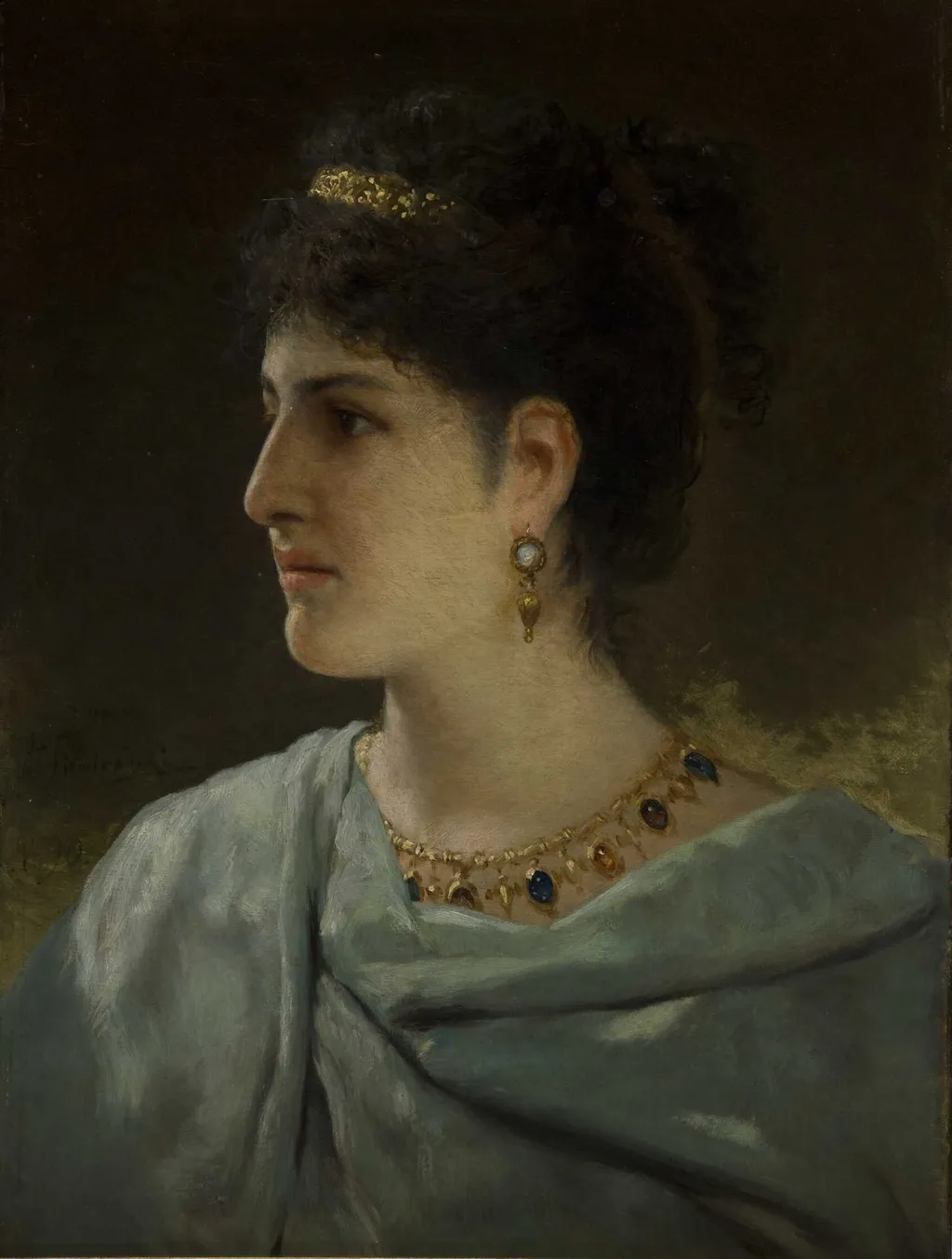
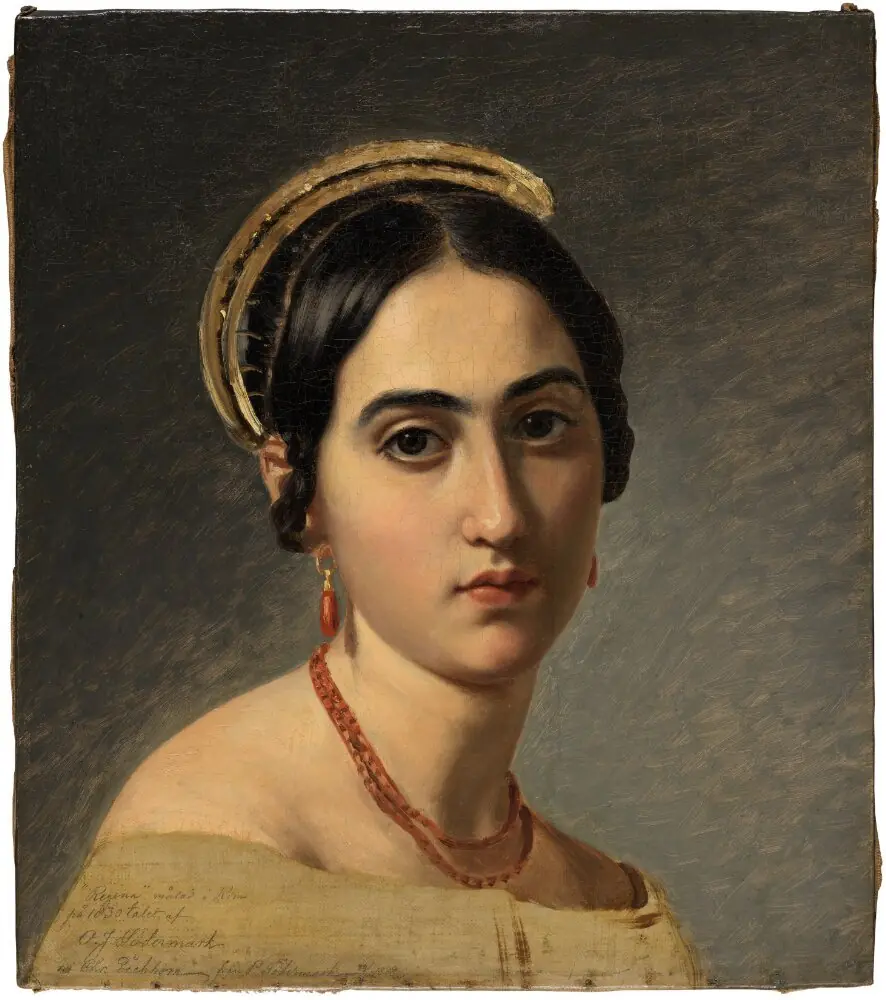
Roman Woman is an oil painting by the Impressionist artist Unknown. It dates from 1896 and is held in the collection of the National Museum in Kraków. The work is an oil painting that presents a seated woman against a dark backdrop.
About this work
Overview
The composition balances the illuminated figure with the surrounding shadow, creating a sense of three‑dimensional presence.
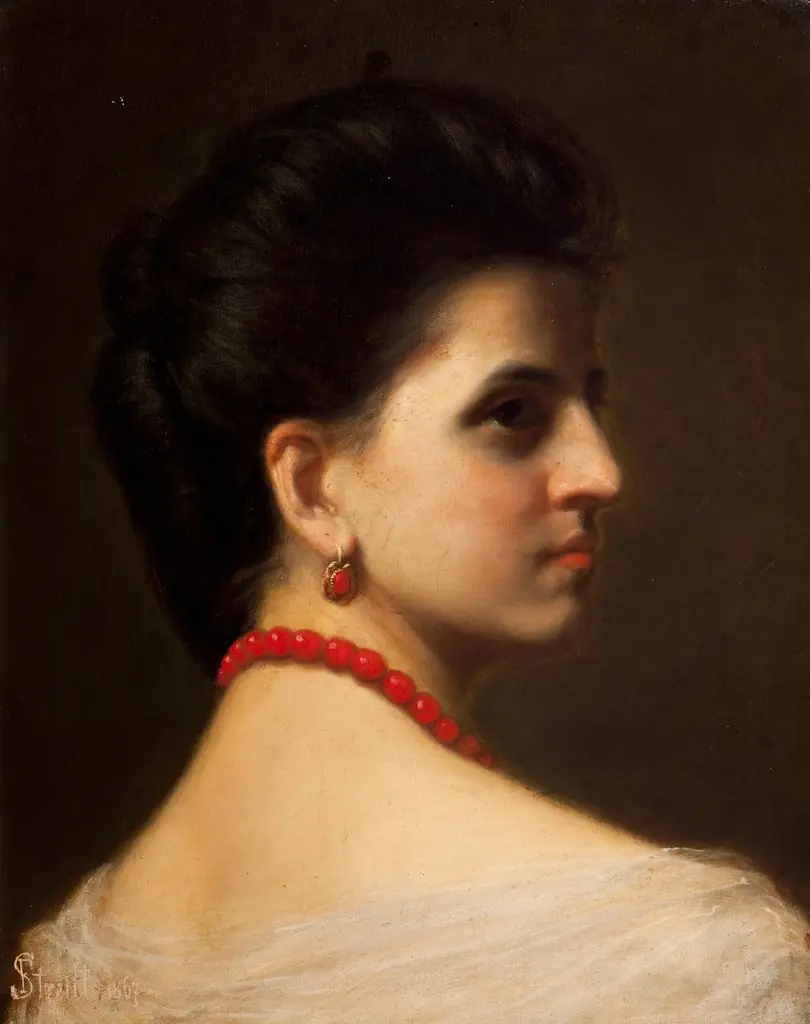
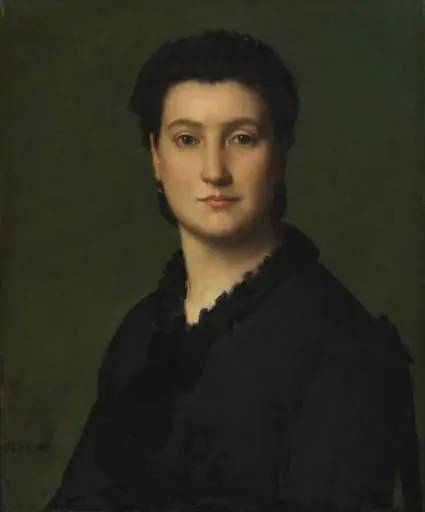
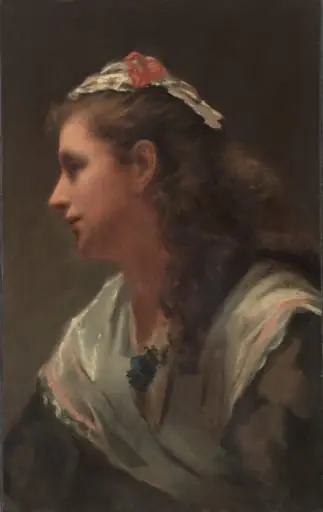
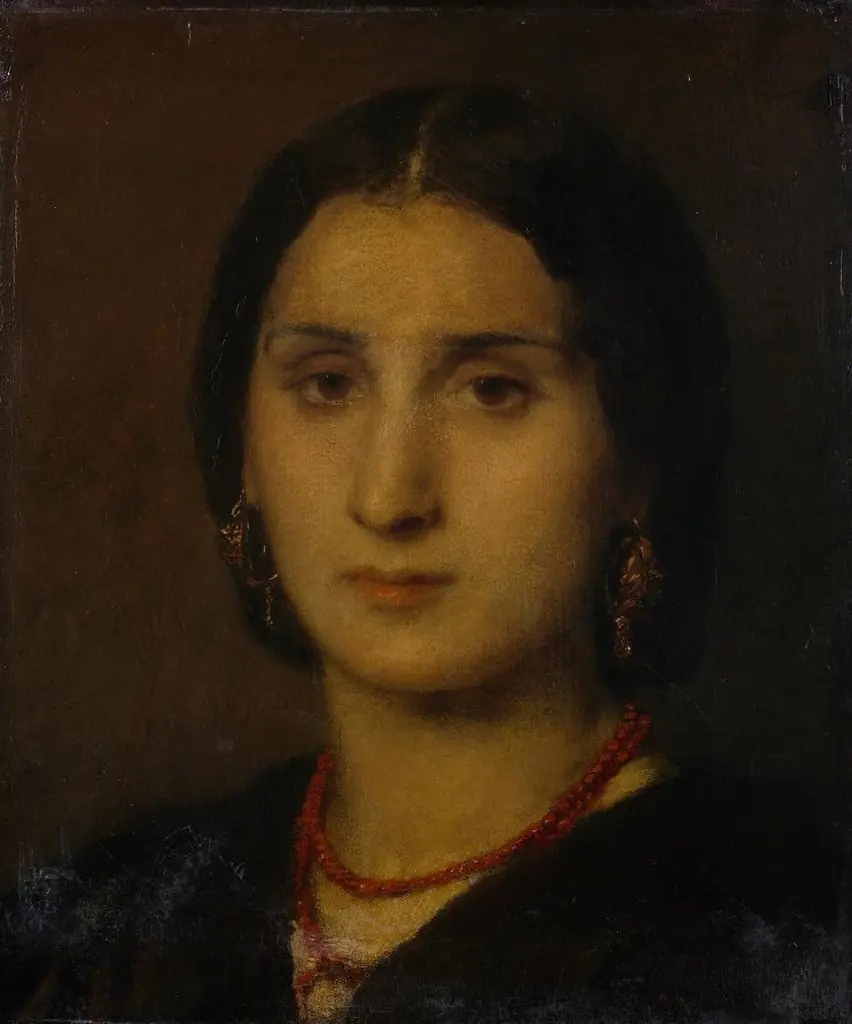
The work is an oil painting that presents a seated woman against a dark backdrop. She is depicted with dark, tightly curled hair, a gold headband, and a light, draped garment. A gold necklace set with blue and red stones rests at her throat, and her eyes look toward the left. The composition balances the illuminated figure with the surrounding shadow, creating a sense of three‑dimensional presence.
Subject & Meaning
The sitter appears to be portrayed in the manner of a classical Roman figure, suggested by her attire and the use of gold accessories reminiscent of antiquity. The gold headband and jeweled necklace evoke status and perhaps a mythological or historical identity, while the calm, leftward gaze invites contemplation of the woman's inner character or narrative role within a Roman‑inspired context.
Technique & Style
Rendered in oil, the artist employs chiaroscuro to model the woman's form, allowing the light to fall on her face, hair, and jewelry while the background recedes into darkness. The brushwork conveys the texture of the curls and the sheen of the gold elements, and the draped garment is suggested with soft, layered strokes that enhance the sense of volume and movement.
Context
The painting reflects a 19th‑century fascination with classical antiquity, a period when artists often adopted Roman motifs to explore ideals of beauty and virtue. By integrating historically inspired costume and accessories, the work aligns with contemporary academic traditions that valued historical accuracy and the moralizing potential of classical subjects.
Legacy
While specific details of the artist and provenance remain undocumented, the piece contributes to the broader corpus of neoclassical portraiture that sought to merge contemporary technique with ancient themes. Its careful rendering of light, materiality, and classical symbolism continues to offer insight into the era's artistic preoccupations with history and idealized representation.
Artist & collection

 Domestic Scene
 Giacomo and Cardinal Marco, investing Andrea, Abbot of San Zeno, with his Benefice
 The Nymph of Fontainebleau
 Portrait of a Woman
 Madonna and Child with Saints in the Enclosed Garden
 Venus and Minerva
 Family Group of Four on Sofa
 Wall painting from Room H of the Villa of P. Fannius Synistor at Boscoreale