Artwork
Albert VII, Archduke of Austria
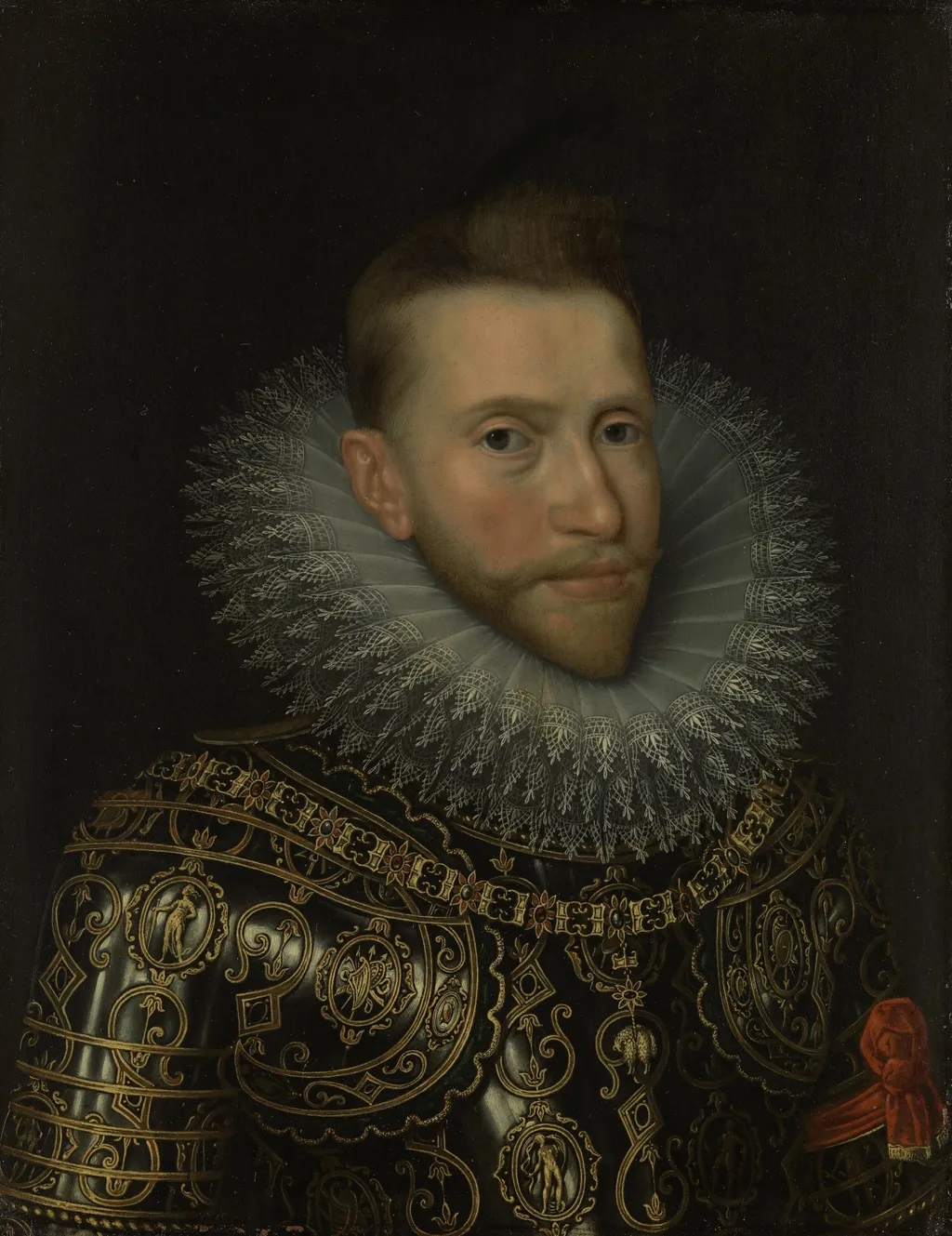
Albert VII, Archduke of Austria is an oil painting. It dates from 1600 and is held in the collection of the Rijksmuseum.
About this work
Overview
This copper portrait presents Albert VII, Archduke of Austria, rendered in a half‑length format. He is depicted from the chest upward, looking directly at the viewer with a composed expression. The background is a uniform black, emphasizing the figure’s illuminated face and richly ornamented armor.
Subject & Meaning
The sitter, Albert VII (1559‑1621), was a prominent Habsburg ruler who governed the Spanish Netherlands. The portrait underscores his martial status through the elaborate black and gold armor, while the restrained demeanor conveys authority and dignified leadership.
Technique & Style
Executed on copper, the work employs a refined chiaroscuro that models the facial features and metallic surfaces, creating depth against the dark ground. Gold detailing on the armor, especially the prominent collar, highlights the luxurious materiality, and a subtle red ribbon on the right adds a touch of color contrast.
History & Provenance
The portrait dates from the early 17th century, a period when copper panels were favored for their smooth surface and luminous quality. Its provenance traces through various European collections, reflecting the archduke’s status and the work’s appeal to connoisseurs of court portraiture.
Context
Portraits of sovereigns in armor were common in the late Renaissance, serving both as personal likenesses and political statements. This piece aligns with contemporary depictions that blend realistic facial rendering with idealized regalia to reinforce the ruler’s martial virtues.
Artist & collection