Artwork
Portrait of Lodewijk (1538-74), Count of Nassau
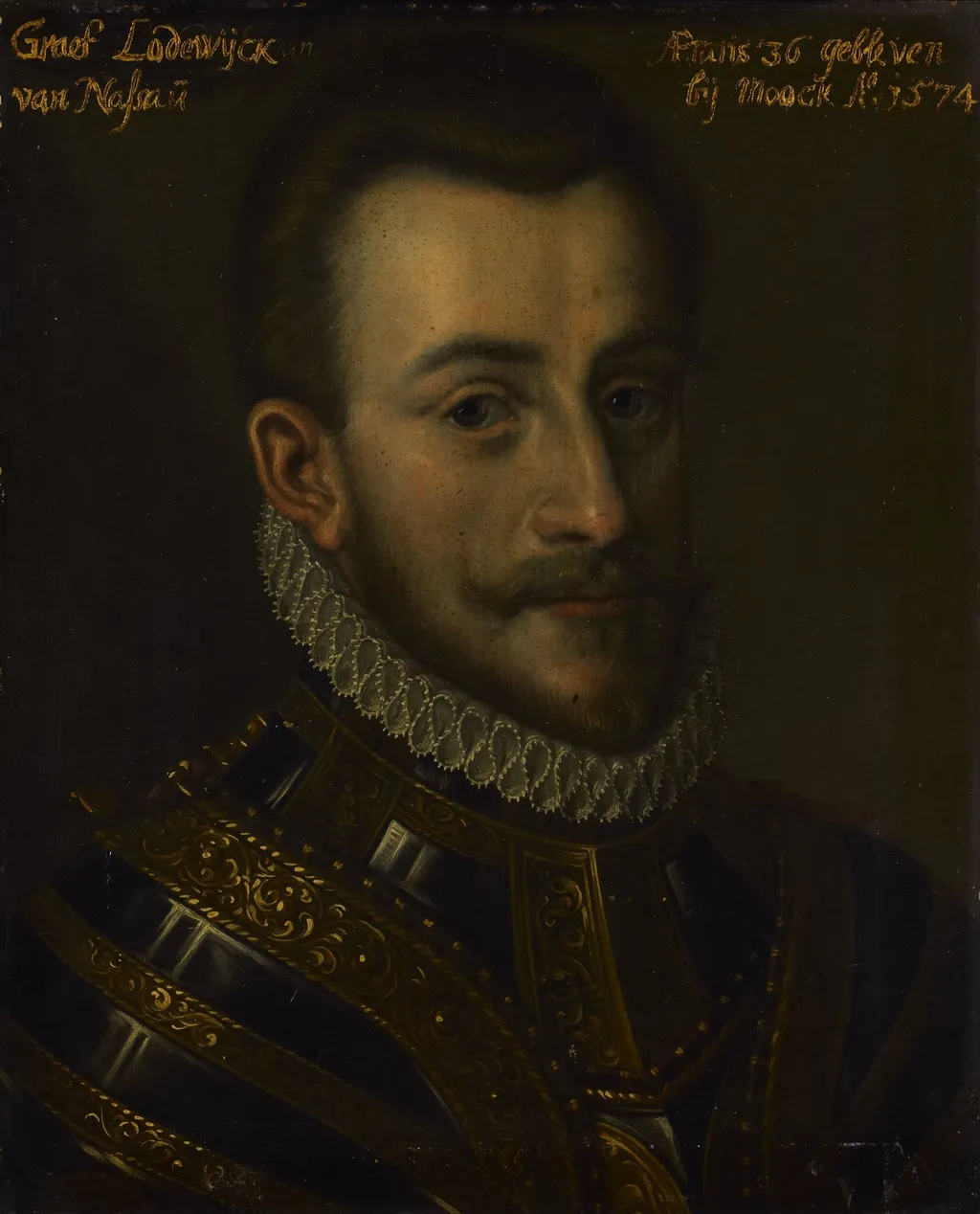
Portrait of Lodewijk (1538-74), Count of Nassau is an oil painting. It dates from 1621 and is held in the collection of the Rijksmuseum. The oil portrait depicts Lodewijk, Count of Nassau, at the age of thirty‑six.
About this work
Overview
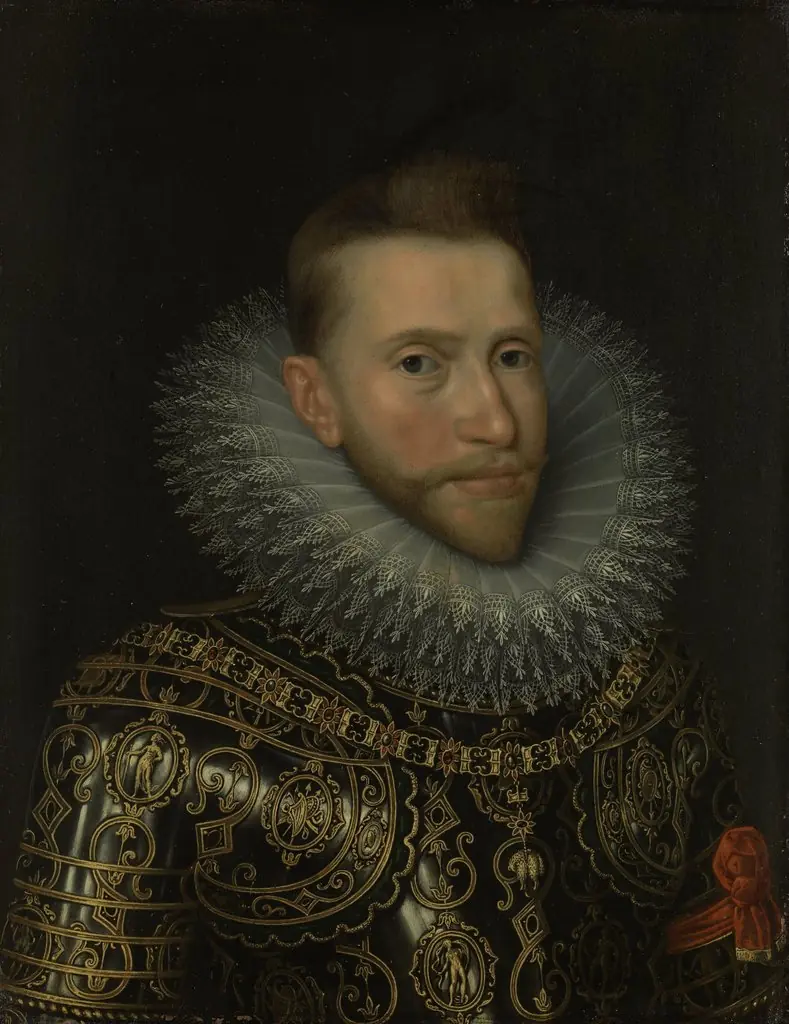
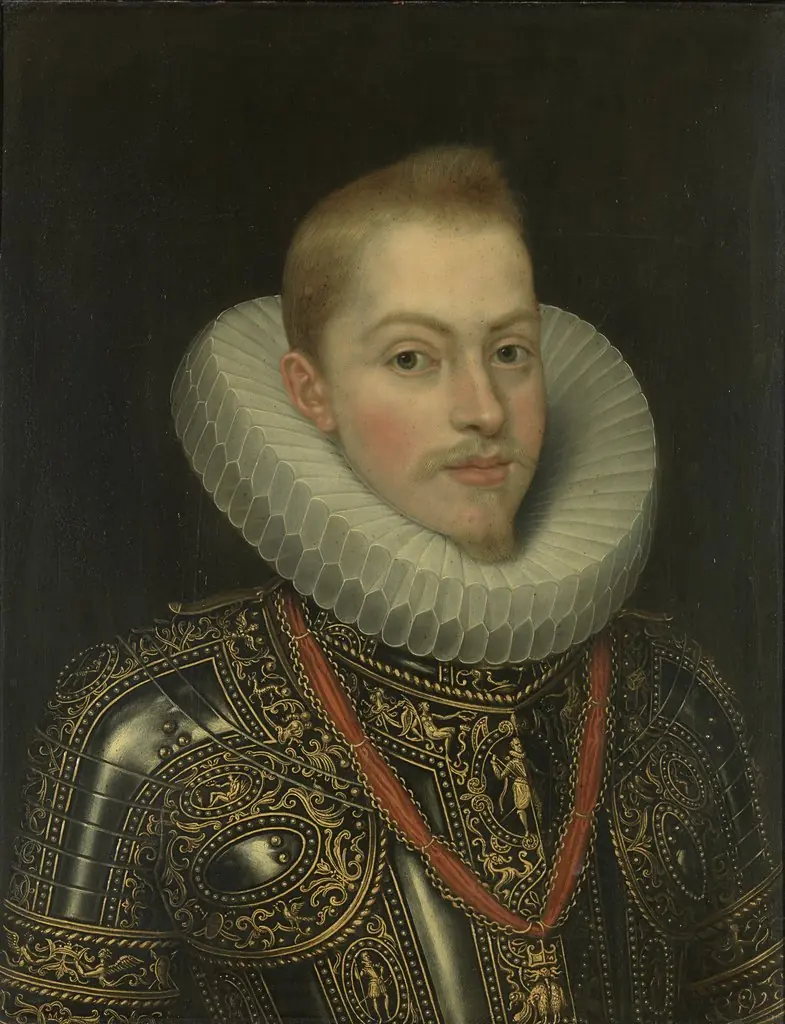
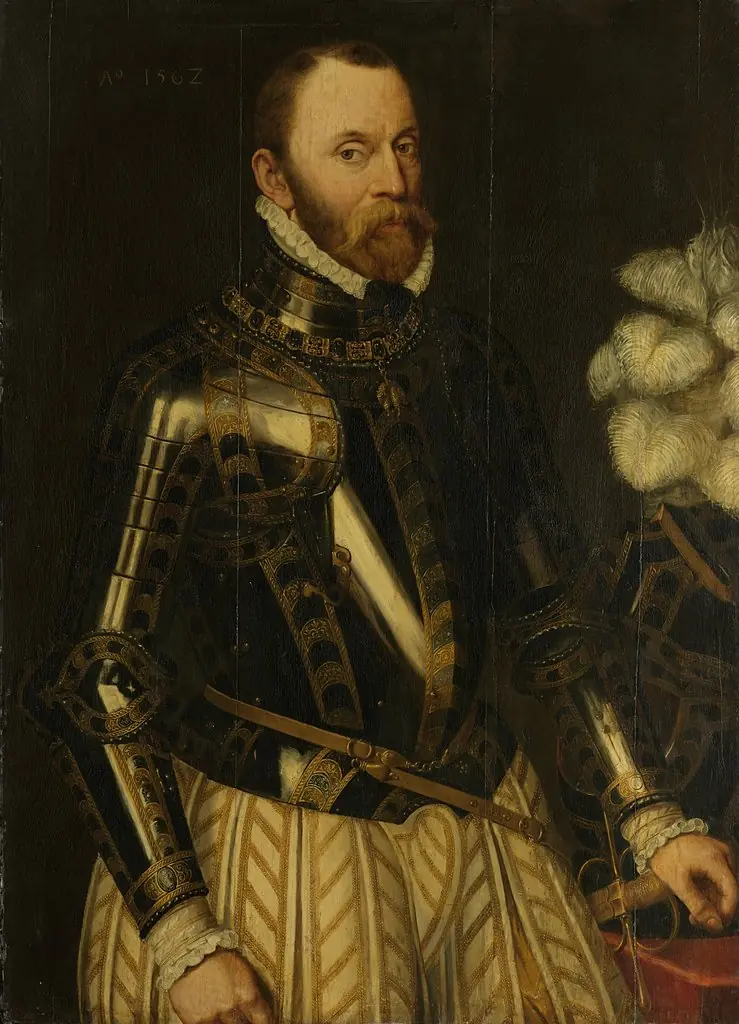
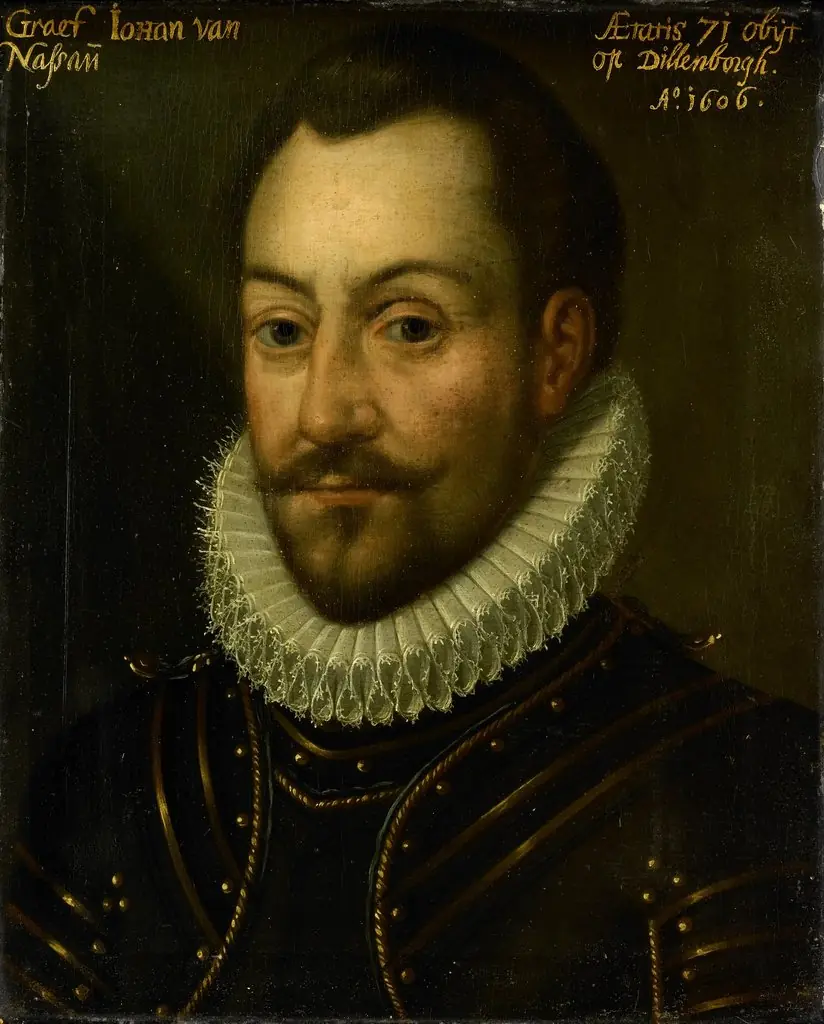
The oil portrait depicts Lodewijk, Count of Nassau, at the age of thirty‑six. He is presented against a dark backdrop, his features illuminated by a focused light source that creates a stark contrast between light and shadow. The composition centers on his solemn expression, emphasizing his status through attire and insignia.
Subject & Meaning
The sitter is identified by an inscription naming Lodewijk, Count of Nassau, a member of the prominent Dutch noble family.
The sitter is identified by an inscription naming Lodewijk, Count of Nassau, a member of the prominent Dutch noble family. His attire—a black doublet embroidered with gold, a white ruff, and a chain bearing a cross—signals both his aristocratic rank and possible affiliation with a chivalric or religious order. The serious demeanor suggests a formal, dignified representation typical of noble portraiture.
Technique & Style
The painter employs chiaroscuro, using a single directional light to model the face and give it a three‑dimensional quality. Soft gradations of shadow define the cheekbones and jawline, while the bright highlights on the ruff and jewelry draw attention to texture and material. The overall handling is restrained, favoring realism over decorative excess.
History & Provenance
Created in the mid‑16th century, the work likely originated in a court or private collection associated with the House of Nassau. Documentation of its ownership after the sitter’s death is sparse, but the painting has been retained within European collections, eventually entering a museum context where it serves as a reference for portrait conventions of the period.
Artist & collection