Artwork
De vastgelopen wagen
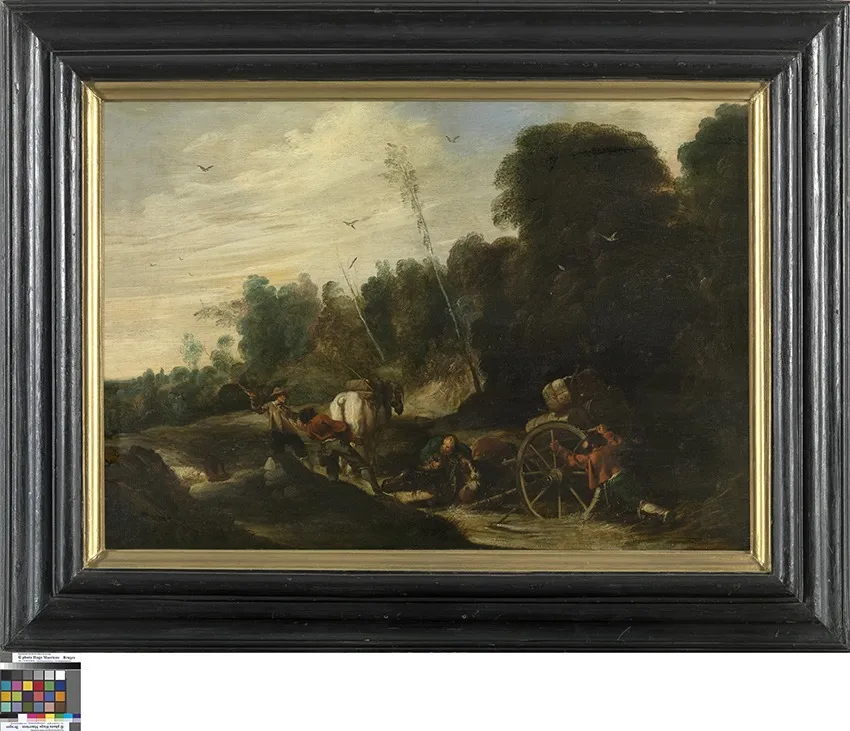
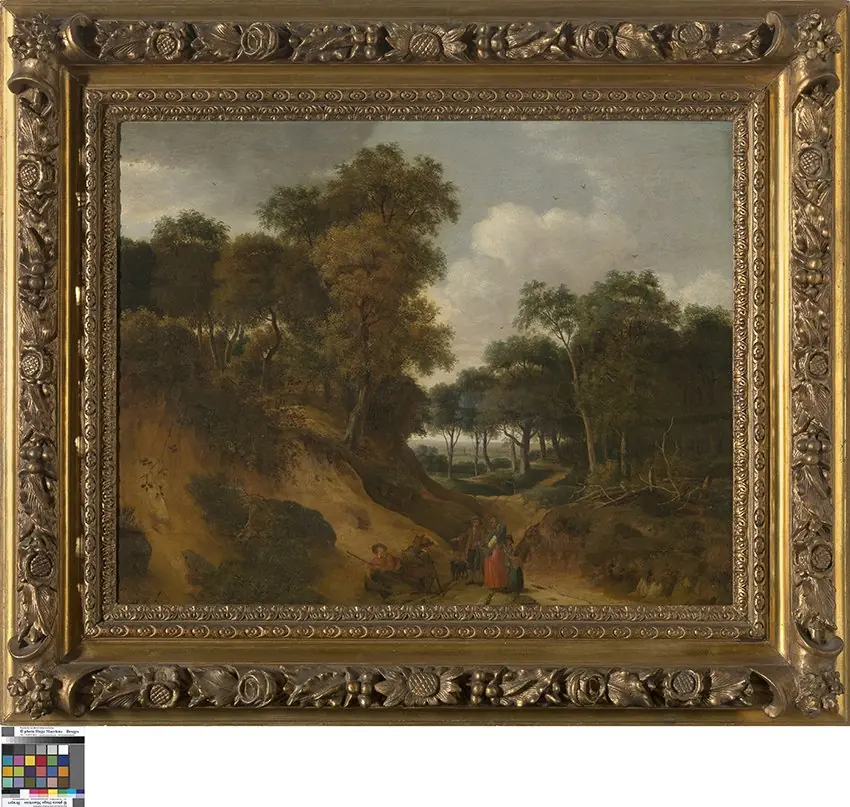
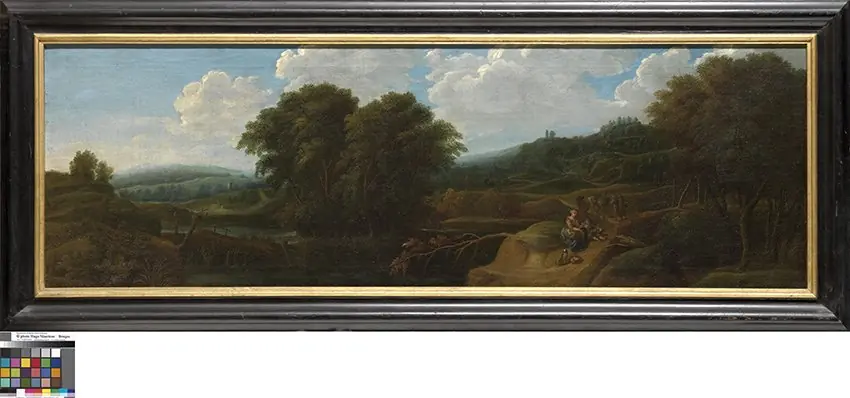
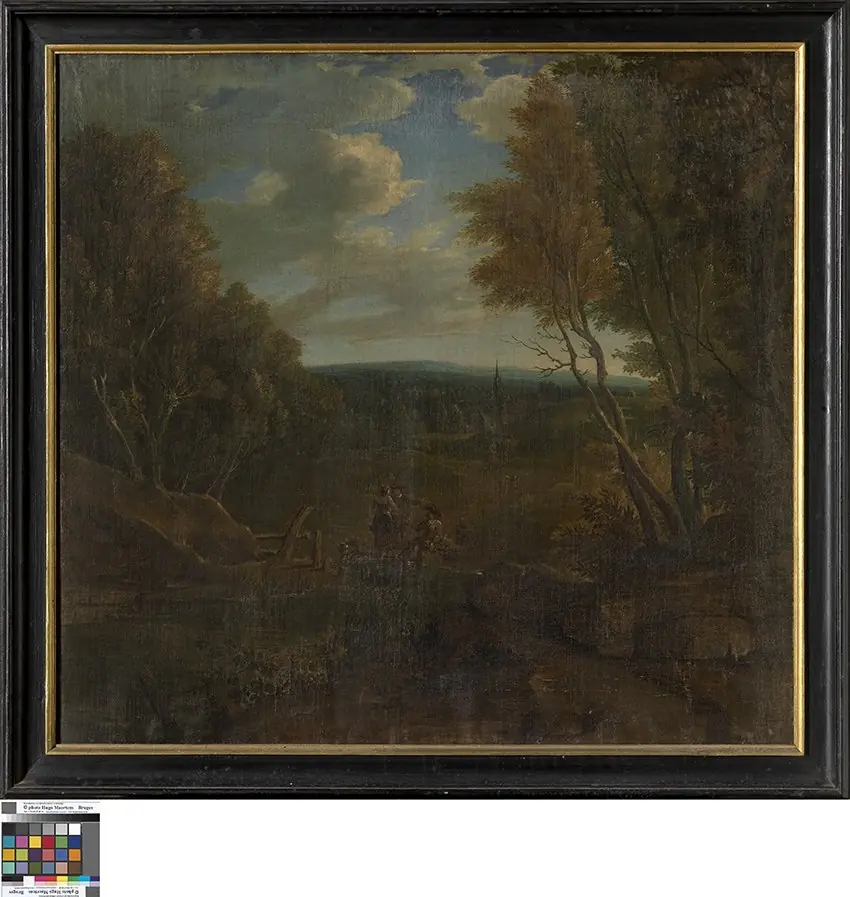
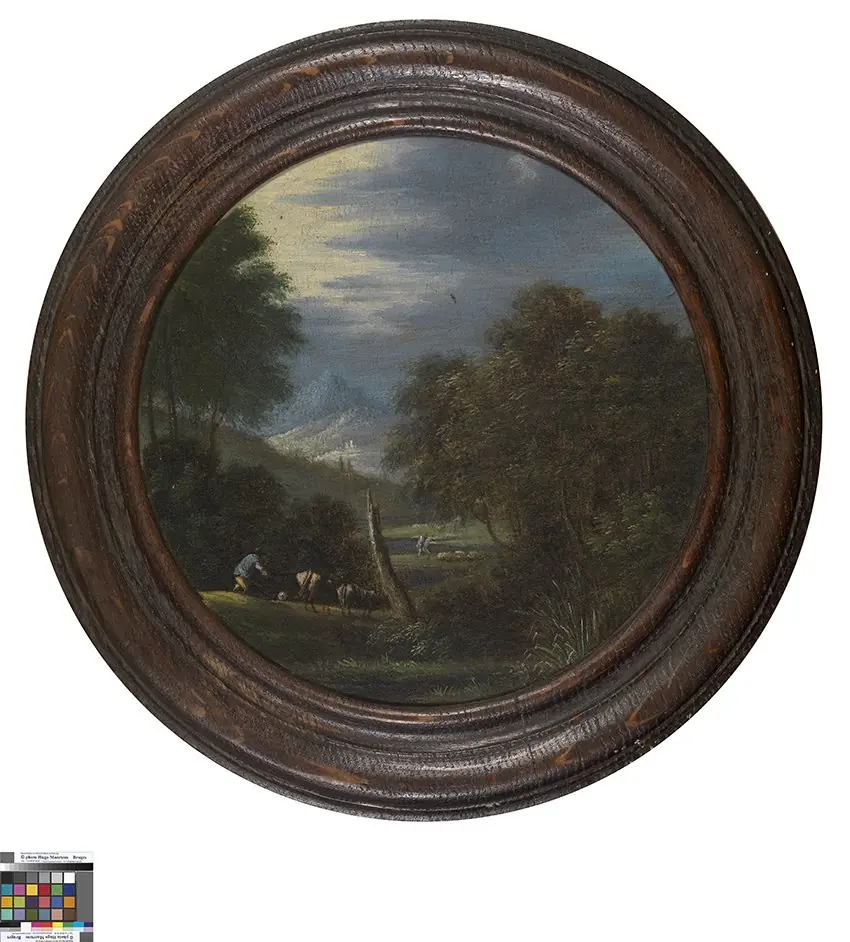
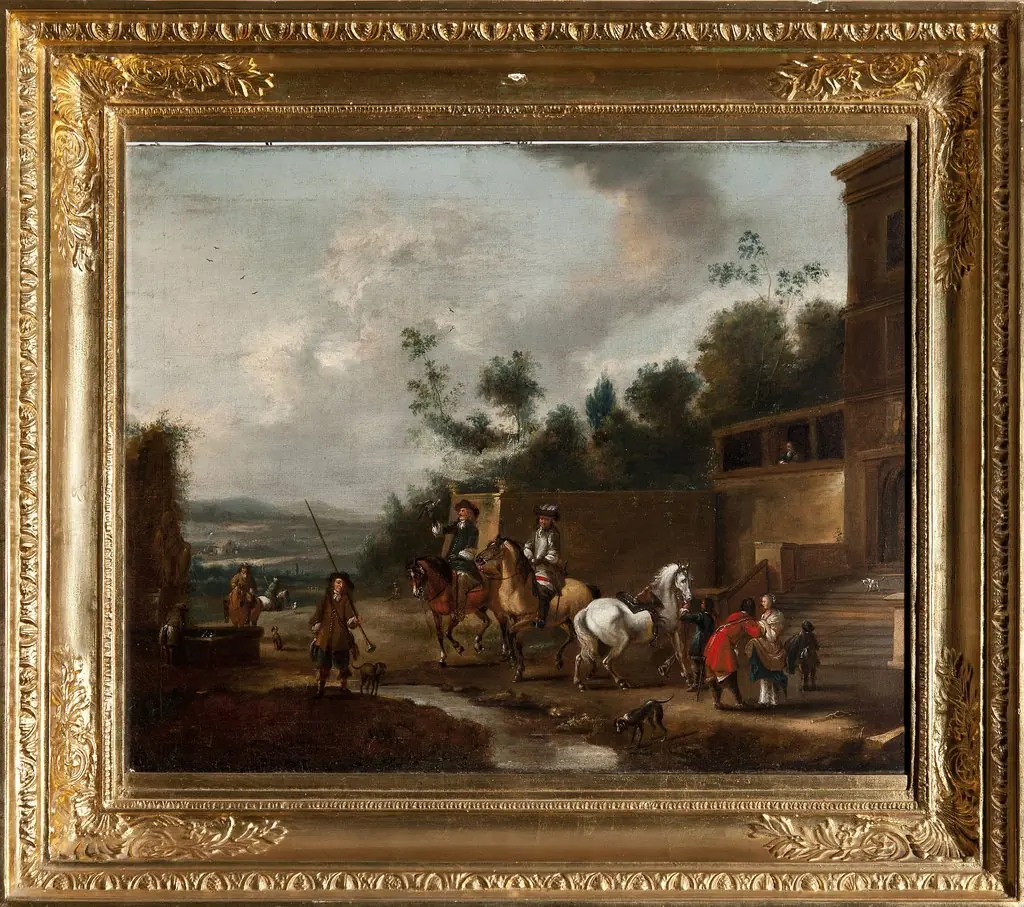
De vastgelopen wagen is an oil painting by the Dutch Golden Age artist Unknown. It dates from 1620 and is held in the collection of the Groeningemuseum. This oil painting depicts a rural scene in which a group of individuals attend to a stalled wagon on a dirt path.
About this work
Overview
This oil painting depicts a rural scene in which a group of individuals attend to a stalled wagon on a dirt path.
This oil painting depicts a rural scene in which a group of individuals attend to a stalled wagon on a dirt path. The composition centers on the labor of repair, with figures engaged in quiet, deliberate action. A horse stands nearby, and a large tree casts a broad shadow over the group. The sky, gently rendered with scattered clouds and distant birds, adds a sense of stillness, suggesting a pause in the day’s journey rather than a moment of crisis.
Subject & Meaning
The painting captures a moment of communal effort, emphasizing cooperation and patience rather than urgency. The absence of dramatic tension implies that breakdowns are ordinary, part of daily life. The figures’ varied postures—some working, others observing or resting—suggest a rhythm of labor and respite. The tree, looming overhead, may symbolize nature’s enduring presence amid human endeavor.
Technique & Style
The artist employs subtle chiaroscuro to model forms with soft transitions between light and shadow, avoiding harsh contrasts. Brushwork is restrained, favoring smooth blending to convey texture in fabric, wood, and earth. The palette is muted, dominated by earth tones and pale sky hues, reinforcing the scene’s quietude. Depth is suggested through atmospheric perspective, with distant birds and hazy background elements receding gently.
History & Provenance
The painting’s origin is undocumented in public records, and no known exhibition history or collector lineage has been established. It is not attributed to any widely recognized artist of the period. Its survival suggests it was likely kept within a private or regional context, possibly created by an amateur or local painter documenting everyday rural life without formal training.
Context
Created during a time when rural transport relied on horse-drawn wagons, the scene reflects a common reality in pre-industrial communities. Such moments of mechanical failure required collective problem-solving, often without access to professional repair services. The painting’s calm tone aligns with regional traditions that valued quiet dignity in labor, contrasting with more theatrical depictions of rural life in urban art centers.
Legacy
Though not widely exhibited or studied, the work contributes to a broader archive of unremarkable yet authentic depictions of rural labor. Its value lies in its unembellished observation of ordinary life, offering insight into the rhythms and social dynamics of communities where mechanical failure was a shared experience rather than an anomaly.
Artist & collection

 Domestic Scene
 Giacomo and Cardinal Marco, investing Andrea, Abbot of San Zeno, with his Benefice
 The Nymph of Fontainebleau
 Portrait of a Woman
 Madonna and Child with Saints in the Enclosed Garden
 Venus and Minerva
 Family Group of Four on Sofa
 Wall painting from Room H of the Villa of P. Fannius Synistor at Boscoreale