Artwork
The Calling of Saint Matthew
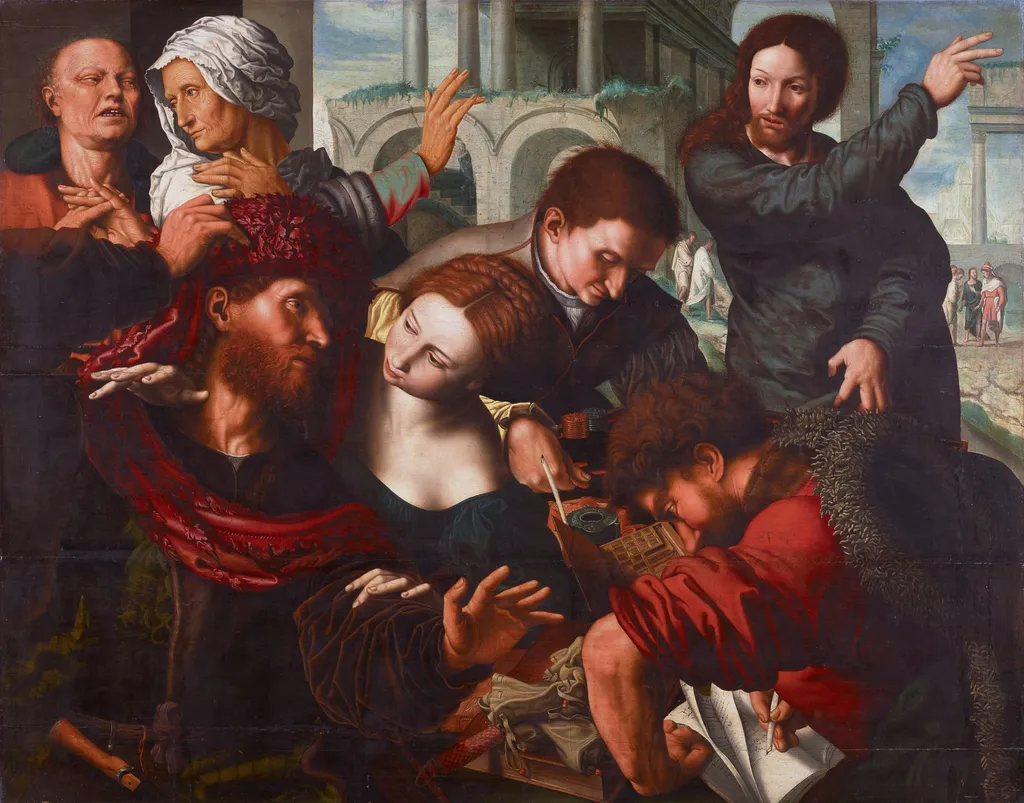
The Calling of Saint Matthew is an oil painting by the Early Baroque Italian artist Unknown. It dates from 1550 and is held in the collection of the Kunsthistorisches Museum.
About this work
Overview
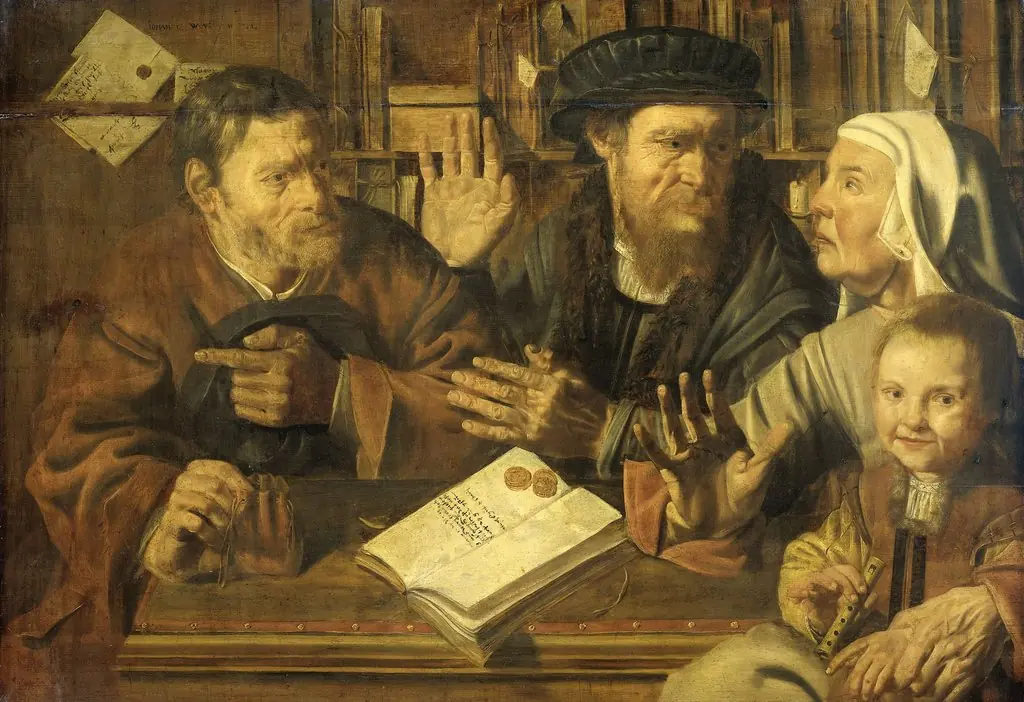
The Calling of Saint Matthew is an oil painting depicting an interior scene illuminated by stark contrasts of light and shadow. Six figures occupy a dimly lit space, their expressions and gestures suggesting a moment of revelation or decision. The composition centers on a pointing figure, directing attention toward another man seated at a table, evoking themes of transformation and moral choice.
Subject & Meaning
The painting portrays the biblical episode in which Jesus summons Matthew, then a tax collector, to abandon his profession and follow a spiritual path.
The painting portrays the biblical episode in which Jesus summons Matthew, then a tax collector, to abandon his profession and follow a spiritual path. The scene unfolds in a contemporary setting, blending sacred narrative with everyday life. The presence of coins and a money bag underscores the tension between material wealth and divine calling, inviting reflection on personal redemption and the weight of moral decisions.
Technique & Style
Executed in oil, the work employs chiaroscuro—a dramatic interplay of light and dark—to model forms and heighten emotional intensity. Figures emerge from deep shadows, their faces and gestures sharply defined by directional illumination. The artist’s controlled brushwork and muted palette emphasize physical presence while reinforcing the scene’s psychological weight, characteristic of Baroque painting’s emphasis on immediacy and drama.
History & Provenance
Commissioned for the Contarelli Chapel in Rome’s San Luigi dei Francesi, the painting was part of a cycle dedicated to Saint Matthew. Installed in 1600, it remained in situ, surviving alterations to the chapel’s decorative scheme. Its early reception was marked by controversy over its unidealized depiction of sacred figures, yet it secured the artist’s reputation as a bold innovator within Counter-Reformation art.
Context
Created during the Counter-Reformation, the work reflects the Catholic Church’s efforts to engage viewers through emotionally charged religious imagery. The painting’s naturalistic approach aligned with post-Tridentine directives to make biblical narratives accessible, while its theatrical lighting and dynamic composition responded to the era’s broader artistic trends, emphasizing directness and spiritual urgency.
Legacy
The Calling of Saint Matthew exerted a profound influence on subsequent Baroque painting, particularly in its fusion of sacred narrative with contemporary realism. Its innovative use of light and composition inspired generations of artists, reinforcing the potential of painting to convey moral and spiritual complexity. The work remains a touchstone for discussions of religious art’s evolving role in the early modern period.
Artist & collection

 Domestic Scene
 Giacomo and Cardinal Marco, investing Andrea, Abbot of San Zeno, with his Benefice
 The Nymph of Fontainebleau
 Portrait of a Woman
 Madonna and Child with Saints in the Enclosed Garden
 Venus and Minerva
 Family Group of Four on Sofa
 Wall painting from Room H of the Villa of P. Fannius Synistor at Boscoreale