Artwork
Cup and Cover Supported by an Enchained Turk
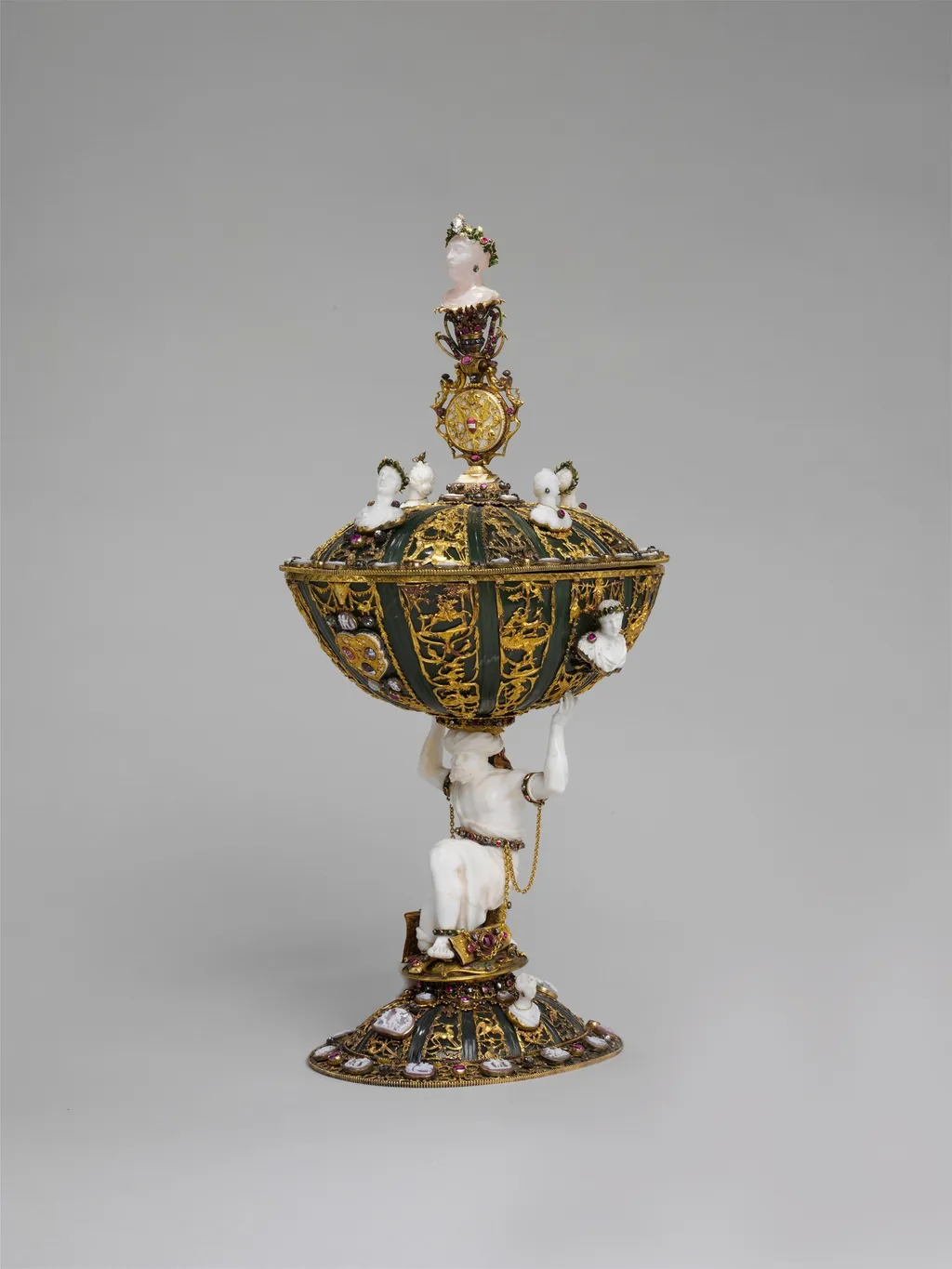
Cup and Cover Supported by an Enchained Turk is an unspecified painting. It dates from 1708 and is held in the collection of the Metropolitan Museum of Art.
About this work
Overview
The work, titled *Cup and Cover Supported by an Enchained Turk*, is a painted composition that presents a gilded cup balanced atop a small, white‑clad figure. The figure, bound by chains at the wrists, appears to strain under the weight of the vessel, while diminutive putti perch on the cup’s lid. Decorative motifs of black and gold adorn the cup, and a tiny crowned face crowns its top.
Subject & Meaning
The scene juxtaposes opulence with servitude, pairing a luxurious drinking vessel with a chained attendant. The presence of cherubic figures suggests a playful or allegorical tone, perhaps commenting on the relationship between wealth, power, and the labor required to sustain it. The crowned face on the cup may allude to a patron or a symbolic authority overseeing the exchange.
Technique & Style
Executed in paint, the image combines meticulous rendering of metallic surfaces with delicate figural work.
Executed in paint, the image combines meticulous rendering of metallic surfaces with delicate figural work. Fine brushwork delineates the chain links and the texture of the tunic, while the gold‑black patterning on the cup is rendered with a flat, decorative quality reminiscent of ornamental metalwork. The overall composition balances realistic detail with a stylized, almost theatrical arrangement.
Context
Although the precise date and artist remain undocumented, the painting reflects a European fascination with exotic subjects and courtly luxury that was prevalent in the 17th and 18th centuries. The depiction of a Turk in a subservient role aligns with contemporary orientalist tropes, while the inclusion of putti connects the work to a broader tradition of allegorical imagery in courtly art.
Artist & collection