Artwork
Die hll. Florian und Sebastian
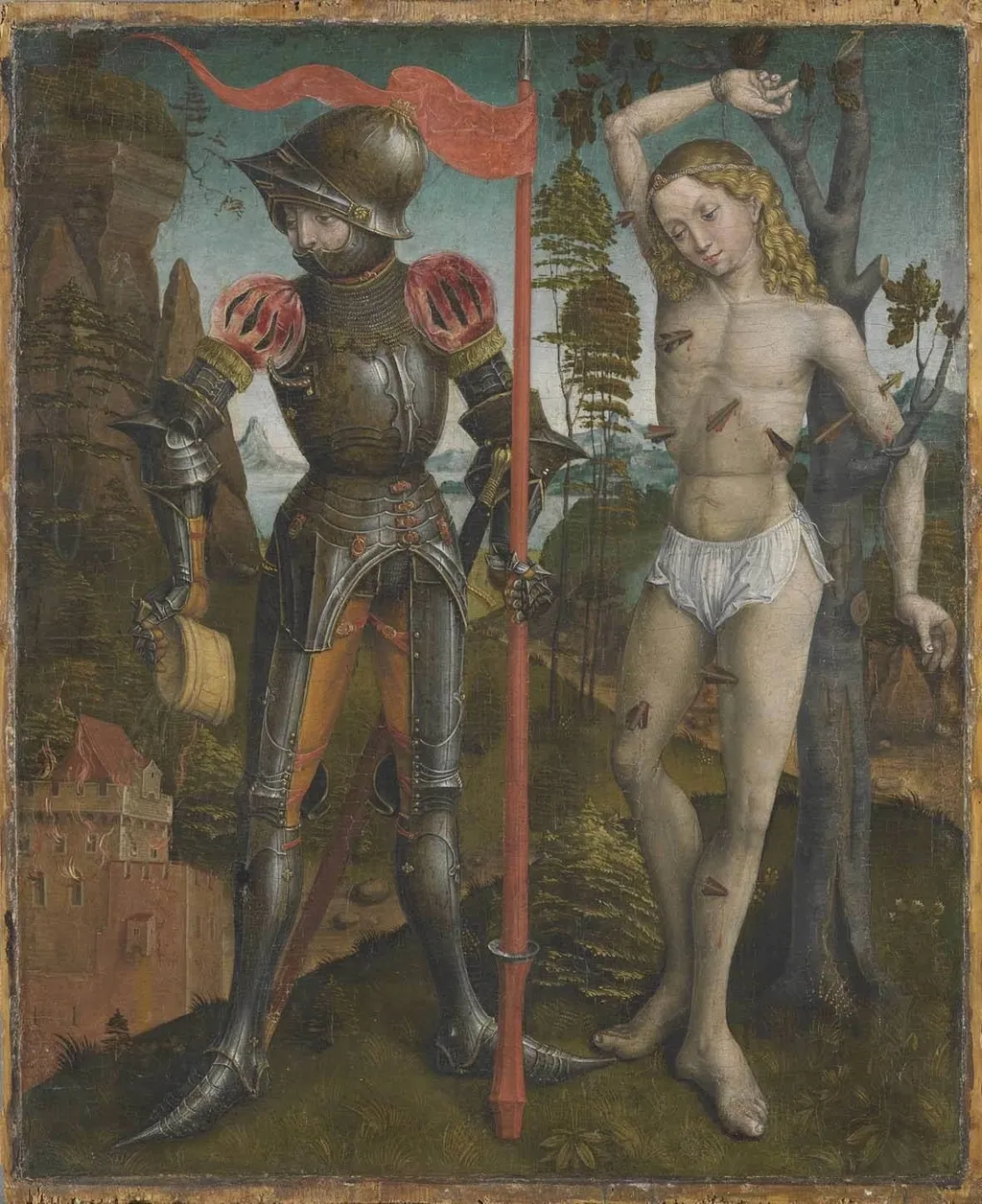
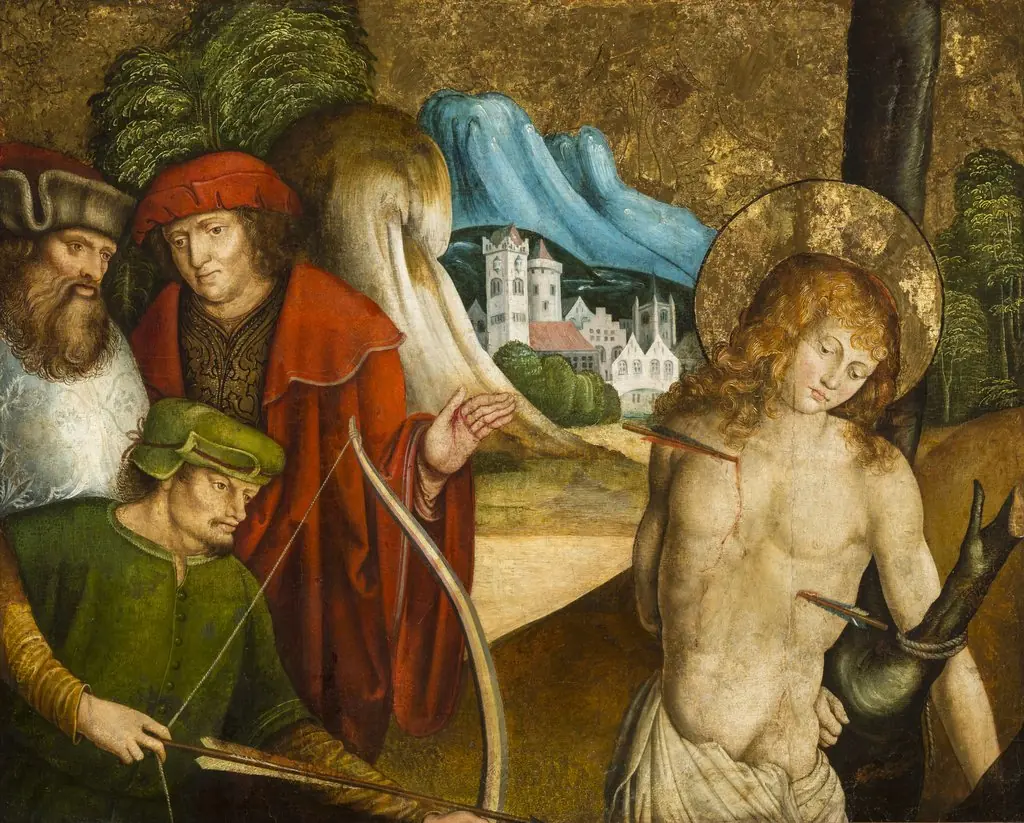
Die hll. Florian und Sebastian is an unspecified painting by the Early Renaissance artist Unknown. It dates from 1475 and is held in the collection of the Bavarian State Painting Collections. The work depicts two figures positioned side by side against a verdant sky dotted with clouds.
About this work
Overview
The companion stands bare‑chested in white shorts, arms uplifted, a small red wound visible on his side.
The work depicts two figures positioned side by side against a verdant sky dotted with clouds. The figure on the left is clad in a reflective suit of armor, accented with red shoulder padding and a helmet topped by a crimson plume, and he grasps a pole bearing a red banner. The companion stands bare‑chested in white shorts, arms uplifted, a small red wound visible on his side. A modest townscape rises in the background.
Subject & Meaning
The juxtaposition of a fully armoured warrior and a vulnerable, minimally dressed figure suggests a contrast between martial protection and exposed humanity. The raised arms of the latter may imply surrender, prayer, or triumph, while the banner held by the armored man could denote allegiance or victory. The red wound adds a note of injury or sacrifice, inviting speculation about a narrative of conflict or martyrdom.
Technique & Style
The painter renders the armor with meticulous attention to metallic sheen, employing highlights that convey weight and reflectivity. In contrast, the flesh of the second figure is modeled with softer chiaroscuro, creating gentle gradations of shadow. The composition is organized by a vertical red pole that bisects the scene, establishing a clear visual axis. The background town is rendered in simplified architectural forms, while the sky’s green hue and cloud treatment lend an otherworldly atmosphere.
Context
The painting belongs to a period when artists often combined historical or allegorical subjects with detailed costume study. The use of vivid red elements—plume, padding, banner, and wound—reflects a palette common in Baroque and early Rococo works that emphasized drama and visual contrast. The inclusion of a small urban setting behind the figures aligns with contemporary tendencies to situate narrative scenes within recognizable, though idealized, environments.
Legacy
While the work’s provenance and exhibition history are not recorded here, its visual language—contrasting armor with exposed flesh, the symbolic use of red, and the clear compositional division—offers insight into the artistic conventions of its era. The painting continues to serve as a reference for scholars examining the interplay of martial iconography and human vulnerability in early modern European art.
Artist & collection

 Domestic Scene
 Giacomo and Cardinal Marco, investing Andrea, Abbot of San Zeno, with his Benefice
 The Nymph of Fontainebleau
 Portrait of a Woman
 Madonna and Child with Saints in the Enclosed Garden
 Venus and Minerva
 Family Group of Four on Sofa
 Wall painting from Room H of the Villa of P. Fannius Synistor at Boscoreale
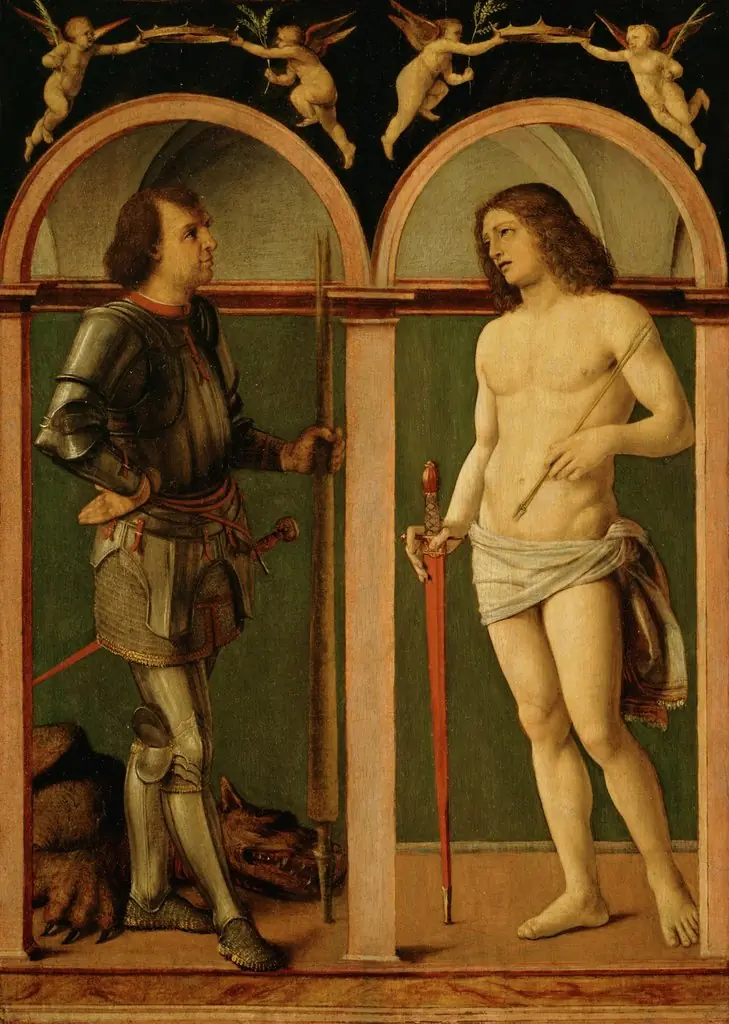 Saint George and Saint Sebastian
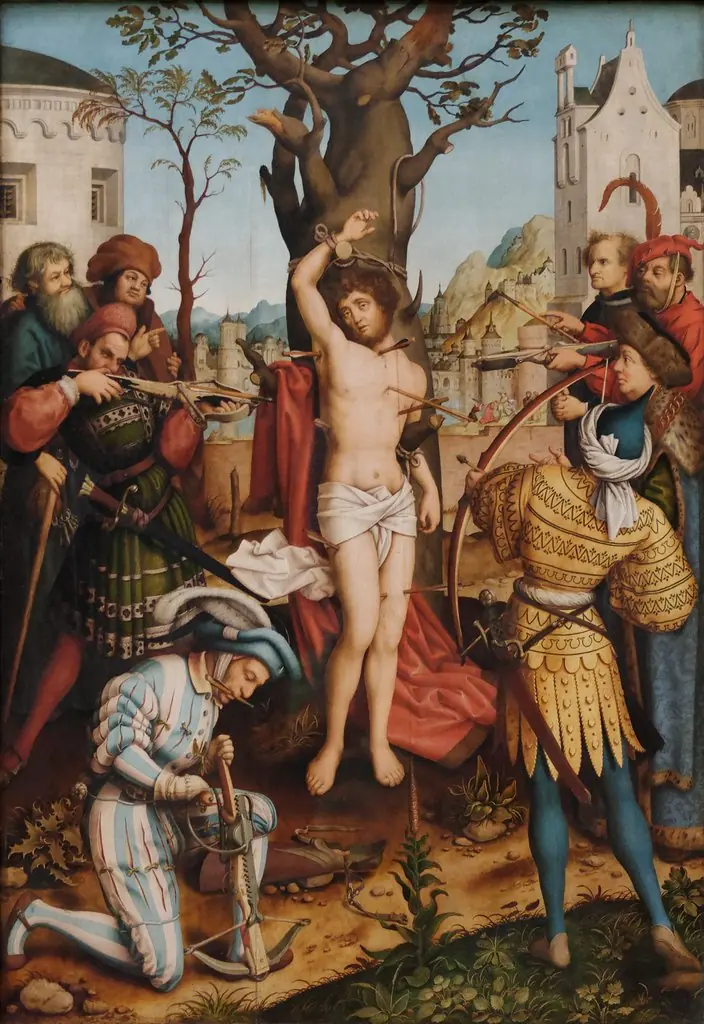 St. Sebastian Altar: The Martyrdom of St. Sebastian
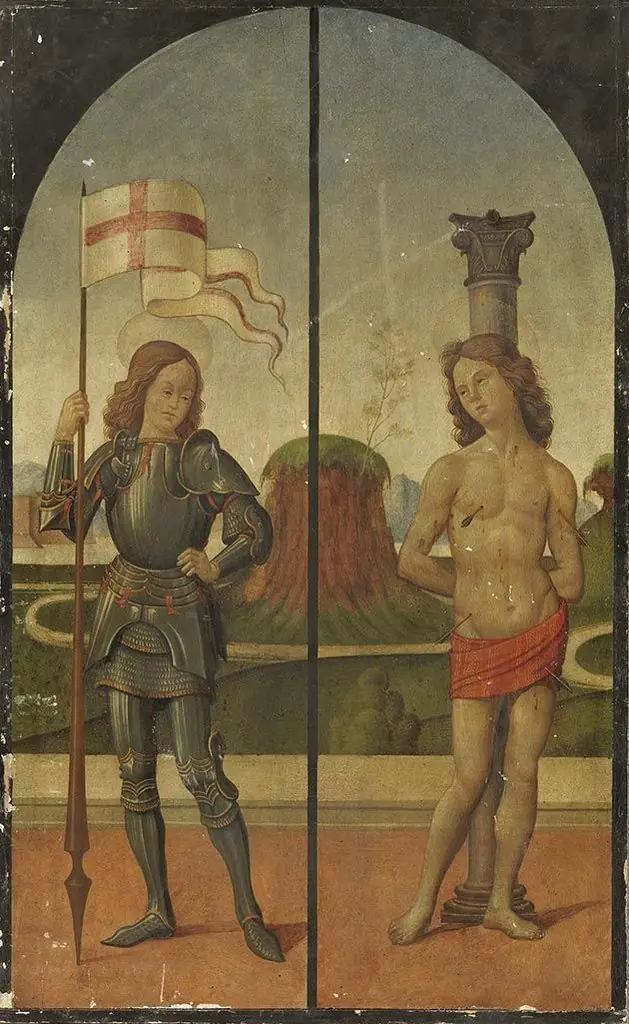 Saints George and Sebastian
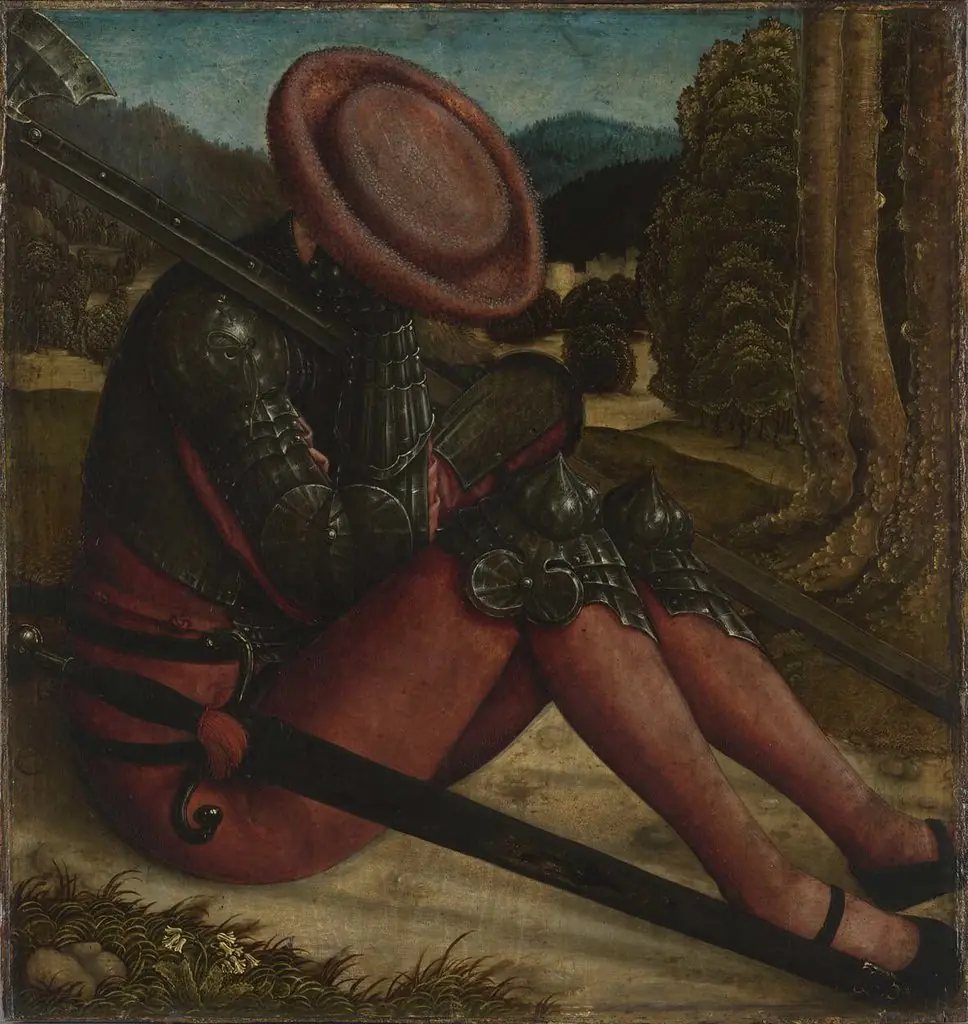 Sleeping guardian of a grave with sword and halberd
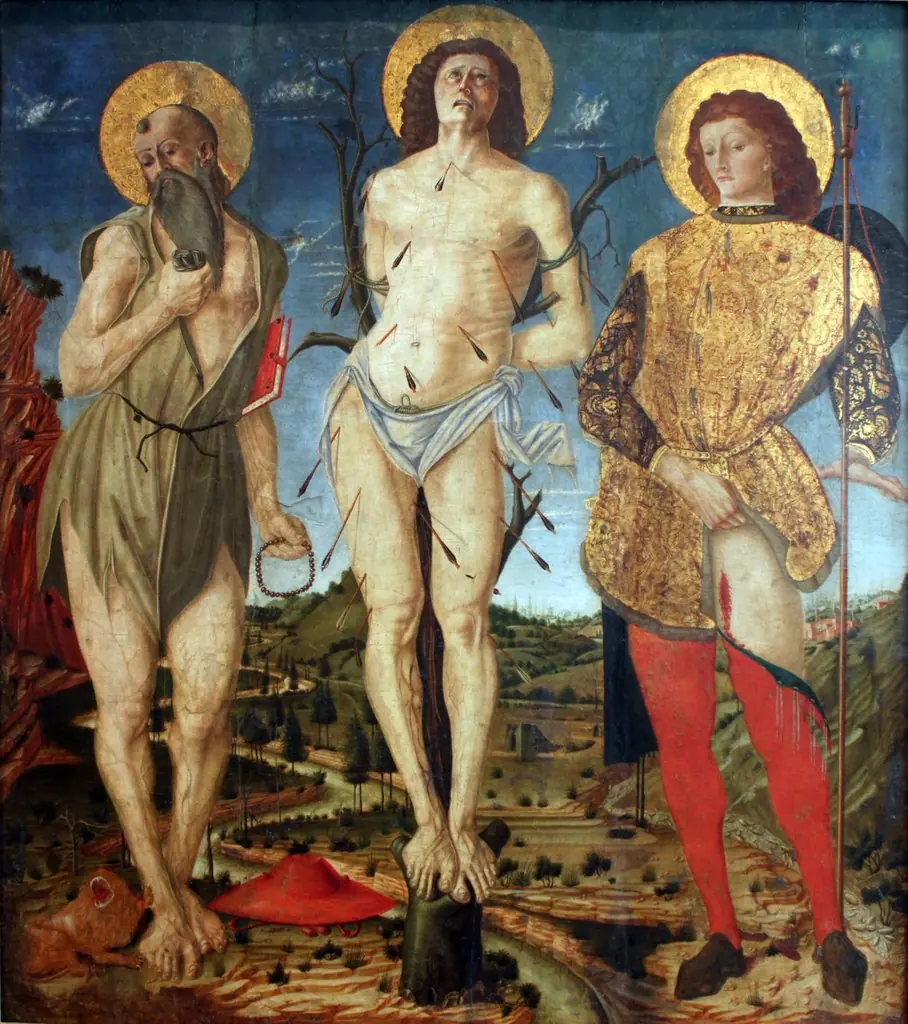 The St. Jerome, Sebastian and Rochus
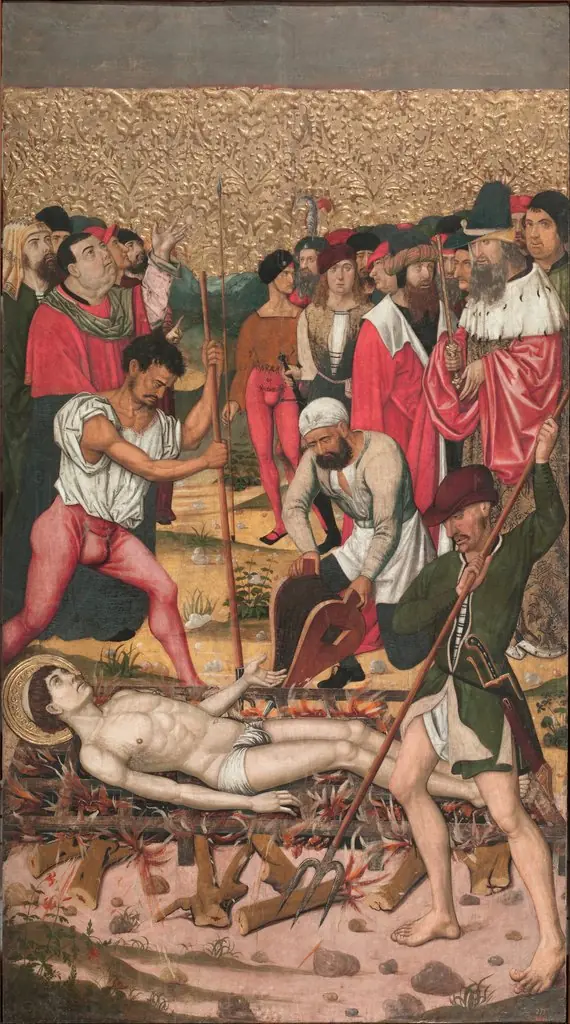 Saint Vincent on the Gridiron
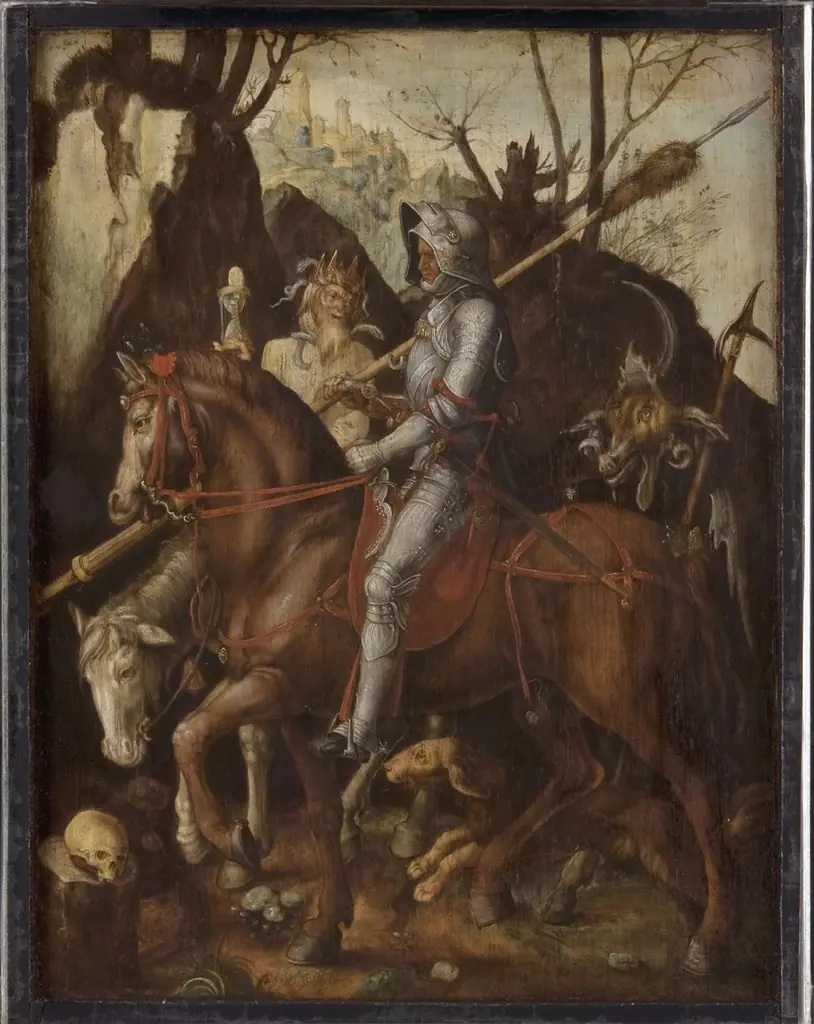 A Knight, Death, and the Devil
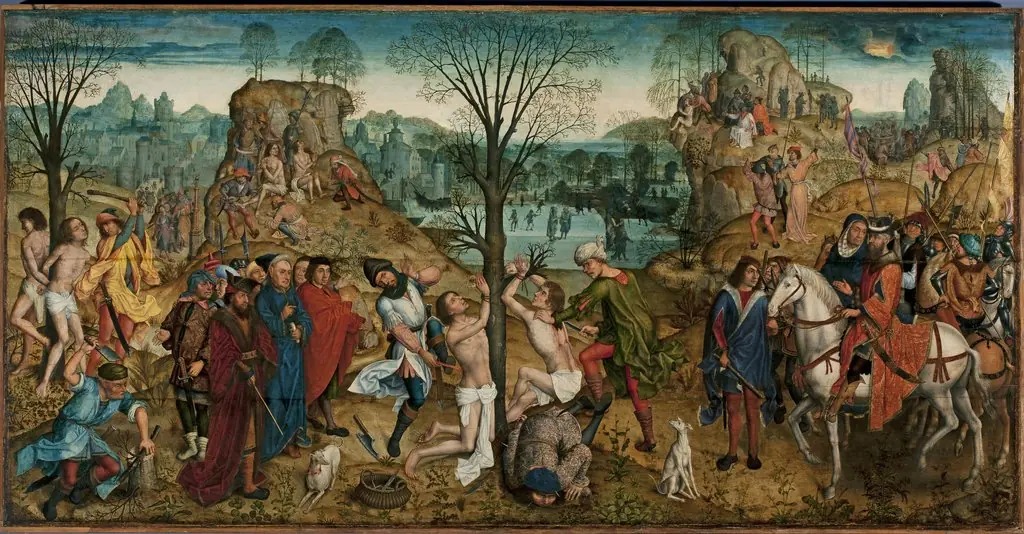 Martyrdom of St. Crispin and Crispinian
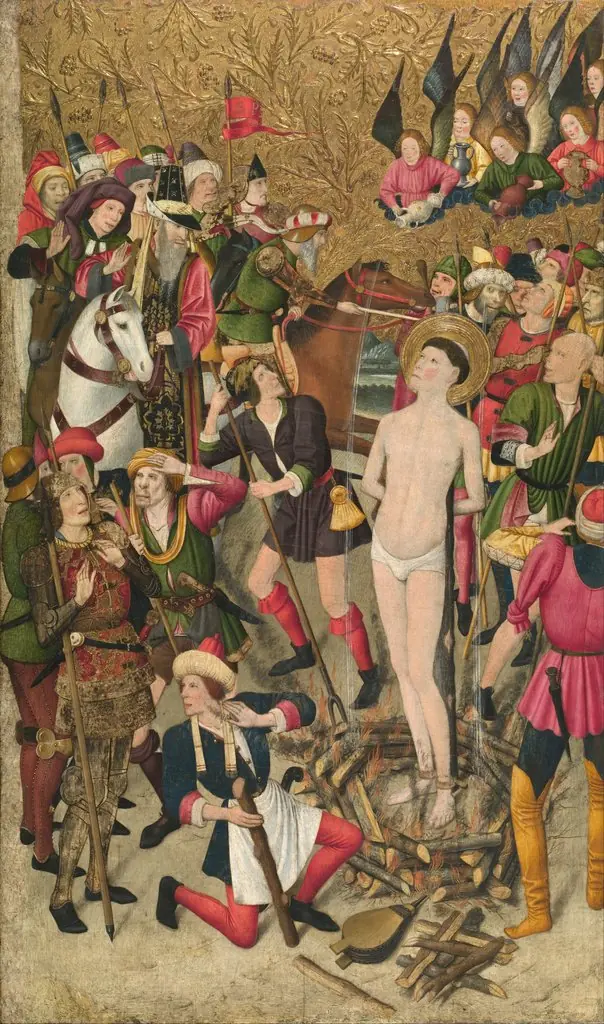 Saint Vincent at the Stake
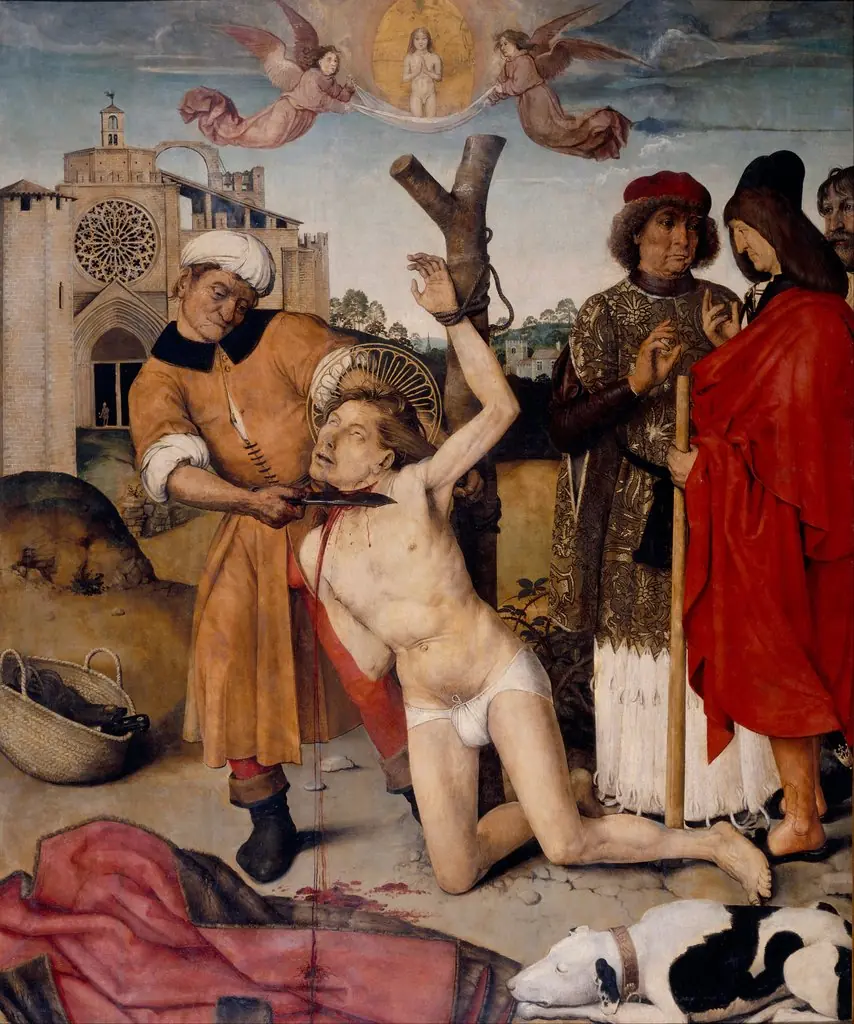 Martyrdom of Saint Cucuphas
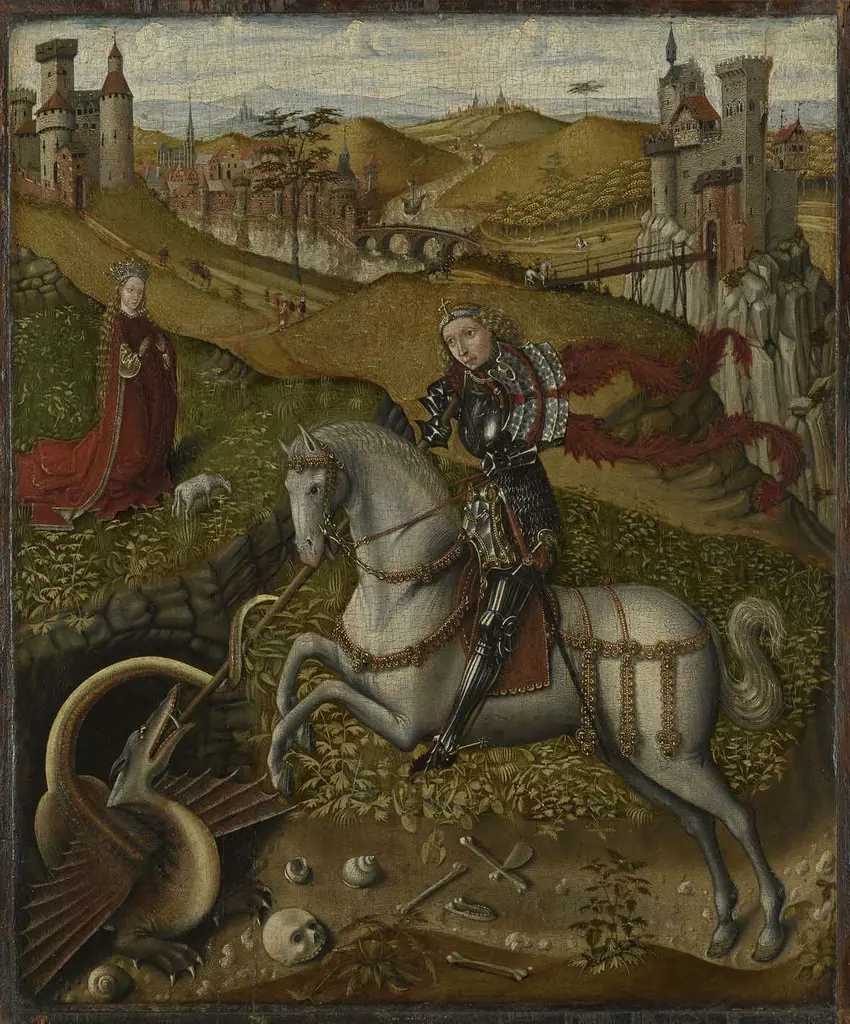 Der hl. Georg mit dem Drachen
 Martyrdom of Saint Sebastian