Artwork
La Virgen del canastillo
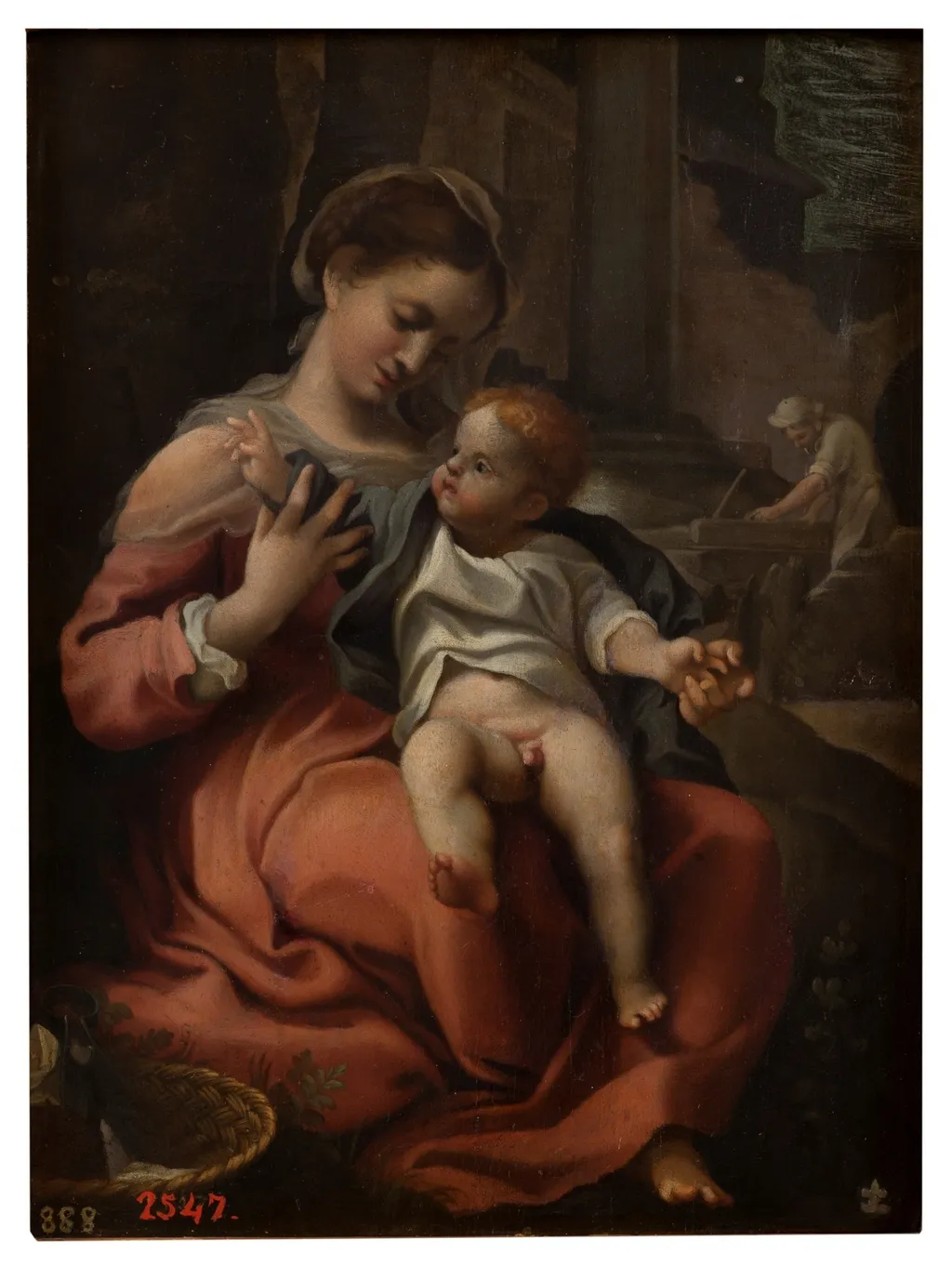
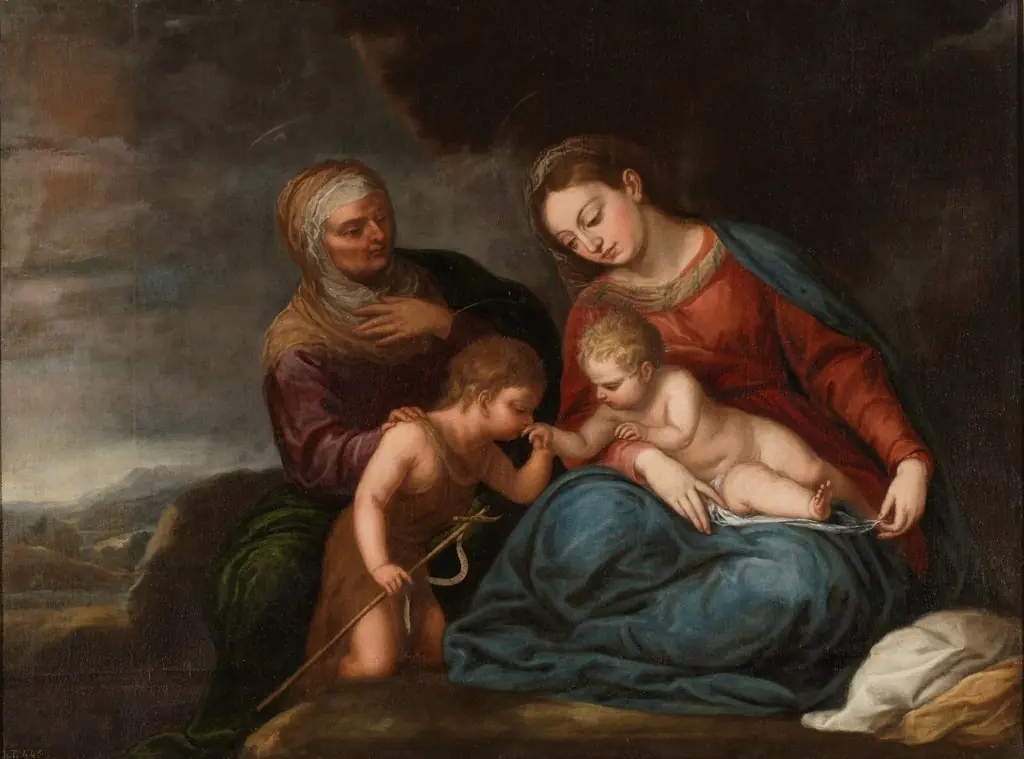
La Virgen del canastillo is an oil painting by Unknown. It is held in the collection of the Museo del Prado. This oil painting portrays a quiet moment between a woman and an infant, rendered with gentle realism.
About this work
Overview
The composition centers on the maternal embrace, framed by a dark interior space that draws focus to the figures.
This oil painting portrays a quiet moment between a woman and an infant, rendered with gentle realism. The composition centers on the maternal embrace, framed by a dark interior space that draws focus to the figures. A woven basket in the lower left corner introduces a domestic element, grounding the scene in everyday life rather than religious symbolism, despite the title’s reference to the Virgin.
Subject & Meaning
Though titled after the Virgin Mary, the painting avoids traditional iconography. The woman’s simple attire and the unadorned setting suggest a secular, intimate portrayal of motherhood. The basket, often associated with domestic labor, reinforces a sense of ordinary care. The work may reflect a devotional ideal filtered through everyday experience, emphasizing tenderness over hierarchy or divinity.
Technique & Style
The artist employs soft modeling and muted contrasts to convey warmth and intimacy. The red dress stands out against the dark background, while the gray shawl and white tunic of the child create subtle tonal harmony. Brushwork is restrained, favoring smooth transitions over detail, enhancing the quiet, contemplative mood of the scene.
History & Provenance
The painting’s early ownership is undocumented, and its attribution remains tentative. It was likely produced in the late 16th or early 17th century, possibly in a Spanish or Italian region where domestic devotional imagery was common. Its survival suggests it was privately held, perhaps in a household setting, rather than displayed in a church or public space.
Context
During the Counter-Reformation, religious imagery often emphasized human emotion to foster personal piety. While many works depicted the Virgin with celestial attributes, this painting aligns with a quieter trend: portraying sacred figures in homely settings. The basket, a humble object, mirrors contemporary interest in the sanctity of daily life within Catholic households.
Legacy
The painting contributes to a broader visual language that blurred sacred and domestic realms. Though not widely known, its understated approach influenced later genre scenes that treated maternal themes with psychological depth rather than symbolic grandeur. Its preservation offers insight into how faith was lived, not just proclaimed, in early modern private spaces.
Artist & collection

 Domestic Scene
 Giacomo and Cardinal Marco, investing Andrea, Abbot of San Zeno, with his Benefice
 The Nymph of Fontainebleau
 Portrait of a Woman
 Madonna and Child with Saints in the Enclosed Garden
 Venus and Minerva
 Family Group of Four on Sofa
 Wall painting from Room H of the Villa of P. Fannius Synistor at Boscoreale
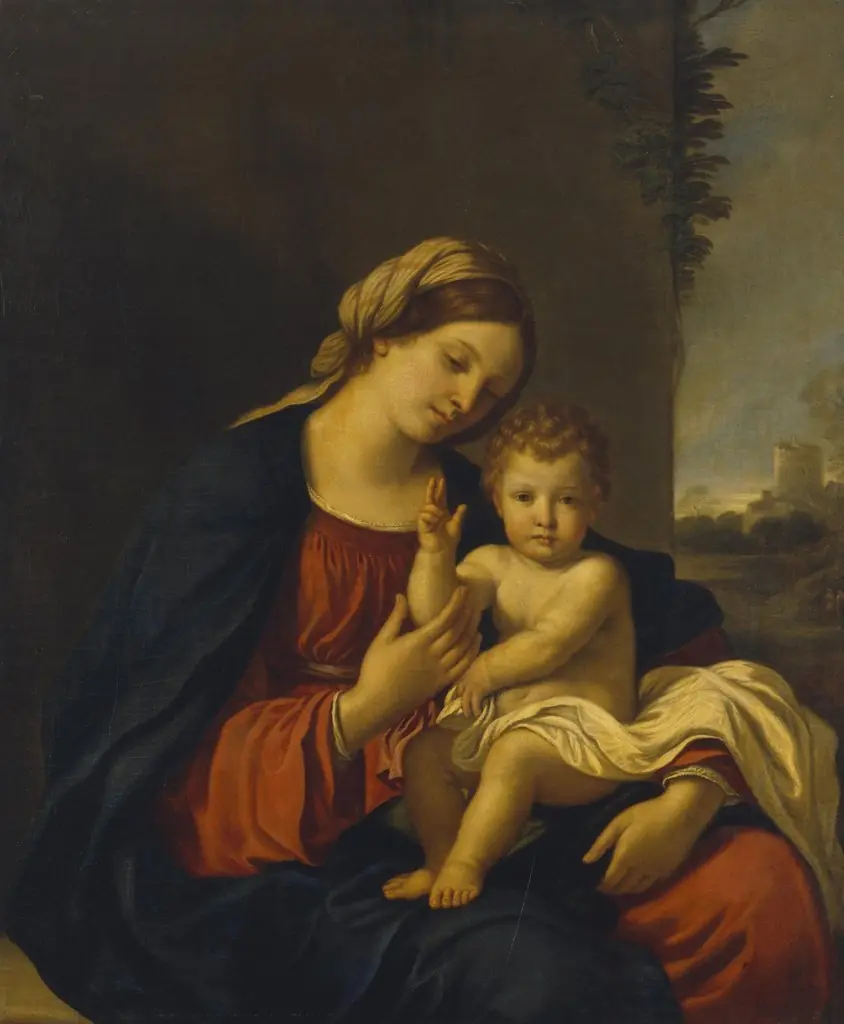 Madonna and Child
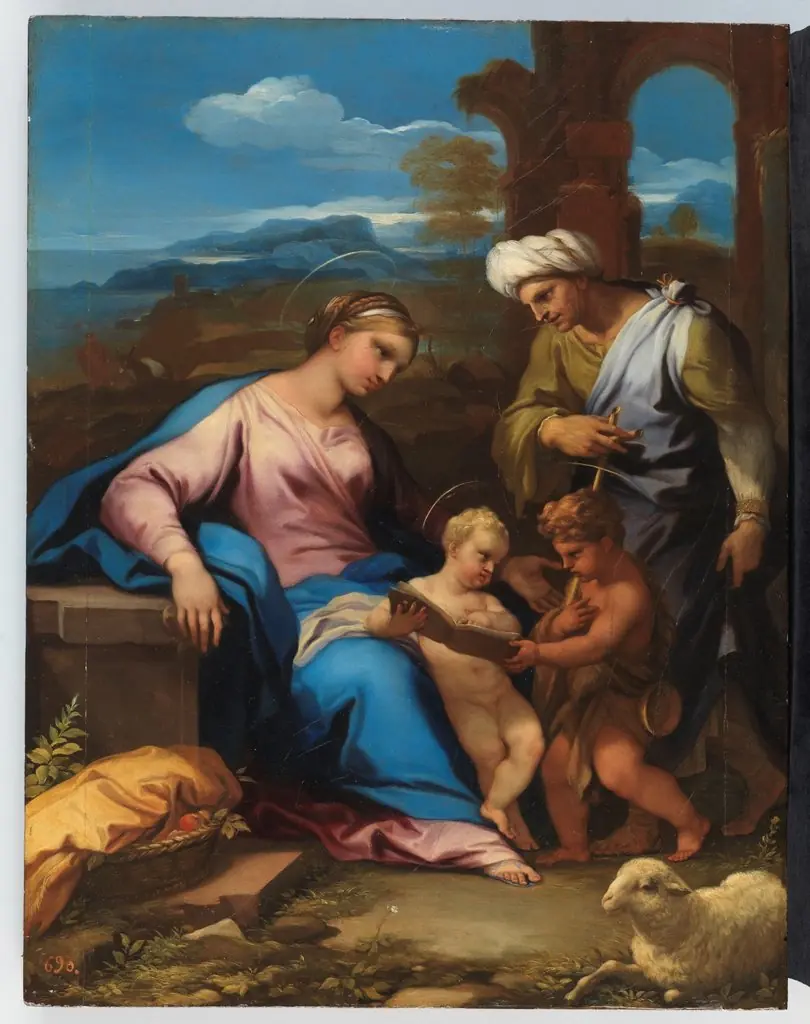 La Sagrada Familia con santa Isabel y san Juanito
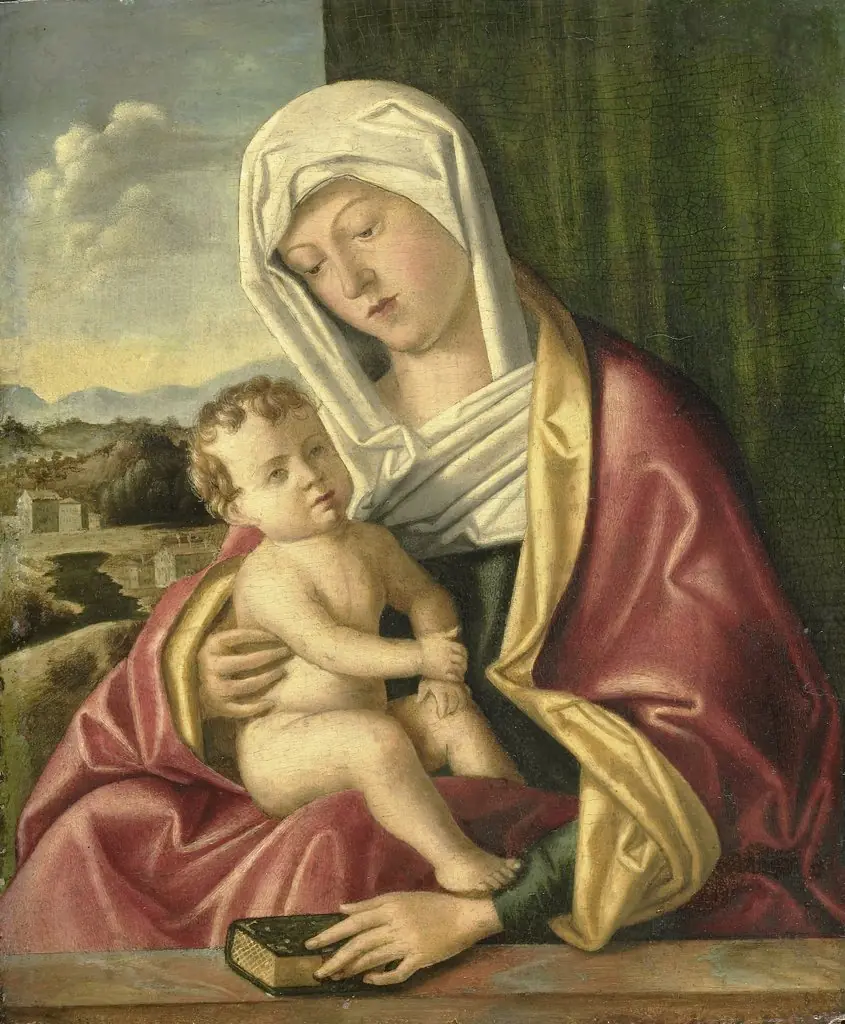 Virgin and Child
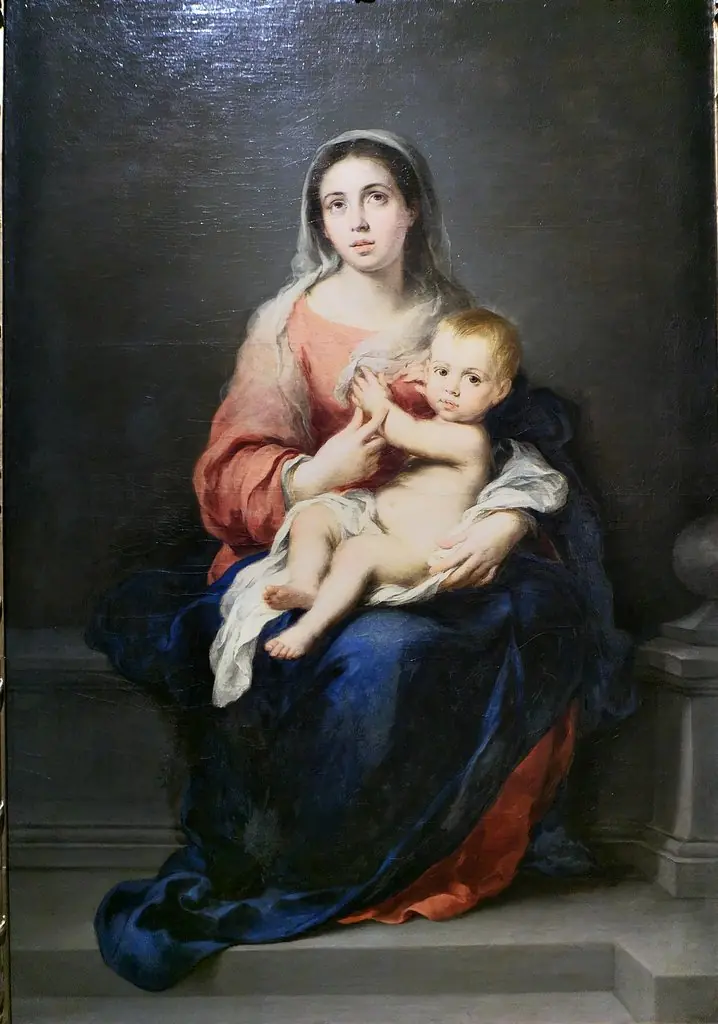 Madonna and Child
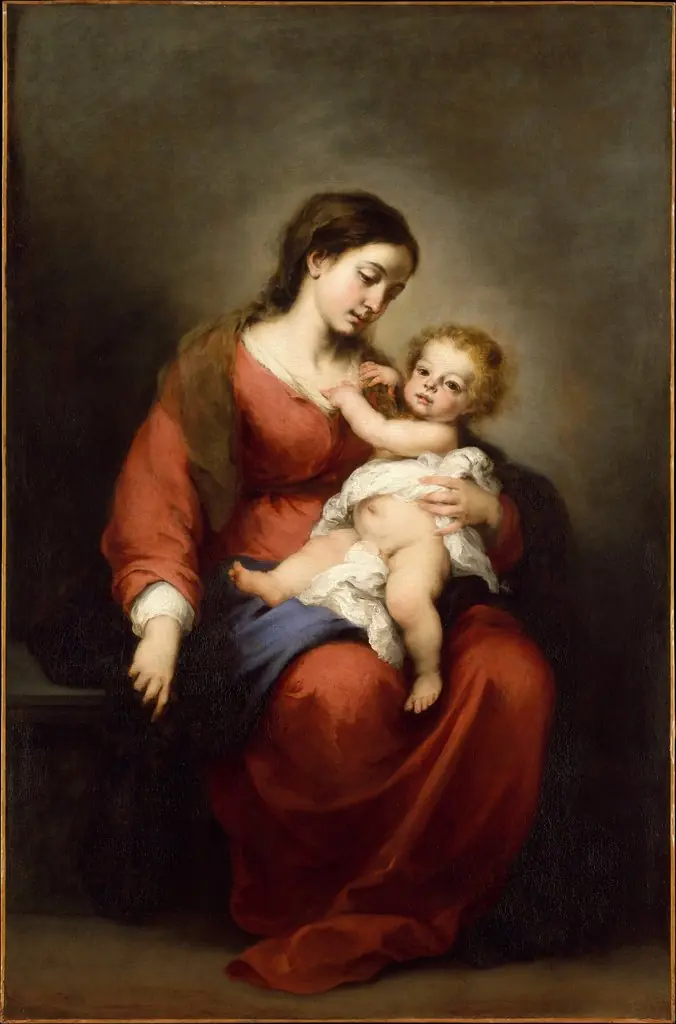 Madonna and Child
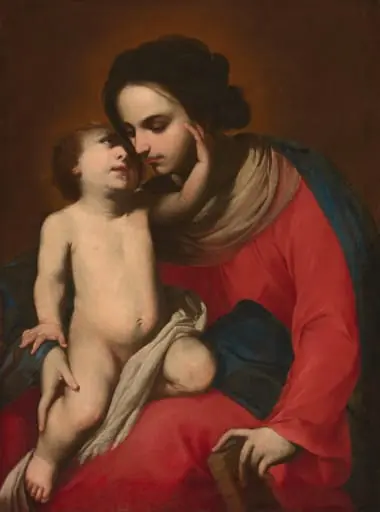 Madonna and Child
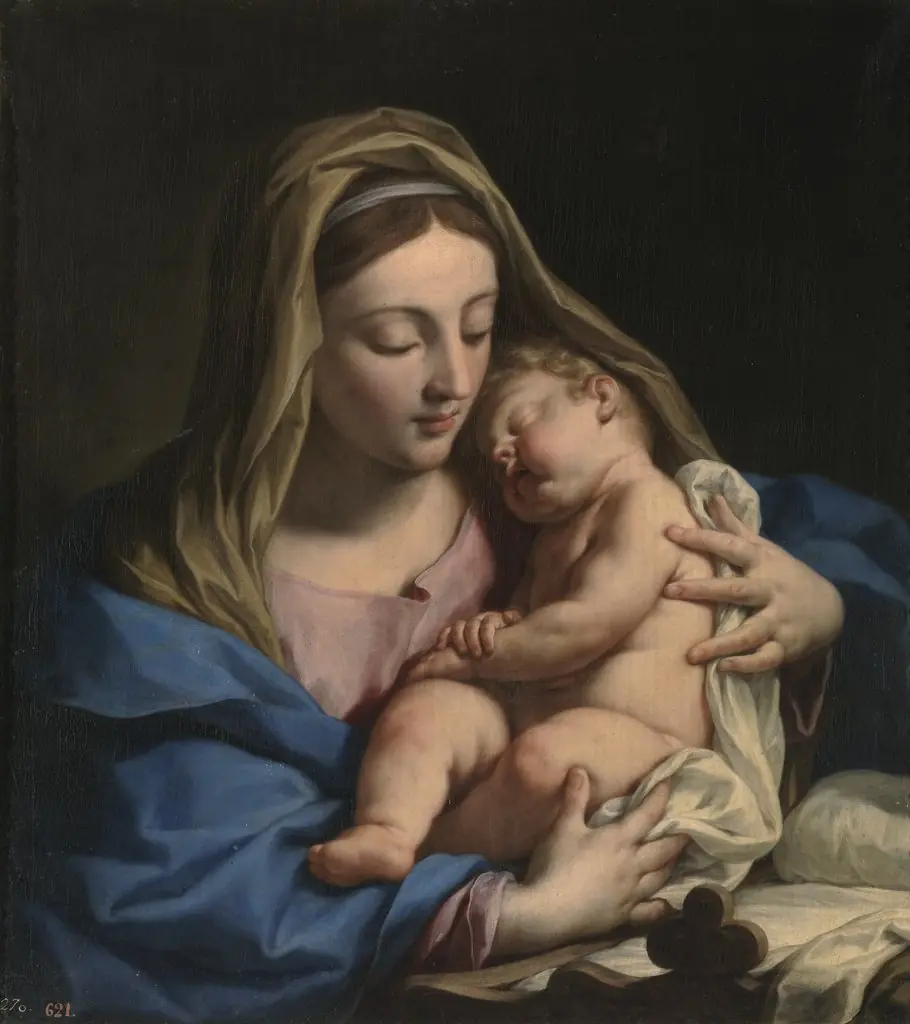 The Virgin and Child
 Virgin and Child
 Madonna and Child
 Maria mit Kind und Engel
 The Virgin with the Child, Saint John and Angels
 The Virgin and Child with Saints Elizabeth and John