Artwork
Landscape
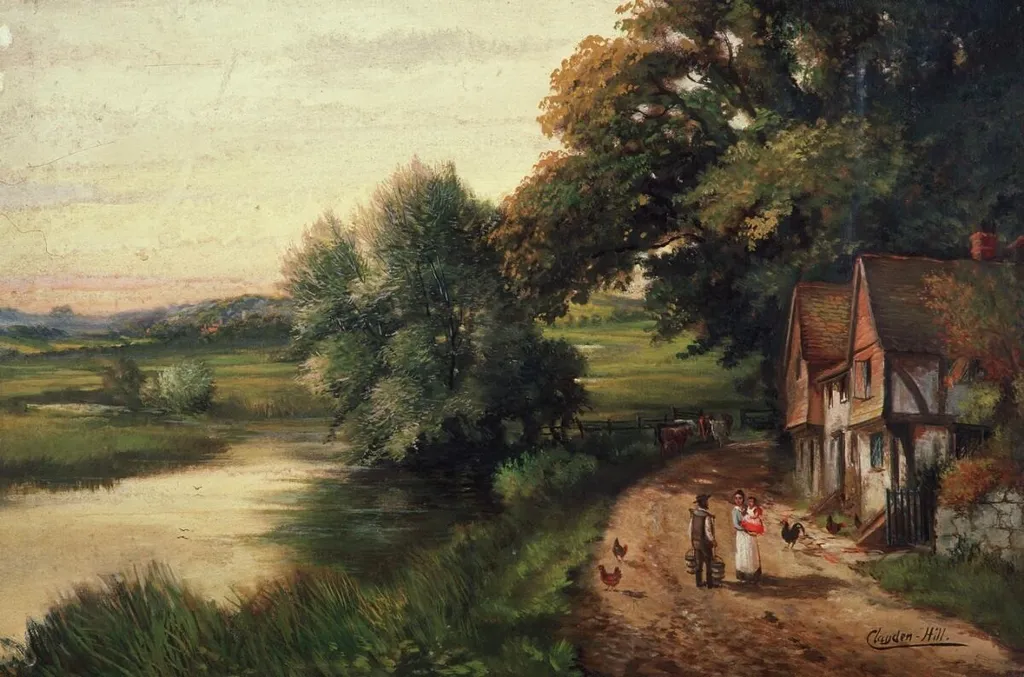
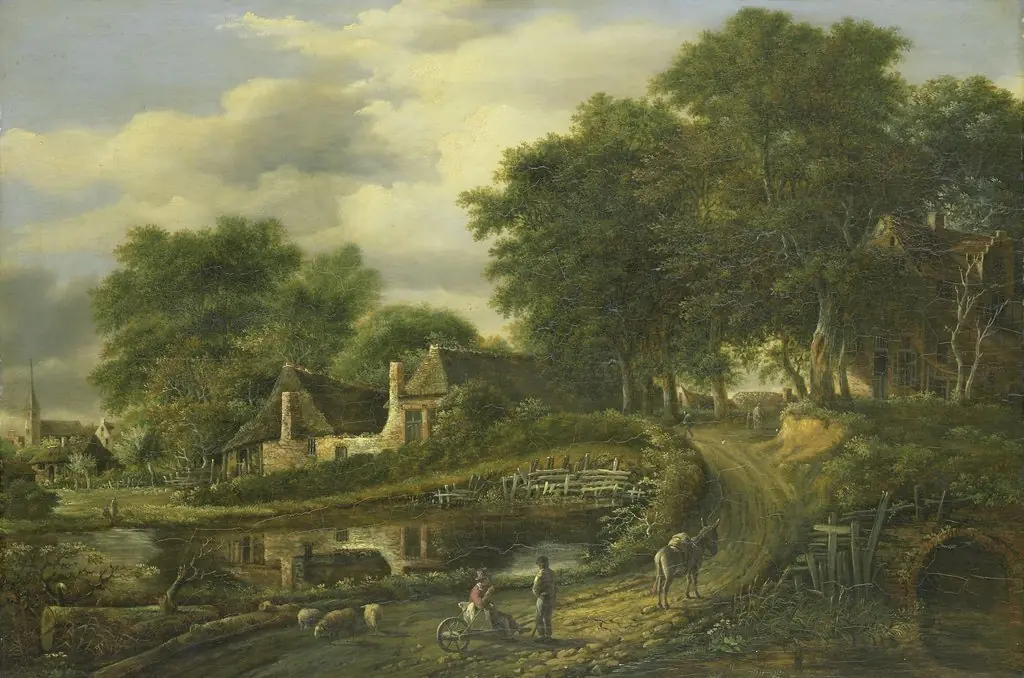
Landscape is an oil painting by the Impressionist artist Unknown. It dates from 1890 and is held in the collection of the National Library of Wales.
About this work
Overview
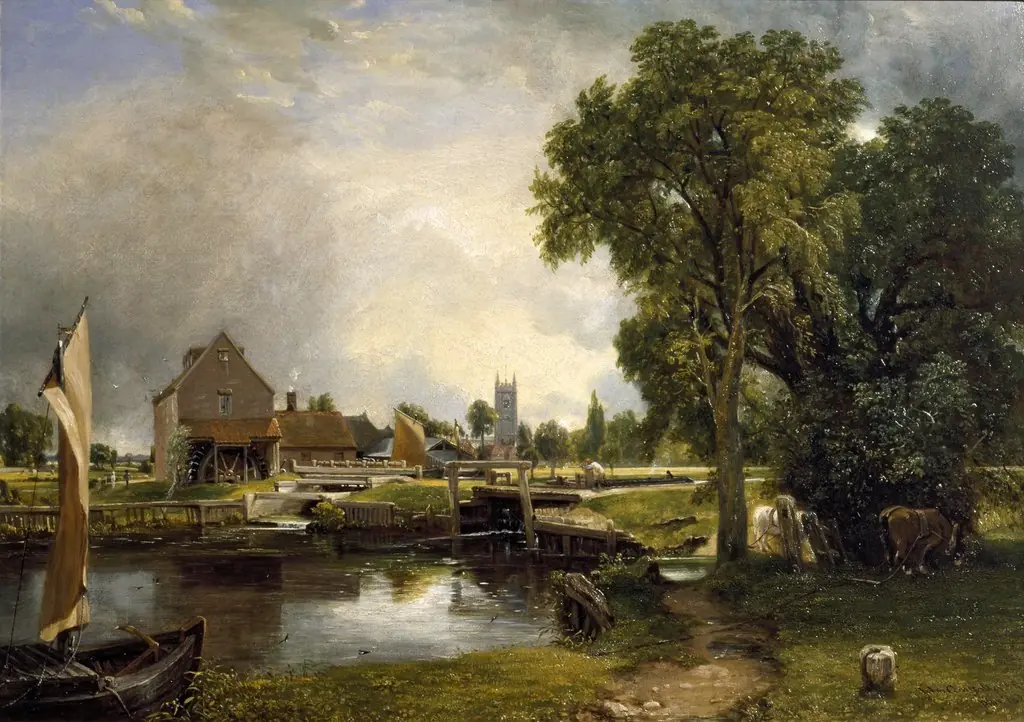
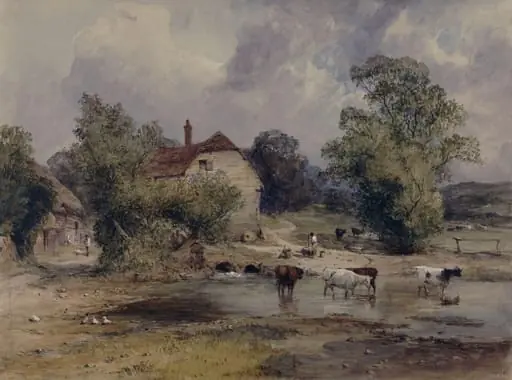
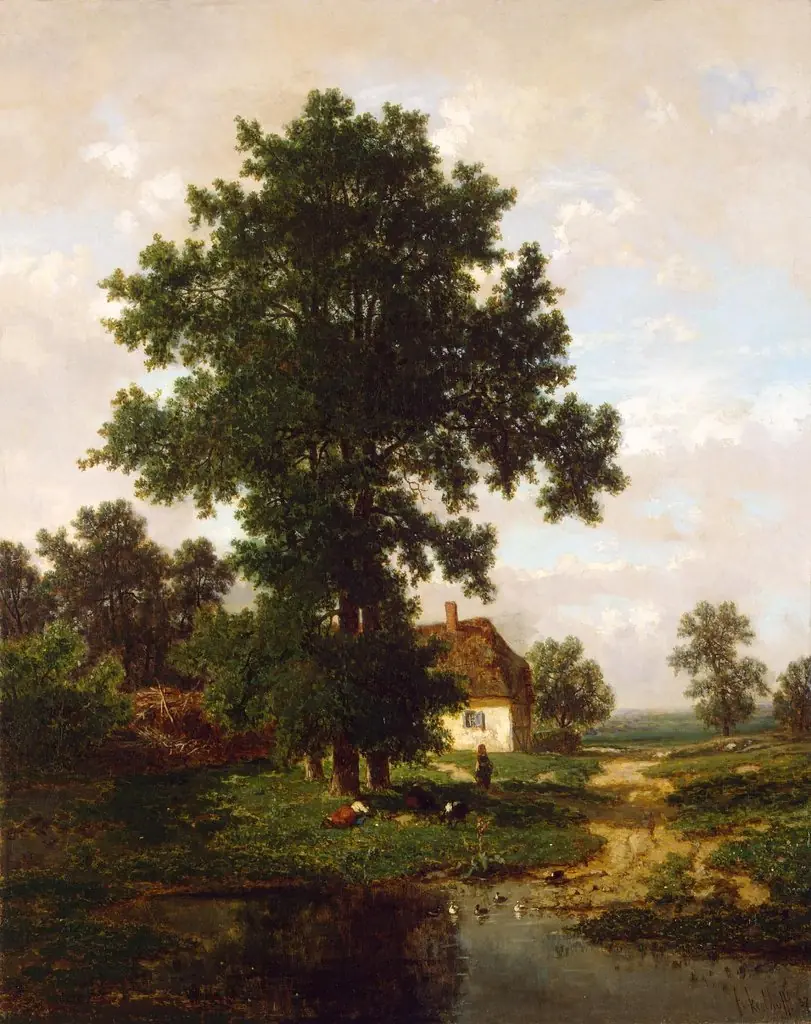
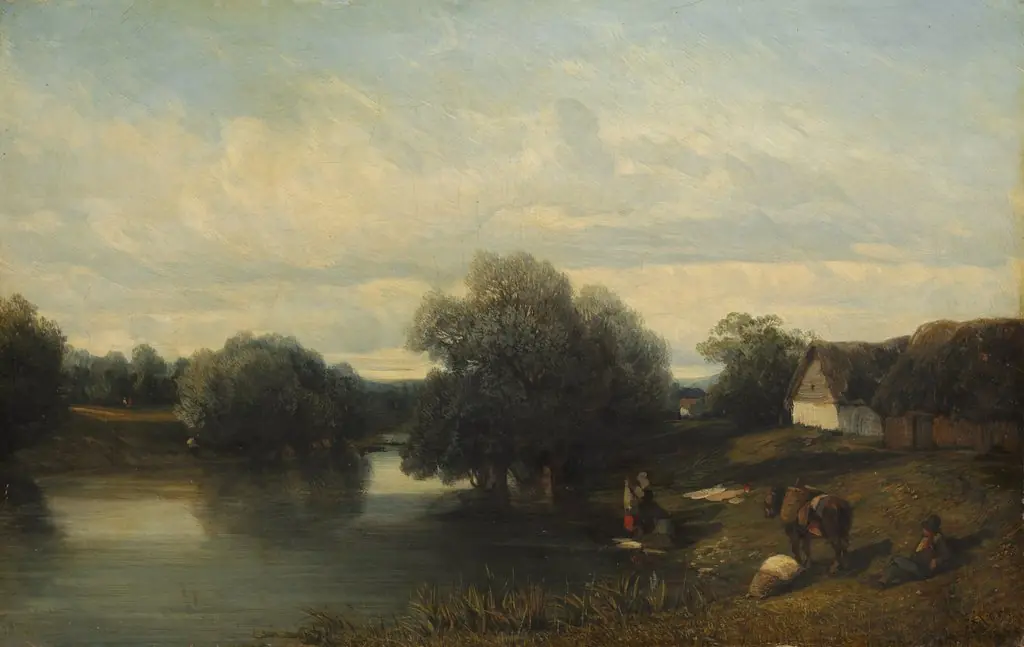
A thatched-roof cottage nestles among dense trees and open fields, while three figures—two adults and a child—stand near the path, accompanied by chickens.
This oil painting captures a tranquil rural landscape, centered on a winding dirt path beside a gentle river. A thatched-roof cottage nestles among dense trees and open fields, while three figures—two adults and a child—stand near the path, accompanied by chickens. The composition emphasizes stillness and quiet daily life, with no dramatic action or focal point, inviting contemplation rather than narrative engagement.
Subject & Meaning
The scene depicts ordinary rural existence without idealization or symbolism. The figures are small within the landscape, suggesting harmony between humans and nature rather than dominance over it. The presence of domestic animals and a modest dwelling implies self-sufficiency and continuity, reinforcing themes of quiet endurance and seasonal rhythm in country life.
Technique & Style
The artist employs smooth, blended brushwork to render subtle transitions in light and color, particularly in the sky and foliage. Soft chiaroscuro models forms gently, enhancing depth without harsh contrasts. Muted greens and pale blues dominate the palette, reinforcing the calm atmosphere. Details like the texture of thatch and the scattering of chickens are rendered with quiet precision, avoiding theatricality.
History & Provenance
The painting’s origin and early ownership are not documented in available records. It likely emerged from a regional tradition of landscape painting in the 18th or early 19th century, when such scenes were valued for their sincerity rather than grandeur. Its survival suggests it was preserved within a private collection, possibly by a local patron or descendant of the artist.
Context
During the period this work was likely created, urbanization was accelerating in Europe, prompting a growing interest in pastoral imagery as a counterpoint to industrial life. Artists in rural regions often painted local views without formal training, producing works that reflected personal observation rather than academic conventions. This piece aligns with that quiet, vernacular tradition.
Legacy
Though not widely exhibited or reproduced, the painting contributes to a broader body of unassuming landscape art that documented everyday rural environments. Its preservation offers insight into how ordinary people experienced their surroundings, contrasting with more celebrated works that emphasized drama or idealized nature. It remains a quiet testament to regional visual culture.
Artist & collection

 Domestic Scene
 Giacomo and Cardinal Marco, investing Andrea, Abbot of San Zeno, with his Benefice
 The Nymph of Fontainebleau
 Portrait of a Woman
 Madonna and Child with Saints in the Enclosed Garden
 Venus and Minerva
 Family Group of Four on Sofa
 Wall painting from Room H of the Villa of P. Fannius Synistor at Boscoreale