Artwork
Dorflandschaft mit Pferdeschwemme in der Ile de France
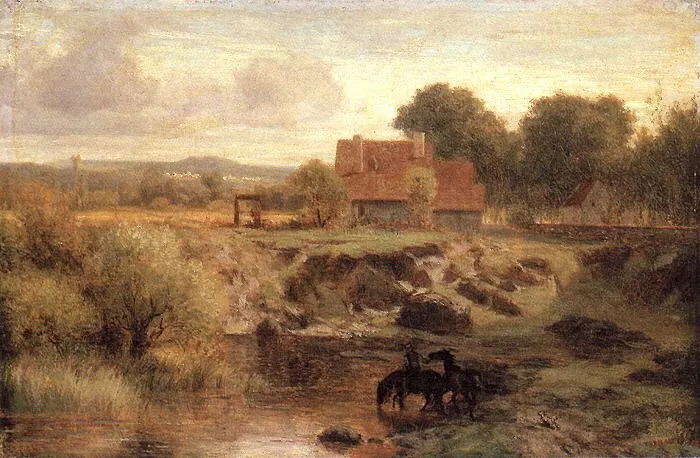
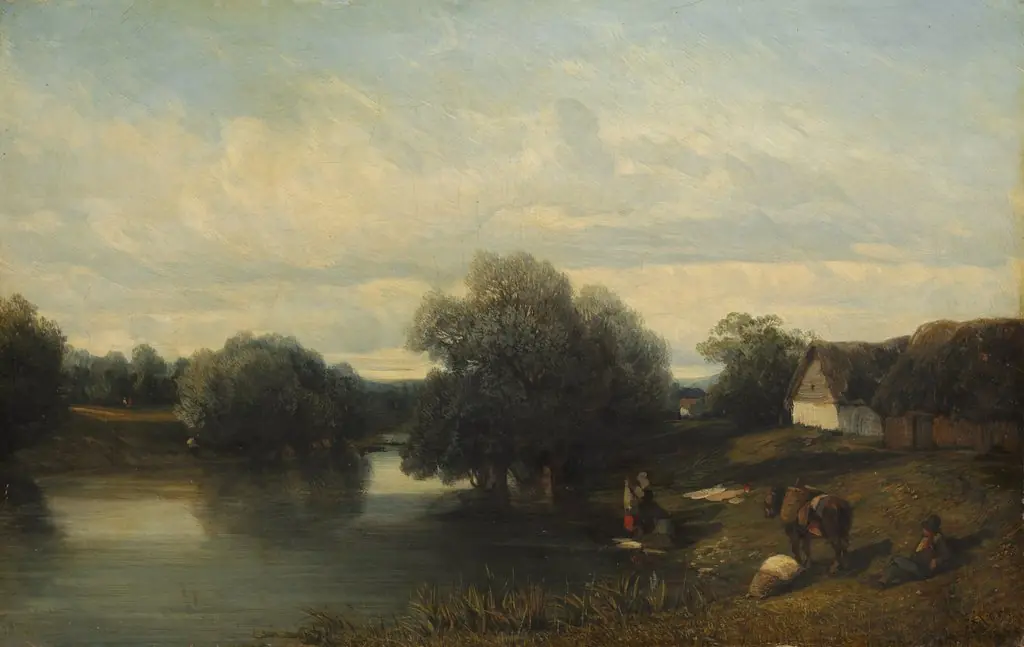
Dorflandschaft mit Pferdeschwemme in der Ile de France is an unspecified painting by Peter Burnitz. It dates from 1855 and is held in the collection of the Hamburger Kunsthalle.
About this work
Overview
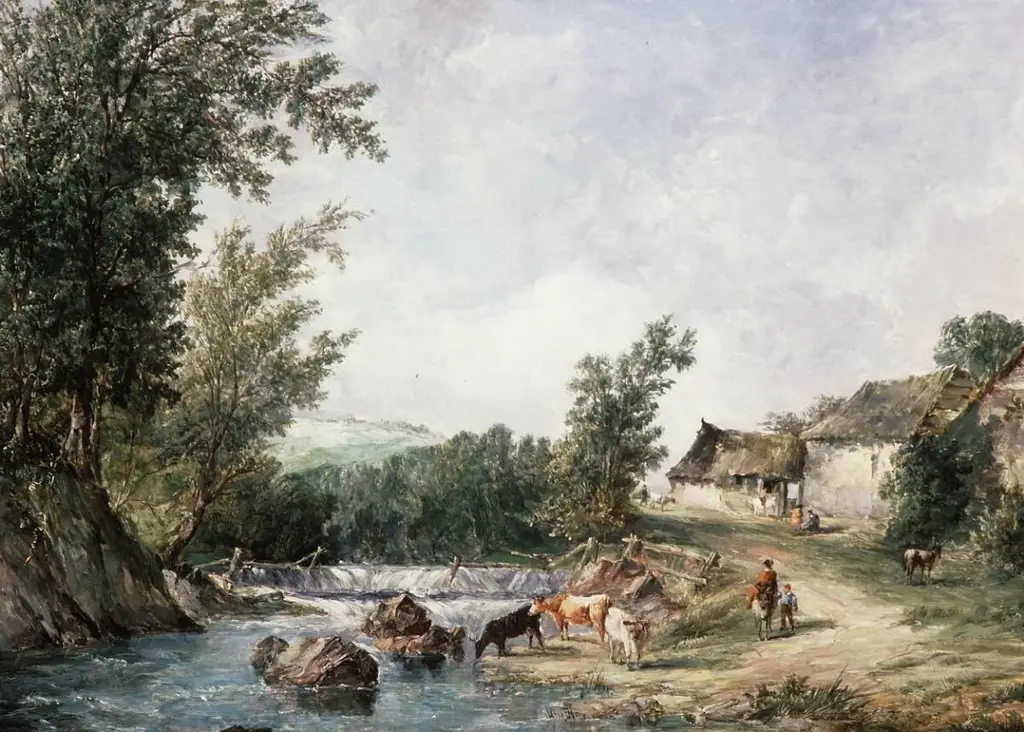
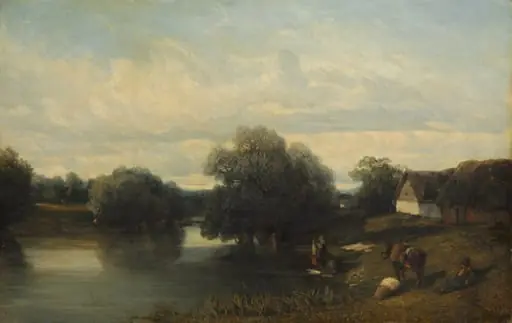
The scene unfolds with gentle topography, a narrow stream winding through grassy terrain, and distant trees framing a modest dwelling.
Painted in 1855 by Peter Burnitz, this landscape captures a quiet corner of the Île-de-France region. The scene unfolds with gentle topography, a narrow stream winding through grassy terrain, and distant trees framing a modest dwelling. A lone equestrian figure near the lower right adds a subtle human presence without disrupting the stillness. The work reflects Burnitz’s interest in naturalistic observation and atmospheric harmony.
Subject & Meaning
The painting presents an unidealized rural moment, free from narrative drama. The stream, rocks, and scattered vegetation suggest a working countryside, while the distant house implies domestic life just beyond the frame. The rider, barely central, serves not as a focal point but as an element of scale and quiet motion. The mood is contemplative, emphasizing the quiet rhythm of rural existence rather than grandeur or symbolism.
Technique & Style
Burnitz employs soft, layered brushwork to render the sky and foliage, allowing light to appear diffused and natural. The water’s surface catches subtle reflections without glossy detail, enhancing realism. Depth is achieved through atmospheric perspective—distant elements muted in tone, foreground textures more defined. The palette favors earthy greens, grays, and pale blues, reinforcing the painting’s calm, overcast ambiance.
History & Provenance
Created in 1855, the painting entered the collection of the Hamburger Kunsthalle, where it remains today. Burnitz, a German artist influenced by French landscape traditions, produced this work during a period of growing interest in plein air observation. Its acquisition by the museum reflects 19th-century German institutional efforts to document regional and transnational landscape practices.
Context
This work emerged amid a broader European shift toward depicting ordinary landscapes without mythological or historical embellishment. Burnitz was part of a generation of artists who valued direct observation over studio idealization. The Île-de-France, near Paris, was a favored subject for such painters, offering accessible rural scenes that contrasted with urbanizing industrial centers.
Legacy
Though not widely exhibited beyond its home institution, the painting contributes to the understanding of 19th-century German landscape painting’s engagement with French naturalism. It exemplifies how artists outside France absorbed and adapted regional motifs, contributing to a quieter, more introspective strand of landscape art that preceded later movements like Impressionism.
Artist & collection