Artwork
Fair on the Antwerp Meir
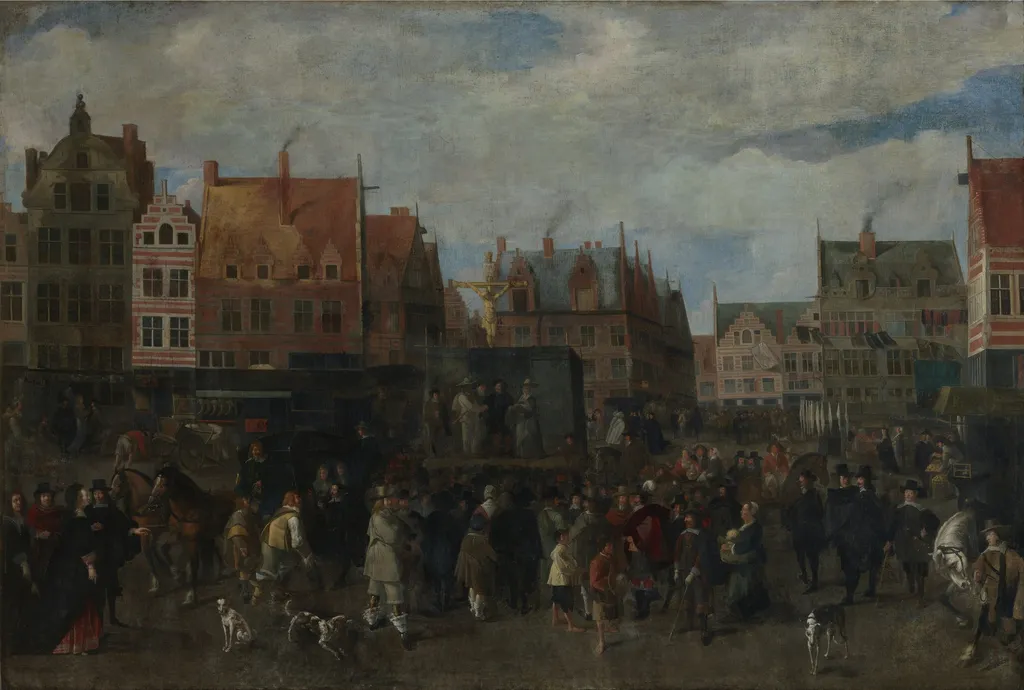
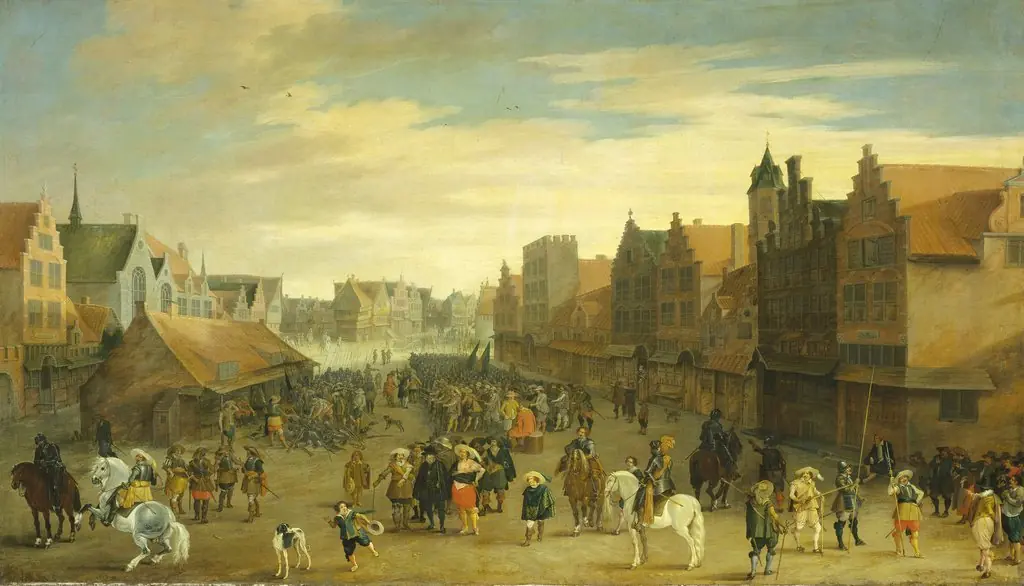
Fair on the Antwerp Meir is an oil painting by the Dutch Golden Age artist Unknown. It dates from 1660 and is held in the collection of the Royal Museum of Fine Arts Antwerp. This oil painting depicts a lively market scene along the Antwerp Meir, a major commercial thoroughfare in the 17th century.
About this work
Overview
The composition captures a dense assembly of figures—pedestrians, riders, and vendors—interacting amid carts and architecture.
This oil painting depicts a lively market scene along the Antwerp Meir, a major commercial thoroughfare in the 17th century. The composition captures a dense assembly of figures—pedestrians, riders, and vendors—interacting amid carts and architecture. The artist employs a broad palette to distinguish the warm stone facades from the muted blues of the overcast sky, creating a sense of atmospheric depth and daily movement.
Subject & Meaning
The scene portrays ordinary urban life rather than a ceremonial or religious event. Figures of varying social standing are shown engaged in commerce, travel, or casual observation, suggesting the Meir’s role as a hub of civic activity. No single narrative dominates; instead, the painting emphasizes the rhythm and variety of everyday market life in a thriving Flemish city.
Technique & Style
The artist uses loose, fluid brushwork to render motion and texture, particularly in clothing and animal forms. Figures are rendered with suggestive detail rather than precise individualization, allowing the crowd to function as a unified whole. Atmospheric perspective is achieved through softened edges and cooler tones in the distance, while warm hues in the foreground ground the viewer in the scene’s immediacy.
History & Provenance
The work originates from the Southern Netherlands during the height of Antwerp’s commercial prominence. While the artist’s identity remains unconfirmed, the style aligns with regional genre painters of the early 1600s. Early records suggest it was likely commissioned by a local merchant or civic figure, reflecting pride in the city’s economic vitality.
Context
In the early 17th century, Antwerp was a key center of trade and culture in the Spanish Netherlands. Markets like the Meir were not only economic centers but also social spaces where diverse classes intersected. Paintings of such scenes emerged as expressions of urban identity, distinct from religious or aristocratic subjects favored elsewhere in Europe.
Legacy
Though not widely exhibited today, the painting contributes to a broader tradition of Flemish genre painting that documented urban life with observational precision. It reflects a shift in artistic focus toward secular, everyday experiences, influencing later Dutch and Flemish artists who continued to explore the dynamics of public space.
Artist & collection

 Domestic Scene
 Giacomo and Cardinal Marco, investing Andrea, Abbot of San Zeno, with his Benefice
 The Nymph of Fontainebleau
 Portrait of a Woman
 Madonna and Child with Saints in the Enclosed Garden
 Venus and Minerva
 Family Group of Four on Sofa
 Wall painting from Room H of the Villa of P. Fannius Synistor at Boscoreale
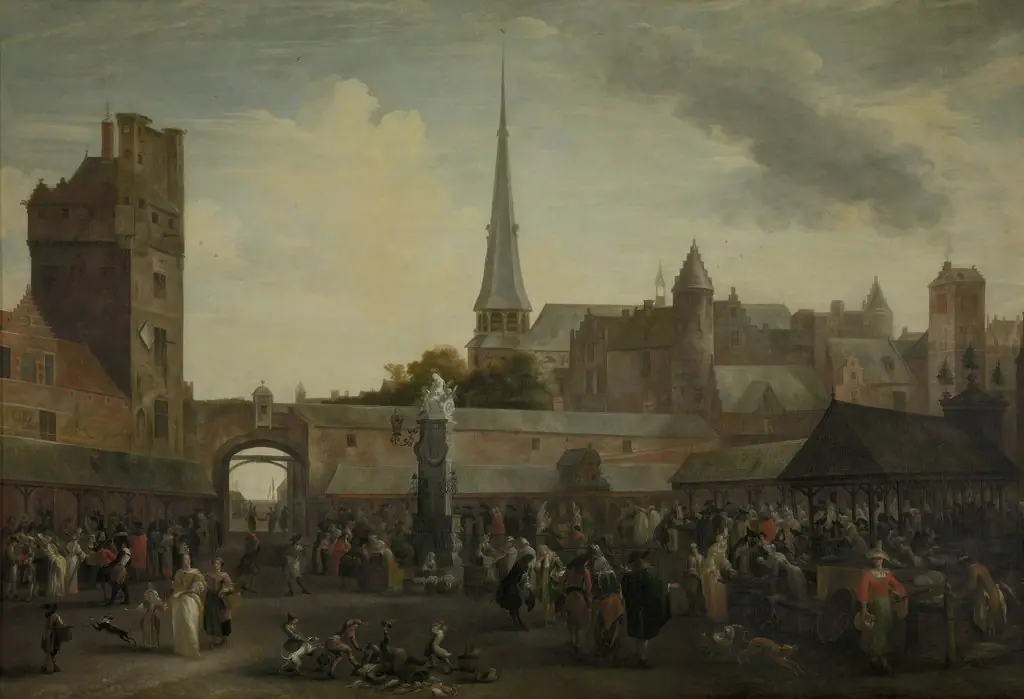 The Fish Market of Antwerp
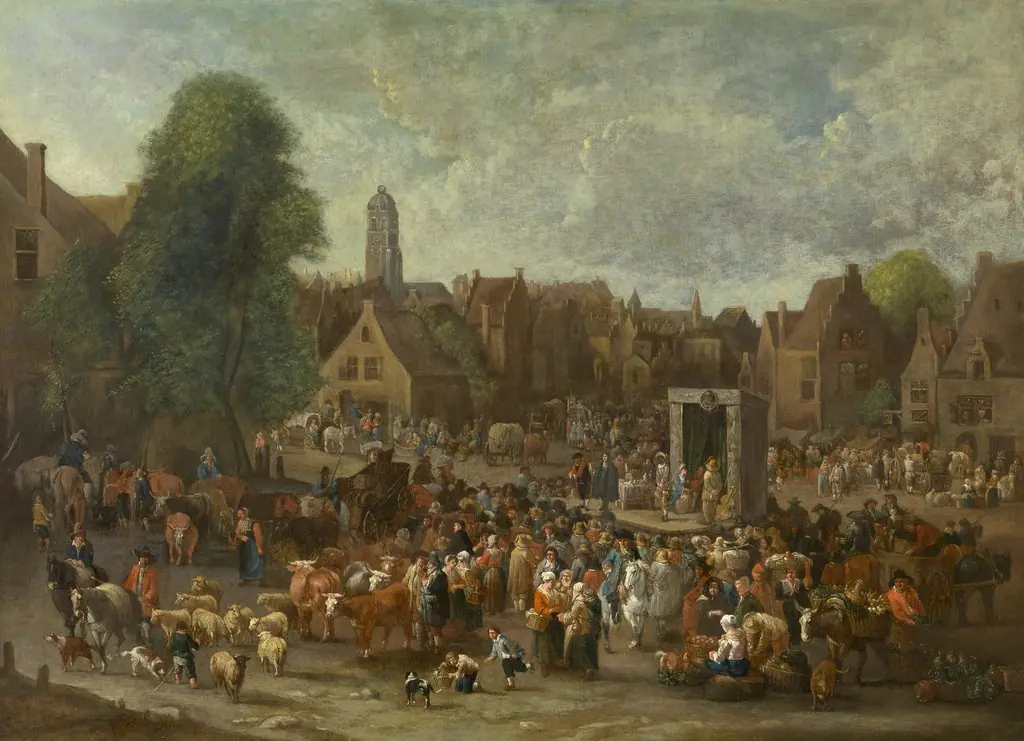 Theatre on the Marketplace
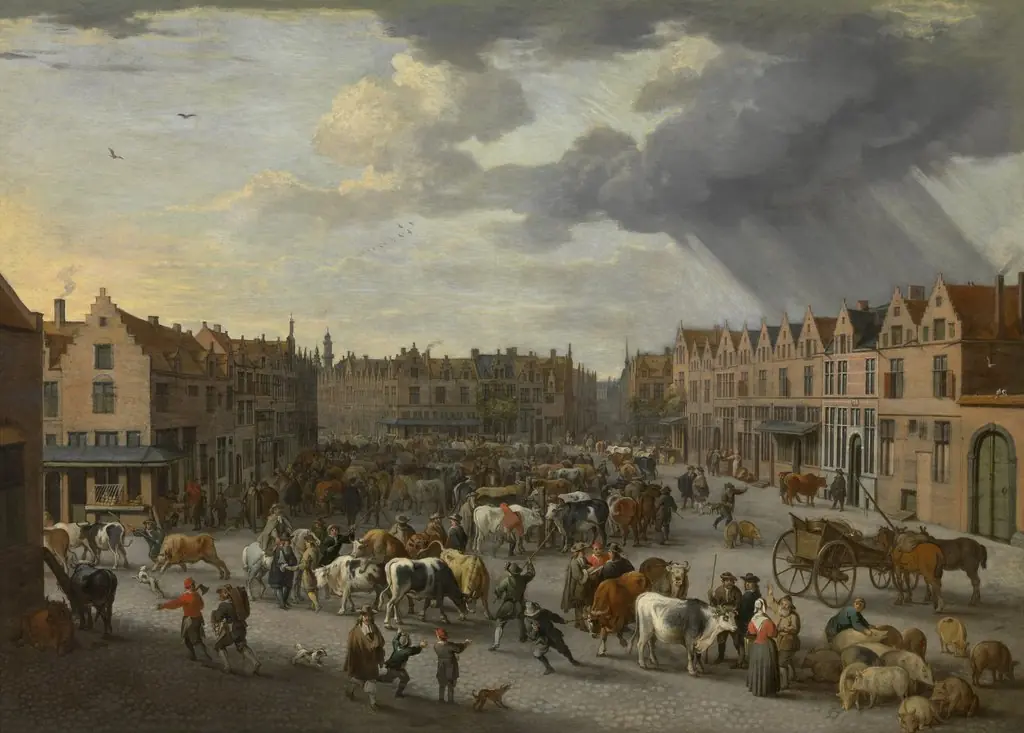 The old cattle market in Antwerp
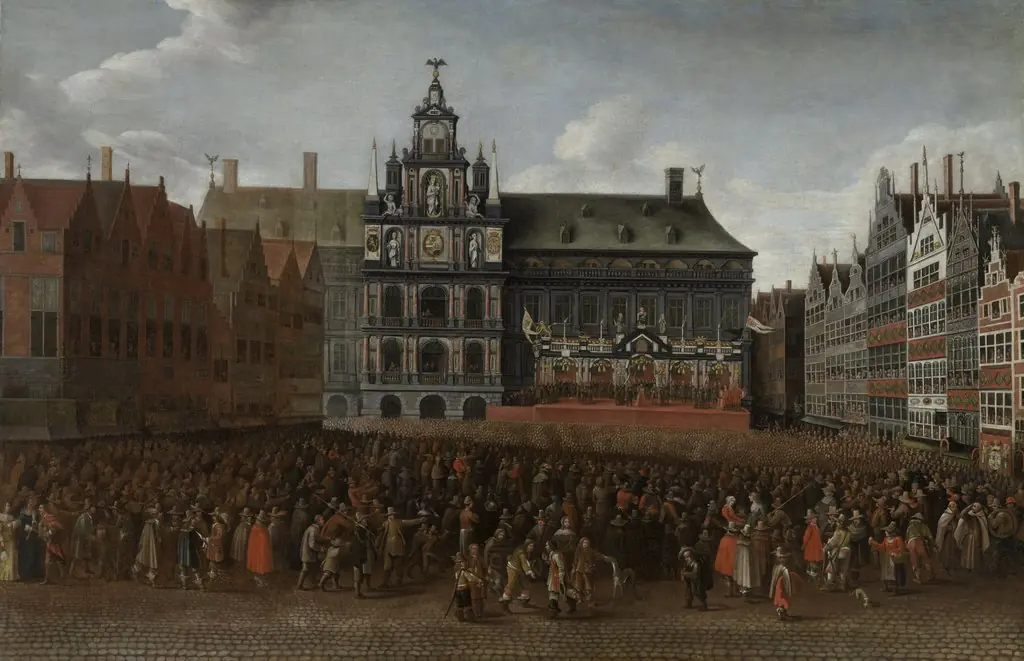 The Proclamation of the Peace of Münster at the Grote Markt in Antwerp
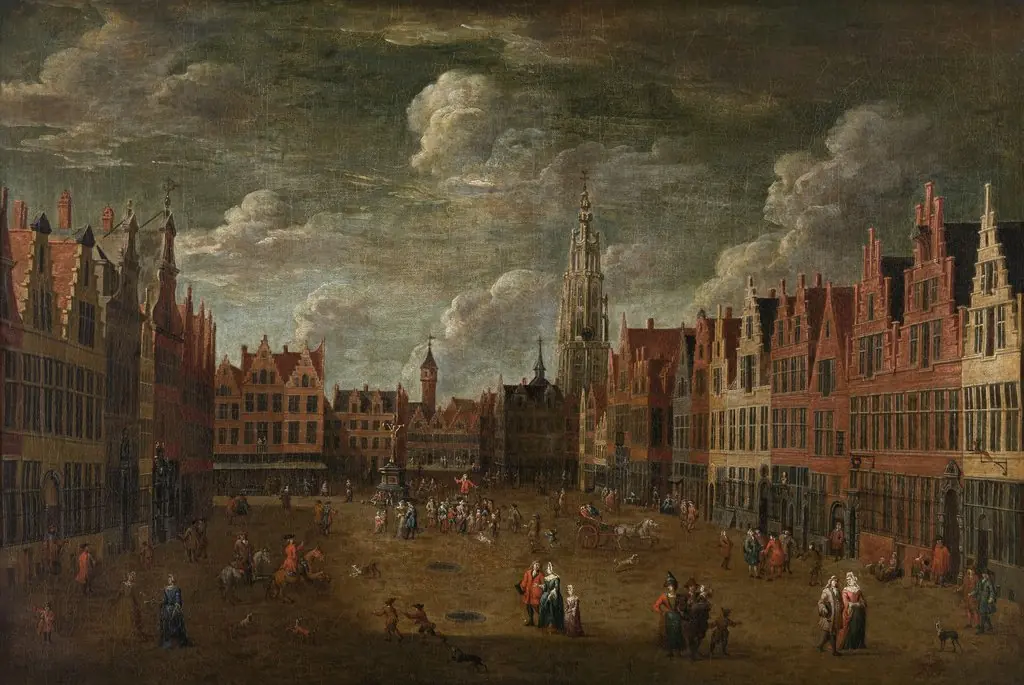 A View of the Meir
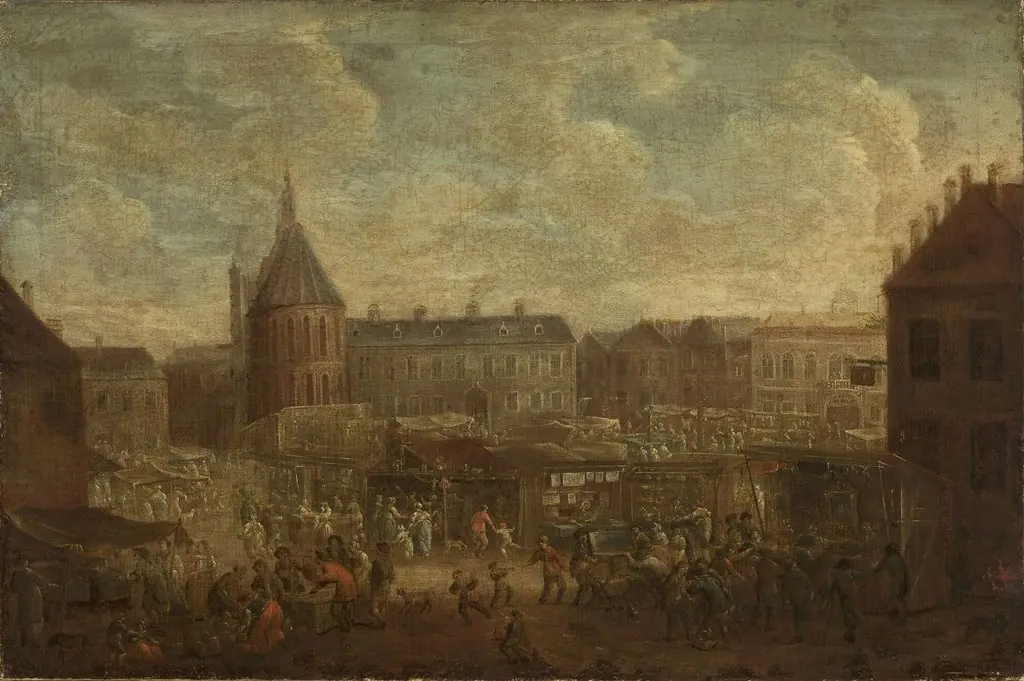 Marketplace in a town
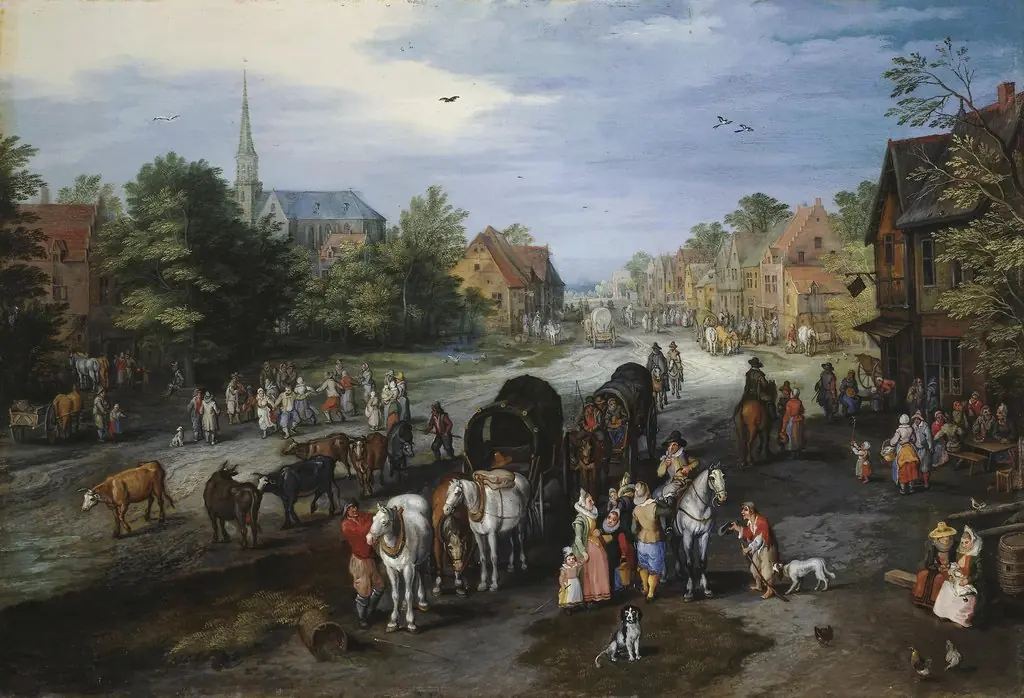 View of the Village of Schelle (Village street)
 The disbanding of the 'waardgelders' (mercenaries in the pay of the town government) by Prince Maurits on the Neude, Utrecht, 31 July 1618